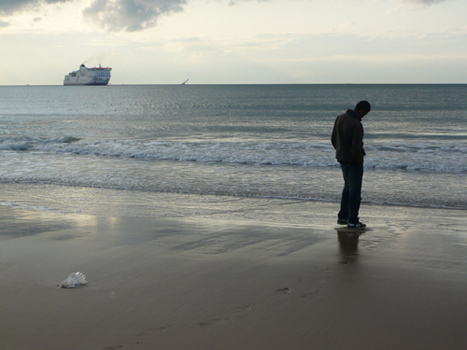
Wisdom of the Surface

straub.jpg

“There is no politics of cinema, there are only singular figures according to which filmmakers apply themselves to bring together the two meanings of the word ‘politics’, with which we can consider a fiction in general and a cinematographic fiction in particular: politics as what a film speaks about – the story of a movement or a conflict, the unveiling of a situation of suffering or injustice, and politics as the strategy of an artistic approach: a way to speed up or slow down time, to diminish or widen space, to match or unmatch look and action, to link or unlink before and after, in and out. We could say: the relation between a matter of justice and a practice of justness. How to think about the way cinema can nowadays put into action the relation between the certainties of injustice, the uncertainties of justice and the calculation of justness?”
— Jacques Rancière

A new book by Jacques Rancière on cinema is always reason to rejoice. Drawing from his experiences related to the cinephile movement in the 1960’s – when he found himself confronted with the tensions between a lingering passion for cinema and an outspoken Marxist worldview – Rancière’s approach to cinema has developed into a highly singular and necessary one, stemming from an interest in the possible relations between a materialism of the mise-en-scène and a global materialism of the world, but also the relations between specific procedures of “sensible” arrangement and what we generally tend to call “cinema” – that what we have come to expect and desire from cinema. For him, these gaps and intervals – “les écarts du cinema”, as his new book is titled – are where the philosophical play is situated. Rancière has never been interested in film analysis or theory in itself: there just is no concept that integrates all the different conceptions of cinema, just as there isn’t a theory that unifies all the problems they pose. With his self-proclaimed position of “amateur” he tries to find a balance between this heterogeneity of cinema and its simultaneous homonymy which paradoxically also lays out a common space to think. It’s in this space where Rancière’s thinking of cinema is situated, always exploring the nodes between different ideas or problems: between cinema and art, cinema and politics, cinema and theory. This amateur position is also an outspoken political one, from which he refutes the authority of specialists and, as in all his work, seeks to reexamine the ways in which the borders of their specific domains intersect or overlay with crossings of experience and knowledge. He writes: “the politics of the amateur affirms that cinema belongs to everyone that has explored the interior of the system of gaps that its name signifies and everyone can take up the authority to trace, between different points of the topography, a singular path that adds to cinema as a world and its knowledge.”

In a way, his conception of philosophy can be considered as cinematographic in itself. Indeed, his work has always been about scanning given landscapes for passage points and transit zones that allow to cut and configure them differently; trying to describe and inscribe particular paths and passages within those landscapes, defined by the coexistence of heterogeneous plans or the connection of opposing points. Isn’t his notion of “partage du sensible” in essence cinematographic too? After all, it deals with a sensibility for the “frame” – what is inside and outside, within and beyond; it deals with with a sensitiveness for the partition of a traversed landscape; with ways of presenting the visible and linking together different sensations and perceptions. The distribution of the sensible is also where his ideas on politics and cinema come together: in the construction of landscapes and ways of seeing that deconstruct consensus and highlight uncovered possibilities and capacities. But at the same time Ranciere has always contradicted the well-spread assumption that this reconfiguration of the landscape can be used as a simple instrument to mobilize militant energies or inform political strategies – an utopian idea that can be traced back to, for example, Vertov, whose work was grounded in a believe that cinema could, in effect, close the gaps between art, life and politics. But once the doomed marriage between communism and cinema was over, writes Rancière,

“the politics of cinema found itself captured in the contradictions that were proper to the expectations of critical art. The view we have on the ambiguities of cinema is in itself marked by the duplicity of what we expect of it: that it gives rise to a certain consciousness due to the clarity of an unveiling, and to a certain energy due to the presentation of a strangeness, that it unveils at the same time all the ambiguity of the world and the way to deal with this ambiguity. We project on it the obscurity of the relation between the clarity of vision and the energy of action. But if cinema can clarify the action, it’s maybe by questioning the self-evidence of that relation.”

In one of the last chapters of Les écarts du cinéma, titled ‘Conversations autour d’un feu’ (first presented in a talk at Centre Pompidou in June 2010) Rancière takes the work of Jean-Marie Straub and Danielle Huillet, in particular their film Dalla nube alla resistenza (From the Cloud to the Resistance) (1979), as a starting point to reflect on how this “questioning” has, over the course of the last decades, taken different forms and attitudes. He writes

“This politics of the communist cantata does not offer us a model of cinematographic politics but a point of reference: the mark of a time when dialectics finds itself scattered from the movement of history that carried it and has to construct a new place for itself, a new distribution of words and gestures, times and spaces; but it is also a fixed point to evaluate the way in which filmmakers have, since that time, wanted to tackle the fractures of history, the shaking up of paths between territories, injustices and new conflicts.”

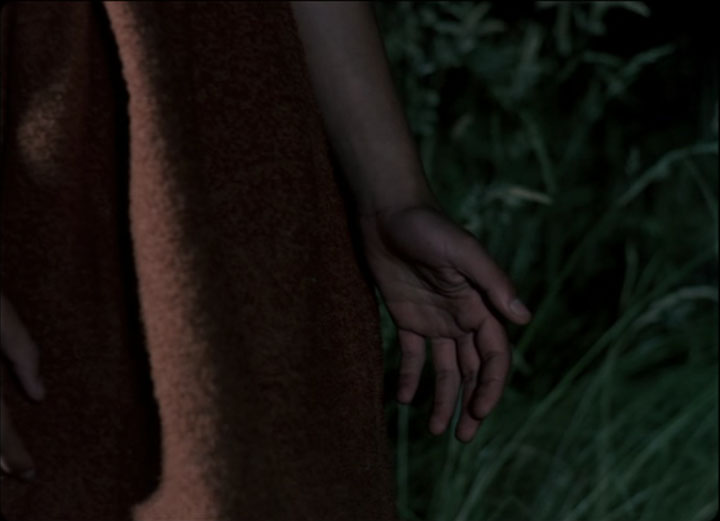
Dalla nube alla resistenza – based on two works by Cesare Pavese – is not used as an exemplary model, but rather as a significant moment in the thinking of cinema and politics. Rancière indicates three reasons for his choice: first of all, the film ties in with the so-called “Brechtian paradigm”, of which the work of Straub and Huillet is perhaps the most systematic cinematographic form; at the same time, this particular film also represents a sort of turning-point in the dialectical tradition, resulting in a form which Rancière proposes to call “post-Brechtian”; and this critical moment in the work of the two filmmakers also corresponds with a historical juncture: namely, the end of the “leftist” decade, marked by a worldwide diminution of social achievements and revolutionary ideals. Around this period a certain era of cinema-political relations came to an end – characterized by the militant work of Vertov or the Medvedkin Group on the one hand, and historical fresco’s such as Bertolucci’s Novecento on the other. The “post-Brechtian” formula, according to Rancière, thus stands for a certain approach to cinema and politics which is “less focused on the revelation of mechanisms of domination and repression, and more on the examination of the aporia’s of emancipation”.

Rancière’s venture takes him from a thorough analysis of Dalla nube alla resistenza to a juxtaposition with the more recent work of Godard, notably Eloge de l’amour and Notre musique. Although all these films seem to have certain traits in common – reference to the Resistance, confrontation of historical text and place etc. – their take on the Brechtian paradigm has taken different directions, which are manifest in the relations between what is said and what is shown, between the visibility of speaking bodies and the things they are speaking about, between gestures of justness and the intricacy of injustice. According to Rancière, the politics in the work of Straub and Huillet, exemplified by the sixth episode of Dalla nube alla resistenza, situates itself in “the art of arranging bodies that are at the same time capable of phrasing the dialectical force of division and summarize in one single gesture the resistance of justice to all arguments. This resistance itself proves to be visually equal to its contrary: the resistance of nature to all argumentation of just and unjust.” On the other hand, the dialectical play in Godard’s recent work, loaded with irony and nostalgia, is amplified in such a way that it gives way to “a radical impossibility of choosing between injustices”.

Beyond these two singular takes on the post-Brechtian paradigm, Rancière traces contemporary figures of cinema-political relations that, at first sight, couldn’t be further removed from the dialectical tradition. He finds them, for example, in the images of a young girl’s final journey in Bela Tarr’s Satantango – which depicts a figure of resistance which is not unlike the shepherd boy’s stretched arm in Dalla nube alla resistenza, or, for that matter, the stubborness of Bresson’s Mouchette. Tarr’s pessimistic view on the historical breakdown of communism, wrapped in a devastating tale of villains and victims, might have nothing left in common with the communism in Straub and Huillet’s work, but it’s the visual force of this particular resistance, opposing the overwhelming emptiness and deceit in the film, that gives it its political dimension.

“It’s only behind the mises-en-scène that cinema can propose promise or betrayal of a historical experience, there is politics that holds on to the very relationship of the art of moving images with the stories it tells and the process it instructs; there is its way to bring the narrative and dialectic topos to the flat frame of the screen, to the way in which space deploys itself and the light vibrates.”

This tension is evoked in Rancière’s account of Kenji Mizoguchi’s Sanshō Dayũ, telling the story of the family of a governor of a Japanese province, sent into exile because of his stance against oppression. His wife is taken away, his children are sent to the mines. In a particular moving scène, the daughter slowly drowns herself in a lake, in order for her brother to be able to escape, look for their mother and fulfill his promise to free the slaves. For Rancière, this moment indicates a double logic: “on the one hand, cinema participates in the struggle for emancipation, on the other, it disperses into circles on the surface on a lake.” The same double logic is apparent when the son, after freeing the slaves, leaves the battlefield to search for his mother. In the end, the film offers no reparation of the injustices done to them, but there is a final reconciliation of mother and son, filmed in “a slow movement that at the same time assembles and sweeps away, in the serenity of the image, the bodies that the violence of the intrigue has separated.” It’s here, writes Rancière, where all the “écarts” of cinema come together: in this movement in which the film, after demonstrating the struggle for emancipation, finally says: “these are the limits of what i can do. The rest is up to you.”

“The justness of cinema depends on the suspense held between two directions of the moving image: that which opens it to the injustices of the world and that which transforms all intrigue of injustice into vibrations on a surface. It’s in relation to this tension between outside and inside, shared by the classical narrative form (Mizoguchi) and the dialectical form (Straub), that we can think of the becoming of the link between cinema and politics.”

Rancière discusses some recent examples of how this relation between inside and outside, but also the sense of “fiction”, can be challenged. He dedicates a separate chapter to Pedro Costa’s Fontainhas trilogy, in particular No Quarto da Vanda (In Vanda’s Room) and Juventude em Marcha (Colossal Youth), two powerful works whose politics does not lie in dialectical discussion or demonstration, but in finding a way to give back the residents of Fontainhas, an impoverished quarter of Lisbon, all the sensible wealth their world holds. Rancière states: “the wealth of the common world and the capacity of any individual cannot be put in a dialectical formula anymore”. Rather, they deploy themselves under the form of a multiplicity of “condensations” of light and color, bodies and objects, words and silences… all of which function as substitutes, floating on the surface of the screen, “of a great lost art that would be the art of life itself, the art of sharing of sensible wealth and forms of experience.”

Thus, “the politics of cinema plays out in the relation between the ‘documentary’ principle of observation of autonomous bodies and the ‘fictional’ principle of recomposing spaces.” It’s this kind of politics he also sees in Tariq Teguia’s under appreciated Gabbla (Inland), where “fiction”, as defined by Rancière, reveals itself in two ways: in the story of certain invented characters (a topographer, a refugee, a group of militant intellectuals, …) but also as a system of “écarts” between different ways of constituting a territory (Algeria). Here the political project is situated in the confrontation of various spaces, movements across those spaces, and figures of justice, exemplified in the scene where all the main characters are seen traversing the desert. “The dialectical arguments about justice take the form of a confrontation of spaces. And the crossing of those spaces in itself obeys the law that commands the cinematographic fable to declare itself as such, by letting the screen recapture the silhouettes and the trails.”

“This transformation of games of dialectic language of former times in games of space can seem far removed from certain expectations related to the politics of cinema. But in its own way it continues the movement that displaces the theatrical forms of the struggle about justice in two directions: on one hand the manifestation of a capacity of ordinary beings to express the richness of common experience; on the other, the uncertainty of all attempts to ever find the signs of justice on the surface of visible things. if the Straubs’ film is a point of reference, it’s because of the balance it produces between these two movements: first, the cinema passes on to the anonymous the theatrical force of the quarrel on injustice; second, it transforms the quarrel in the projection of luminating images and revokes the pretension of theater to identify itself with life, this pretension that it wages on the reality on speaking bodies in action. Let’s call this cinematographic counter-movement wisdom of the surface. And let us note that today the balance has clearly shifted to the side of this wisdom.”

As he also made clear in his previous writing on “critical art” and the relationship between esthetics and politics, Rancière radically questions and overturns the expectations and presuppositions that come with the notion of politically engaged art and cinema: the believe that there’s a clear line between a way of presenting things and the determination to act; between raising a certain consciousness and provoking political action. But today, the real political power of cinema, according to Rancière, does not lie in conveying outspoken political messages but in what he calls the “wisdom of the surface”.

“Some still hold on strongly to the idea that the political effect of art works depends on the production of well-defined feelings of attraction or repulsion, fury or energy. They still hold on to models of causality that pretend to link modes of perception, forms of knowledge and mobilizing affects; but if they grant these powers to the works, it’s only to make them trip up, to be able to extract a diagnosis of impotence. I think that there is more common power preserved in the wisdom of the surface, in the way in which the issues of justice are weighed according to the imperatives of justness. But also the stories of spaces and trajectories, marchers and journeys can help us to inverse the perspective, to imagine no longer the forms of an art put in the service of political goals but the political forms reinvented on the basis of multiple ways in which the arts of the visible invent gazes, place bodies, making them transform the spaces they traverse.”

Notes on Jacques Rancière, ‘Les écarts du cinéma’, published by La Fabrique Editions. Apologies for the rough translations.
Figures of Dissent

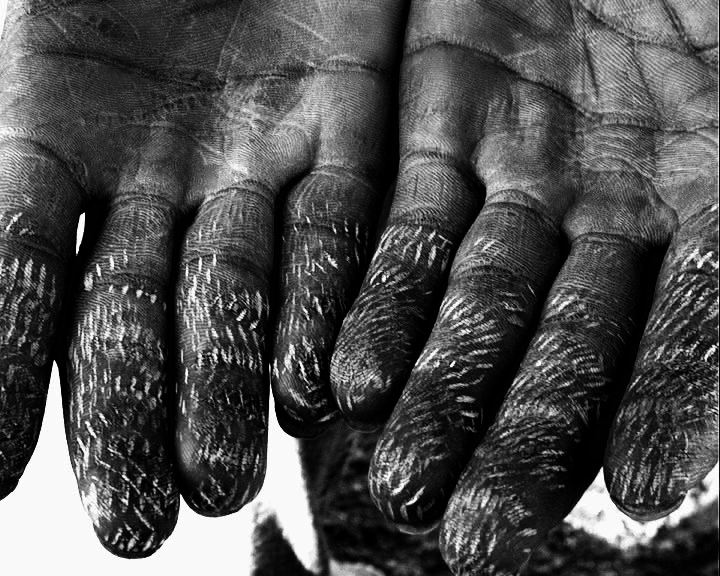
sylvain-george-qrer-doigts-brules.jpg

Notes on cinema and politics

It’s not enough to make political films, films must also be made politically. This dictum by Jean-Luc Godard reflects the longstanding tension between politics and cinema. It’s part of the introduction to his “What is to be done?” manifest from 1970, a sharp-toned piece which references Bertolt Brecht, Dziga Vertov and Vladimir Lenin, summarising the fundamental differences between the two above-mentioned notions in forty points. “For the first”, writes Godard, “it is enough to only open the eyes and the ears. The second means to be militant”. The combative tone illustrates the attitude of the French cinephile milieu at the time, which after the revolutions of May 1968 and the following disenchantments would see the need of taking an outspoken political role, parallel to a growing realisation that cinema – their idea of cinema –had become a shadow of what it once had been, or could have been. This was the time during which Godard and the editorial staff at Cahiers du Cinéma sought solace in Maoism; a short-lived impulse that would later be dismissed as “naive”, but which is indicative of the perceived failure of the great utopias that had characterised French left-wing thinking since the Liberation. The Prague Spring, Salvador Allende’s “Chilean experiment” and the Soviet version of communism had all failed and the idea of revolution seemed to be reduced to a selling slogan in the capitalist mindset. What was left was a great open void that seemed to be filled with nothing but bursts of violence, trivialisation and narcissism. The existing theoretical paradigms did not stand a chance: the interventions in the dialectic between ideology and representation, that had dominated the pages of Cahiers du Cinéma for years, came to nothing. The tragic events of the time demanded other forms of action and reflection, which more than ever needed to be directed to exploring and cultivating the political potential of cinema. In his first article as editor in chief of Cahiers in 1973 Serge Daney wrote: “For film-makers of all leanings, in this near-open battle, in their very craft of film-making, a single problem emerges: How can political statements be presented cinematically? How can they be made positive?”.

fenzsmall1.jpg

The critical attention of Daney and many others close to Cahiers, did not go out to the verification of the effectiveness of a given “militant” cinema (“all films are militant films”) but to the exploration of the relation between filmmaker and filmed subject. The favoured term was “point de vue” (point of view), which was interpreted in at least two different ways: on the one hand, as the application of a political discourse – which thus already exists before the film is made; on the other hand, as the position taken by the filmmaker, his crew and equipment during the shooting. In the context of a demonstration, a politically committed filmmaker will for instance always film from within the crowd, with the camera among the limbs, the flags and the cries of the demonstrators, contrary to the police or television, who tend to film the crowd from above (as if in order to count or – imaginary – machine-gun). The temptation was always high to dismiss that fundamental distinction as “political”, an argument that doesn’t hold up. What is here at stake is a question of morality: is the filmmaker aware of the camera’s power of intervention, interference and provocation? Can he be truthful to his ideas and yet be respectful to the images that he has made? This accent on the idea of the “point de vue” aligns with the long-time cinephile tradition of Cahiers du Cinéma, based on the idea that each cinematographic work represents a voice and a standpoint, a vision of the world that at the same time legitimises and organises the work. It is not enough to simply emphasize what is being told in a film, it is at least as important to lay bare where, when and by whom it is told. There can be no “énoncé” (statement) without “énonciation” (enunciation). In other words, the unquestioning belief in the intrinsic power of an idea is under no circumstances enough to settle a (political or ideological) argument. In Daney’s words: “We have to know that today the struggle must encompass point of view as well as choice of subject. As our Italian comrades of La Commune remind us: ‘It is not enough to counter the false statements of the bourgeoisie. In and through our own statements we must convey a different view of the world.”

je-me-suis-arme-contre-la-justice-3.jpg

In the light of this understanding of the notions of politics and cinema, the traditional distinctions between documentary and fiction can no longer be sustained – the “framing” of reality always implies a form of fiction – but neither can the distinction between “mise en scène” (as in: staged, constructed) and the so called “direct” filmmaking (as in: from “real” life). For Daney, “bourgeoisie does not only hold the monopole of the images of reality, it also has the monopole of the mise en scène of that reality. A city, a film theatre, a public space… are already ‘mises en scène’. There is already a given use of time and space that is laid out by obligatory paths to be followed, thresholds, out of bounds”. There is no “real” world, only a configuration of what is established as real, a system of coordinates that philosopher Jacques Rancière refers to as a “police order”: an order of bodies that defines what we do and what we don’t, and assigns those bodies to a particular place and function. It is an order of the visible and the sayable that sees that a particular activity is visible and another is not, that one speech is understood as discourse and another as noise. It’s this “mise en scène”, more powerful because we are barely aware of it, that inevitably predetermines and conditions how and what to behold and film. The opposite of a mise en scène is thus not a pure, non-manipulated, direct take, but another mise en scène. The opposite of a direct take is not a mise en scène, but another take. “Another” in the sense that it makes a new perception possible. “Another” in the sense that the filmmaker takes a new position – spatially, morally, politically – in regards to what he films. It’s here that the potential of true politics resides: in breaking with the self-evidence of the “natural” order – that pushes people and things to certain positions, pins them down on a determinate time and space, assigns them to specific ways of being, seeing and saying – by reframing the given mise en scène, in search for alternative partitions of time and space, new configurations of the visible and the invisible, of speech and noise. Rancière has a word for this: dissensus.

part_4_greenville_ms_fenz.jpg

The greatest danger of our time, according to Rancière, is consensus. The term does not simply mean the agreement of political parties or social partners about the common interests of a community, it implies the resolute abolition of every form of political subjectivity, of every possibility of breaking through the dominant categories of classification and identification. By objectivising the conditions of any possible collective situation, every dispute is fundamentally neutralised: what is left are endless arguments over the administration and configuration of who and what has already been given a place and function. In other words, consensus is what reduces politics to police. Consensus, as a form of government, reduces the role of the state to that of regulating and controlling identities, space and movements, a stalemate which is greatly determined by the global economical order. As states have less control over the circulation of capital, they fall back on what is still within their power: the circulation of persons. This control, in permanent conflict with all the identities that it has not created itself, is today not only one of the principal tasks of the state; it is becoming its essential raison d’être. The recent hardening of immigration policies in many European countries and its resulting forms of stigmatisation and discrimination illustrate what has grown to become the ultimate trading mark of the consensual state: the management of (in)security. Only in the moments when the ranks are broken, when those who don’t have the right to speak raise their voices (“Nous ne sommes pas en trop, nous sommes en plus” – “We are not surplus, but a plus”), when those who don’t count make their existence known (“On est ici, on est d’ici” – “We are here, we are from here”), on those moments when the dreadful contradictions and logics of the dominant order are brought to light, only then politics becomes possible. In that sense politics always implies resistance. A resistance that is born in the refusal to accept the place that has been assigned to people and things. Politics assumes dissensus: two worlds in one.

npsvn-victoire-poing-croise.jpg

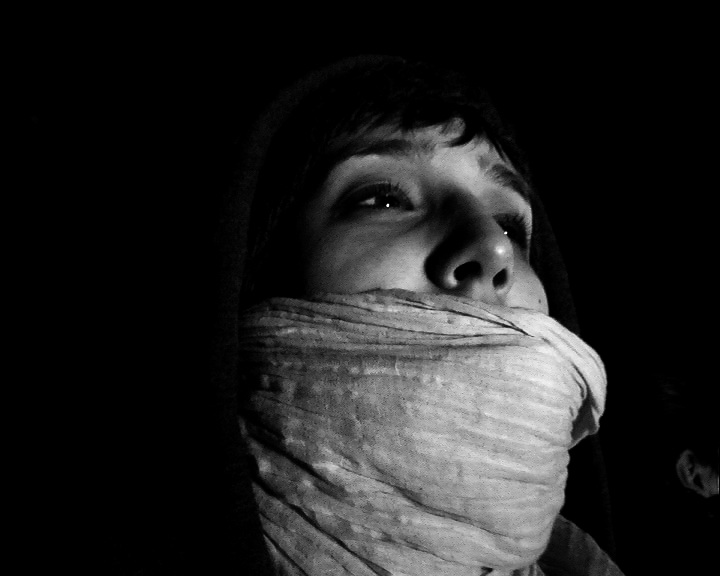
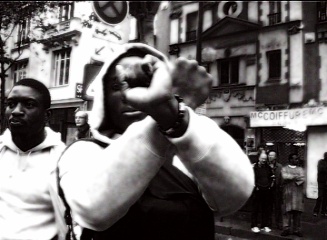
Politics situates itself not in the administration and the demonstration of the apparatus of power but in the gestures, glimpses and cries of those who are not recognised by the same apparatus. It’s in this intersection of politics and aesthetics that the work of French filmmaker Sylvain George is to be found: in the struggle of the “nouveaux damnés” (“the new damned”), trapped between the rule and the exception: the outcasts, the unemployed, the “sans papiers”, the young with no voice and even less perspectives; they who are regarded within the dominant socio-political order as “surplus”: included but not belonging. But George is not the sort of filmmaker to embellish his sympathy with an overflow of commentary and explanation, nor to fall into a pedagogical ceremony of misery and sorrow. Instead of organizing his formal strategies around the worn out strategies of causality and narrative, structure and texture are put in the service of allegorical examinations where people and things have their full potential restored. Rancière writes that cinema “must agree to be the surface upon which the experience of people relegated to the margins of economic circulations and social trajectories try to be ciphered in new figures”. It is not the task of art and cinema to endorse the self-evidence of the “real”, but to seize the relation between reality and signification, between appearing and being. In the words of filmmaker Philippe Garrel, there is certainly “a solidarity between real artists and revolutionaries, because they both refuse ordinary identifications.” In the films of George representation tears itself off from itself, in search for new figurations, new trajectories between what we see and what we know. Fable-like figures, worn faces, burned hands: the body constantly takes up the space of the image, but always resisting recognition, always on the verge of disappearance. It is the perceptible tension between the visible and the invisible, presence and absence, individual and collective, that leads us to a confrontational awareness: here is life.

sylvain-george-qrerjeune-homme.jpg

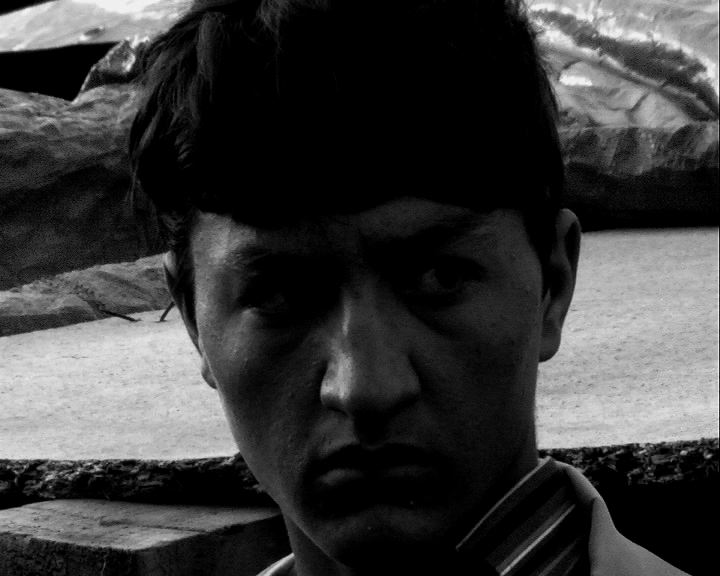
“Ce qui n’a jamais été vu, n’est pas reconnu” (“What hasn’t been seen, cannot be recognised”) wrote once Daney. The consequence is clear: “on a un manque d’image” (“we have a shortage of images”). The problem is not, as it’s generally considered, that there are too many images; on the contrary: there can never be enough. The problem is that there are too few images that contest the dominant mise en scène, too few that give visibility to what is ignored by the dominant order; too many of the same, too little of the “other”. It’s not that there are no images of grief, violence, injustice and revolt; on the contrary, we get to see them regularly in the countless news reports and current affairs television shows self-evidently presenting us the state of the world. But they are always overshadowed by the faces and the voices of those who fabricate the news, those who speak with authority, the newsmakers, politicians and specialists. These are their images: their effigies that validate their words, their selection of visibilities that their words designate as relevant and in turn validate the same words. It isn’t that we don’t get to see any suffering or struggling people. But what we see are far too often bodies without a name, too many faces that do not return the gaze that we direct at them, too many voices that are spoken about, but who don’t get the chance to speak themselves. What Sylvain George’s images do is let these bodies speak for themselves: words of fire and dream, gestures of rage and despair. The spontaneous outbursts of resistance in a Paris neighbourhood in N’entre pas sans violence (2007), the voicing of hope and desperation in the harbour city of Calais in Qu’ils reposent en révolte (des figures de guerre) (2010): these are the stories of a few, who stand for the stories of many. For if there is something that we should retain, this is it: everyone has a story.

ea06-figure-5.jpg

“Aesthetisising” is a grievance often heard referring to the portrayal of misery. Making “beautiful” images in the light of the intolerable can only indicate indifference, or even worse, a gesture of “populism”. This line of thinking is the consequence of using simplistic oppositions between wealth and misery, between passivity and involvement, between what is given and what is seized. The question of aesthetics is not a matter of choosing a certain formula in order to grasp the hard “reality”. It’s a question of searching for a relation to the configuration of space and the rhythm of time, a question of experiencing and grasping the energy that space and time hold, a question of “point de vue”. This is the attitude that is imbedded in Sylvain George’s images. There is no trivial formalism hidden in the way he pays attention to the wealth of the landscapes surrounding the refugees in Qu’ils reposent en révolte; there is no cheap populism hidden in the patience with which he listens to their stories. Everything that is seized, is given back: the misery of the world, the power of speech, the possibility of resistance. This is a poetry of exchange that is also present in the films of American filmmaker Robert Fenz. His work displays a conviction that the real is not a “given”, the real can only be “framed”. That’s why the inclination to naturalism is foreign to him, as it would only be a confirmation of the dominating mise en scène. The challenge is to break though this order, to disclose it, to fracture it. “Realism must always be won”, according to Daney. Hence Robert Fenz’s preferred use of grainy black&white 16mm film, against the naturalistic impulses of the audiovisual industry. Hence his restless passion for the frame – the passion of a cameraman who understands that filming amounts to choosing. The frame, in André Bazin’s words, is a “mask”, hiding all what happens outside of it. But in Fenz’s films, the frame is much more than a delimitation of the visible: it’s an invitation to the invisible.

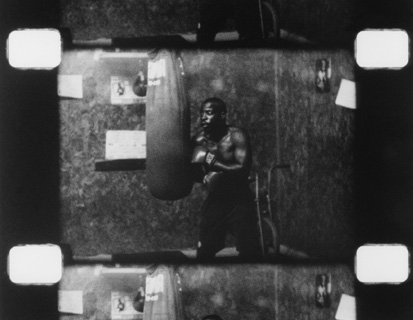
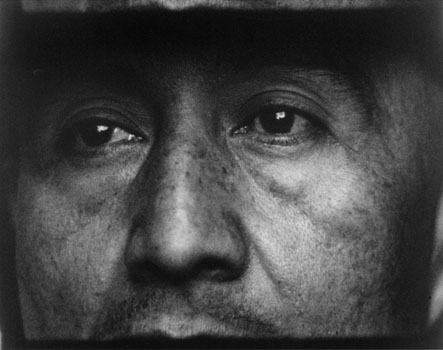
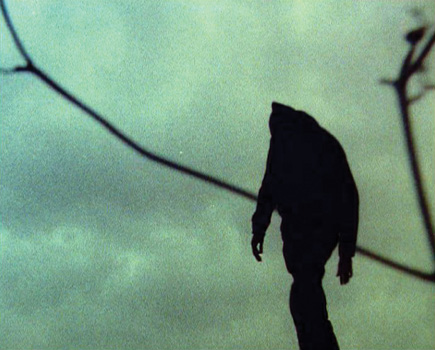
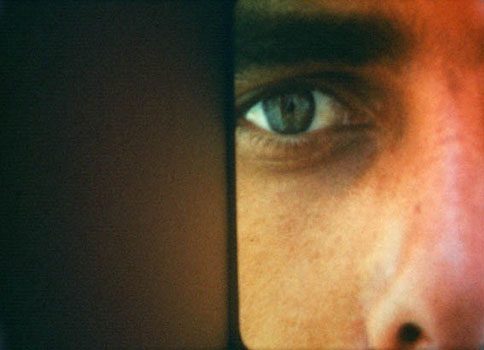
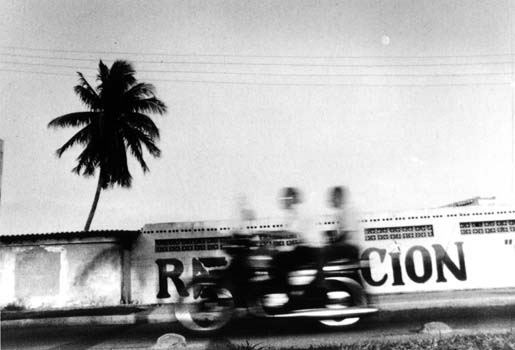
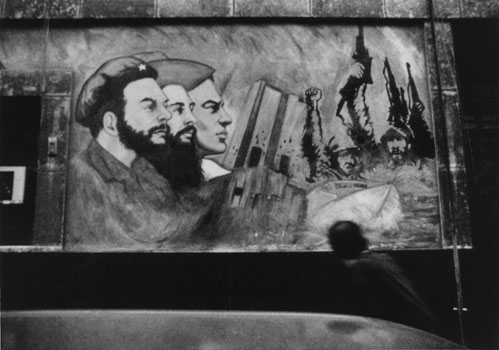
fenzsmall4.jpgMeditations on Revolution (1997- 2003) is the title of a series of films that represent the heart of Fenz’s oeuvre. “Revolution” does not refer here to the overthrow of a form of state, but to the countless nameless revolutions inscribed in rural and urban spaces, steeped in hollowed and smiling faces, dancing on the rhythms of a world in constant transition. “Revolution” takes here the form of a sensible world. A dance lesson in the bustling streets of Havana, children playing in a shanty town in Rio de Janeiro, the hard-trained torso of a boxer in Greenville, Mississippi, the proud but fatigued monologue of a jazz musician (the late Marion Brown) in New York: the politics of Fenz’s films does not lie in lecturing on economical or geo-political issues, but in the reframing of bodies, the world they live in and the place that they take in that world. Politics resides in the confrontation of power and impotence, reality and possibility, inside and outside, “here” and “there”. It lies in the way films are made. “Say how things are real”, as Godard proclaims, is what making political films implies. Making films politically: “to say how things really are”.
Sylvain George and Robert Fenz are two of the “Artists in Focus” on the Courtisane Festival 2011.

Translated from Dutch by María Palacios Cruz
Images are taken from various films by Robert Fenz and Sylvain George

Change the World

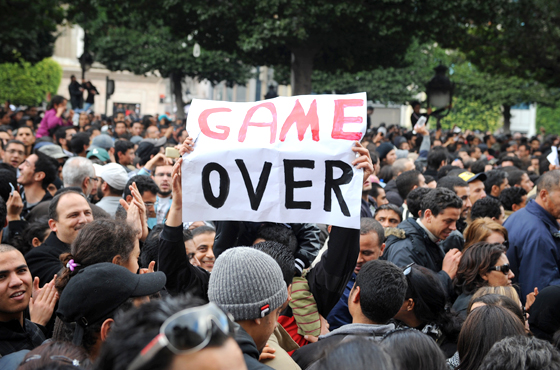
tunisia-riots-17012011-03.jpg

Are we in a time of riots? Below you’ll find a rough translation of Daniel Fischer’s transcription of the 19 January 2011 session of Alain Badiou’s seminar Que signifie « changer le monde » ? (What does “change the world” mean?), as found on Jonathon Collerson’s blog. “It is not something Badiou has written out. Nevertheless, it gets across his, apparently, impromptu comments on Tunisia, riots and revolution. It appears that Badiou correctly places the riot at the gateway of revolution and, in calling Tunisia “the weakest link” (Lenin re. Russia 1917), correctly notes the beginning of massive change in the Middle East. Daniel Fischer’s excellent notes are great resource on Badiou’s developing thought.”

Today I’ll talk to you about the riots in Tunisia. We won’t leave the subject of this year’s seminar — What does “change the world” mean? – an expression whose ambiguous character I’ve already described to you.

If by “riots” we mean the street actions of people who want to overthrow the government by means of varying levels of violence, we must at once emphasise what makes these Tunisian riots rare: they have been victorious. A regime seemed securely in place for 23 years and here it is overturned by a popular action which, ipso facto, retroactively establishes it as the “the weakest link”. Why should we analyse this phenomenon, when we could just let ourselves rejoice? A vague uneasiness makes itself felt in the requisitely contented character, let’s call it a consensual character, that must be displayed in spite of the inherent illegality of the events concerned. Today it isn’t easy to declare: “I love Ben Ali, I’m truly heartbroken that he must leave power.” When one says that, one finds oneself in a very bad position. The reason we must pay tribute to minister Alliot-Marie, who publicly regretted her delay in putting the “know-how” of the French police force at the service of Ben Ali, is that she expressed aloud what her political colleagues only whispered. Next to her, Sarkozy is a hypocrite and a coward. Just as everyone, Right and Left, who, in only a few weeks, were congratulating themselves on having Ben Ali as a solid bulwark against Islamism and an excellent pupil of the West, are today forced, because of a consensus of opinion, to pretend to rejoice in his departure, tail between legs.

Once again: a government overthrown by popular violence (and in particular by the young, who spearheaded it) is a rare event for which you must go back thirty years if you want to find a comparable precedent, namely to the Iranian Revolution (1979)*. Thirty years during which the dominant conviction was that such events were no longer really possible. The thesis of “the end of history” made this claim. That thesis obviously didn’t mean that nothing more would happen: “the end of history” meant “the end of events in history [l’événementialité historique]“, the end of a moment where the organisation of power could be overthrown in favour of, as Trotsky said, “the masses entering on the stage of history”. The normal course of things was the alliance of the market economy and parliamentary democracy, an alliance that was the only tenable norm of the general subjectivity. Such is the meaning of the term “globalisation”: this subjectivity became global subjectivity. Furthermore, this wasn’t incompatible with punitive wars (Iraq, Afghanistan), civil wars (in dysfunctional African states), repression of the Palestinian Intifada, &c. So what is fascinating above all else in the Tunisian events is their historicity, they demonstrate that the capacity to create new forms of collective organisation is intact.

The ensemble formed by the market economy and parliamentary democracy, an ensemble given as an insuperable norm, I propose to name: “the West” – and this is what it calls itself. Among the other names in circulation, we note “international community”, “civilisation” (where it is opposed to, as its right, the diverse forms of barbarism, cf. the expression “clash of civilisations”), “Western powers” … Remember that more than thirty years ago the only group who claimed this name — “Occident” — as their standard was a small group of fascists weilding iron bars (with whom I had to deal in my youth). That a name’s referent can change so dramatically can only mean that the world itself has changed. The world no longer has the same transcendental.

Are we in a time of riots?

You could think that, seeing recent events in Greece, Iceland, England, Thailand (the coloured shirts), the hunger riots in Africa, the considerable workers’ riots in China. Also in France, there is something like a pre-riot tension; through phenomena like the factory occupations, people are on the verge of accepting riots.

As an explanation, there is of course the systemic crisis of capitalism that became visible two or three years ago (and is far from finished) with its procession of social impasse, poverty, and the growing feeling that the system is not viable nor as magnificent as was previously said; the vacuity of political regimes has become manifest, service to the economic system is their only purpose (the “save the banks” episode was particularly demonstrative), which contributes greatly to their discrediting. In the same period, and precisely because they are the operators of systemic survival, states have taken dramatically reactionary measures in more and more areas (railways, post, schools, hospitals…).

I’d like to try and locate these phenomena in the framework of a historical periodisation. In my opinion, the rioters’ disposition arises in interval periods [périodes intervallaires]. What is an interval period? There is a sequence in which revolutionary logic is clarified and where it explicitly presents itself as an alternative, succeeded by an interval period where the revolutionary idea has not been passed on to anyone [déshérence], and in which it hasn’t yet been taken up, a new alternative disposition has not yet been formed. During such periods the reactionaries can say, precisely because the alternative is impaired, that things have returned to their natural course. Characteristically, this is what happened in 1815 with the restorers of the Holy Alliance. In interval periods, discontent exists but it can’t be structured because it is unable to draw its force from a shared idea. Its power is essentially negative (“make them go away”). This is why the form of mass collective action in an interval period is the riot. Take the period 1820-1850: it was a grand period of riots (1830, 1848, the revolt of the Canuts of Lyon); but it doesn’t mean they were sterile, they were haphazard [aveugle] but very fertile. The great global political orientations that were the hinge [vertébré] of the next century emerge from that period. Marx says it well: the French workers’ movement was one of the sources of his thought (beside German philosophy and English political economy).

What are the criterion for evaluating riots?

The particular problem of the riot, in as much as it calls state power into question, is that it exposes the state to political change (the possibility of its collapse), but it doesn’t embody this change: what is going to change in the state is not prefigured in the riot. This is the major difference with a revolution, which in itself proposes an alternative. That is the reason why, invariably, rioters have complained that a new regime is identical to an old one (it’s model, after the fall of Napoleon III, is the constitution on 4 September of a regime made up of the old political staff). Notice that the party, of the type [concept] that was created by the RSDLP then by the Bolsheviks, is a structure explicitly designed to constitute itself as an alternative power in place of the state. When the figure of the rioter becomes a political figure, i.e. when it has in itself the political body that it needs and recourse to an inveterate politics [aux vieux chevaux de la politique] becomes useless, we can say that that moment there is the end of the interval period.

To return to the Tunisian riot, it is very likely that it is itself going to continue – and divide itself – by proclaiming that the figure of power that will be in place is so disconnected from the popular movement that it doesn’t want it either. On what criteria, then, can we evaluate the riot? In the first place, one must have a definite empathy towards the riot, this is an absolutely necessary condition. Another criterion is the recognition of its negative power, the hated power collapses at least symbolically. But what is affirmed? The Western press has already responded by saying that what was expressed there was a desire for the West. What we can affirm is that a desire for liberty is involved and that such a desire is without debate a legitimate desire under a regime both despotic and corrupt as was that of Ben Ali. How this desire as is a desire for the West is very uncertain.

It must be remembered that the West as a power has so far given no proof that it cares in any way at all about organising liberty in the places where it intervenes. The account of the West is: “are you walking with me or not?”, giving the expression “walk with me” a signification internal to the market economy,** if necessary in collaboration with counter-revolutionary police. “Friendly countries” like Egypt or Pakistan are just as despotic and corrupt as was Tunisia under Ben Ali, but we’ve heard little expressed about it from those who have appeared, on the occasion of the Tunisian events, as ardent defenders of liberty.

How can we define a popular movement as reducible to “a desire for the West”? We could say, and this definition applies to any country, that it involves a movement that realises itself in the figure of the anti-despotic rioter whose negative and popular power takes the form of the crowd and whose affirmative power has no other norm than those the West invokes. A popular movement meeting this definition has every chance of ending in elections and there is no reason for another political perspective to develop. I claim that at the end of such a process, we will have witnessed the phenomena of Western inclusion. For what we call the Western press, this phenomena is the ineluctable result of the riot’s development.

If it is true that, as Marx predicted, the space where emancipatory ideas are realised is a global space (which, incidentally, wasn’t the case with the revolutions of the Twentieth Century), then the phenomena of Western inclusion cannot be part of genuine change. What would genuine change be? It would be a break with the west, a “dewesternisation”, and would take the form of an exclusion. A dream, you are thinking; but it is precisely a dream typical of an interval period like ours.

If there were a different evolution than the evolution toward Western inclusion, what could that attest to? No formal response can be given here. We can simply say there is nothing in the analysis of the state’s process which, through long and torturous necessity, will eventually result in elections. What is required is a patient and careful inquiry among the people, in search of that which, after an inevitable process of division (because it is always the Two that carries a truth, and not the One), will be carried by a fraction of the movement, namely: declarations [des énoncés]. What is stated can by no means be resolved within Western inclusion. If they are there, these declarations, they will be easily recognisable. It is under the condition of these new declarations that the development of the organisation of figures of collective action can be conceived.

We return, to conclude, to empathy. The lesson to draw from the Tunisian events, the minimal lesson, is that what appears as unfailing stable can itself in the end collapse. And that is reassuring, very reassuring (Et ça, ça fait plaisir, et même très plaisir).

— Badiou ended the lecture with a poem by Bertold Brecht’s “In Praise of Dialectics”:

Today, injustice goes with a certain stride,
The oppressors move in for ten thousand years.
Force sounds certain: it will stay the way it is.
No voice resounds except the voice of the rulers

And on the markets, exploitation says it out loud:
I am only just beginning.

But of the oppressed, many now say:
What we want will never happen

Whoever is still alive must never say ‘never’!
Certainty is never certain.
It will not stay the way it is.

When the rulers have already spoken
Then the ruled will start to speak.
Who dares say ‘never’?

Who’s to blame if oppression remains? We are.
Who can break its thrall? We can.

Whoever has been beaten down must rise to his feet!
Whoever is lost must fight back!
Whoever has recognized his condition – how can anyone stop him?
Because the vanquished of today will be tomorrow’s victors
And never will become: already today!

(Translation: David Riff)

* The fall of the communist regimes of Eastern Europe 20 years ago is not comparable. They fell with the consent of the USSR, this was symbolised in a meeting between the East German leader Honecker and his Russian guardians: when he asked their permission to fire on the crowd (a necessary step for him), he was refused this permission. Change to the communist power structure was made by the same apparatchiks who installed themselves at the head of what remained of their system before it imploded.

** [trans.] The French verb ‘to walk’ is marcher and the French for Market Economy is l’économie de marché; Badiou is playing on marcher and marché here.

Racism: A Passion from Above

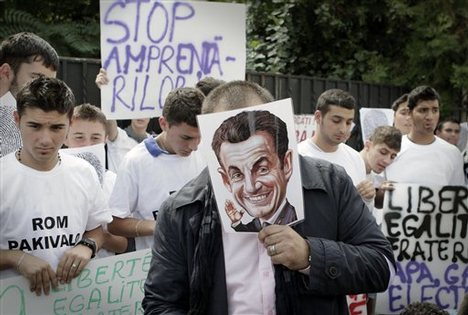
roma.jpg

“Il serait peut-être temps de réorienter la pensée et le combat contre une théorie et une pratique de stigmatisation, de précarisation et d’exclusion qui constituent aujourd’hui un racisme d’en-haut: une logique d’Etat et une passion de l’intelligentsia”
– Jacques Rancière, 11 September 2010

This is a thought-provoking piece by Jacques Rancière, based on a talk he gave during the conference ‘Les Roms, et qui d’autre?‘ (“The Romas, and Who Else?”. Montreuil, 11.09.2010), which was organised in response to the French government’s expulsions of Romas from its territories, as well as the broader processes of ethnicisation, racialisation and securitization enforced by the French political administration. Both this translated version and the original French text (“Racisme, une passion d’en haut”) were published by Mediapart.

“I would like to propose a few thoughts concerning the notion of “state racism,” which is on the agenda for our meeting today. These thoughts counter a very widespread interpretation of the measures recently taken by our government, including the law [of 2004] banning the Islamic headscarf in public schools and the deportations of Romas in summer 2010. That interpretation sees in these measures an opportunistic exploitation of racist and xenophobic themes for electoral purposes. This purportedly critical attitude thus clings to the premise that racism is a popular passion – the frightened and irrational reaction of the reactionary strata of the population, which is unable to adapt to the new mobile and cosmopolitan world. The state is accused of betraying its principles by indulging those populations. Its position as the representative of rationality in the face of popular irrationality is thereby consolidated.

Now, this view of the game adopted by supposedly leftist critics is exactly the same one the right has used to implement certain racist laws and decrees over the last 20 years. All these measure have been taken in the name of the same rationale: there are problems of delinquency and other threats because of immigrants, including illegal immigrants, and these are in danger of unleashing racism unless measures to restore order are taken. Consequently, this delinquency and these threats must be subject to the law’s universality so that they do not create racist disturbances.

That’s the game that has been played out on the left as well as the right ever since the Pasqua-Méhaignerie laws of 1993. It consists of counterposing the universalist logic of the rational state to popular passions, that is, giving racist state policies anti-racist credentials. It’s high time to turn the argument around and note the close correspondence between state “rationality” used to justify these measures and the convenient “other” or complicit adversary the state proposes as a foil: popular passion. What we see in fact is not the government acting under the pressure of populist racism and in reaction to the so-called populist or far-right passions. Rather, it’s state policy that fosters the image of this “other” to which it confides imaginary responsibility for its real legislation.

Fifteen years ago, I proposed the term “cold racism” to designate this process. The racism we are dealing with today is a deliberate racism, an intellectual construction. It is primarily a creation of the state. In this gathering, we’ve discussed the relationship between the rule of law and the police state. But it’s in the very nature of the state itself to be a police state, that is, an institution that determines and controls identities, space and movements – an institution in permanent struggle against any surplus of identities beyond those it creates, and thus, as well, against the surplus of identity logics affirmed through the action of political subjects. The global economic order only makes the state’s labors in this area more insistent. Our states are ever less able to counter the destructive impact of the free circulation of capital on the communities for which they are responsible. They are all the more unable in that they have no desire whatsoever to do so. They, therefore, fall back on what is within their power: the circulation of persons. They make the control of this other circulation their specific object, and define as their objective the security of their nationals threatened by these migrants. In more precise terms, they are engaged in the production and administration of insecurity, this work becoming more and more their raison d’être and the means of their legitimation.

Hence their use of the law fulfills two essential functions: an ideological function, which is to constantly provide the subject that threatens security a face; and a practical function, which is to constantly reorganize the border between the inside and the outside and to constantly create floating identities, which can make what was once inside fall outside. Legislating on immigration meant, first of all, creating a category of sub-French and making people who were born on French soil of French-born parents fall into the floating category of immigrants. Legislating on illegal immigration meant making legal “immigrants” fall into the category of illegals. It’s the same logic again that dictated the recent use of the notion of “French of foreign origin.” And it’s the same logic that targets the Romas today, by creating – against the very principle of free circulation of persons within the boundaries of Europe – a category of Europeans who aren’t really Europeans, just as there are French who are not really French.

To create these suspended identities, the state does not trouble itself about contradictions, as we’ve seen with its measures concerning “immigrants.” On the one hand, it creates discriminatory laws and forms of stigmatization based on the idea of citizen universality and equality before the law. Those whose practices are said to oppose citizen equality and universality are, thus, punished and/or stigmatized. On the other hand, within this citizenship – supposedly identical for all persons – it creates discriminatory categories such as those that distinguish French “of foreign origin.” Consequently, on the one hand, all French citizens are the same and woe to anyone who is not; on the other hand, all citizens are not the same and woe to anyone who forgets it!

Thus, today’s racism is a rationalization of the state and not a popular passion. And this state logic is sustained in the first place not by who-knows-what retrograde social groups, but by a good portion of the intellectual elite. The most recent racist campaigns were not at all the product of the so-called “populist” far right. They were conducted by an intelligentsia which claims to be leftist, republican and secular. Discrimination is no longer based on arguments about superior and inferior races. It is supported on the basis of the struggle against “communitarianism” [i.e. the particularism of ethnic or religious communities] on the basis of the universality of the law, the equality of all citizens in the eyes of the law and equality between the sexes. Here again, its proponents don’t trouble themselves too much over the contradictions; they don’t otherwise show much concern with equality or feminism. In fact, the argumentation has the effect above all of creating the composite stereotype necessary to identify undesirable subjects: thus, the conflation among migrant, immigrant, reactionary, Islamist, male chauvinist and terrorist. The reference to universalism is, in fact, manipulated to the benefit of its opposite: the establishment of a discretionary state power to decide who belongs or doesn’t belong to the class of those who have the right to be here – the power, in short, to confer or cancel identities. Correlative to this power is the power to force individuals to be identifiable at all times, to confine themselves to a place of full visibility by the state. It is worth reviewing from this perspective the solution the government found to the legal problem posed by the prohibition of the “burqa” or “full Islamic veil.” It was, as we saw, difficult to enact a law that specifically targeted a few hundred people of a particular religion. The government found the solution: a general prohibition of covering one’s face in public through a law that simultaneously targets the woman wearing a full veil and the demonstrator wearing a mask or a scarf. Thus, the headscarf becomes the common emblem of the backward Muslim and the terrorist agitator. It was “republican” thought that provided the formula for that solution, adopted – like a great many other immigration measures – with the benevolent abstention of the “left.” Let us remember the furious diatribes of November 2005 against masked and hooded youth acting by night. Let us also remember the triggering event of the Redeker Affair, in which philosophy professor Robert Redeker was threatened by an Islamic “fatwa.” His pretext for his vehement anti-Muslim diatribe was … the ban on wearing g-strings when Paris turned the banks of the Seine into a public beach. In this prohibition by Paris city hall, Redeker detected a measure of deference to Islamic fundamentalism and to a religion whose potential for hatred and violence was supposedly demonstrated by its prohibition of being naked in public. The noble talk of secularism and republican universalism in the end boil down to the principle that one ought to be entirely visible in public space, whether it’s paved or sandy.

In conclusion: much energy has been spent combating a certain kind of racism as embodied in particular by the National Front, and a certain conception of racism as the expression of white “rednecks” (“petits blancs”) representing the backward strata of society. A good part of that energy has been channeled into constructing the legitimacy of a new form of racism: state racism and “left” intellectual racism. Perhaps it’s time to direct our thought and struggle against a theory and practice of stigmatization, marginalization and exclusion that today constitute a top-down racism (“un racisme d’en-haut”): a rationalization of the state, a passion of the intelligentsia”.

Courtisane 2011 Artists in Focus

aifsylvain3.jpg

I’m very happy to announce we will have three amazing “Artists in Focus” as guests on next year’s Courtisane Festival, which will take place from Wednesday March 30 until Sunday April 3 2011, in various locations in Ghent (Belgium). These artists-filmmakers will present a combination of their own work – as screening and/or performance, in collaboration with selected musicians – and their personal sources of inspiration.

Here’s a preview. More news on the full programme will soon be available on www.courtisane.be.

aifbeavers.jpg

Robert Beavers (1949, Brookline, Massachusettes) is considered as one of the most important avant-garde filmmakers from the second half of the 20th century. He’s also the most European of American artist filmmakers, since he has been living and working in Europe since 1967, shooting most of his films travelling between Italy, Greece and Switzerland, where the Temenos Archive is located. Founded by Beavers and the late Gregory Markopoulos, this archive preserves the entirety of their film oeuvre as well as all related documentation material. Until the late 1990s, Beavers rarely presented his films, but recently restorations of his films have been shown at the Austrian Film Museum in Vienna, Tate Modern in London, the Berkeley Art Museum and Pacific Film Archive in Berkeley and the Whitney Museum of American Art in New York. Having lived briefly in Belgium in the late sixties, this will be the first time in several decades that his work is screened here. “Since leaving the USA in 1967, Robert Beavers has laboured in relative isolation on works whose goal ‘is for the projected film image to have the same force of awakening sight as any other great image.’ His meticulously crafted films are at once lyrical and rigorous, sensuous and complex. Whilst communicating his response to the landscapes, architecture and traditions of the Mediterranean and Alpine countries in which they were filmed, they also incorporate deeply personal and aesthetic themes. Rarely seen in public, Robert Beavers’ remarkable body of work is a celebration of light, life and colour.” (Mark Webber)

A selection of Robert Beavers’ work will be shown as part of the Courtisane festival in Ghent. The week after he will present several programs of his films at Cinematek, the screening theatre of the Belgian Royal Film Archive in Brussels.

Some texts, essays and interviews are available here and here

aiffenz.jpg

Robert Fenz (1969, Ann Arbor, Michigan) is among the more exciting and original young filmmakers working in and against the avant-garde tradition today. Fenz’s films, mostly shot in black and white 16mm, have a rare energy and restless beauty that recalls both the jazz-inspired imagery of New York School photographers such as Roy DeCarava and Aaron Siskin and the landscape films of one of Fenz’s former teachers, Peter Hutton. An inveterate traveler, Fenz has made films in Cuba, Mexico, Brazil and, more recently, India and France. His most celebrated work is the film cycle Meditations on Revolution, filmed over seven years (1997-2003), exploring the basic theme of revolution in its purest definition: the radical transformation of a subject from one state to another, and the various forms that transformation can take. Fenz has also worked as a cinematographer on several films including Chantal Akerman’s Là-Bas and De l’autre côté (From the Other Side) . He has recently finished two new films, one of which engages the cinematic legacy of anthropological filmmaker Robert Gardner.

Fenz’ cinematographic approach has been greatly informed by music, especially by jazz improvisation. One of his inspirators was composer and master improvisationalist Wadada Leo Smith (1941, Leland, Mississippi), whose incredible forty-year career has included performances and recordings with legendary musicians Anthony Braxton, Don Cherry and Cecil Taylor. “Studying music with Leo”, said Fenz in an interview,”reinforced my belief that I needed to go into the world with an idea – do research on a subject and arrive at a place where I would be prepared to adapt and change the film completely, in the moment”. The two met when Smith, who helms the CalArts program in African American Improvisational Music, taught the filmmaker. Later the trumpeter provided the soundtrack for Vertical Air (2000), one of Fenz’s best-known films. On the occassion of the Courtisane Festival, Wadada Leo Smith will perform live with a selection of Robert Fenz’ films.

Read an interview with Fenz and Smith here

aifsylvain2.jpg

Sylvain George (1968, Vaulx-en-Velin, France) started making films in 2004, after his studies in philosophy. His work, influenced in particular by the thinking of Walter Benjamin, combines formal experiment with militant commitment. “The idea”, he says, “is to make films that take a stand and assert a political position, and at the same time not to separate content from form; to be formally demanding and to manage to define an own view and grammar as a filmmaker.” Far away from any form of didacticism, his films depict and allegorise the struggles of the “nouveaux damnés”, trapped between the rule and the exception: the stateless, the clandestine, the precarious. Most of his films explore issues related to immigration. His most recent work, Qu’ils reposent en révolte (des figures de guerre), gives an account of the living conditions of migrants in Calais over a period of three years (2007-2010). “Politically speaking, it is about standing up, contesting these grey zones, these spaces or cracks like Calais standing somewhere between the exception and the rule, beyond the scope of law, where law is suspended, where individuals are deprived, stripped off their most fundamental rights. And that while creating, through some dialectic reversal, the “true” exceptional states. Space-time continuums where beings and things are fully restored to what they were, are, will be, could be or could have been”. Rebellion and redemption are at the heart of George’s films, which find, beyond the dominant order of the visible, true politics in the gestures, cries and bodies of those who are excluded.

Music is an important factor in the films of George, who especially likes to draw upon the ethos and energy of free jazz. On the occasion of the Courtisane Festival Qu’ils reposent en révolte (des figures de guerre) will be accompanied live by William Parker (1952, New York) for the first time. One of the most vital musicians in the experimental jazz scene in New York and beyond, Parker has played with various musicians such as Alan Silva, Rashid Ali, Cecil Taylor, Peter Brotzmann, Derek Bailey and Hamid Drake. His compositional skills span a range including operas, ballets and film scores. On the festival, Parker will play the double-bass solo, exploring the interface between bow and strings. As one commentator noted: “as if his bass were raw wood he was using to light an internal fire”.

More info on George can be found here

— The two performances are produced in collaboration with art centre Vooruit —