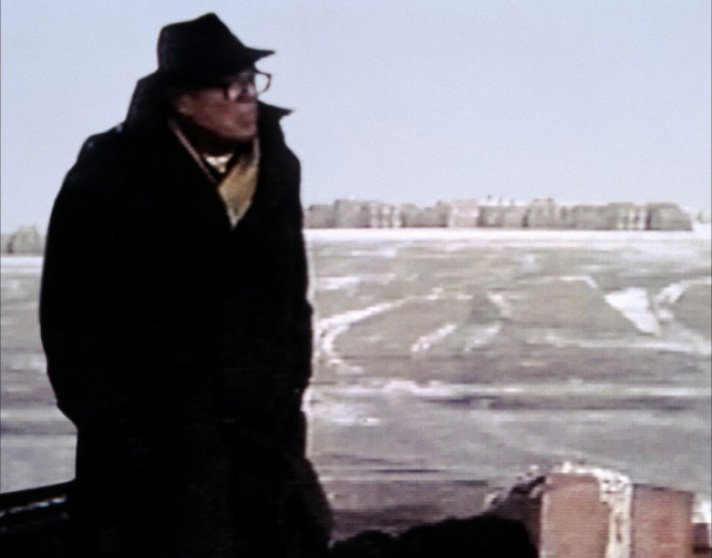
ARTIST IN FOCUS: Marcel Ophuls

veillee-d-armes-94-aff-01-g.jpg

In the context of the Courtisane festival 2013 (Gent, 17 – 21 April)

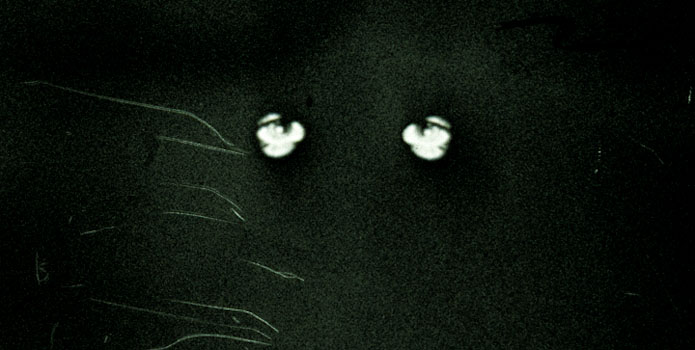
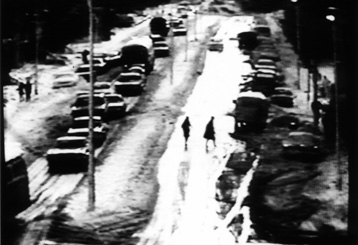
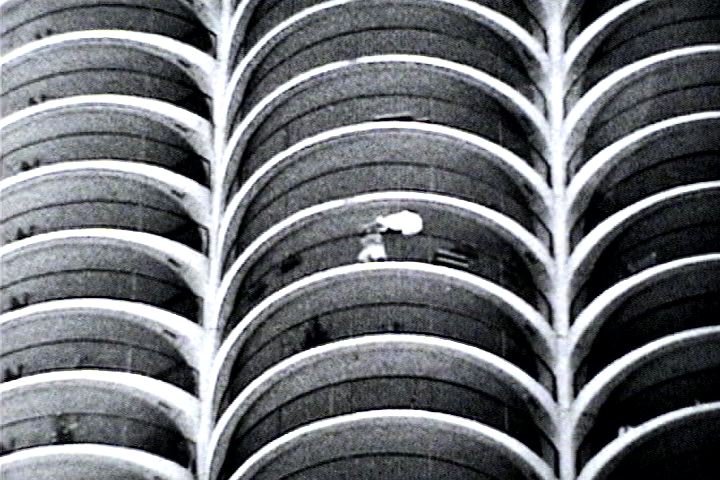
Resistance. If there is a single word that characterizes the work of Marcel Ophuls, this is it: resistance to every form of injustice and banalisation, resistance to the prevailing dogmas of documentary cinema. It is an attitude that is marked both by a whole-hearted abhorrence (for indifference) and by passionate love (for narrative film). The one is a response to his experiences during WW II, the other a legacy from his father, the famous director Max Ophuls. The result is an uncompromising cinema that for four decades has had no equal in blazing a trail through the 20th century’s shadowy realm: occupation and collaboration during the Vichy regime in Le Chagrin et la Pitié (1969), the Troubles in Northern Ireland in A Sense of Loss (1972), war crimes in Nazi-Germany and Vietnam in The Memory of Justice (1976), the siege of Sarajevo in Veillées d’armes (1994). Time and again, like a roguish Inspector Colombo, Ophuls makes his way through the heart of the conflict zone, in search of witnesses, in search of the story. Because Ophuls’s work primarily brings to mind the fact that the word “documentary” is always followed by the word “film”. This is a cinema that places structure above content, subjectivity above objectivity, discussion above pedagogy, a cinema that recognizes that documentary always equals “fiction” – a construction, a presence, a form. It is a cinema, finally, that refuses to make a distinction between “history” with or without a capital “H”, between a politics of the commonplace and the politics of the power apparatus, because that distinction, according to Ophuls, “forms the worst escape in life itself, the avoidance of every responsibility.”

——————————————————————————————————————————————————————-
memory.png

KASKcinema Thu 18 April 13:00

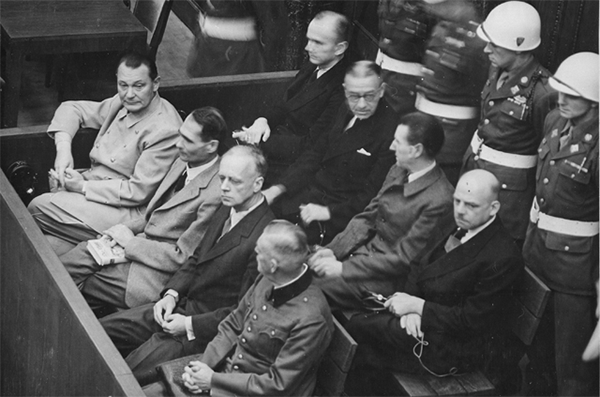
The Memory of Justice
1976, 35mm, color & b/w, various languages with English subtitles, 279′

The film uses Telford Taylor’s book Nuremberg and Vietnam: An American Tragedy as a point of departure in exploring wartime atrocities and individual versus collective responsibility. Divided into two parts – “Nuremberg and the Germans” and “Nuremberg and other places” – it builds into its very fabric the identity of the filmmaker. It’s not simply that we see him interviewing the subjects or feel his presence through intrusive editing; but Ophuls includes scenes with his German wife, his film students at princeton and even his grappling with cutting and arranging the overwhelming material. “I try to be autobiographical in Memory of Justice because of my wife’s childhood and my childhood – my reaction against what we feel has been misunderstood. I felt a great misunderstanding concerning The Sorrow and the Pity (the movie of my life, like Conan Doyle and Sherlock Holmes – I try to get rid of it, but it won’t go away): there is no such thing as objectivity! The Sorrow and the Pity is a biased film – in the right direction, I’d like to think – as biased as a western with good guys and bad guys. But I try to show that choosing the good guy is not quite as simple as anti-Nazi movies with Alan Ladd made in 1943.” (From an interview with Annette Insdorf, 1981)

——————————————————————————————————————————————————————-
sense.png

KASKcinema Thu 18 April 22:30

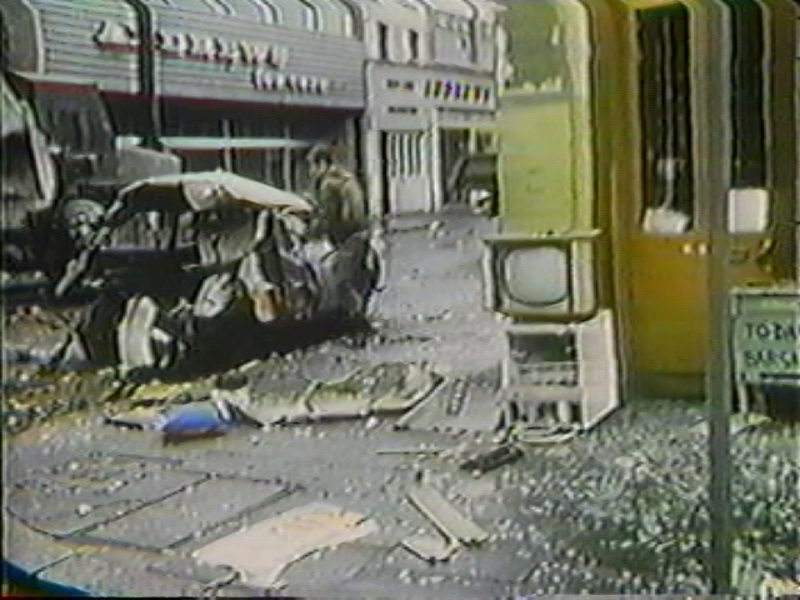
A Sense of Loss
1972, 16mm, color, English, 134′

Preceded by a talk between Marcel Ophuls & Eyal Sivan (KASK CIRQUE 20:00)

Ophuls’s self-described “film report” on the troubles in Northern Ireland. “The structure of the film was to start with the investigation of death, death in all its forms – death by the bomb, death by the bullet, the almost accidental death – and then to set out in search of who the individuals were, what their favourite record was, their favourite film, where they wanted to spend their holidays, etc.. All this to give the life of an individual some sense. It is individualistic and anti-generalizing, and in that sense almost an anti-ideological film. Consequently, what it is about is not just the structure of the completed film, but most of all a structure of research. It was indeed the case that in the chronology of filming, the ambulances were followed first, with a system of having previously established signals with the police, with the people of the IRA, with the people of the British army in order to know where a conflict was underway, where violence was taking place, where there was death, and always being on the alert, even at night in the hotel, to be able to be there in five minutes. It was only afterwards that we tried to identify the people, and the historic reasons, the ideological, sectarian aspects of this conflict. It is therefore the research structure that determines the structure of the film.” (from an interview with Lorenzo Codelli, 1973)

——————————————————————————————————————————————————————-
veillee-d-armes-1994-02-g.jpg

KASKcinema Fri 19 April 14:00

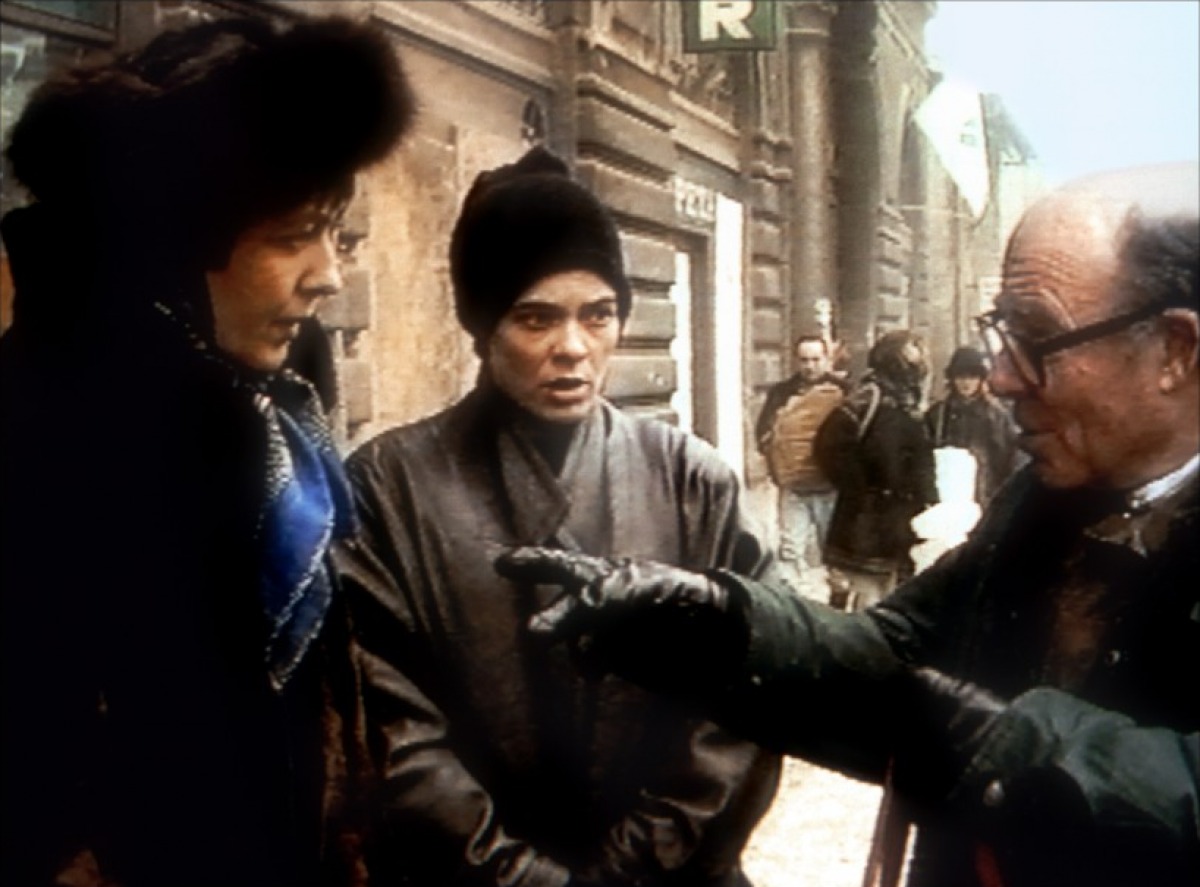
Veillées d’armes (The Troubles We’ve Seen)
1994, video, color, various languages with English subtitles, 234′

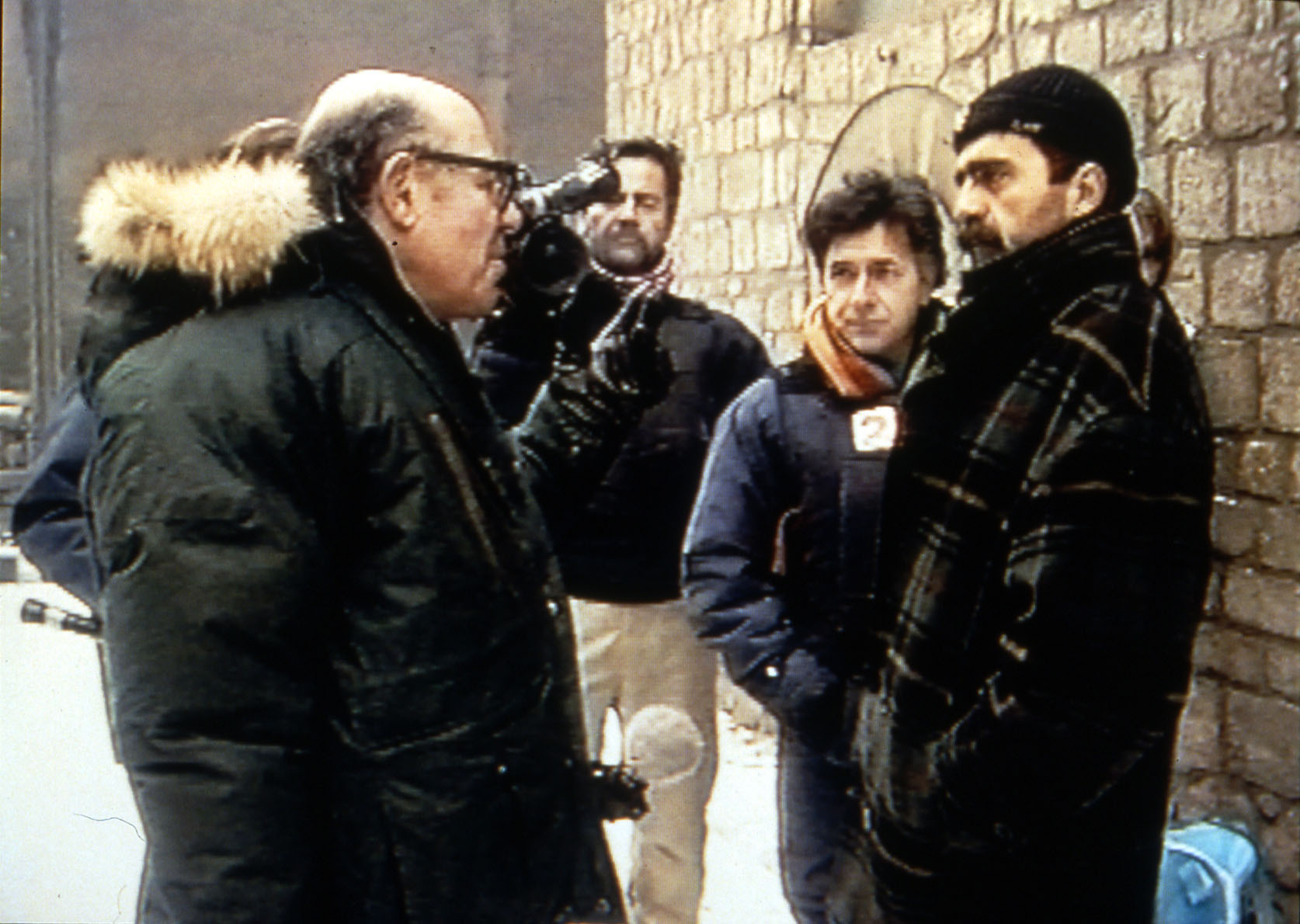
“Ethnic cleansing, that brings back memories,” Marcel Ophuls muses on the train to Sarajevo in this epic, ironic investigation of war and the journalistic impulse.. Ophuls traveled to the besieged city in 1993 to mingle with the motley crew of reporters camped out at the Holiday Inn; his interviews with French, British, American, and Bosnian journalists deliver trenchant observations on the political, ethical, and psychological factors behind the making of news. Other interview subjects include Serbian president Slobodan Milosevic, who claims his country’s freedom of the press is “unparalleled,” but says “don’t trust my explanation.” “I won’t.” Ophuls replies. Excerpting films by his father Max Ophuls, adopting the Marx Brothers as muse, the director employs a strategy of playful self-reference in the midst of horror; between feints at media and mediation, he moves in for a sucker punch of reality. As legendary reporter Martha Gellhorn, who survived both the Spanish Civil War and a marriage to Ernest Hemingway, puts it: “the brave are funny.” (Juliet Clark)

——————————————————————————————————————————————————————-
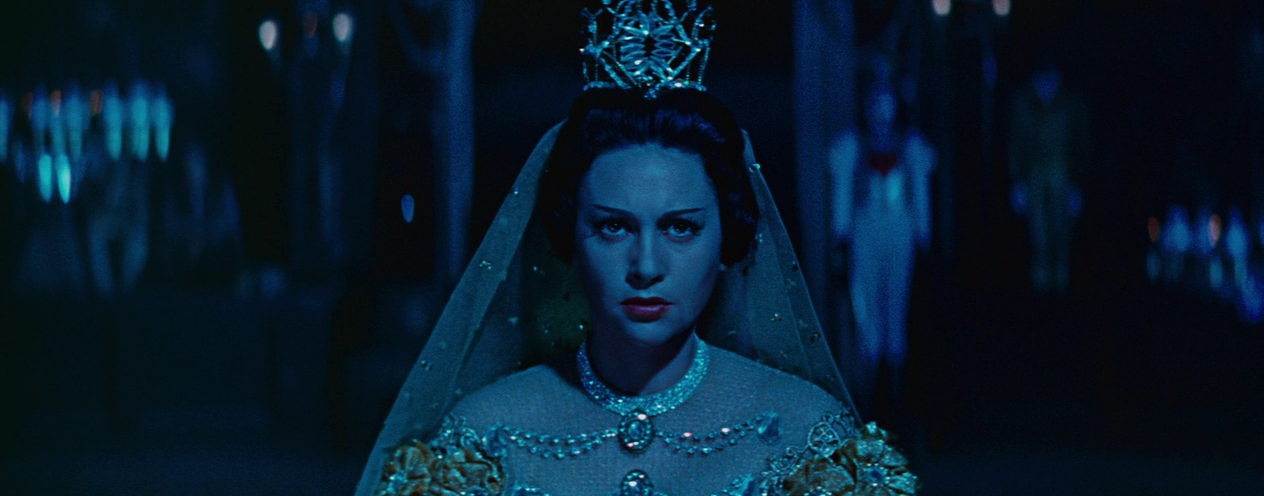
lola.png

SPHINX Fri 19 April 20:00

Max Ophuls
Lola Montès

FR/DE, 1955, 35mm, color, English with Dutch subtitles, 110’

introduced by Marcel Ophuls

Max Ophuls’ final film (and his only movie in color) is a cinematic tour-de-force masquerading as a biography, in this case a dazzling fictionalized life of the notorious 19th century dancer, actress, and courtesan. “Did his father’s reputation as a filmmaker help or hinder Marcel? “It helped me to get work. More than anything, it helped me to be modest about my achievements. I was born under the shadow of a genius, and that spared me from being vain. I don’t have an inferiority complex – I am inferior.” Ophuls worked with his father only once, as third assistant director on Lola Montès. “That means I was the coffee carrier.” It was his father’s last film, one the critics hailed for its ingenuity. In one shot, Lola arrives in a circus ring to re-enact scenes from her life while standing on a turntable that revolves in one direction, while the camera tracks round her in the opposite direction. “He was a genius, but that film killed him. I carried the coffee and saw him withering.” It was then Max had his first heart attack; two years later he died. “People say he was a romantic who dealt with private things like love and I was political,” says Ophuls. “That’s bullshit. I never make a distinction between private life and politics – that’s a petit bourgeois thing. How can you make a stand against Nazi Germany, or in Rwanda, when you live life by making that distinction? What I am saying has to do with citizenship.” (from an interview with Stuart Jeffries, 2004)
Once was Fire

trasosmontes1.jpg

Films by António Reis & Margarida Cordeiro, Stavros Tornes & Charlotte van Gelder, Jean-Marie Straub & Danièle Huillet

‘Once Was Fire’ is part of the programme of the Courtisane Festival (17 – 21 April 2013). Curated by Stoffel Debuysere

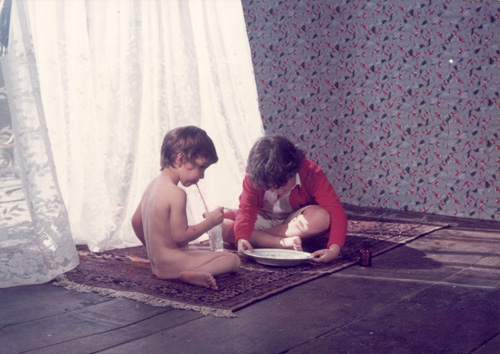
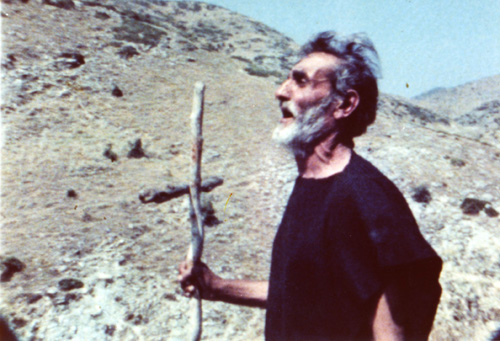
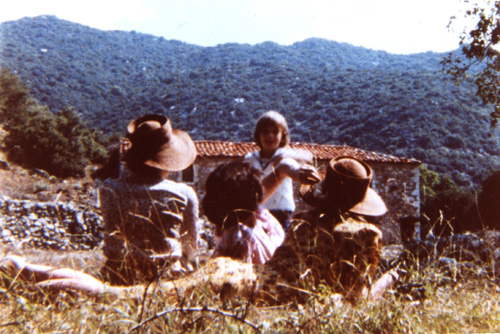
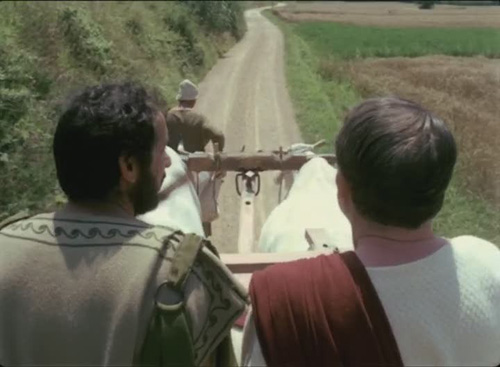
What is it the work of these three filmmaker-couples has in common? Perhaps it is passion, the burning desire to craft a cinema of their own, against the grain, against the void, a desire inscribed in every form, always staring right back at us. Perhaps it is attention, a constant consideration for all things equal : the beauty of the moving wind in the trees, the sounds of words spoken, the splendour of the world we don’t care to see in life. Perhaps it is grace, the generosity of artisans meticulously plying their trade, echoing an epoch when cinema and art were not the big words they have become. Perhaps it is risk, the painstaking chance they take in every image, at each moment risking their lives for a look, a sigh, a gesture. Perhaps it is soul, the broken soul of Southern Europe, this ancient theatre of memory where everything is haunted by ghosts of past and future, this land of lost dreams where all and nothing is horizon. Perhaps it is dream, the clarity of an age-old dream reawakening something that has been stifled, forgotten, annulled, in defiance of the storm of progress blowing from paradise. Perhaps it is love, the tender care for people and places, where everyone and everything has a name, where time is suspended and multiplied, inventing new capacities for framing our daunting present. Perhaps, when all is said and done, it is persistence, and the burdensome solitude of those who know all is lost, putting everything at stake to catch a glimpse of a fire that once was.

In collaboration with the Royal Belgian Film Archive, with many thanks to the Cinemateca Portuguesa, the Greek Film center, the Cineteca di Bologna, Barbara Ulrich and Pedro Costa. In the framework of “Figures of Dissent (Cinema of Politics, Politics of Cinema)” (KASK/HoGent).

——————————————————————————————————————————————————————-

António Reis & Margarida Cordeiro

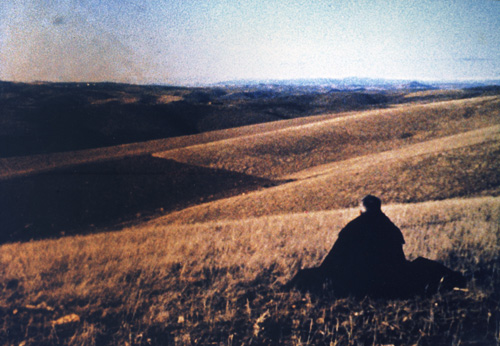
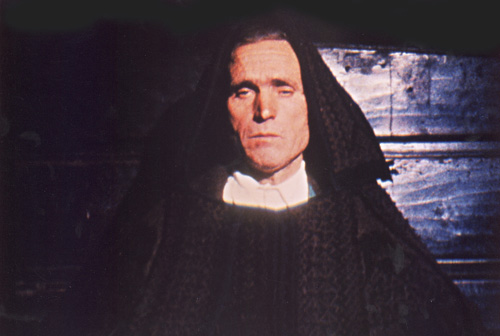
“A way of life that stands under no present law and only pays attention to the wisdom and advice which reach across to us from ancient times,” wrote Franz Kafka in The Great Wall of China. It is this text, read out in the guttural sub-dialect of northeastern Portugal, which is at the heart of Tràs-os-Montes, António Reis and Margarida Cordeiro’s first portrait of the Nordeste Transmontano region, the “frontier of sorrow” between Spain and Portugal. Here, out of reach from the arm of the law, out of sight from the watchful eyes of the capital, another form of community still abides, a deep-rooted communion between men, land, and the seasons. Here, at the crossroads of different ages, haunted by a violent history of inquisition and repression, steeped in ancient myths and primitive rites, time offers resistance. In the words of Rainer Maria Rilke, whose poetry deeply inspired their work: “When behind each shape more that the past lays hidden, when that which lay before us was not the future.” In these rural villages, working from day to day as “peasants of cinema”, Reis and Cordeiro created two magnificent frescos, depicting forms of life that owe absolutely nothing to the imperatives of Empire. It is a world of endurance, always on the verge of disappearing, trees of life blooming and withering alike, caught in the throes of the great round of change.

trasosmontes2.jpg
Trás-os-Montes
PT, 1976, 16mm, color, Portugese with French subtitles, 111’

“I have never seen a Portuguese film that speaks of Portugal in such a profound and beautiful way, that is not only about the earth, the people and the faces, but also the dreams, the stories and the layers of millennia. We first see a documentary blossoming, opening up, which offers itself as an ethnographic pearl, after which we evolve towards something that leans more toward science fiction. This section is that of our soul, from the depths of our being. Sensitive to colour, the time, the passing of time: Tras-Os-Montes is a great poem. Like those children who lose themselves in time, we are a people who live as if time never existed.” (Manoel de Oliveira)

ana_antonioreis_margaridacordeiro.jpg
Ana
PT, 1985, 16mm, color, Portugese with French subtitles, 114’

“A film by poets, but also by geologists, anthropologists, sociologists, by all the possible -ologists. Reis and Cordeiro are Portuguese, but not from Lisbon (it is a much too provincial capital city), not even from Porto. They situate their films in this North of Portugal where the tourists never come (they invade the Algarve in hordes, the fools). Beautiful and abandoned landscapes, which have to be perceived as sumptuous ruins; a countryside that is filmed as if it were a city. In Ana, the trees, the roads, the stones of the houses almost have names. Everything is a junction; nothing is anonymous. The film is a consoling buzzing: the sound of the wind causes the images to swell and shrink like a sea. There is emptiness in the heart full of sensations, the way there is an emptiness in this part of Portugal. The films by Reis and Cordeiro record a disorienting situation of emigration, caused by the exodus: the men have left, the children are now left to their games and the elderly are left to guard the places. There is no supervision from the parents here, only the guardianship of grandparents, in a game of glances, fleeting and tender, surprised and serious.” (Serge Daney)

——————————————————————————————————————————————————————-

Stavros Tornes & Charlotte van Gelder

“In cinema, there is this possibility of what is to come, of a new awakening. There is a possibility of a future existence.” Stavros Tornes is one of the forgotten prophets of cinema, poète maudit steeped in the land of myth and tragedy, companion of all the outcasts of the post-industrial society, of all the vagabonds wandering amid the wreckage of Empire. Always choosing the enchantment of the world, in all its exuberance and intemperance, in the face of the disenchantment of the social, tinted by memories of occupation, civil war and dictatorship. In the handful of films he made with his “alter ego”, Charlotte van Gelder, there is no rift between the real and the surreal; reality and the imaginary flow into each other as if the concrete world were inhabited by ancient animistic forces. In the course of seemingly aimless voyages through space and time, adrift in a dérive through foreign landscapes, we are offered the unexpected wonder of another humanity in its many figures: the return to the origins, the descent to the netherworld, the arrival in the promised land. “Homer operating the camera, Heraclitus recording the sound”, as film critic Louis Skorecki once wrote. A cinema before cinema: primordial, unattainable, mythical. A cinema that makes us whisper, in complete bewilderment, “Where am I?” Not for fear of being lost, but because of the revelation of being in a deep sleep, suddenly awakening, and not knowing what estranged world we have woken up to.

balamos1.jpg
Balamos
GR, 1982, 16mm, color, Greek with English subtitles, 80′

“Balamos is a popular film, though not easy to absorb; it puts forward a passionate, persistent claim to the poetry and dreams which man has earned for himself, in the teeth of all the powers that be. Balamos is about the return to the East, about water and earth, and the anguished concern with freedom. It is a popular fiction, not a populistic, moralistic intrigue. It is firmly situated whithin our culture, but not in a localized, pictureque sense. It is permeated by time, but not by calendar markings. It is both very ancient and very new. It ignores the facilities of photo-romances and seeks out the image. Tornes follows a cinematic line that grows out of one of the shots in Eisenstein’s Que viva Mexico. There are underlying emotional repercussions from the work of the Taviani brothers and Straub. The popular quality of a film like Balamos can never be quite accepted in an age that preaches the trade unionist version of freedom. It is a film that any of us could have produced. But the technocrats of the film industry the technicians of authority have deprived us of that ability. All we can do is immerse ourselves in these images, ride Balamos’ horse in order to recapture a human right which is only too often ignored or repressed: the right to dream. (Antonis Moschovakis)

karkalou2.jpg
Karkalou
GR, 1984, 16mm, color, Greek with English subtitles, 83′

“Tornes has tried to fragment the course of life of a man, whose journey through the 20th century to a certain degree presupposes a collective memory, and then put it back together again. A man, who witnesses his own death, becomes the narrator of a challenging life. Disillusioned love affairs go hand-in-hand with revolutionary dreams, and South American music accompanies images of the Greek desert. The ‘saints’ that have freed themselves from the conventional yoke meet believers who embark at all costs in search of salvation and, in particular, everything that transcends, rises above them. ‘The imagination is a quality of the spirit that we can exercise as memory,’ Luis Buñuel had said a little earlier, and Tornes seems to have taken these words literally.” (Illias Kanellis)

——————————————————————————————————————————————————————-

Jean-Marie Straub & Danièle Huillet

“No filmmaker should make a film without it having a minimum of what Cézanne spoke about when he watched his mountain for years on end before being able, one fine day, to capture it and say, ‘Look at this mountain, once it was fire’.” The cinema of Jean-Marie Straub and Danièle Huillet is one of the uttermost concentration, capturing the whirlwind of the world in every tiny inch of matter. The sensible and the intelligible cannot be separated. That is what they have learned from Friedrich Hölderlin: the dream of the community to come is not embodied in laws and governments, but in gestures of life and forms of nature. But for there to be a community, it must be divided, and that is what they have learned from Bertold Brecht: the changeability of the world does not insist on agreement, but on its contradictoriness. Between Brecht and Hölderlin, materialism and mysticism, at once dialectical and lyrical, the films of Straub and Huillet point to an abandoned yet irrefutable truth: we do not live in the best of possible worlds. The roots of Fascism, war, injustice and resistance are revisited by way of much older dramas, recounted by authors such as Cesare Pavese and Elio Vittorini. But these texts are not more important than the people reciting them, the space they find themselves in, or the movement of light and colour shimmering through. What matters, in the end, is the sensible intensity which is always there, always in the present, affirming the enduring capacity for the construction of a new common world: a community of sense.

straub-clouds-2.jpg
Dalla nube alla resistenza (From the Clouds to the Resistance)
IT, 1978, 35mm, color, Italian with electronic English subtitles, 105’

“Dalla Nube is composed of two separate parts, one mythological, the other modern, without any apparent relation. The Nube part is six of the twenty-seven Dialogues with Leuco (“Dialoghi con Leucò”), written by Cesare Pavese in 1947. The Resistenza part is extracts from another book by Pavese, The Moon and the Bonfires (“La luna e i falo”), published in 1950, a few months before his suicide. This latter part is not a surprise: every Straub film is an examination – archaeological, geological, ethnographic, military as well – of a situation in which men have resisted. To Nietzsche’s claim that “The only being known to us is being that represents itself,” the Straubian would respond that only those who resist exist for sure: resist nature, language, time, texts, gods, God, chiefs, Nazis. Mother and father. This is how the shot, the basic atom of Straubian cinema, is the product, the reste (remainder), or rather the restance (remaining) of a triple resistance: texts resisting bodies, places resisting texts, bodies resisting places. One has to add a fourth: the public resisting shots “designed” this way, stubborn resistance of cinema’s audience to something intractable, something which renounces it as a public”. (Serge Daney)

sicilia.jpg
Sicilia!
IT, 1999, 35mm, b/w, Italian with English subtitles, 66’

“Sicilia! is a film that shines both in its own inherent vision and as a highlight in the work of the Straubs, a top that we can reach without extra tools. If, according to the generous idea of Manoel de Oliveira, a film’s true nationality is the country in which it is filmed, then a great deal of the Staubs’ oeuvre is Italian, even if we hear a lot of German and French in it. Few of their films are about the modern world in a direct sense: they are rather elegant peplums from the theatre in which antiquity is always revived, brought alive into modern history. With Sicilia!, it is the Italy of the 20th century, when Mussolini was enacting his parody of the Empire of the Caesars. It is the exploitation of Sicily, the almost African earth, a South that tries for as long as it can to resist the North, and the film a black-and-white poem of the outraged world. Thanks to the voices of actors who had never before spoken Italian so amusingly, the Italy of today is physically represented. It is incomplete, with its empty spaces, intense: the lost soul of Italian cinema. When, as is here the case, it is about oranges that cannot be sold, fish grilled on charcoal, police suspicions, returns to the mother’s house, nightly clandestine meetings in the valley that ultimately come to light, functional objects that no one buys any more, the loss of manual thinking, what is taking place here is the excess or the insufficiency which, as is true in life, gives rise to a film.” (Jean-Claude Biette)

DISSENT ! Marcel Ophuls & Eyal Sivan

ophuls-troubles4.jpg

Thursday, April 18 2013 20:00 KASK cirque, Gent. In the context of the Courtisane Festival 2013.
introduced by Stoffel Debuysere

Resistance. If there is a single word that characterizes the work of Marcel Ophuls, this is it: resistance to every form of injustice and banalisation, resistance to the prevailing dogmas of documentary cinema. It is an attitude that is marked both by a whole-hearted abhorrence (for indifference) and by passionate love (for narrative film). The one is a response to his experiences during WW II, the other a legacy from his father, the famous director Max Ophuls. The result is an uncompromising cinema that for four decades has had no equal in blazing a trail through the 20th century’s shadowy realm: occupation and collaboration during the Vichy regime in Le Chagrin et la Pitié (1969), the Troubles in Northern Ireland in A Sense of Loss (1972), war crimes in Nancy Germany and Vietnam in The Memory of Justice (1976), the siege of Sarajevo in Veillées d’armes (1994). Time and again, like a roguish Inspector Colombo, Ophuls makes his way through the heart of the conflict zone, in search of witnesses, in search of the story. Because Ophuls’s work primarily brings to mind the fact that the word “documentary” is always followed by the word “film”. This is a cinema that places structure above content, subjectivity above objectivity, discussion above pedagogy, a cinema that recognizes that documentary always equals “fiction” – a construction, a presence, a form. It is a cinema, finally, that refuses to make a distinction between “history” with or without a capital “H”, between a politics of the commonplace and the politics of the power apparatus, because that distinction, according to Ophuls, “forms the worst escape in life itself, the avoidance of every responsibility.”

A conversation between two accomplished advocates of documentary film, about cinema and history, montage and narration, and the role and responsibility of the filmmaker. Eyal Sivan already participated in a DISSENT ! session in december 2012. Marcel Ophuls is one of the Artists in Focus on the Courtisane Festival. The talk will be preceded by a screening of The Memory of Justice and followed by a screening of A Sense of Loss.

DISSENT ! is an initiative of Argos, Auguste Orts and Courtisane, in the framework of the research project “Figures of Dissent” (KASK/Hogent), with support of VG & VGC.

——————————————————————————————————————————————————————-
About DISSENT!

How can the relation between cinema and politics be thought today? Between a cinema of politics and a politics of cinema, between politics as subject and as practice, between form and content? From Vertov’s cinematographic communism to the Dardenne brothers’ social realism, from Straub-Huillet’s Brechtian dialectics to the aesthetic-emancipatory figures of Pedro Costa, from Guy Debord’s radical anti-cinema to the mainstream pamphlets of Oliver Stone, the quest for cinematographic representations of political resistance has taken many different forms and strategies over the course of a century. The multiple choices and pathways that have gradually been adopted, constantly clash with the relationship between theory and practice, representation and action, awareness and mobilization, experience and change. Is cinema today regaining some of its old forces and promises? Are we once again confronted with the questions that Serge Daney asked a few decades ago? As the French film critic wrote: “How can political statements be presented cinematographically? And how can they be made positive?”. These issues are central in a series of conversations in which contemporary perspectives on the relationship between cinema and politics are explored.

Transparent Things: Mary Helena Clark’s films & influences

mary-helena-clark.jpg

25 March 2013 20:30 OFFoff Cinema, Gent

What are we seeing when watching images flickering on the screen? One could say that the cinematic experience always involves an unique play of imaginary presence (perceptual experiences, fantasies, illusions) and real absence (what is represented but not really there). The act of perception may be real, but the perceived is merely a shade, a phantom, “a hallucination that is also a fact”. It is this fundamental tension between presence and absence, actual and perceptual, the visible and the spectre of the hidden, that is at the heart of Mary Helena Clark’s work. Taking cues from the fantasy and illusion of early cinema as well as the material and formal exercises of the avant-garde, her hypnotic pieces explore cinema’s primitive magic, hurtling us down the secretive rabbit holes of the moving image. After having screened several of Mary Helena’s films in previous years, Courtisane will once again showcase her work during the coming Courtisane festival (17-21 April 2013), with the screening of her latest short film, Orpheus (outtakes). As a prologue to this year’s festival, Courtisane will present at OFFoff six films by Mary Helena Clark together with a selection of works by other filmmakers that have inspired her practice.

“Here is a selection of my films from 2008 to 2012 with work by Hans Richter, Anne McGuire, John Smith, Ernie Gehr, Anne Robertson and Saul Levine.

Hans Richter’s Rhythmus 21 begins the program with an exploration of constructed space. It’s a minimalist play of dimensionality, finishing with a reinstatement of the flatness of the screen space. Anne McGuire’s I Am Crazy and You’re Not Wrong still startles me with the spontaneity of her performance. You can almost hear the twists of her mind and feel the tension of the single performer on stage, threatening to turn tragic. And like McGuire, John Smith’s a major and recurring influence. Leading Light, an early work, straddles lyrical and structural modes of filmmaking, using the basic tools of exposure and sound perspective to playfully undermine the veracity of film. Also, I am partial to movies made in bedrooms. Ernie Gehr’s Untitled (1977) was described to me by Ken Eisenstein years before I ever saw it. So for me, there’s a stacking up of the told-film, the film itself, and then how that film lingers in the mind, like a play of tenses. The shifts in Gehr’s film are magical whether imagined, experienced, or remembered. Going To Work by Anne Robertson is one of her quieter pieces. This diary film observes the world with a disconnect that rings true, with a mundane profundity that can hold the viewer in bewildering stillness. Saul Levine’s Dream Story gives me goosebumps. It’s directness reminds me of why I want to make films. The title of this program is taken from a Nabokov novel of the same name. He writes, “When we concentrate on a material object, whatever its situation, the very act of attention may lead to our involuntarily sinking into the history of that object…Transparent things, through which the past shines!” ”

hans_richter_rhythmus_21.jpg
Hans Richter
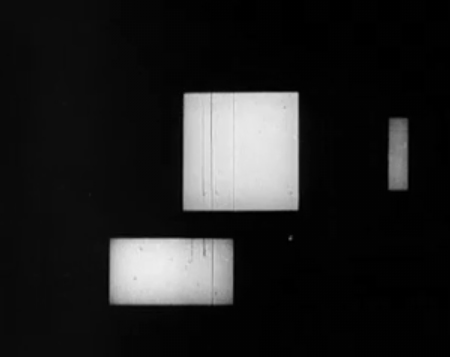
Rhythmus 21

Germany, 1921, 16mm, b&w, silent, 3’30

“I conceive of film as a modern art form particularly interesting to the sense of sight. Painting has its own peculiar problems and specific sensations, and so has film. But there are also problems in which the dividing line is obliterated, or where the two infringe upon each other. More especially, cinema can fulfill certain promises made by the ancient arts, in the realization of which painting and film become close neighbors and work together.”

byfootcandlelight-600.jpg
Mary Helena Clark
By foot-candle light

USA, 2011, digital video, color, sound, 9’

“A walk through the proscenium wings. You close your eyes and suddenly it is dark.”

anne_mcguire.jpg
Anne McGuire
I Am Crazy and You’re Not Wrong

USA, 1997, video, b&w, sound, 11’

A wonderful witty work about nostalgia and desperation. Ann McGuire portrays a Kennedy-era singer performing in a space where theatre meets television. McGuire’s Garlandesque gestures provide both a sense of tragedy and humour. I am Crazy and You’re Not Wrong weaves narrative, performance, memory and history into a ironic and haunting work of unique proportions.

leading.jpg
John Smith
Leading Light

GB, 1975, 16mm, color, sound, 11’

“Leading Light uses the camera-eye to reveal the irregular beauty of a familiar space. When we inhabit a room we are only unevenly aware of the space held in it and the possible forms of vision which reside there. The camera-eye documents and returns our apprehension. Vertov imagined a ‘single room’ made up of a montage of many different rooms. Smith reverses this aspect of ‘creative geography’ by showing how many rooms the camera can create from just one.” (A.L. Rees)

sunflowers.jpg
Mary Helena Clark
And The Sun Flowers

USA, 2008, digital video, color, sound, 5’

“Based on the true story of the wallpaper in my bedroom.”

2_after_writing.jpg
Mary Helena Clark
After Writing

USA, 2008, 16mm, color, optical sound, 4’

“Scraps of text gathered from molding filmstrips and peeling chalkboards are photographed and intercut with pinhole shots from a schoolhouse. “

Ernie Gehr
Untitled

USA, 1977, 16mm, color, silent, 5’

“… a delicious slow pulling of focus over four minutes in which snowflakes, streaming like intercepted chalk marks, fall in front of what seems to be a field, then a pond, and finally is recognized as a brick wall.” (P. Adams Sitney)

orpheus_01.jpg
Mary Helena Clark
Orpheus (outtakes)

USA, 2012, 16mm, b&w, optical sound, 6’

“An impossible film project: Buster Keaton stars in the outtakes from Jean Cocteau’s Orpheus, made by me for the cutting room floor.”

racgoingto.jpg
Anne Charlotte Robertson
Going To Work

USA, 1981, Super8 to video, color, sound, 7’

“Anne took the written diary form and extended it to include documentary, experimental and animated filmmaking techniques. She did not shy away from exposing any parts of her physical situation or emotional life. She became a pioneer of personal documentary and bravely shared experiences and observations on being a vegetarian, her cats, organic gardening, food, and her struggles with weight, her smoking and alcohol addictions, and depression (she was diagnosed with bipolar disorder). Romance (or lack thereof) and obsession are long-running themes in her films, as is the cycle of life.” (Harvard Film Archive)

plant.jpg
Mary Helena Clark
The Plant

USA, 2012, digital video, color, sound, 8’

“A film filled with clues and stray transmissions built on the bad geometry of point-of-view shots.”

sound-over-water.jpg
Mary Helena Clark
Sound Over Water

USA, 2009, 16mm, color, optical sound, 5’

“Blue water and blue sky meet on emulsion.”

dream.jpg
Saul Levine
Dream Story

USA, 2001, digital video, color, sound, 5’

“Dream Story is about a dream I had of Marjorie Keller.”

DISSENT ! Hartmut Bitomsky

deutschlandbilder2.jpg

28 March 2013 20:30 Galeries, Brussels
in conversation with Stoffel Debuysere

“As once stated in a Brecht play: if two things come together, you need a third thing. The third thing, back then, was political film making”. For about ten years, the film work of Hartmut Bitomsky could hardly be dissociated from that of Harun Farocki. In the second half of the 1960’s they both formed the backbone of the Projektgruppe Schülerfilm, an initiative of Berlin students building on the leftist intellectual legacy by combining militant cinema and Brechtian didacticism. After their studies, they continued to make a number of films together, and consequently co-founded the Filmkritik magazine as an outlet for their cinephile enthusiasm. But it was only a matter of time before their ways parted: “Farocki comes from Eisenstein, and I come from Rossellini. He is very fond of montage, I am more interested in life”. Although they are both exploring a critical-essayistic perspective, Bitomsky considers documentary film as an instrument for articulation rather than for deconstruction. So, each film he has been making since the 1970’s provides some sort of map, its routes leading us through unruly territories, covering themes such as memory, history, technology and image culture. In this fourth installment of the DISSENT ! series a selection of Bitomsky’s films will serve as the starting point for a conversation on cinema, documentary practice, image and reality.

Before the talk, on March 28th, we’ll be screening
Hartmut Bitomsky & Heiner Mühlenbrock, Deutschlandbilder
1983-84, 35mm, b/w, German with English subtitles, 60′
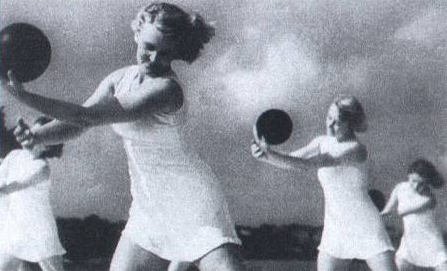
“The film is composed of excerpts from more than 30 documentary films that were made and shown in the period between 1933 and 1945. The documentary films present a clean and self-confident Germany and a people of nature lovers, who respect its traditions, is devoted to progress and has an appreciation for beauty. This was something the Nazis particularly liked; they had a pronounced need for beauty. They loved films and they made ample use of them. Most of the films deal with work, leisure and work again. They indulge in a certain kind of populism, one that casts a look of understanding at the simple man. In this way they function like a reversed plebiscite: the regime confirms its people because they show themselves to be devoted and able and because they participate in everything with creative enthusiasm. Today, however, we must ask ourselves what these films can still tell us. They are profoundly hypocritical, and their intention is to conceal which function has been assigned to them. The more they intend to show, the more they seem to need to keep secret. What can be studied in the films is how film pictures are managed: how they are engaged and turned into instruments, how they are arranged and edited, how commentary and sound is added to them, and how they were taken and used. The Nazi film-makers took great pains to do this. Like advertising strategists, they wanted to seduce. The films and their pictures are like masks that show one face and at the same time cover another. Pictures were taken from reality served to hide reality. Kracauer wrote about this that “The Nazis falsified reality just like Potemkim; instead of cardboard, however, they used life itself to build imaginary villages.” (HB)

DISSENT ! is an initiative of Argos, Auguste Orts and Courtisane, in the framework of the research project “Figures of Dissent” (KASK/Hogent), with support of VG & VGC. The visit of Hartmut Bitomsky is supported by Galeries and Goethe-Institut Brussels.

Also read ‘The documentary world by Hartmut Bitomsky.
——————————————————————————————————————————————————————-
About DISSENT!

How can the relation between cinema and politics be thought today? Between a cinema of politics and a politics of cinema, between politics as subject and as practice, between form and content? From Vertov’s cinematographic communism to the Dardenne brothers’ social realism, from Straub-Huillet’s Brechtian dialectics to the aesthetic-emancipatory figures of Pedro Costa, from Guy Debord’s radical anti-cinema to the mainstream pamphlets of Oliver Stone, the quest for cinematographic representations of political resistance has taken many different forms and strategies over the course of a century. The multiple choices and pathways that have gradually been adopted, constantly clash with the relationship between theory and practice, representation and action, awareness and mobilization, experience and change. Is cinema today regaining some of its old forces and promises? Are we once again confronted with the questions that Serge Daney asked a few decades ago? As the French film critic wrote: “How can political statements be presented cinematographically? And how can they be made positive?”. These issues are central in a series of conversations in which contemporary perspectives on the relationship between cinema and politics are explored.