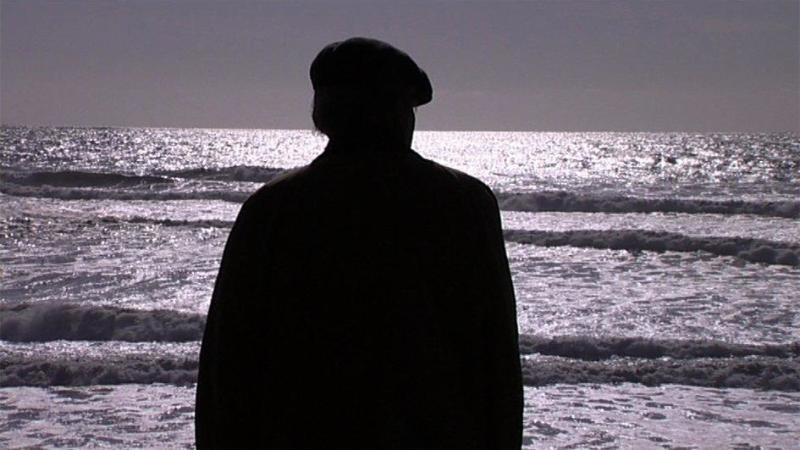
In the context of the Courtisane Festival 2022 (30 March – 2 April). Curated by Stoffel Debuysere.
“Within the spectral temporality of the tape loop, the imperial anxieties of the early twentieth century resonate with the multiple fears of the present.” This is how Kodwo Eshun described the sound piece Trevor Mathison created for Expeditions, the very first work of the Black Audio Film Collective (1982-1998). With this impressive composition, which incorporates elements from dub and musique concrète as well as the industrial mantras of Cabaret Voltaire or the neo-Constructivist anthems of Test Department, Mathison set the tone for the soundtracks that he would subsequently provide for the films of the collective. It is no coincidence that the collective’s name places as much emphasis on “audio” as “film”, or that several of their titles — such as Handsworth Songs (1985) or Three Songs on Pain, Light and Time (1996) — refer explicitly to sonic processes: the auditory was at least as important as the visual in their multi-layered and pioneering explorations of notions of race, ethnicity, colonialism, diaspora, identity and memory. When asked why sound and music occupy such a prominent place, John Akomfrah, one of the members of the collective, replied, “because there is so much we can’t say without it.”
For Twilight City (1989), Mathison created a hypnotic aural landscape of repetitive textures and melancholic timbres that expresses the psychogeographical relief of the British capital in the grip of gentrification and segregation. In Who Needs a Heart (1991), a portrait of political exhaustion and racial drift in the 1960-70s, dialogue is exchanged for a composition of fragments from the work of jazz greats such as Ornette Coleman, Eric Dolphy and Anthony Braxton to evoke disharmony and dissonance. In The Last Angel of History (1996), Mathison’s mixture of wavering motifs and stuttering pulses accompanies a quest for the genealogy of Afrofuturism and its continuation within electronic music movements. In each case, Mathison produces deeply resonant sound worlds based on what he himself calls “post-soul noise”: “sounds that take their cue from pre-existing black musics… but they’ve been defamiliarised, put through a sonic box that renders them strange and unusual” (John Akomfrah).
After the dissolution of the Black Audio Film Collective, Mathison continued to work closely with Akomfrah, with whom he made numerous films and installations. With Anna Piva and Edward George, another former member of the collective, he formed the projects Flow Motion and Hallucinator, whose mutant techno dub featured on the leading record label Chain Reaction. Under the name Dubmorphology, he and Gary Stewart make installations that explore the relationship between culture, history and technology. He also recently produced the soundtrack for Garret Bradley’s America (2019), a reinterpretation of a forgotten history of African-American cinema.
This programme is the first chapter of Echoes of Dissent, a trajectory that aims to counter the hegemony of the eye and the subsequent disregard for the ear by considering the relationship between cinema and politics from the perspective of sound. It is therefore only fitting to begin this journey by focusing on the striking work of a sound artist who is rightly considered by Gaylene Gould as “the quiet centrifugal force behind what we now recognise as a black British aesthetic”.
Part of the event series Echoes of Dissent, produced by Courtisane, argos and Auguste Orts, in the context of the KASK and Conservatory School of Arts research project with the same title.
——

Expeditions 1 – Signs of Empire
Black Audio Film Collective, UK, 1983, video, 26′
Expeditions 2 – Images of Nationality
Black Audio Film Collective, UK, 1984, video, 22′
A two-part 35mm slide-tape text, produced while the Black Audio Film Collective were undergraduates. The work toured England from November 1984 to March 1985, using a Kodak dissolve unit to sequence images into narrative. The soundtrack to Signs of Empire, which consisted of tape loops of musique concrète and political speeches, was amplified to create a powerful environment of dread.
“There was a need for a recycling aesthetic. One thing we wanted to do was to comment on the past, because there was just no way forward without that. Tape-slide provided one of the easiest means for doing that because the reproducibility of images from slides, once you had a printer, meant you could reshoot, you could reframe, you could perform something with images. We also spent time trying to pull together a sonic backdrop which one could only call ‘black industrial’, because post-punk was in full swing by then.” (John Akomfrah)
single channel 35mm colour Ektachrome transferred to video
Courtesy Smoking Dogs Films and Lisson Gallery
——

Three Songs on Pain, Time and Light
Black Audio Film Collective / Trevor Mathison & Edward George, UK, 1995, video, 25′
A rarely seen video portrait of black British artist Donald Rodney (1961-1998), who suffered from Sickle Cell Anaemia. The video uses a mixture of home movies, studio and location based tableaux, interviews and testimonies to examine how he uses his art to come to terms with constant pain.

The Last Angel Of History
Black Audio Film Collective / John Akomfrah, UK, 1995, video, 45′
The Last Angel of History is a sci-fi documentary about Africa, history and memory. Legend has it that in the 1930s itinerant blues man Robert Johnson sold his soul to the devil in order to play the blues. What Johnson got in return for his soul was a black secret: technology which would produce the history of black music. 200 years into the future another itinerant figure, the Data Thief, sells his soul for the knowledge of his future. He has been told to go to the past (our present) and unearth black culture’s speculations about the future. Piece together these speculations and you will find the secret of the black secret technology which will unlock your future. The Last Angel Of History takes us on a voyage, from the margins of black culture to its interstellar heart. The film charts a new interface, striking up connections and dialogues between diverse black interstellar parties who have so much in common, and yet for the most part remain unaware of each other’s existence from Sun Ra to Nichelle Nichols, George Clinton to Lee Perry, A Guy Called Gerald, Goldie and Underground Resistance. John Akomfrah: “Last Angel proved conclusively to both me and Trevor that you could actually use your own sounds to bring these worlds into being.”
——

Twilight City
Black Audio Film Collective / Reece Auguiste, UK, 1989, video, 52′
A cinematic exploration of London as a symbolic as well as a civic space, representing ideals of affluence and the hope of a new beginning, and contrasting it with the reality of the harsh welcome offered to many migrants. By 1989, the conservative government was three years into a programme of wealth creation and urban redevelopment unparalleled in 20th Century Britain. Black Audio Film Collective’s third work Twilight City can be seen as the first essay-film to map the new London through an excavation of Docklands, the City, Limehouse and the Isle of Dogs. In its movement between archival image, fictional script, studio interview, photographic tableau and travelling long shots, London is reimagined as a nighttime city of light and glass, bordered by a landscape of dreams, sequenced by electronic pulses.
“Mathison’s modus operandi is to exploit the synthesiser’s innate ability to be inhuman. The result is that sound offers no refuge from deterritorialisation. There is no ‘core of affect’ — whether gospel or reggae or blues or jazz — around which the film can secure an inviolable core of identity; on the contrary, the score marshals its affects and identifications from within electro-modernity, from inside the synthesiser’s inherent alienation- effect.” (Kodwo Eshun)

America
Garret Bradley, US, 2019, DCP, 27′
“I see America as a model for how the assembly of images can serve as an archive of the past as well as a document of the present,” Bradley has said. This film cites historical events, ranging from African American composer and singer Harry T. Burleigh’s publication of the spiritual Deep River in 1917, to the murder of popular jazz bandleader James Reese Europe in 1919, to the founding of baseball’s Negro National League in 1920. By including borrowed footage from Lime Kiln Club Field Day, she also shines a light on a film that was radically progressive for its time by celebrating Black vernacular culture. America is also a sonic exploration set to a score by Trevor Mathison and sound designer Udit Duseja, which reminds us of the importance of sound to conjure memories.
——

Who Needs a Heart
Black Audio Film Collective / John Akomfrah, UK, 1991, video, 78′
Who Needs a Heart is a parable of political becoming and subjective transformation and remains BAFC’s most controversial film. Akin to a sophisticated home-movie history, a record of life on the fringes in London between 1965 and 1975, the film explores the forgotten history of British Black Power through the fictional lives of a group of friends caught up in the metamorphoses of the movement’s central figure; the counter-cultural anti-hero, activist and charismatic social bandit Michael Abdul Malik aka Michael X. Who Needs a Heart is a largely silent film whose soundtrack of Eric Dolphy, Ornette Coleman, The Art Ensemble of Chicago, Albert Ayler, Anthony Braxton, John Coltrane and the ritual music of the Llamas and Tibetan Monks of the Four Great Orders investigates the expressionist potential of music to create the conditions for the movement of images. As John Akomfrah stated, “we were convinced that sound itself had a gaze, a way of constructing a look, and I think Who Needs A Heart is probably the best way we’ve found so far of substantiating that thesis.”
——

Performance
Sound artist and composer Trevor Mathison has been creating groundbreaking sonic work for almost four decades, first as a member of the Black Audio Film Collective, later with projects such as Flow Motion, Hallucinator and Dubmorphology, and as sound designer for various films and installations. In this live performance he will explore his current ideas about sonics.
——
Conversation
“What happens if critical analysis slows down the rate of perception and sustains a close hearing? If the revisionary archaeology that Black Audio Film Collective are so famous for is listened to as intensively as it is watched? If the ear, for once, pilots the eye through the counter-memorial practice? This is not a matter of downgrading the visual in favor of the sonic; rather it concerns one carefully situating the optical within the trialogical relay of narration, montage, and sound design so as to gauge the full implications of the BAFC project… Attention to the nervous routes between the dimensions of the aural and the filmic has been resoundingly silent.” (Kodwo Eshun)
A close hearing to the work of Trevor Mathison and others will provide the basis for an extended conversation about his sonic practice.