The second workshop I put together in the context of the BOM-Vl project (one of my “jobs”). It’s invitations only, but if you’re really interested, just send me a mail.
Audiovisual Archives in the Age of Access.
New Concepts & New Policies
5 February 2009. 14:00 -17:30 De Zebrastraat, Zebrastraat 32/001, Gent.
The increasing use of digital moving image technologies, combined with their convergence with other media forms through different platforms and network technologies, poses great challenges to film and video archives worldwide. Archivists are not only dealing with the integration of rapidly developing technologies into their professional practice but also with a constituency of users whose expectations have been raised by the massive accessibility of audiovisual documents on DVD, Blu-Ray, P2P networks and video sharing sites such as YouTube. In this “age of access”, to use a expression coined by Jeremy Rifkin, a generation of users is trained in the belief that any and all primary materials should be a mere Google search away. But however versatile, cost-effective and easy-to-use these access tools are, there is still no known solution for long-term preservation of digital data that matches the performance – and experience – of film, and questions of longevity and (historical and technical) integrity are the subjects of tense debate. Digital culture has become the arena in which conflicting priorities in response to the demands of preservation and access have risen again, sharper than ever.
Wherever the answers to these complex philosophical, ethical and strategic issues may lie, there can be little doubt that “digital access” has become the keyword in the politics of the audiovisual archive. This has led to a reassesement of the archives’ role, practice and policy, as well as to an exploration of new business and financial models. For some, Public Private Partnerships may be a way forward. To quote Paolo Cherchi Usai: “We have come to the point where the identity and independence of moving image and recorded sound archives is confronted by the imperatives of the commercial world. In principle, everyone agrees that national collecting institutions should be independent from commercial imperatives. In practice, the commercial world is already within our gates, and it has been within our gates for quite some time. This is no longer a matter of whether or not we want to deal with it; it is a matter of how we can we deal with it without betraying our cultural mission”. How do cultural heritage institutions – and in extenso cultural policy – deal with these new paradigms? What are the opportunities and threats? Which sutainable partnerships and models of cooperation exist and how can they be set up? What is the role of national policy in this? What are the ramifications of this digitization for the public? What is the impact on archival institutions, and its continuing pursuit of its core mission and values?
These questions will be discussed during a workshop, organised in the context of the BOM-Vl project. Four international guests will enlighten their perspectives on the issues at hand.
schedule:
14.00: introductions
14.20: Jeff Ubois + Q&A
15.00: Emjay Rechsteiner + Q&A
15.40: break
16.00: Thomas C. Christensen + Q&A
16.40: George Ioannidis + Q&A
17.20: Questions/Debate
Jeff Ubois is a Berkeley, California-based consultant on archival issues for Intelligent Television in New York; for Fujitsu Labs in Sunnyvale, California; and for the Preserving Digital Public Television Project at WNET/Thirteen in New York. Earlier, he was staff research associate at the School of Information Management and Systems at the University of California, Berkeley. For the Internet Archive, Jeff has worked on managing orphan works, the collection and retention of digital library usage data, and the launch of the Open Content Alliance.
Emjay Rechsteiner is program manager at the Dutch Filmmuseum for the project ‘Images for the Future’. He received an MA in Communications from the University of Amsterdam, and attended Film School at the New York School of Visual Arts. He has produced and co-produced several (awardwinning) movies and numerous commercials.
Thomas C. Christensen is M.A. in film studies from the University of Copenhagen. He has taught film studies at the University of Copenhagen and the University of Aarhus. In 1998 he was appointed Curator at the Danish Film Institute. He has supervised several full digital intermediate restorations and a series of DVD publications. In 2002-2004 He was involved in the EU project FIRST. Since 2003 he has served on the FIAF Technical Commission. He is currently involved in the EU project European Film Gateway.
George Ioannidis is a senior researcher, managing research and development in the Digital Media / Image Processing Department at the Center for Computing Technologies (TZI), University of Bremen, Germany. He received the Dipl.-Ing degree in 1993 and the Dr.-Ing degree in 1999, both from the Dept. of Electrical and Computer Engineering, National Technical University of Athens, Greece. He managed and worked in many national and international research projects on digital libraries, such as GAMA (Gateway to Archives of Media Art).
“We always had the intention of rectifying it, to take that nice word from The Shining, when the butler’s trying to encourage Jack Nicholson to kill his family – to rectify the situation”
— Jake Chapman, about ‘Insult to Injury’
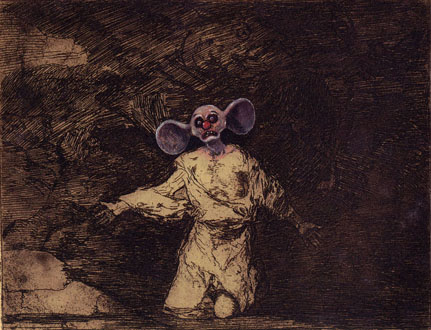
Some time ago, I bought Jake & Dinos Chapman’s ‘Insult To Injury’ publication, consisting of an endlessly fascinating series of manipulated/erased images. It started in 2001, when the Chapmans were able to purchase one of the few remaining sets of Goya’s ‘Los Desastres de la Guerra’ (‘Disasters of War’) prints. This group of 80 drawings was made between 1810 and 1820 as an attack on the horrors of war and its supposed romance and idealism, and has since become emblematic of art’s moral voice, as well as a powerful template for the representation of the insanity of such conflict (Picasso and Dali were both influenced by Goya’s work). The Chapmans meticulously “rectified” their Goya prints, drawing on top of what must be the most revered set of prints in existence. The artists superimposed cartoon faces, either those of clowns or puppies, onto figures Goya had intended as allegories of human suffering.
Dinos Chapman has explained: “We modified the Desastres in light of current events. Now they work better, if that doesn’t sound too immodest. The victims are de-individualized. Our ‘Desastres’ denounce any idea of rational humanity in the ideology of the powerful as pathetic and laughable.” “Goya was the first artist to make the scandal of war visible,” added Jake Chapman. “For us, it was about how, and if, moral positions should be or even can be made visible. The Desastres show the impossibility of distancing oneself morally from war. There’s no discerning the difference between good and evil anymore.”
Some interesting comments, by Christopher Turner:
“In ‘Regarding the Pain of Others’, Susan Sontag wrote that, unlike most images of mutilation and torture, Goya’s ‘The Disasters of War’ “cannot be looked at in a spirit of prurience” – it is devoid of pornography. The Chapmans would disagree. “I don’t think that there’s an opposition between a salacious interest and a noble one,” Jake Chapman says. For them there is a “convulsive beauty” in the violent image, and they are wedded to the Surrealists’ avant-garde belief that such shocks and jolts can wake us from the dream-state of a commodity culture by, as Jake puts it, “shocking the viewer from the edifice of comfort”. (The brothers’ work might be collectively titled ‘The Disasters of Capitalism’.) “He’s defended as a humanist,” Jake once said of Goya’s prints, “but there are moments of pleasure. They have an intensity, a humour and a tendency to undermine their own dignity.”
Jonathan Jones has written:
“Given how important the ‘Disasters of War’ were to Picasso, Dali and the image of the civil war, this is clearly an important, evocative, emotionally raw thing, and they have scribbled all over it. Yet the antecedent they themselves claim puts the gesture in a different light. In the 1950s, points out Jake, the American artist Robert Rauschenberg erased a drawing by Willem de Kooning, the great abstract expressionist painter. On the face of it, Rauschenberg was being aggressive – as a younger artist, a founder of pop and conceptual art, he was erasing the work of the older, dominant generation in a flamboyantly oedipal gesture. Yet he said he chose De Kooning for this fate specifically because he admired him; and he sought the older artist’s permission. Destruction can be an act of love. (…) Violet and white bursts of colour, the clown heads and puppy faces are astonishingly horrible. They are given life, personality, by some very acute drawing, and so it’s not a collision but a collaboration, an assimilation, as they really do seem to belong in the pictures – one art historical antecedent is Max Ernst’s collages in which 19th-century lithographs are reorganised into a convincing dream world. What the Chapmans have released is something nasty, psychotic and value-free; not so much a travesty of Goya as an extension of his despair. What they share with him is the most primitive and archaic and Catholic pessimism of his art – the sense not just of irrationality but something more tangible and diabolic.”
Rod Mengham
“If it is accurate to describe the relationship between the Chapmans and Goya as one of collaboration it is precisely because Goya’s graphic works exist in a perpetual process of sign transformation, of which ‘Insult to Injury’ is only the most recent evidence. In fact, ‘Goya’ itself (the holding concept used to organise a corpus of work, as much as a historical figure) is also a sign in constant flux. It has recently been argued that it is precisely art history’s redemption of Goya as the original humanist (where ‘Disasters of War’ represents the triumph of moral outrage over technical sophistication) that made a re-evaluation of the Goya’s ‘irrational supplement’, the indigestible aspect of his work, inevitable. In the face of this same logic, Bataille linked Goya with the Marquis de Sade, suggesting that they share a response to horror that ‘takes the form of a sudden leap into humour, and means nothing but just this leap into humour.‘ It is this Goya: irrational, expendable and hilarious, with whom the Chapmans collaborate.”
(…)
“It is in the wide margin of difference between the carnivalesque and the postmodern body that the Chapmans screw around with our received methods of viewing and reading the topographies of consumption, forcing us to experiment with our buried juvenile selves in imagining the world before we were forced to inherit it”.
“When the Cat’s Away, Neurosis Is on Display.”
– Washingtonpost.com
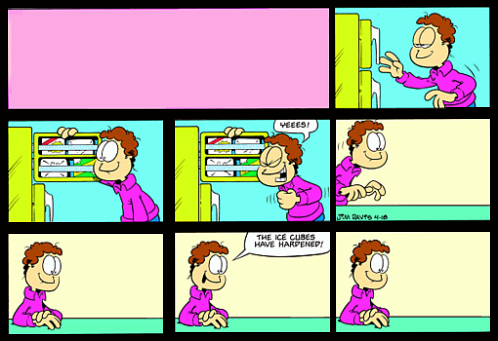
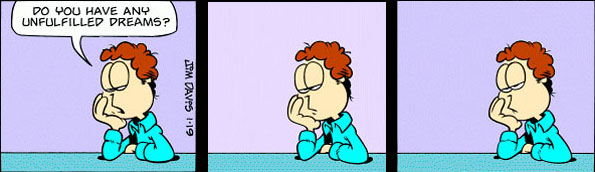
Natalie Frigo sent us a nice tip, which works well in the context of our little ‘erasure’ program (see previous post). Garfield Minus Garfield is a web project created by Dan Walsh, dedicated to removing Garfield from the Garfield comic strips in order to “reveal the existential angst of a certain young Mr. Jon Arbuckle. It is a journey deep into the mind of an isolated young everyman as he fights a losing battle against loneliness and depression in a quiet American suburb.” Surely, fans of Garfield have always found ways to tweak the strip. The Garfield Randomizer lets visitors create their own strips out of random panels. Images of strips with Garfield’s thought bubbles removed or Garfield replaced by a silent, realistically-drawn cat have been circulating online as well. But this concept, as simple as it is, became an online sensation in no time (the site started receiving as many as 300,000 hits a day). Even Jim Davis, who pens the original strip, was intrigued and pleased with the concept, calling the work “an inspired thing to do”. He even went so far as to thank Walsh, saying: “I want to thank Dan for enabling me to see another side of Garfield. Some of the strips he chose were slappers: ‘Oh, I could have left that out.’ It would have been funnier.” Dan Walsh’s reaction: “In an age when the internet gives everyone an opportunity to put their own spin on art, music and literature, it’s a pity more people aren’t as generous with their work – just imagine some of the fantastic creativity we could be enjoying.” Thanks to Davis’ involvement (and the subsequent press coverage), a book version has been published in October 2008. In the book, the original strips are published alongside the ones in which Garfield has been removed.
“All things move, all things run, all things are rapidly changing. A profile is never motionless before our eyes, but it constantly appears and disappears. On account of the persistency of an image upon the retina, moving objects constantly multiply themselves; their form changes like rapid vibrations, in their mad career. Thus a running horse has not four legs, but twenty, and their movements are triangular.”
— Umberto Boccioni, ‘Futurist Painting: Technical Manifesto’ (1910)
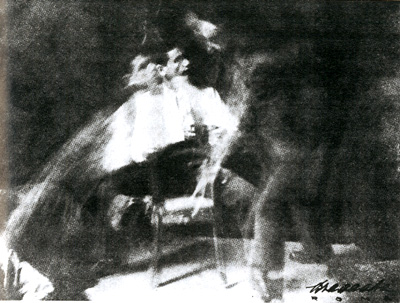
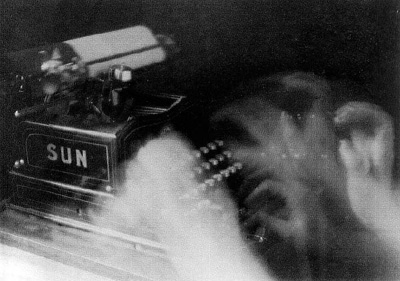
Discovering the work of Idris Khan (see previous post) – in particular After Eadweard Muybridge ‘Human and Animal Locomotion’ (2005), a combination of Muybridge’s motion studies in a single image (see below) – has triggered me to do some explorations on the condensation and synchronisation of time in photography and cinematography. Khan refers to his own condensed photographs as “a playful emblem of our own departure from the corpse of photography, burdened with what the Futurist Anton Guilio Bragaglia once referred to as its ‘glacial reproduction of reality’.” Bragaglia (1890-1960) is a good starting point to explore this fascinating zone between art and science. Influenced by Henri Bergson’s ideas about the infinite continuity of time, This Italian Futurist created the term “Fotodinamismo” to define the photographs he made with his brother Arturo. Their aim was to look for an alternative means of capturing the essence and sensation of speed and motion than the sequential analysis, driven by Muybridge‘s work (studying motion using several still cameras and taking photos from many angles at the same instant in time) as well as Etienne-Jules Marey‘s so-called”chronophotography” method (using a slow motion camera with the capacity of taking 700 images per second) – which was to lead ultimately to the perfection of the illusion of movement with cinematography.
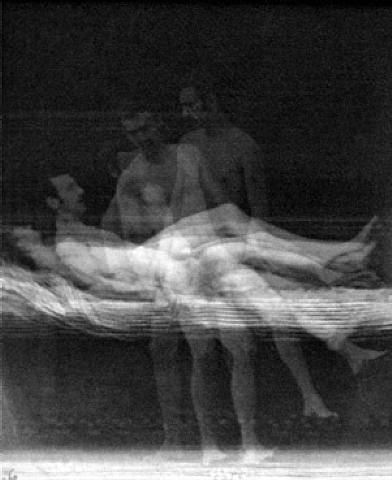
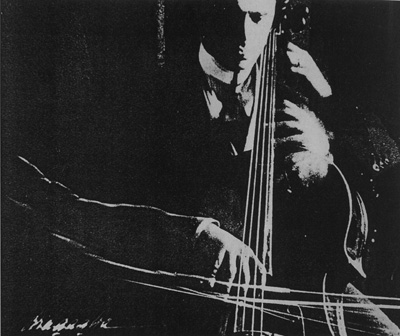
Essentially the Bragaglias wanted to “depict movement as an indivisible reality, rather than a sequence of static poses.” “We are not interested in the precise reconstruction of movement, which has already been broken up and analysed. We are involved only in the area of movement which produces sensation, the memory of which still palpitates in our awareness”, Bragaglia wrote in his Futurist Photodynamism (1913). Fotodinamismo would render actions visible “more effectively than is now today possible with actions traced from one point, but at the same time keeping them related to the time in which they were made…”. Bragaglia advanced the theory that speed applied to actions or objects renders them immaterial and invisible: “appearance is replaced by transparency”. Bragaglia’s photodynamics are fluid “visual transcriptions of energy” —not by way of successive pictures (Muybndge) or schematic phases (Marey)- but as a smooth, continuous dematerialization of objects in space. This was accomplished by means of capturing in a single image the flowing trajectories of objects in motion, made visible by long exposure times. Well known studies, pictured here, include ‘Typewriter’ (1911), The Slap’ (1912) and ‘The Cellist’ (1913).
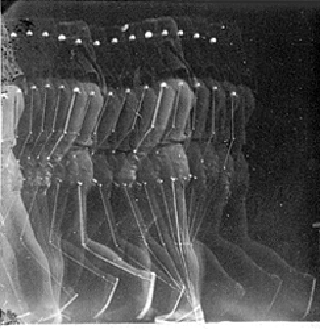
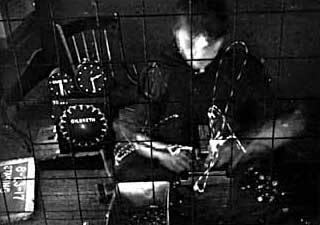
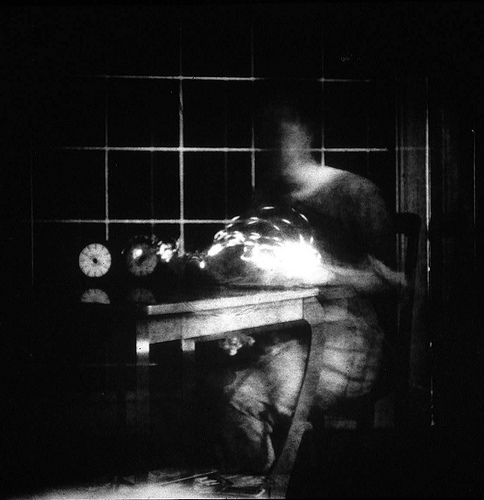
A similar result is visible in the work of Frank (1868–1924) and Lilian Gilbreth (1878–1972), although their method and motivation were quite different. They developed the “stereo chronocyclegraph”, 3-D photography that traced the path of human motion in pulses of electric light, in order to identify the “one best way to do work.” The Gilbreths wanted to convert their images (“micromotion studies”) into useful data for employers eager to reorganize and increase production. Small electric lights, blinking twenty times a second were attached to the wrists of the workers and one cycle of their motions was photographed in a darkened studio (the “betterment room” the called it). Since the lights traced pearl-shaped exposures on the photo- graphic plate, one could identify the direction of the hand movement. Grids placed in the background, or double-exposed later, measured distance while clocks recorded elapsed time. The distance between the light tracings revealed changes in speed. Of course this methodology of “scientific management” – that led to the standardization of work practices and the development of ‘Continuous Improvement Process’ (CIP) – has been criticised widely: the resulting images, after all, could be seen as portraits of the dehumanizing tendencies of modern industrial labor. One criticist is Mike Mandel who decided to subvert the reasoning behind these efficiency studies. In his book ‘Making good time: scientific management, the Gilbreths, photography and motion-futurism’ (1989), he writes: “In my own pictures I want to turn the Gilbreths upside down and shake them out of my brain. I want to find the “one best way” for the worst of reasons—to analyze motions that have never been measured and don’t need to be. I want to completely reevaluate day- to-day life, distorting the Gilbreth imperative to suit my needs: More waste = more fun”.
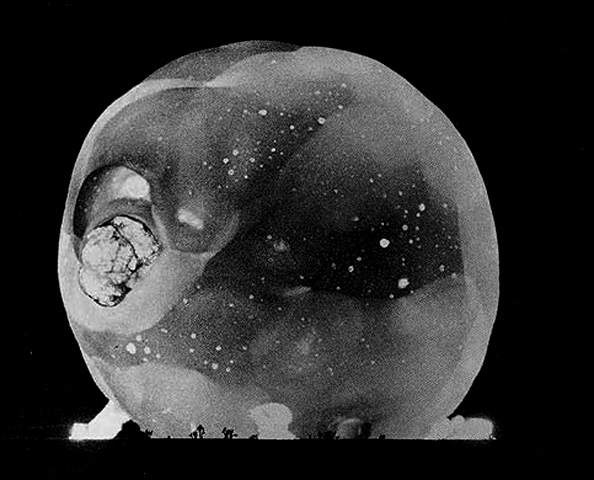
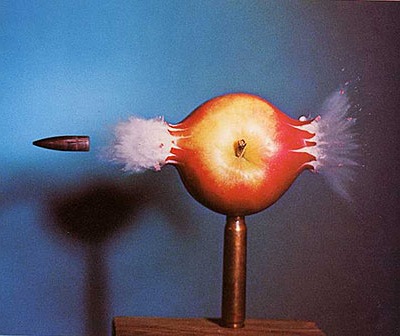
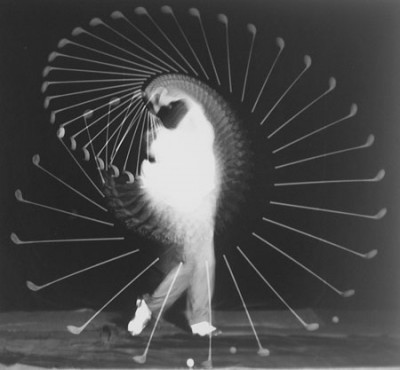
Bragaglia and the Gilbreths of course worked in a time when the representation of motion became a compelling concern for scientists, photographers and artists alike. According to Siegfried Giedion (in ‘Mechanization Takes Command’, 1948) the depiction of motion was the key imagery of the twentieth century: ” the essence of the phenomenal world has been increasingly regarded as motion-process: sound, light, heat, hydrodynamics; until, in this century, matter, too, dissolves into motion.” Another figure who took this concern at heart was Harold Eugene Edgerton (1903 – 1990), an electrical engineer at the Massachusetts Institute of Technology (MIT), who perfected the stroboscope for use in both ultra-high-speed and still (or stop-motion) photography. This device – first developed by Joseph Plateau – allowed him to take images of a realm beyond human vision. Starting from the 1920’s he manipulated the stroboscope to create two types of images. In one technique, a single, brief exposure documents a specific event in time, and magically captures its effects. In the wellknown photograph ‘Shooting the Apple’ (1964) for example, Edgerton seized the moment just as an apple is pierced by a passing bullet, leaving a cloud of skin and flesh in mid-air. Though only moments later the apple would explode, Edgerton has frozen time to order to illustrate the laws of physics. This effect was also accomplished with the “rapatronic camera” he developed in the 1940s, which was used to photograph the rapidly-changing matter in nuclear explosions within milliseconds of ignition – resulting in utterly frightening or beautiful pictures, depending on the way you want to look at it (see top). Edgerton also used the stroboscope to record the cumulative forms described by bodies moving through time, especially of athletes in action.. In ‘Densmore Shute Bends the Shaft’ (1938), a golfer swings his driver which creates an apparition of a nautilus shell – a perfect form in nature equal to the perfect form and grace of his swing. “Seeing the unseen” – the title of a book on his achievements – is really what is was all about for him: later in his carreer he also created night-vision imaging systems with the Defense Department during World War II, enhanced underwater imaging of the ocean floor in consultation with the National Geographic Society and Jacques Cousteau – accompanying him on numerous expeditions – and even worked with some Hollywood Studios, demonstrating how to use high-speed photography to make movies. He even won an Academy Award for the short film ‘Quicker than a Wink’ (1940), produced in association with Pete Smith (anyone know where to find this?). “Don’t make me out to be an artist”, he said. “I am after the facts, only the facts. In many ways, unexpected results are what have most inspired my photography.” If only he could have witnessed the impact that the “Bullet-time” effect had on millions of movie buffs worldwide, when the ‘The Matrix’ finally hit the cinemas, 9 years after his death (note that ‘The Matrix’ wasn’t the first film to use this effect – Michel Gondry, Dario Argento, Tim Macmillan and others used it years before it came out).
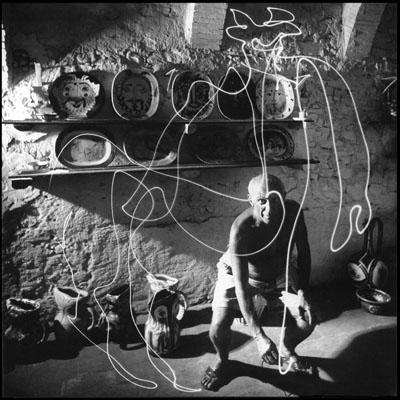
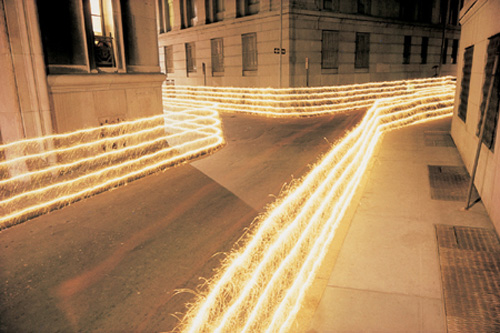
It’s one of Edgerton’s colleagues at MIT, Gjon Mili (1904-1984), who introduced the stroboscope techniques in the artworld. Mili, who was a photographer for Life Magazine for over 4 decades, took thousands of pictures of dance, athletics, and musical and theatrical performances. He also used some of the methodes in the short film ‘Jammin’ the blues’ (1944), featuring performances by musicians such as Lester Young, Red Callendar, Harry Edison and “Big” Sid Catlett, which is considered as a minor landmark in the way musicians are filmed. He took some impressive pictures of musicians in action – notably of drummer Gene Krupa. In 1950 he also made a new version of Marcel Duchamp’s ‘Nu descendant un escalier n° 2‘ (1912), which was in itself influenced by the work of Marey and Futurists such as Bragaglias and Giacomo Balla. But his most famous photographs must be the one the took of Pablo Picasso, in 1949. Picasso was photographed in the dark. After Mili fired his flash, Picasso sketched a centaur in the air. The result is pictured below. This form of painting with light was later developed futher by people like Eric Staller. In the late the 1970’s Staller made quite a name for himself with his series of long-exposure images shot in the streets of New York City. He set the camera up on a tripod whilst he manipulated light in the frame to make an array of patterns and colours.
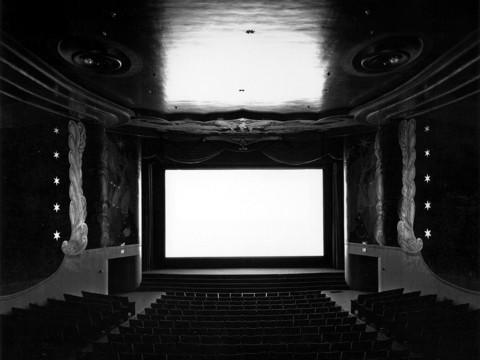
In these examples one can basically point out two ways to visualize structures of time and its relationship to space, using various techniques of photography and cinematography. While Edgerton and others tried to “freeze” movements in images, the “photo dynamists” were more interested in the transgression of synchronized time relations. The resulting effects were dependent on parameters such as the length of exposure, the timing of natural or artificial light and the development time required to expose the film. Some contemporary artists use digital technologies to extend these studies in new domains. One could say that the means of conventional photography serve more or less the fusion and condensation of temporal processes, while digital technology allows a layering and superimposition of individual temporal segments. Heike Helfert gives some nice examples in her essay ‘Technological Constructions of Space-Time. Aspects of Perception‘.”In his photograph series ‘Theaters,’ which he has been working on since the 1970s, Hiroshi Sugimoto exposes the cinema as a site that shapes space and time with light. Usually, the architectural space of the cinema steps into the background as soon as the light of the projector is turned on. Sugimoto, however, condenses the entire film on one photo, inverting the relationship of real space to illusionary space. He exposes his photographs over the entire course of a film showing, and thus returns film to its foundation, that is, light. The entire film is thus contained in a single photo, but due to the long exposure time the screen only appears as a bright surface. All that remains visible is the physical space of the cinema.” Thomas Kellein, in his essay in the book ‘Hiroshi Sugimoto, Time Exposed’ writes:”The white rectangle in the Theaters obliterates the stream of images and captures in a blaze of light the whole time factor of moviegoing. Only thus, as the trace of an illumination, does the cinematic experience have duration for Sugimoto. Light assumes the place of a story, whatever its title, and of the arbitrary, constantly shifting positions of the camera. Not only are individual films transitory; the film medium itself, photography’s great rival, seems to have lost its capacity to survive.”
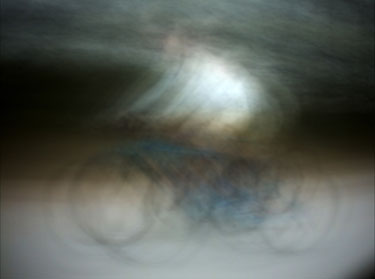
A similar goal is pursued by Jim Campbell (a brilliant artist with degrees from MIT, who also holds dozens of patents in the field of video image processing) in his’ Illuminated Averages’ project, a series of images displayed in light boxes in which each image is created by “averaging” all of the frames of a moving sequence. For example the first one created (2000) was an average of all the frames of the film ‘Psycho’. Placing all of the frames on top of each other, he created an image that contains all of the film’s visual data (I would love to see ‘Accumulating Psycho’ (2004), the video that documents this gradual accumulation process, with the sound of the film remaining intact!). “But he works with digital, and not analog, technology”, writes Helfert. “At issue is thus not the duration of exposure that produces a certain amount of light, but the addition of individual film images and their data. Here, image after image are superimposed on one other, producing a concentration of light and contrast that only allow the outlines of a plot to be glimpsed in the less strongly illuminated parts of the image. In this process, time manifests itself as light and the superimposition of different degrees of brightness.” The influence of Bragaglia and Balla in particular is apparent in other works in this series, for which he videotaped movement of several objects – a clock, an automobile, a bicyclist, a cow – for a specific period of time, and then used custom hardware to average the multiple frames into one single image. The result is a blurring effect that gives the appearance of motion.
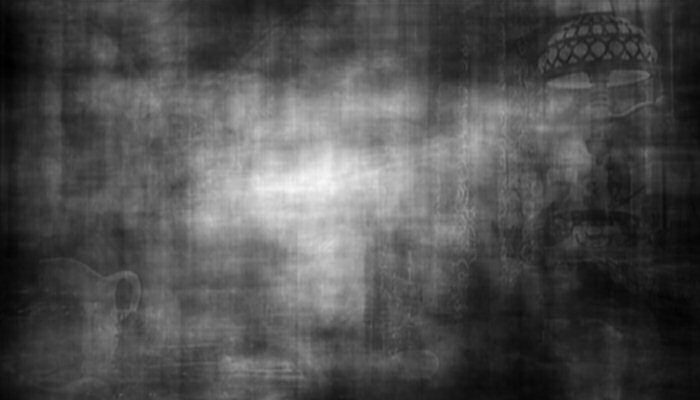
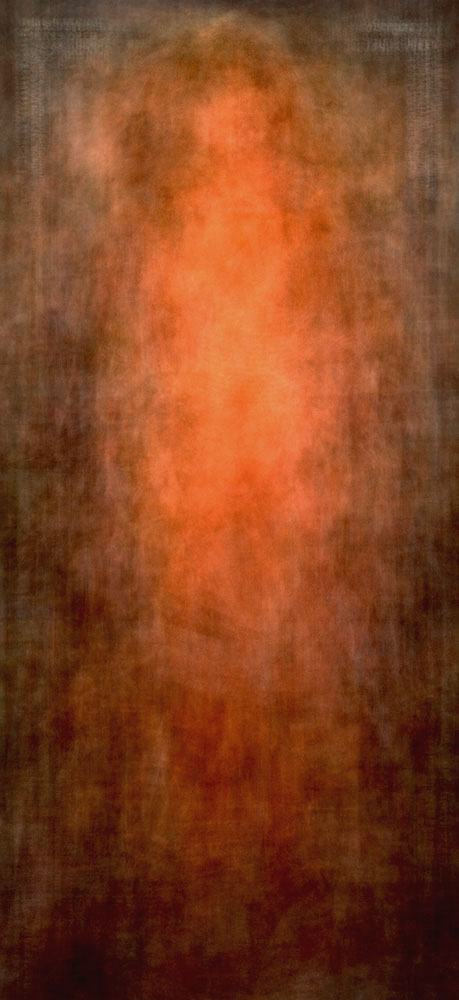
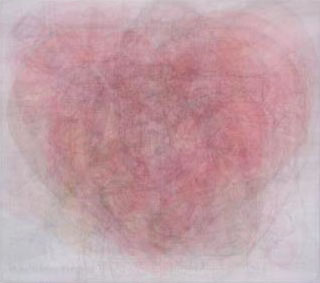
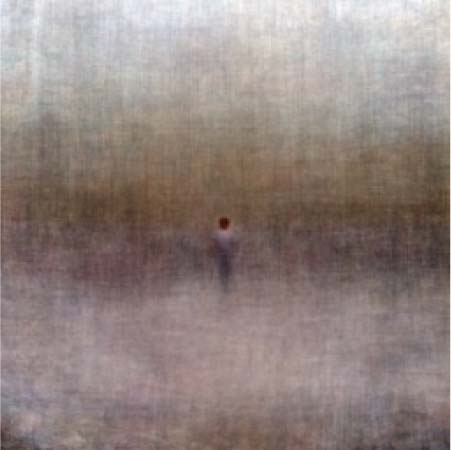
There are quite a few contemporary artists/scientists exploring similar ideas. Jason Salavon has used custom made software to “average” sets of photographs (but also music & video) sharing common characteristics, like Playboy centerfold foldouts (in ‘Every Playboy Centerfold, The Decades’, 2002) and late night talk shows (the video installation ‘The Late Night Triad’, 2003). Besides these “amalgamations” he’s also done works with “color-averaged frames”, in which the overall color-value of individual frames of film and video are used to compose abstracted projects. ‘The Top Grossing Film of All Time, 1 x 1’ (2002), for example, is a static image showing all of the frames of the movie ‘Titanic’ reduced to the average color most representative of each frame. In the same vein Antonio Torralba and Aude Oliva ( both @ MIT) made a series in which images containing a person are averaged to reveal regularities in the intensity patterns across all the images. In the series ‘Go Ogle’, Meggan Gould has taken the first 100 responses to a Google image search – like “heart” – and overlayed those images into a single photographic “average.” As Gould herself writes: “The results, a visualization of intersections between Boolean logic and the popular imagination, are more often than not a hopeless jumble of unidentifiable pixels – but occasionally a recognizable form does emerge.” Atta Kim (who holds a degree in mechanical engineering) has done similar stuff in his ‘ON-AIR ‘ series, which consisted of “overlaid” images, as well as extended exposures that record the dissipation of objects and people. Influenced by Heidegger’s speculations on time, along with the teachings of the mystic G. I. Gurdjieff and Zen Buddhist thinking, he bases his work on notions of interconnectedness and transience – time as a quantifiable, linear entity is a mirage. His view of several NY locations leaves all the stationary elements in focus, but reduces traffic to a shimmering haze, a ghost of motion. A couple making love for an hour is a cloud of luminosity.
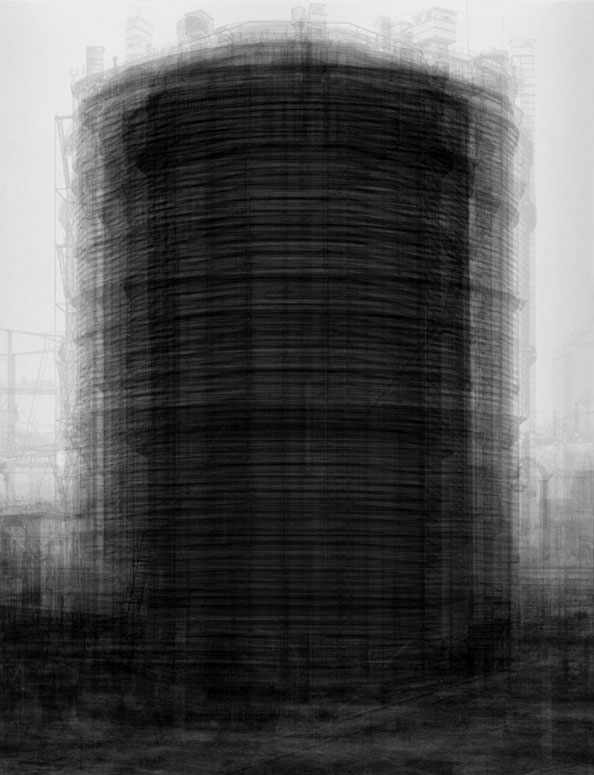
Idris Kahn, who I mentioned before, has done some fascinating work. Noteworthy is the series of images he made by superimposing Bernd and Hilla Becher‘s photographs of industrial buildings, while digitally manipulating them to emphasise certain details or to enhance areas of light and shade. He has said: “it’s obviously not about re-photographing the photographs to make exact copies, but to intervene and bring a spectrum of feelings – warmth, humour, anxiety – to what might otherwise be considered cool aloof image. You can see the illusion of my hand in the layering. It looks like a drawing. It’s not systematic or uniform. The opacity of every layer is a different fallible, human decision”. The resulting, strangely transient, images do have quite a bit in common with some of Krzysztof Pruszkowski’s ‘Photosynthesis‘ work, which he started in 1975 – and without the use of digital techniques. Jerome Sans has written: “By subjecting his photographic topics, whether they are taken from the media or not, to “multiple superimpositions,” Krzysztof Pruszkowski demonstrates the limits of the new reality–a reality which dissolves the notion of time picture by picture and, in a way, accounts for the speed which characterizes some video clips, the instant circulation of information and pictures around the world. We are no more in the order of the snapshot. (…) The artist does not interpret the world by establishing its apparent form but rather restores its complexity and places it in a context which reveals the richness of its metamorphosis”
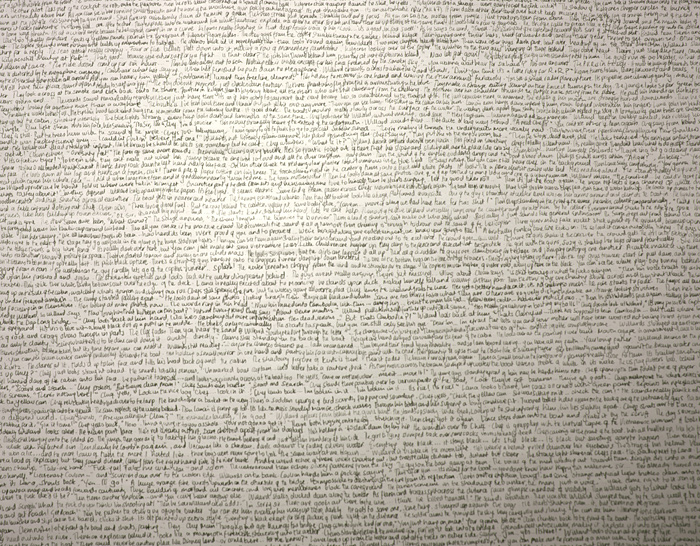
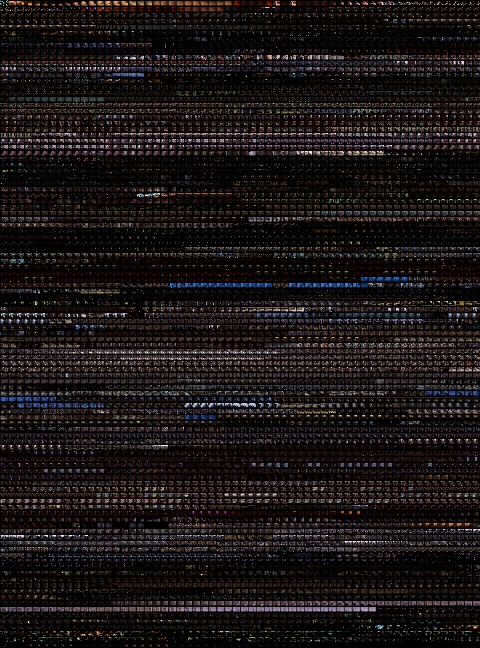
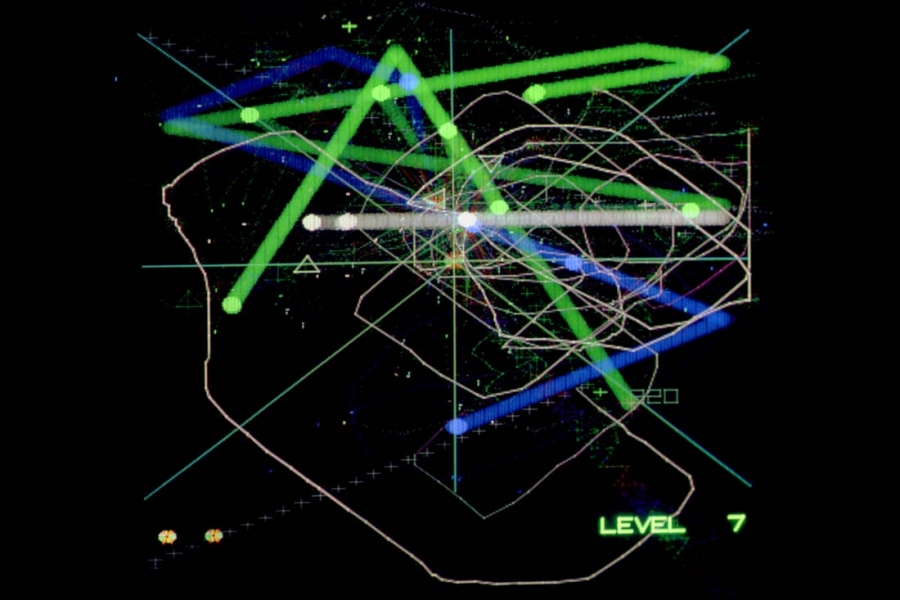
Others took the condensation of motion in surprising directions. Fiona Banner for one explores the relations between linguistic and visual perception in her “still films”: handwritten, blow-by-blow descriptions of films such as ‘Apocalypse Now’ (along with other war movies in ‘The Nam’, a 1,000-page book, 1997), ‘Lawrence of Arabia’ (‘Desert’, using a vast plane of text similar in scale to a cinema screen – or an expanse of desert, 1994) and ‘Don’t Look Back’ (an installation with the same title screened across three wallpaper panels, 1999). The entire movies can be seen – but not read, because the words pile on so thick that they become too dense to read – in an instant, on a single canvas. For her this transformation is a “stepping back from how the image works on us, yet at the same time still having the image there. It’s a way of being able to work with images without drowning in the deeply complex currency of those images. Hopefully, what’s gained in the process is an original moment of looking at something, or being able to look at something in a different way by side-stepping the image.” In his ‘Cinema Redux’ project, started in 2004, Brendan Dawes explores the idea of distilling a whole film down to one single image by creating unique fingerprints. Films like ‘Taxi Driver’ (see below), ‘Serpico’ and ‘The Conversation’ are processed through a piece of software that samples a movie every second and generates an 8 x 6 pixel image of the frame at that moment in time. It does this for the entire film, with each row representing one minute of film time. The result is, according to Dawes, “a sort of movie DNA showing the colour hues as well as the rhythm of the editing process”. And then there’s also a series of intruiging long exposure photographs by Rosemarie Fiore, taken while playing old video war games. “By recording each second of an entire game on one frame of film”, she has written, “I captured complex patterns not normally seen by the eye”. Seeing the unseen, I guess, is what drives many of these artist/scientists. Their representations of motion make it clear that “the precise, mechanical, glacial reproduction of reality” is not the only way to perceive the passage of time.
“Erasure is never merely a matter of making things disappear: there is always some detritus strewn about in the aftermath, some bruising to the surface from which word or image has been removed, some reminder of the violence done to make the world look new again”.
— Brian Dillon
Some more loose notes on (audio)visual erasure (see also previous post), in the context of a little program we’re doing in a few weeks. One part of the program (proposed title: “Without a Trace. Erasing Inscription, Inscripting Erasure”) will be a performance by Pierre Hébert, titled ‘only the hand‘, starting from Meister Eckhardt’s famous quote “Only the hand that erases can write the true thing” (btw: Godard said smth similar – “seule la main qui efface peut écrire” ” to express his thoughts about the incapacity of art and film to discuss the Holocaust). Hébert explores the relationship of this quote with his own workflow, doing live improvised animation, alternately drawing and erasing. Hébert writes: “the animated movement cannot appear without the action of erasing. It also interest me because it relates the question of truth to very physical actions that put the body into motion, that is writing and erasing, and not just to the act of “saying the truth” although speech is always present as a ground. It seemed to me that the impossibility to attribute this sentence to any single author did authorized me to give it a meaning that suited my needs without necessarily discarding all of the possible historical interpretation of it”.
This is an extract of a performance he did in Beyrouth (French version)
This performance somewhat relates to Christian Capurro‘s ‘A.M.P.E.d.S. (Another Misspent Portrait of Etienne de Silhouette)’ project (which will be part of the forthcoming edition of the ARTEFACT festival, titled ‘Behind the Image: The Image Behind’), which involves a mass-collaborative erasure of a 246 page Vogue Hommes magazine. “The magazine has been diminished, emptied of its original, primarily pictorial content and re-inscribed, palimpsest-like, by other energies and with other values. In the process, and while maintaining the basic integrity of its original form – an impersonal, mass produced, and ephemeral product of popular culture – this out of date object with little intrinsic worth was transformed: invested with a significant amount of time (267 hours, 49 minutes, 5 seconds…), of attention, of labour, and propositionally endowed with considerable value (AUD$11,349.18…). The artefact that has resulted from this drawn-out, yet economical mass undertaking could be thought of as a social and/or artistic document of a certain disproportionate investment and disproportionate attention: one that hopefully embodies some of the paradoxical impulses evident within the contemporary politic of images, toward both negation and proliferation”.
In some ways, writing or painting can already be considered as acts of erasure (see Brian Dillon, ‘the revelation of erasure‘) (just as animation and cinema can be seen as acts of progressive erasure: one image superseding the previous one to create an impression of movement). Every painting, said Picasso, is a sum of destructions: the artist builds and demolishes in the same instant. Which is perhaps what Jasper Johns had in mind when he said of Robert Rauschenberg’s ‘Erased de Kooning Drawing’ (1953) that it embodied an “additive subtraction”: after a month’s sporadic destruction – using about 40 rubber erasers to literally rub-out a drawing that he had persuaded de Kooning to give him specifically for that purpose – what is left is a surface startlingly alive, active, palimpsestic. Rauschenberg himself stressed that the main aim of this work was to find out “whether a drawing could be made out of erasing” – the eraser was used as a drawing tool, working over the top of the old drawing, to create a new work. Soundwise, George Maciunas did a similar thing with ‘Homage to Richard maxfield’ (1962) – erasing a master tape of Maxfield while rewinding. Any form of erasure, however violently destructive, can be seen as constructive in some way – any erasure carries within it the potential for renewal or reinvention, made possible by the knowledge gained through the erasure of the old. For Willem Oorebeek, whose ‘Black Out’ series consists of pictures which are are overprinted with a layer of black ink – so the image is only visible when the light on the black surface is seen from a particular angle – erasure can rescue the image “from a one-dimensional view.” “It subjects it to a momentary form of blankness”, wrote Wouter Davidts, allowing it to resurface again, as an afterimage”. Erasure is a “process which makes the new visible to itself as it redefines what is visible in the old”, wrote Richard Galpin in his essay ‘Erasure in Art: Destruction, Deconstruction, and Palimpsest‘, extending on Derrida’s notion of ‘sous rature’ (under erasure). He gives the example of Ad Reinhardt, who reduced painting to a flat black canvas, which he described as “the last painting which anyone can make”. Joseph Kosuth wrote of his work: “Painting itself had to be erased, eclipsed, painted out in order to make art.”
Kosuth himself made some works that use erasure/deletion in a less “absolute” way, being more involved with the erased “sign”. In his installation series ‘Zero and Not’ (1985 – 1986, see figure above) he partially erased texts by Freud, as a sort of ironic affirmation of Freud’s theories. The text is printed on the gallery wall, then struck through with black tape, so that it is erased but still insists, remaining more or less readable. Candice Breitz uses a similar strategy in her ‘Ghost Write Series’ (see below). With Tipp-ex she whitens out full sentences, paragraphs or just seemingly sporadic words from the text of cheap romance novels. In doing so she creates a space of possibility and imagination, inviting the viewers to reconstruct the narrative itself or accidentally creating their own.
In her ‘Ghost Series’ she again uses Tippex to whiten the bodies of women on ethnographic tourist postcards (see image below). This reminds me of Matt Bryans’ work (see below), for which he snips out black-and-white images from assorted newspapers and, using an eraser, rubs away identifying features to leave only eyes, mouths and shadowy silhouettes – which, in a strange way ressemble the defacings in some found copies of the book ‘Ten Years of Uzbekistan‘ (1934) designed by the Constructivists Alexander Rodchenko and Vavara Stepanova, who were driven to obliterate, with ink and paint, the names and faces of those in that book who had fallen from the favour of and been destroyed by Stalin (documented by Ken Campbell). Gert Jan Kocken also documented some defacings in his work, mainly the remains of Reformation iconoclasm in Holland, England, Germany and Switzerland. Dillon writes: “More than any other image, an erased human face remains horribly eloquent. In fact, a face cannot be made to vanish completely: it stays sufficiently human to horrify by its exact lack of humanity.”
Breitz’ ‘Ghost Series’ also reminds me of Naomi Uman’s amusing 1999 film ‘Removed’, for which she used nail polish remover and household bleach to erase the female figures from an old and forgotten porn film (see still). The wriggling holes in the film become erotic zones, blanks on which a fantasy body is projected, creating a new pornography. Variations of this idea can be found in photography project such as Justin Jorgesen’s ‘Obscene Interiors‘ or John Haddock’s ‘Internet Sex Photos‘, as well as Pierre Bismuth‘s ‘Collage For Men’.
Oliver Laric (see also previous post) did quite the opposite in ‘Touch My Body (Green Screen Version)’, appropriating a video of Mariah Carey and leaving her figure intact but deleting the background images surrounding her body, digitally replacing it with a flat green backdrop, leaving it open for multiple fillings and interpretations (which are flowing on the internet right now).
Erasure can also be understood as camouflage, like in Paul pfeiffer‘s work. In the ongoing photo series ‘Four Horsemen of the Apocalypse’ he edited out all players from images of basketball games, except one. What remains is not an absent but rather an intensified figure. In ‘The Long Count (I Shook Up The World)’ (2000), he altered the footage of a boxing match by digitally erasing the boxers. What’s left on the ring is their ghostly outline, a transparent aura through which one can clearly see the exhilarating reactions in the faces in the crowd of the match. This editing process is very slow and ultimately very manual and requires going frame by frame, even though to a degree the process is somewhat automated through software tools. “It’s like the computer can only think so much and then the human hand and eye really have to do the rest of the refining work”, says Pfeiffer. Filmmaker Martin Arnold can probably acknowledge that. Since 1997 he has been working on a series of works in which he erases actors and actresses from film fragments – like the shower scene from Alfred Hitchcock’s ‘Psycho’. For his video installation ‘Deanimated’ (2002) he literally “de-animated” an old, hour-long Hollywood b-movie (‘The Invisible Ghost’ from 1941) by digitally erasing one character at a time. The increasingly empty scenarios, at times inhabited by actors whose facial expressions have been morphed, “create a ghostly effect that serves to remind us of our own mortality”, reporting the ever presence of abscence. “Essential protagonists of the plot are deleted from the film by ‘digital compositing’, the mouths of couples engaged in a dialogue are morphed closed, orchestral film music surges up to add a dramatic emphasis to non-events. What remains are only traces of events, scanty circumstantial evidence of happenings whose origins are left unexplained: dust whirling up, the sound of gunshots, the horror reflected on the face of a woman recoiling from the void.”
More digital erasure in, for example, Natalie Frigo‘s ‘November 22, 1963’ (2004), an alteration of the Zapruder footage of the John F. Kennedy assassination with the removal of JFK from each frame (as a comment on the modyfied version that was originally mediatised – frames were missing or destroyed, parts of footage cropped). There’s also Jeannette Ehlers ‘Ghost Rider‘ series. In the last video in this series you see a football game without players, leaving a haunting feeling of absence. Coincidentally or not, Tammuz Binshtock had a similar (but at the same time opposite) idea in 2001, resulting in this video:
More examples. This is a segment (titled “invisible borads”) from ‘Yeah Right!’, a film made by Spike Jonze for the Girl Skateboard Team.
And this is a fragment of Martijn Hendriks‘ ongoing video project, based on Hitchcock’s 1963 film ‘The Birds’ from which all birds have been removed (Stephen Fox apparently did smth similar in his video ‘the birds’ (2005), but I never saw that)
Hendriks has recently also started working on This is where we’ll do it, a series of YouTube videos he downloaded, manipulated and uploaded again. He writes: “… the absence of essential elements from widely known images has taken center stage. By digitally erasing exactly those things that matter most, absence, background, memory and doubt are shown to become unexpectedly productive”. This is #6:
Mungo Thomson has used this procédé wonderfully in his ‘The American Desert (for Chuck Jones)’ (2002). He erased the characters from classic Road Runner cartoons, leaving only their barren landscapes. Protagonists and narratives excised, the desert scenes mimic landscape painting. Mostly static, there are only oblique traces of the mayhem that we are used to seeing unfold in these unforgiving wastelands: a train rushes by, we hear rocks tumble down a cliff, a waterfall. As a tribute to animator Chuck Jones, the meditative landscapes also focus attention on the production and iconography of mass media images, how they influence our everyday perceptions, and how they’ve become an indispensable part of Western cultural history. Again, coincidentally or not, a year later Stephen Gray did a similar thing in the video ‘Beep prepared’ (2003).
The work shown below is very nice as well. This time it’s not based on any photo- or videographic manipulation, but a modification of Nintendo’s ‘Super Mario’ game. Gone is the main character, who the player had to guide through a labyrinth in the original jump and run game, just like the obstacles, landscapes and opponents that lend the game its narrative structure. Artist Cory Arcangel (see also previous post) had to open the cartridge, on which the game was stored, and replace the Nintendo graphics chip with a one on which he had burned a program he had written himself. As the Source Code is available on the net, the work has continued to perpetuate itself via the Internet, and has been replicated and modified in numerous iterations. The duo JODI has also done an “erased” version of the Quake game, as part of the ‘Untitled Games’ project. In this particular modification (there are 12 for Mac and 13 for PC) all graphical element – monsters, characters and backgrounds – have been eliminated. What remains is the interface components and sound (download it here).
The act of erasing itself is central in the animated films of William Kentridge and Naoyuki Tsuji, which are based on charcoal drawings that are altered and erased in the process. For each film dozens of drawings are made, which undergo continual addition, permutation and erasure, the traces of which are plainly visible. A similar metod is used by Nalini Malani in her first film, ‘Memory; Record/Erase’ (1996), for which she painted directly onto glass, drawing over or erasing the previous images – capturing the ephemeral and unreliable nature of memory and identity.
And this is a very nice one too (thanks PP): Denis Savary‘s ‘Le Bourdon’ (2004-2007). Here’s an excerpt:Other examples: Jules Engel’s ‘Accident’ (1973) shows a loop of a dog loping left to right, progressively blurred or erased. Nadia Hironaka has a 16mm installation, entitled ‘Camouflage'(2002), which starts with appropriated images of explosions that are gradually transformed with a hand-fabricated looping mechanism that exposes the film to bleaching vapors. As the film continues the cycle, its emulsion slowly fades and the image is slowly washed away from the filmstrip. In Kirk Tougas’ ‘The Politics of Perception (1973 – see Ghosting the Image program) segments from the trailer of ‘The Mechanic,’ an action flick with Charles Bronson, are continuously repeated over a period of a half hour. The sound and image quality constantly deteriorate until both picture and sound assume the status of “noise”. The point of exhaustion that the film implies is a phenomenological reduction that is explained by Tougas’ conception that “film is a process where we take shadows and modulate an artificial sun (by intervening celluloid patterns).” According to Tougas it is like viewing “the history of photography and representation in reverse… slowly”. A variation of this process can be found in JJ Murphy’s ‘Print Generation’ (1973-1974), for which a one-minute piece of film was re-photographed fifty times over. It begins with isolated particals of emulsion that slowly cohere into increasingly complex forms. Once the images are brought up to full color and form, the movie heads back toward abstraction (note that as the image distorts, the sound becomes clearer, and vice versa). According to Scott MacDonald the film “provides an extended exploration of the fragility of the filmstrip and its inevitable entropy over time” as well as “invites the viewers to study the motion of their own consciousness, especially the process of their apprehension of visual information.”
Erasure can be considered as a ‘surplus’ to the original “text”, in graffiti for example. Roland Barthes, writing in relation to Cy Twombly, who he describes as a “painter of writing”, wrote that “what constitutes graffiti is in fact neither the inscription nor its message but the wall, the background, the surface (the desktop); it is because the background exists fully as an object that has already lived, that such writing always comes as an enigmatic surplus… that is what disturbs the order of things; or again: it is insofar as the background is not clean that it is unsuitable to thought (contrary to the philosopher’s blank sheet of paper)…”. Galpin describes this with the word palimpsest, which originally referred to “writing material or manuscript on which the original writing has been effaced to make room for a second writing”.
Rosalind Krauss wrote in reference to Twombly’s work : “the formal character of the graffito is that of a violation, the trespass onto a space that is not the graffitist’s own, the desecration of a field originally consecrated to another purpose, the effacement of that purpose through the act of dirtying, smearing, scarring, jabbing”. This could also be said of the films of Cathy Joritz, who uses various direct-on-film animation techniques to penetrate and appropiate the existing images on the celluloid (see Ghosting the Image and Drawn to Life programs), or this (less effective) video by Clare E. Rojas & Jeffrey Wright, titled ‘The Manipulators’ (1999), for which they used sharpie markers and white-out correctional fluid to cover and alter advertising and fashion magazine images.More fun stuff, based on the principle of animated graffiti: a great wall-painted animation by the BluBlu collective.
… which relates to this documentary, Matt McCormick‘s ‘The Subconscious Art of Graffiti Removal’ (2001), documenting and “analysing” (tongue-in-cheeck) the seemingly mundane job of graffiti removal (what graffiti writers call “buffing,” or “getting buffed”). Here’s a fragment:
And as Brian Dillon suggests, excess can be a form of erasure too. Dillon refers to Honoré de Balzac’s story ‘The Unknown Masterpiece’ (1837), in which the painter Frenhofer labours for years at a picture of a young woman, until she disappears, leaving only a tiny, perfect foot looming out of the surrounding chaos. An example of this idea can be found in Idris Khan‘s work. For ‘every…page of the Holy Koran’ (2004) (see image below), he made of photograph of every page of the Koran, which are overlaid to the point of illegibility. “The sacred text overwrites itself until it is a blur of meaningless ciphers, and the vertical gutter between the pages a deep black void”. He has subjected the same superimposition on books by works by Roland Barthes, Susan Sontag and Vilem Flusser, amongst others, and scores of Chopin and Beethoven. Chopin’s ‘Nocturnes for the Piano’ become a frenzied buzz of notes, while Beethoven’s ‘Sonatas’ appear as brooding blocks in which both the overlaid notation and the white spaces between the staves come to seem as meaningful as the dark constellation of notes. By giving the piece the title ‘Struggling to Hear . . . After Ludwig van Beethoven’s Sonatas’ (2005), Khan invokes the composer’s descent into deafness. Notes – laid graphically over one another – produce empty channels fringed by visual buzzing, a strange but compelling visual metaphor for Beethoven’s hearing loss. As David Crowley writes: “here, the technique of sous rature – based on the dynamics of presence and absence – resonates with human tragedy”.