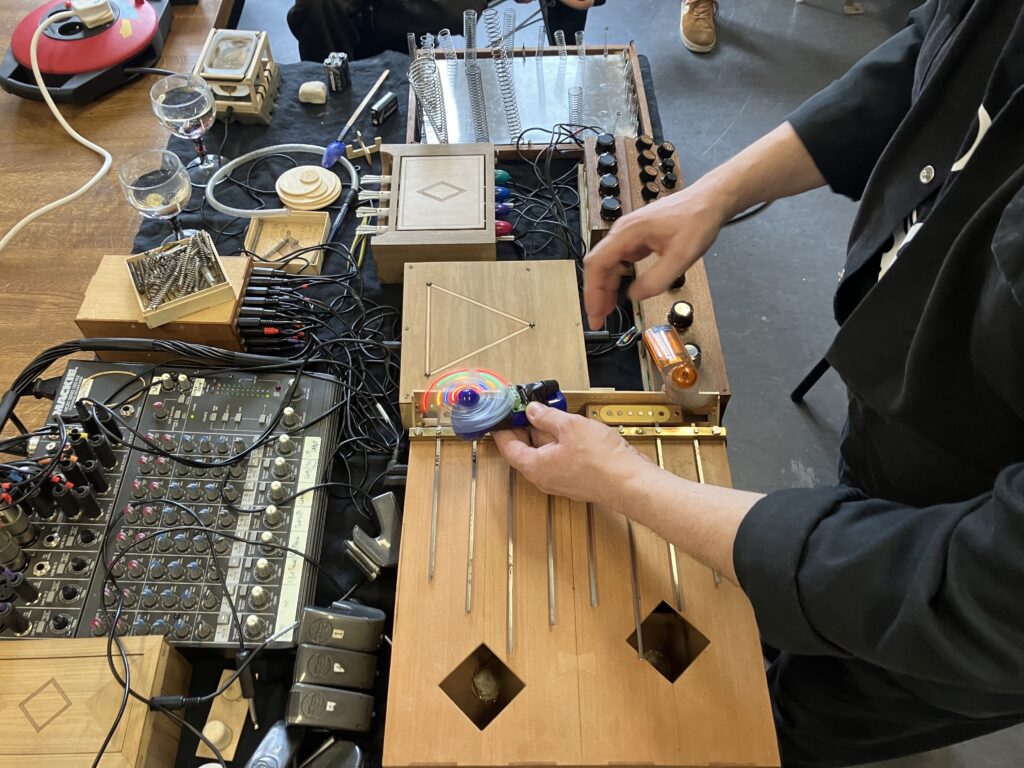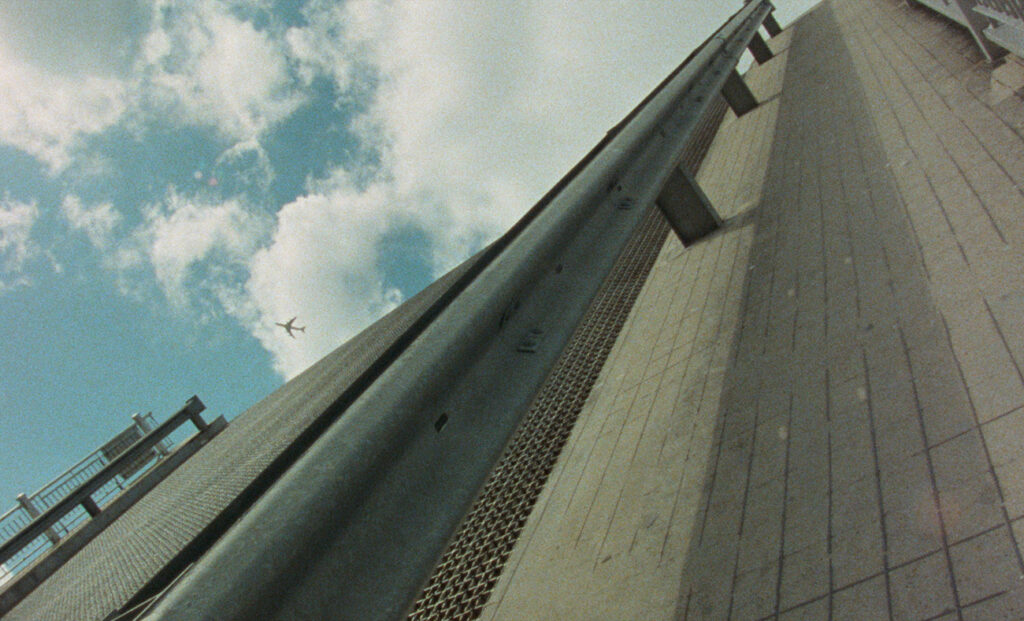
Shadows of the Unseen / Movement Radio 27

27th episode of “Shadows of the Unseen” for movement_radio Athens. Aired April 2023

1. Alain Pierre, Des morts (theme) (from Des morts, Jean-Pol Ferbus, Dominique Garny, Thierry Zéno, 1979)
2. Tujiko Noriko, Romi Sings (from Kuro, Daisuke Shimote, 2012)
3. Jim Williams, Walk to My Still Beating Heart (from A field in England, Ben Wheatley, 2013)
4. Josiah Gabriel, I’ll Fly Away (from We the Animals, Jeremiah Zagar, 2018)
5. Martin Pavey, Metallic Fields (from A field in England, Ben Wheatley, 2013)
6. Bruno Ganz, Lied von Kindsein (from Wings of Desire, Wim Wenders, 1987)
7. Mogwai, Nose Pints (from ZeroZeroZero, Stefano Sollima, Leonardo Fasoli, Mauricio Katz, 2020)
8. Nate Archer, Ocean Bells (from Wild Tigers I Have Known, Cam Archer, 2006)
9. Disasterpeace, Whokiller (from Bodies Bodies Bodies, Halina Reijn, 2022)
10. Excerpts from Trash Humpers (Harmony Korine, 2009)
11. Zammuto, Winter (from We the Animals, Jeremiah Zagar, 2018)
12. Bitchin Bayas, Stormy Sky (from Sailing a Sinking Sea, Olivia Wyatt, 2015)
13. Jan Jelinek, The Water seems changed to mist and vapor (from SEASCAPE – polyptych AV software, Clive Holden, 2022)
14. Excerpts from Equus (Sidney Lumet, 1977)
15. Alain Pierre, Clown (from Des morts, Jean-Pol Ferbus, Dominique Garny, Thierry Zéno, 1979)
16. Ben LaMar Gay, Amanhã É A Gente + Melhor Que Tem (from This is Bate Bola, Ben Holman, Neirin Jones, 2018)
17. Devonte Hynes, A Couple Deer (from Queen & Slim, Melina Matsoukas, 2019)
18. Matthew Herbert, It’s Over (from The Responder, Tony Schumacher, 2022)
19. Ben Babbit, Two Yous – The Zwilling Hotline (from Paris Window, Amanda Kramer, 2018)
20. Alain Pierre, Cyrogene (from Des morts, Jean-Pol Ferbus, Dominique Garny, Thierry Zéno, 1979)
21. Alexander Hacke, March To the Labour Camp (from The Cut, Fatih Akin, 2014)
22. Mogwai, Wake Up and Go Berserk (from Zidane, un portrait du 21e siècle, Douglas Gordon, Philippe Parreno, 2006)
23. Steve Roden, Trainslation (from Variable Fiction, Grégory Chatonsky, 2006)

Breath, Rhythm, Silence, Resonance: Listening Beyond Seeing in the Films of Trinh T. Minh-ha

The interrogation of the relationship between cinema and politics is predominantly associated with the visual domain, where the politics of the audio-visual is all too often reduced to the politics of the image. The publication series Echoes of Dissent aims to parry the hegemony of the eye, and subsequent disregard for the ear, by examining the relationship cinema–politics from a sonic perspective.

Echoes of Dissent #1: Breath, Rhythm, Silence, Resonance: Listening Beyond Seeing in the Films of Trinh T. Minh-ha by David Toop. Published by Courtisane in March 2023.

The publication series is initiated and edited by Stoffel Debuysere, in the context of the research project with the same title at KASK & Conservatory / School of Arts Ghent.

Publication available via Courtisane bookshop

The Murmur of the World

In the context of Courtisane Festival 2023 (Gent, 29 March – 2 April 2023) with the support of KASK & Conservatory / School of Arts. Curated by Stoffel Debuysere in the context of the KASK research project Echoes of Dissent.

The title of this programme, The Murmur of the World, is taken from a piece of writing that critic Serge Daney devoted to Robert Kramer’s Route One/USA (1989). In this film fleuve, Kramer, together with companion and alter-ego Doc, makes a journey from the beginning of Route 1 in Maine to its end in Florida. Along the way, numerous spaces and encounters unfold, combining to form a previously unseen and unheard of picture of the US. In many ways, it is both a sequel to and counter-image of a film Kramer made more than a decade earlier: Milestones (1975). In this vast mosaic of a movie, he took stock of the political radicalism that had spread from the late 1960s onwards in the US and far beyond. With this film, he closed a period whose portrait he had drawn like no other. A disillusioned Kramer then headed to Europe where he found a new base. One need not be a Freudian to see that sooner or later he would return to his starting point.

“Route One/USA,” he said, “comes from a conscious decision to return to the scene of the crime. The interesting thing about this film is that in Milestones, we crossed the entire country without ever talking to anyone who was not part of our crew. Route One/USA was the exact opposite: we were there just to talk, listen and learn.” Serge Daney continued on that élan in his piece: what does a doctor traveling across the hinterland do, he asked. He uses his eyes and takes from his briefcase that old emblem, the stethoscope. He measures up the state of the populations, he takes their pulse. From the people he meets and listens to, along Route One, he expects no truth: he simply follows them through a phase of their existence. He diverts them slightly from their route, as if offering them a free consultation. He does not dramatise the road (it is the opposite of a road movie in that sense), nor the encounter: these people are always there and have other things to do. He feasts his eyes but doesn’t expect anything from them – and that’s exceptional – a voyeuristic added value. Above all, he puts his ear to the ground. Here, cinema par excellence functions as a social and political stethoscope that measures the pulsation of hearts and ideas and lets the murmur of the world, in all its diversity, be heard.

Twenty years later, another filmmaker, Tariq Teguia, measured up the state of his native land. In Gabbla (Inland, 2008), the main character is not a doctor but a topographer returning to the Algerian interior. This choice is no accident: the work of the surveyor – going into the field, looking through a lens, drawing lines – is reminiscent of that of a filmmaker. It also evokes a certain philosophical practice: in a famous text, Gilles Deleuze described Michel Foucault’s work as that of a novel cartographer. Teguia, whose film practice is indeed that of a cartographer, once wrote a master’s thesis on Foucault. Moreover, he devoted a PhD to Robert Frank – whose photo collection The Americans could be seen as a precursor to Route One/USA – under the title Fictions cartographiques. Fiction implies a certain idea of displacement, and it is indeed displacement that the film Gabbla applies to a territory – that of Algeria – which consists in undoing its dominant configuration and confronting, through image and sound, a multiplicity of Algerians. Beyond the official scenarios about the ‘Third World’ and ‘growth countries’, about neo-colonialism, Islamism, liberalism and globalisation, the film, through a form of aesthetic hospitality, inventories and collects different possibilities of life that give new visibility and audibility to the community.

This programme offers a selection of cartographic fictions in which a concatenation of recordings and encounters does not reveal an ultimate truth, but constitutes a possible constellation, as an exercise in togetherness in difference. Fictions that accommodate a multiplicity of voices, languages, geographical and sonic territories, and, as one of the characters in Gabbla suggests, make different islands into an archipelago, taking all the possibilities of life inherent in each to their utmost eloquence.

——
Thanks to Nina Devroome, Kristofer Woods, Elizabeth Dexter, Céline Paini (Les Films D’Ici), Noshka van der Lely, Leenke Ripmeester (EYE), Helke Misselwitz, Mirko Wiermann (DEFA-Filmverleih), Céline Brouwez (CINEMATEK), Louise Richars (mk2), Tariq Teguia, Annabel Thomas (ECLECTIC).

Cues taken from Serge Daney, La Rumeur du monde (1989) and Jacques Rancière, Inland (2011). This selection of cartographic fictions is, of course, not exhaustive. One could also think of Gallivant (Andrew Kötting, 1996), Vers la mer (Annik Leroy, 1999), Rostov-Luanda (Abderrahmane Sissak, 1998), Les Glaneurs et la Glaneuse (Agnès Varda, 2000) or Michel Khleifi and Eyal Sivan’s Route 181 (2003), to name a few.

——
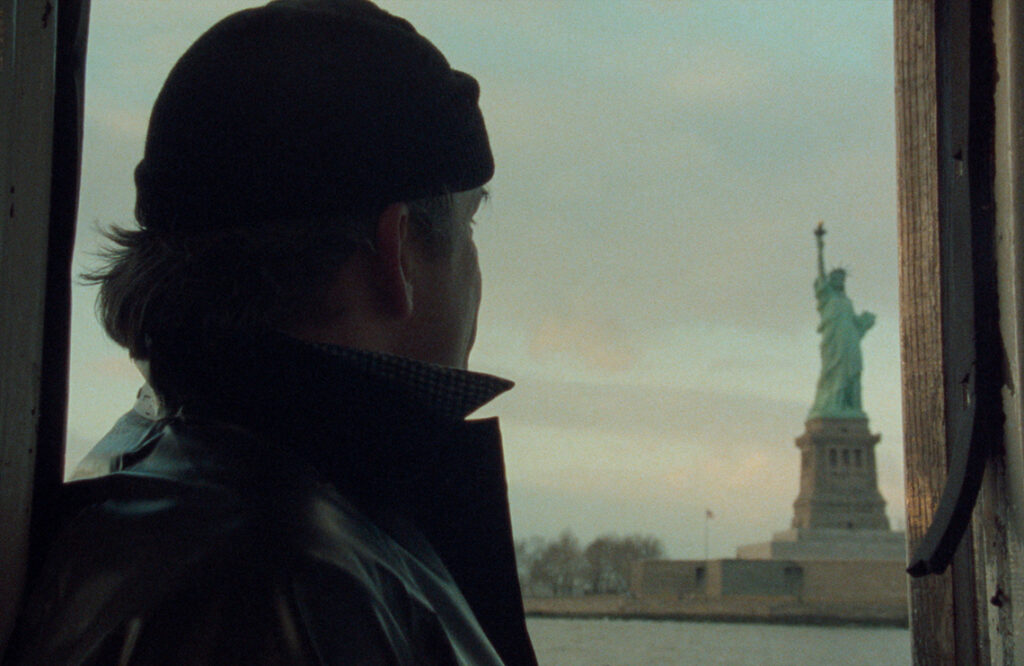
Route One/USA
Robert Kramer, UK, FR, IT, 1989, DCP, 255′

English spoken
Digitized and restored by Les Film D’Ici with the support of the Centre National du Cinema (CNC)

In September 1987, Robert Kramer returned to the US after a decade of self-imposed exile, where he spent five months filming along Route One, which connects Canada to Key West in Florida. In 1936, it was the most travelled route in the world, meanwhile it runs alongside superhighways and through suburbs – a thin strip of tarmac that cuts through all the old dreams of a nation. Together with fellow traveller Doc (Paul McIsaac), Kramer enters a succession of private worlds that steadily reveal themselves to the camera: from a Native American reservation in Maine to the Vietnam Veterans Memorial in Washington DC, from a Thanksgiving dinner at a homeless shelter to a sermon at an evangelical church. The grittiness of Kramer’s earlier militant work has given way to a casual mise en scène, with a fluid camera moving amidst ever-changing characters. Rarely did a filmmaker so fearlessly tread the fault lines between documentary and fiction, between inside and outside, to the point where the film almost breaks in half.

“I had met someone who told me about Route One, and that it was a good way to cross America. From that conversation, with nothing but a map, I wrote a two or three page proposal about a trip along Route One. Without any idea of what kind of film it might be, just the desire to move. Little by little, the project began to take shape. There was still no concept. I’m not sure I even thought I was going to make the film. There was the idea that we always fall back on: that of living a situation… During five months shooting along this route, I did not have the impression of filming the past, but rather of revealing the present. From the shadows of the interchanges, the town centers of glass and steel stand out against the horizon like studio décors. We were in the present, affronting difficult times.“

In the presence of Daniel Deshays

——

De weg naar het zuiden (The Way South)
Johan van der Keuken, NL, 1981, 16mm, 143′

English subtitles
Conservation copy courtesy of EYE

The account of a journey starting in Amsterdam on 30 April 1980 – the coronation of a new queen, the occupation of an office building, a clash with the establishment – and ending up in Egypt via Paris, southern France, the Alps, Rome and Calabria. A “road movie”, says Johan Van der Keuken, “except that the road surface has mostly been rolled up by the wheels of a car or a plane and taken along to the next stop, so that one is moving by fits and starts. Once you are here, then there – and what is between here and there is up to you to fill in: the inner journey, the route you plot out for yourself. In his characteristic intuitive and engaged style, van der Keuken encounters people trying to make a place for themselves: squatters, travellers from country to city, from South to North. An account of outward emigration and inner alienation, but also of resilience and life’s courage. A journey to the South that gradually makes one feel what it means to lose the North.

“It is a story of outer emigration and inner alienation, but also a series of signs of the courage to face life. It is the obsession with rooms, streets, places where people try to communicate their lives to other people and fight their battles against the injustice of the world. The film is long, two hours and twenty-five minutes, but it has to be this long to enable me to record the impressions of a dream voyage and to register changes in perception and style. I had in mind the creation of a composition that would be balanced and yet, at the same time, take shape spontaneously. One often walks on the border of arbitrariness: everyone has something to say.”

——
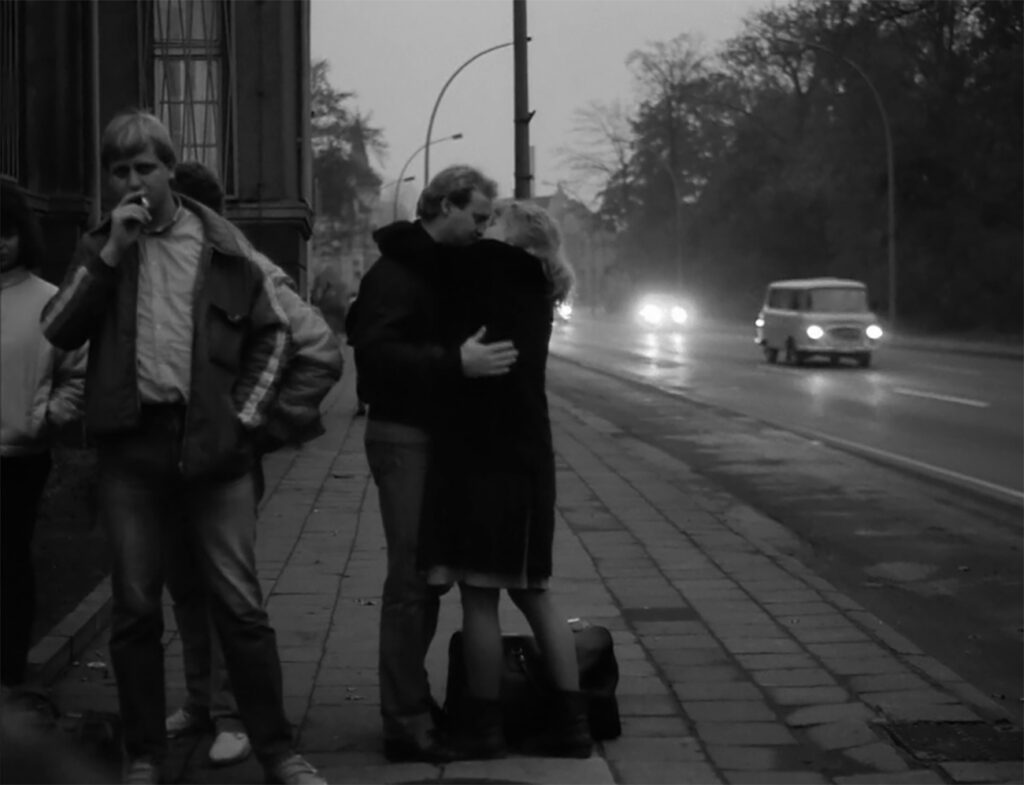
Winter Adé (After Winter Comes Spring)
Helke Misselwitz, DE, 1988, DCP, 116′

German spoken, English subtitles
Digitized and restored by DEFA

In 1987, shortly before the collapse of the GDR, Helke Misselwitz travelled by train from her home near Zwickau in the south to the north coast of East Germany. Along the way, she met women of different ages and backgrounds, whom she filmed with rare tenderness and precision. “For almost forty years, the law has established that women are legally and economically equal to men,” Misselwitz said. “But what has happened in those 40 years in people’s behaviour towards one another? That’s what interested me.” Referring to her own biography – she was born in front of a closed railway crossing – the filmmaker explores how women and girls live in “real existing socialism” and “how they want to live”. The women – two young punks, a worker in a briquette factory, a Berlin economist, and an 85-year-old woman celebrating her diamond wedding anniversary – tell of their disappointments, desires and hopes. Never before had anyone in the GDR appeared so openly and at the same time so naturally in front of the camera to talk about their circumstances and dreams. With the programmatic title “Farewell Winter”, the film marked the untenability of the official stance. It pointed to a clear shift in the mood in East Germany, which finally broke out a year later.

“The three structural elements in Winter Adé are the railroad journey, the intensive meetings with women, and the observation of daily life. The only fixed aspects of the film was that it begins with my birthplace in Zwickau and ends on a ferry on the sea. I definitely wanted to tell about myself in the beginning: by acci­dent, I was born on the road, in an ambulance, right in front of a closed railway gate. And this fact leads into the concept of a rail­way journey. Of course, the railroad is a very important means of transportation in the GDR, but its meaning as a poetic symbol is also clear. It points to the existence of closed borders and also to the internal structure [of the country]: there are many tracks in life, but generally you can’t depart from the one you’re on because the switches are operated by someone else.”

Followed by a conversation with Helke Misselwitz

——
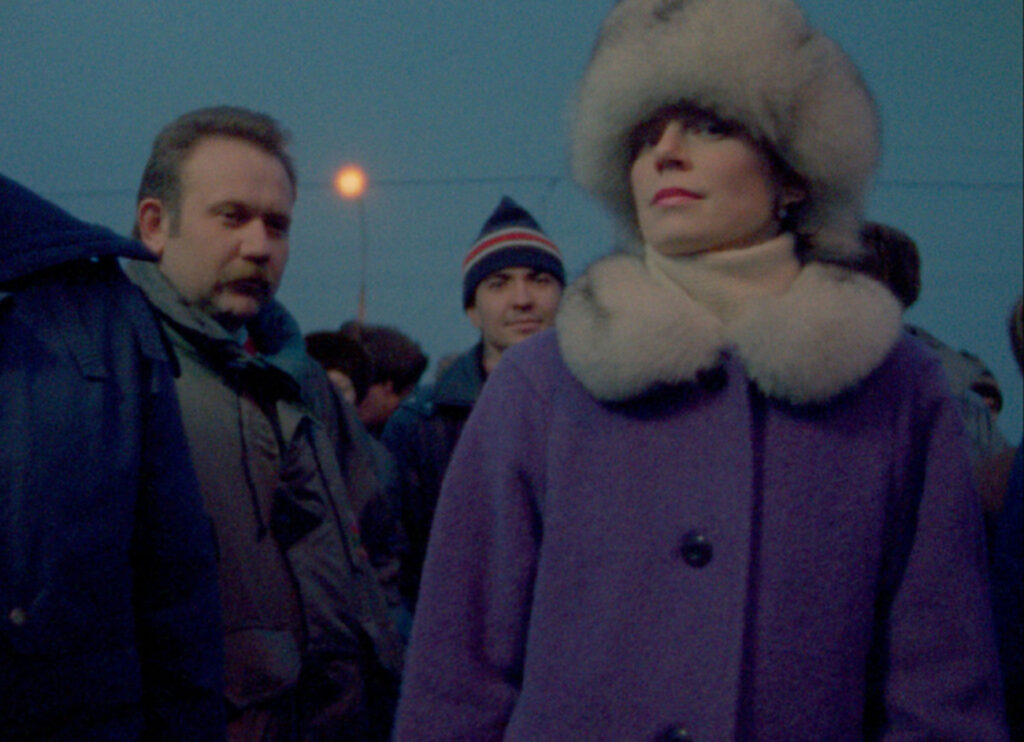
D’Est (From the East)
Chantal Akerman, BE, FR, 1993, DCP, 107′

Newly digitized and restored by CINEMATEK

Between 1991 and 1993, just after the fall of the Berlin Wall, Chantal Akerman travelled through Central and Eastern Europe – to East Germany in the spring, to Poland and Ukraine in the summer, and on to Moscow in the winter. “For already 20 years, I wanted to go to Eastern Europe,” said Akerman, “to work with Slavic languages, which are different but sound quite similar. I wanted to make a work about the changes in voices and languages.” However, the film developed, intuitively, into a completely different form: while the texture of the soundtrack is very important in D’Est, not a single word features in the film. Instead, an audiovisual composition of haunting impressions unfolds, without commentary, dialogue or subtitles. In a succession of long takes, a world in suspension, on the verge of an indefinite future, is revealed. “Without getting too sentimental,” she says, “I would say that there are still faces that offer themselves, occasionally effacing a feeling of loss, of a world poised on the edge of an abyss, which sometimes take hold of you, as you cross “the East” as I have just done.”

“I originally wanted to work with a lot of languages. I had a lot of preconceived ideas, but it was through traveling a lot in those countries and finding things that interested me both in an emotional way and in a cinematic way that the film took shape. We made four trips. We were shooting a bit, but I knew the film was not there yet. So through the traveling I saw these people waiting and waiting and I thought that I should install myself next to them and that would be the film. So the shape was in my mind, but it was still very loose. And then I shot the material and through the editing I started to find the shape. I started to swim. And, in a way, that’s much more interesting than to just follow a story. It’s through cinema that you find the cinema.”

Followed by a conversation with Pierre Mertens. He is one of the most respected sound recordists and sound directors in Belgium, who worked with esteemed filmmakers such as Thierry Michel, Claudio Pazienza, Bruno Dumont, Agnès Varda, and Elia Suleiman. He worked on several films with Chantal Akerman, notably De l’autre coté, D’Est, and La folie Almayer.

——
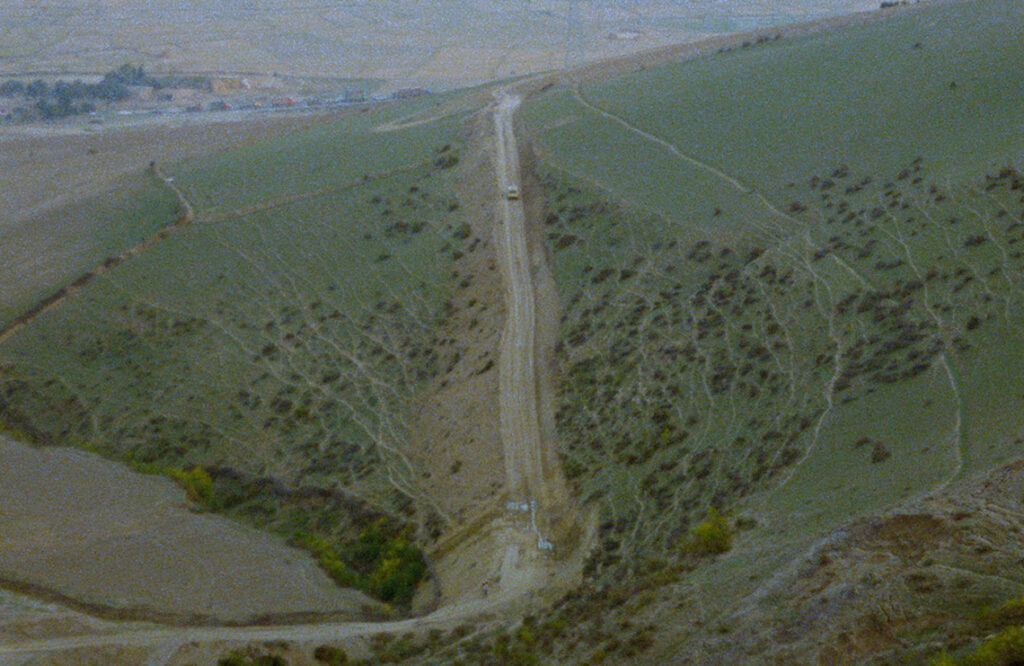
Zendegi va digar hich (And Life Goes On)
Abbas Kiarostami, IR, 1992, DCP, 95′

Persian spoken, English subtitles
Digitized and restored by mk2 films

In June 1990, an earthquake of catastrophic proportions struck Northern Iran, killing tens of thousands of people and causing untold damage. After the disaster, Abbas Kiarostami and his son decided to travel from Tehran to the area around Koker, a village where he made Where Is the Friend’s House? four years earlier, in search of the two child actors who starred in the film. The events of the trip and the story of a young man Kiarostami met along the way, who got married immediately after the disaster, stayed with him, and he decided to return to make a film there. In the fictionalised account of Kiarostami’s journey, as father and son move further into the countryside, the purpose of their mission fades and gives way to a sense of hope amid the rubble. When the locals refused to wear dirty clothes for the re-enactments and instead showed up in their finest attire, Kiarostami replied, “Why not? We are not portraying reality; we are making a film.”

“My concern was to find out the fate of the two young actors who played in the film but I failed to locate them. However, there was so much else to see… I was observing the efforts of people try­ing to rebuild their lives in spite of their material and emotional suffering. The enthusiasm for life that I was witnessing gradually changed my perspective. The tragedy of death and destruc­tion grew paler and paler. Towards the end of the trip, I became less and less obsessed by the two boys. What was certain was this: more than 50,000 people had died, some of whom could have been boys of the same age as the two who acted in my films. Therefore, I needed a stronger motivation to go on with the trip. Finally, I felt that perhaps it was more important to help the survivors who bore no recognizable faces, but were making every effort to start a new life for themselves under very difficult conditions and in the midst of an environment of natural beauty that was going on with its old ways as if nothing had happened. Such is life, it seemed to tell them, go on, seize the days.”

——
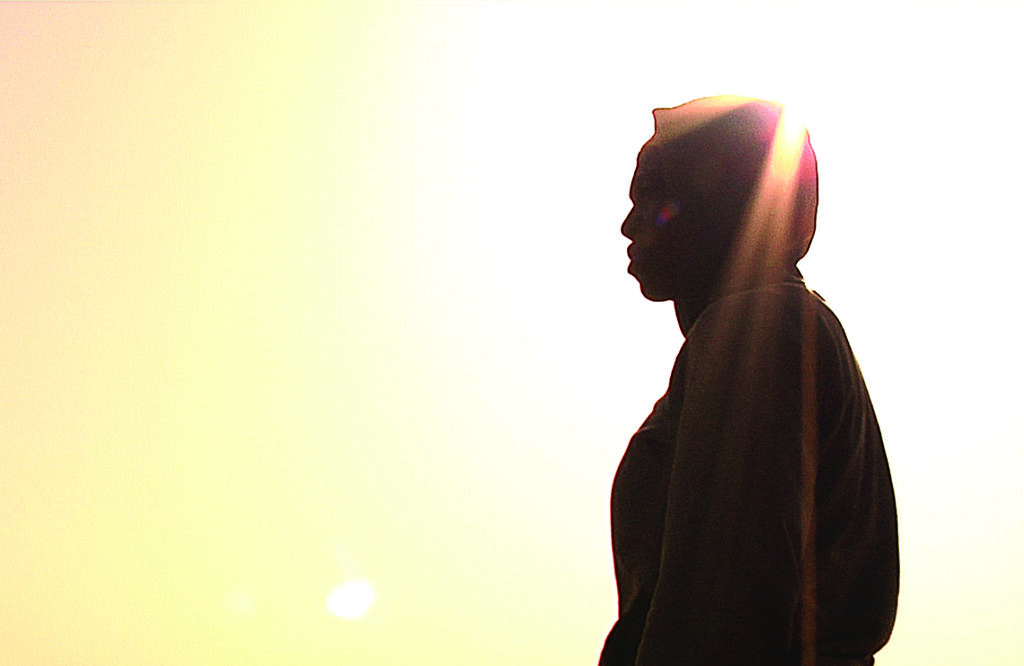
Gabbla (Inland)
Tariq Teguia, DZ, FR, 2008, DCP, 138′

Arab-Algerian spoken, English subtitles

To the challenge of “Algeria documenting itself ”, Tariq Teguia offers an answer in the form of a road movie that turns its back on the city and goes deep into the hinterland. It is the story of a surveyor moving through the steppes of Algeria’s Saïda province, forging new encounters and relations. But it is also an assemblage of lines, colours, rhythms and sounds in which the desert functions not so much as a mythological space, but rather as an intersection of divergent lines of circulation that fleetingly converge only to diverge again: those of the fictional characters, but also those of itinerant workers, those of underground activists, those of illegal immigrants, those of different languages and musical forms. Teguia maps the territory and the different ways it can be inhabited as an amalgamation of intersecting lines, thus testifying to the complexity and heterogeneity that characterises a society. He weaves the lines not to make a pleasing tapestry, but to “see between the stitches”, to reveal the traces of the past and the signs of another possible Algeria.

“My way of proceeding is territorial, spatial, both political and sensorial, and this time I wanted to extend it into the depths of the coun­try, into the heart of the country… This film is in some ways a road movie, but it works at different speeds. Gabbla was born of my intui­tions when I was on location: when I went there, I saw lines, and the film had to reflect these lines. They are lines of circulation, those of the Chinese workers, those of the clandestine activists, those of the illegal immigrants, those of the different languages and musical forms, and those of the fictional characters that I was going to add. I tried, in a plastic and not sociological or journalistic way, to make this intertwining of lines of circulation perceptible.”

In the presence of Daniel Deshays

——
SEMINAR

Within the framework of ‘The Murmur of The World’ programme, we invited Daniel Deshays to reflect on the sonic dimensions of cartographic fictions. In his work as a sound engineer, researcher, teacher and writer, Deshays has developed an extensive reflection on the mise-en-scene of sound, as a creative object all too often considered subservient to the omnipotence of the image. For four decades he has contributed to the development of sound worlds in theatre, dance and especially cinema. He has collaborated with Robert Kramer, Tariq Teguia and Chantal Akerman, among others, whose work is represented in this year’s programme.

——

PERFORMANCES
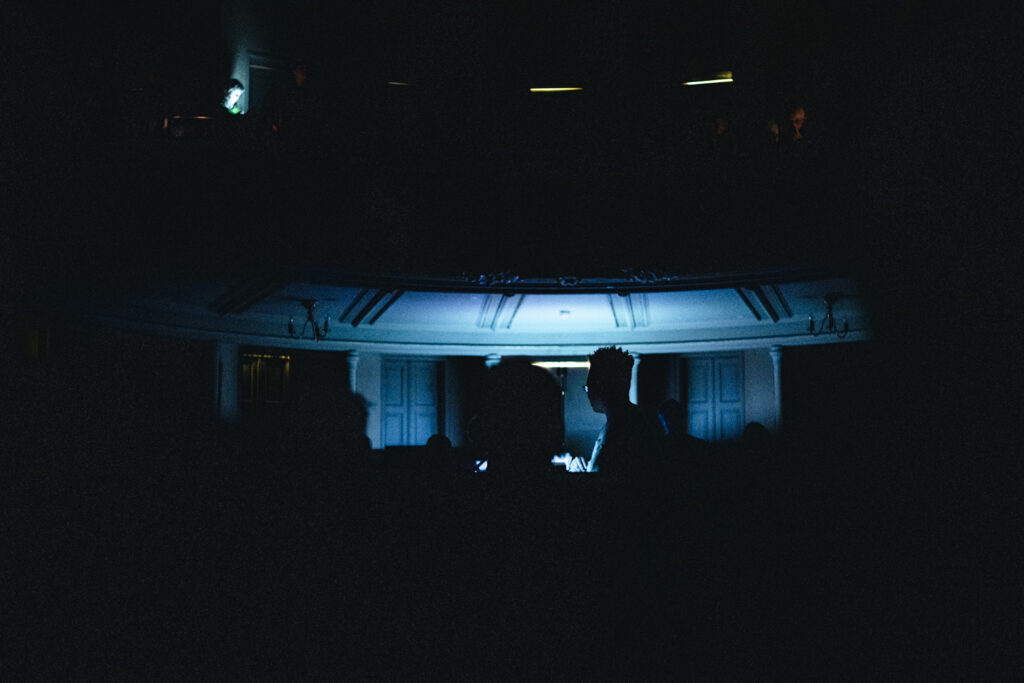
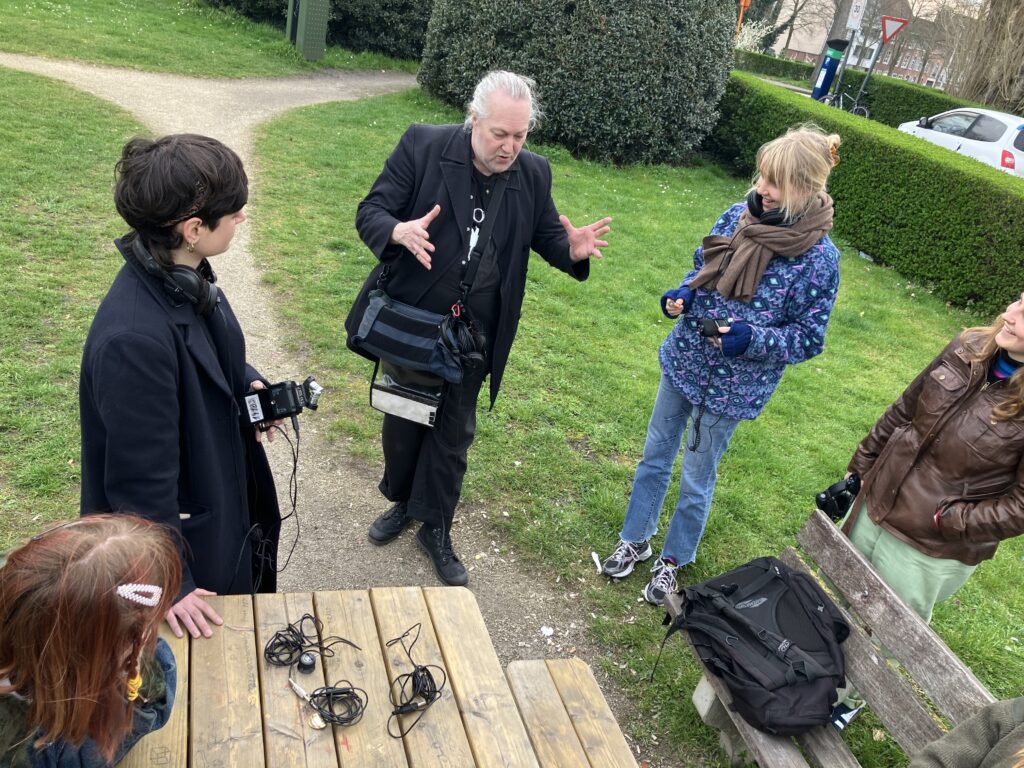
Aurélie Nyirabikali Lierman was born in Karago, Rwanda, and grew up in Belgium. Fascinated by the narrative power of abstract sound and music, she often adds dramatic and documentary elements to a compositional structure. The common thread running through her work is her extensive collection of unique field recordings and soundscapes from East Africa. Sound by sound she transforms and models all those sounds she collected herself into something she describes as “Afrique Concrète”. In the context of The Murmur of the World, she will present a sonic and polyphonic portrait of Kariakoo, a district of the city of Dar es Salaam, the capital of Tanzania.
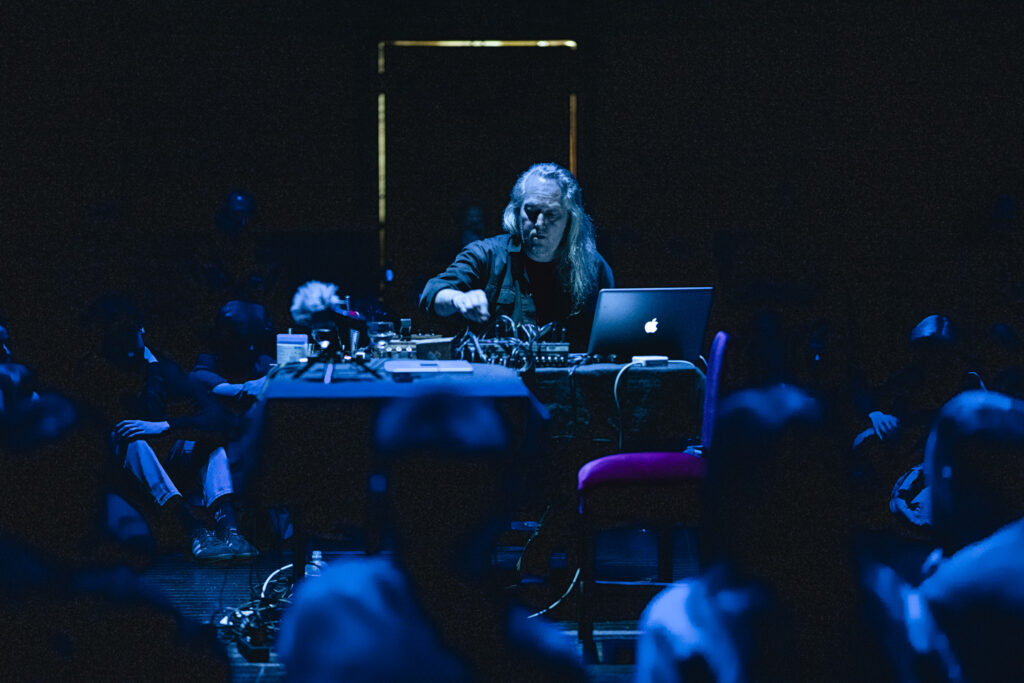
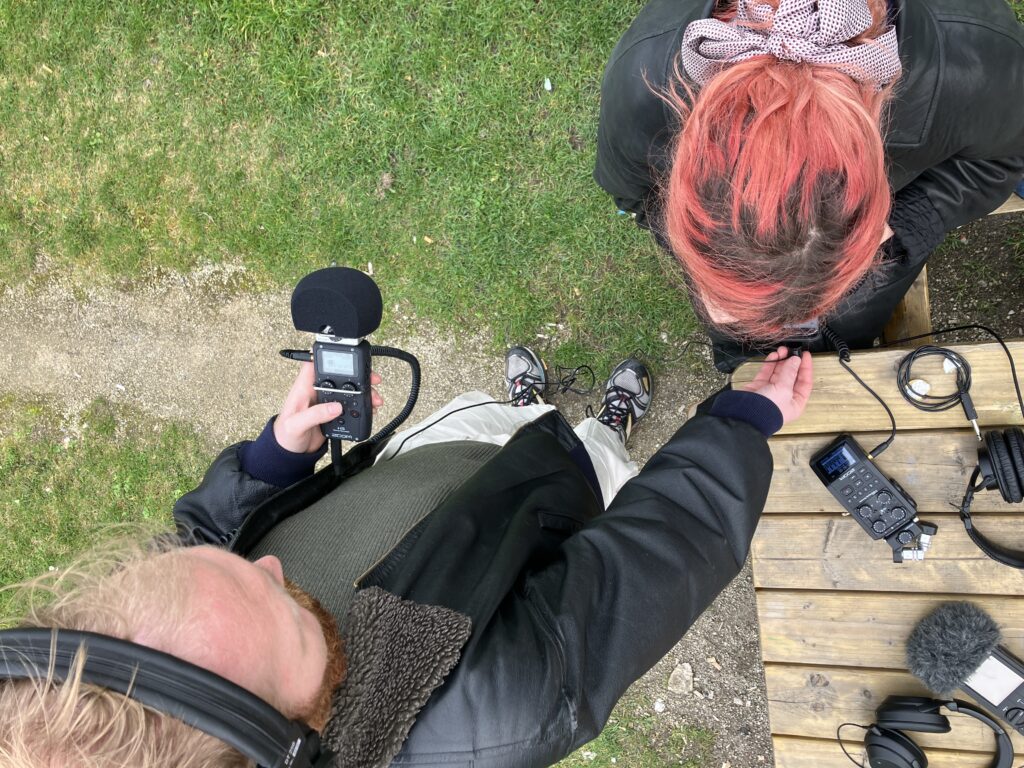
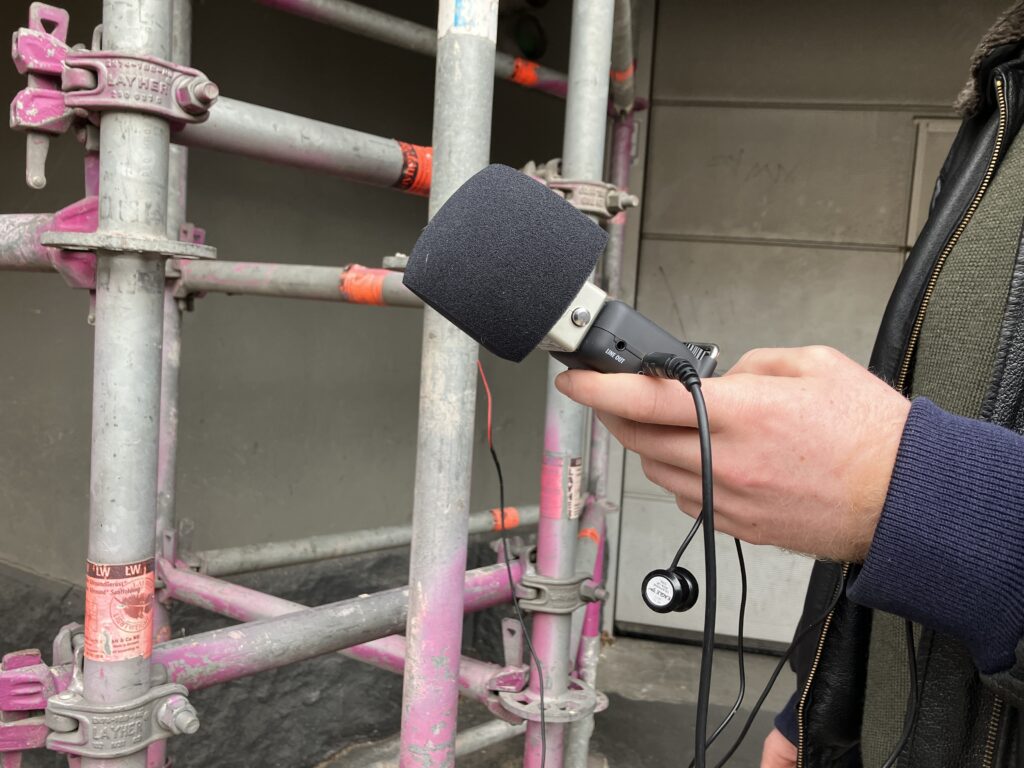
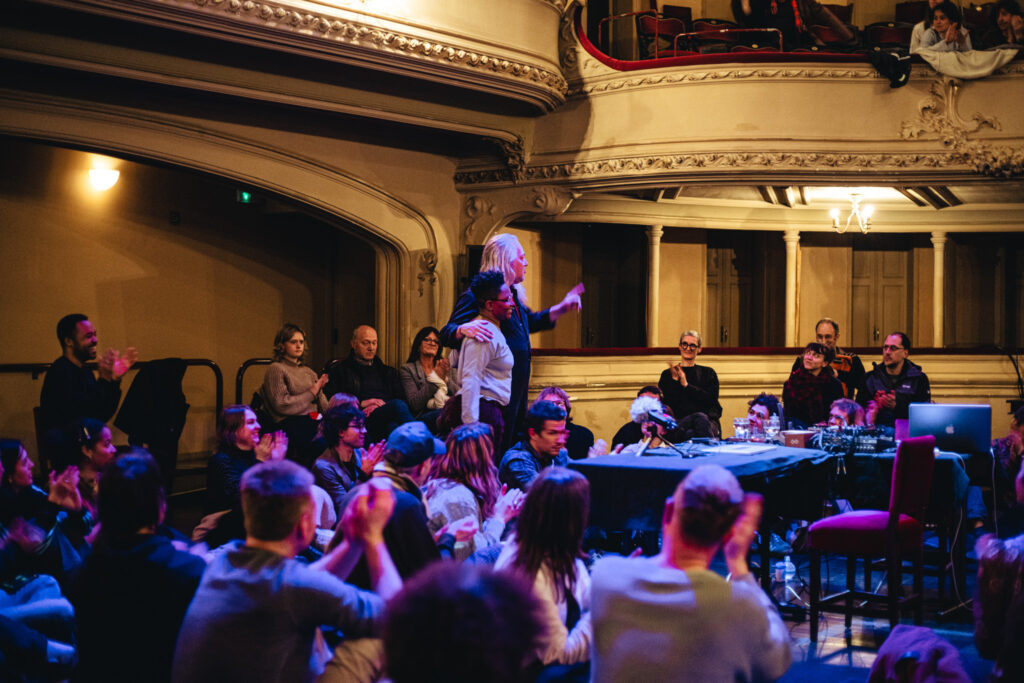
Lee Patterson listens and lets us listen to places and situations that are all too often considered mute. Whether working live with amplification or recording within an environment, he has pioneered a range of methods to produce or uncover complex sound in unexpected places. For example, he provided the sound recordings for Luke Fowler’s Being in a Place, a portrait of Margaret Tait’s life on the Orkney Islands, an archipelago in the Northern Isles of Scotland . In the context of The Murmur of the World, we invited Patterson to perform an alternative version of this portrait, based on the extensive sound recordings he made on Orkney.
——

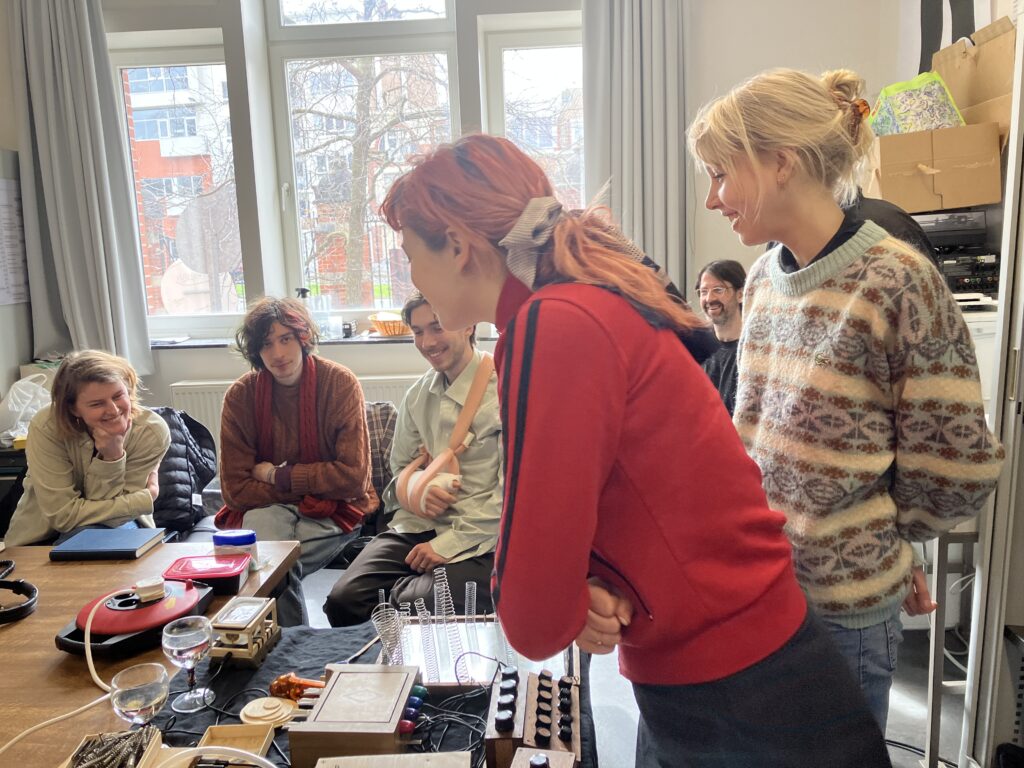
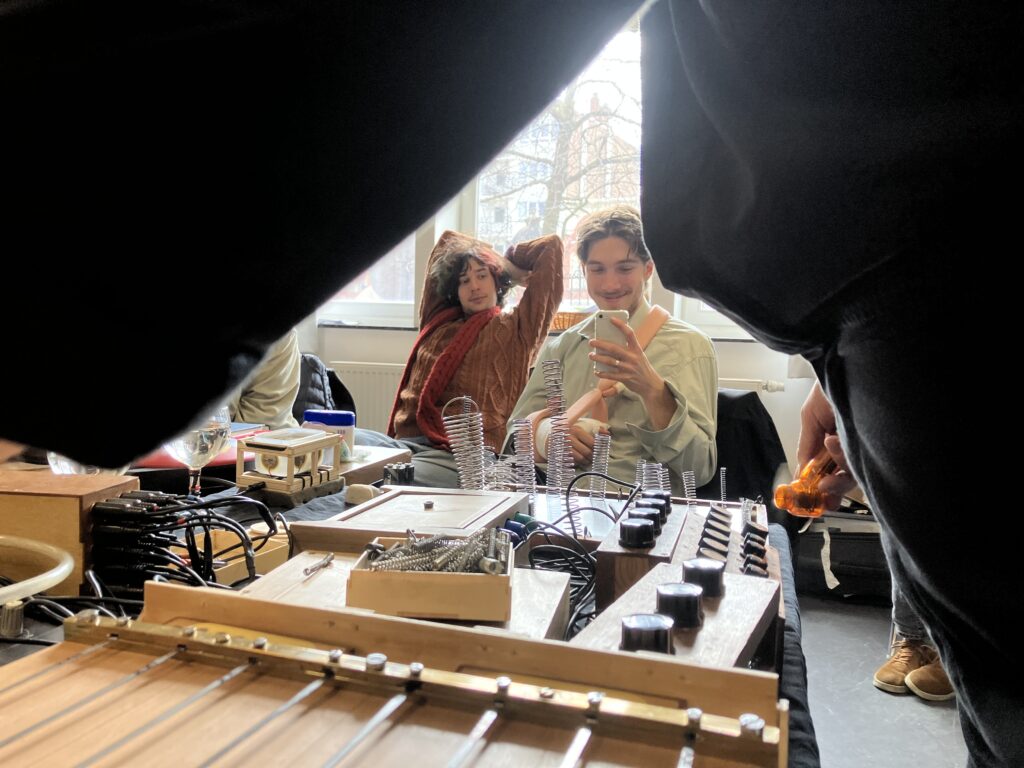
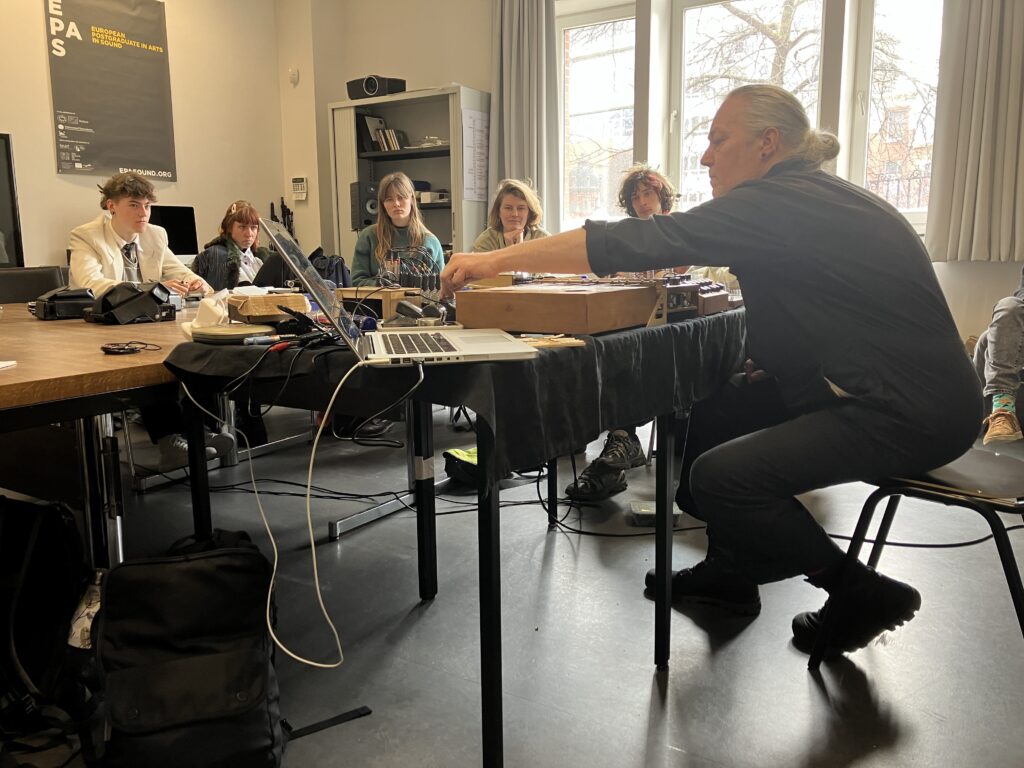
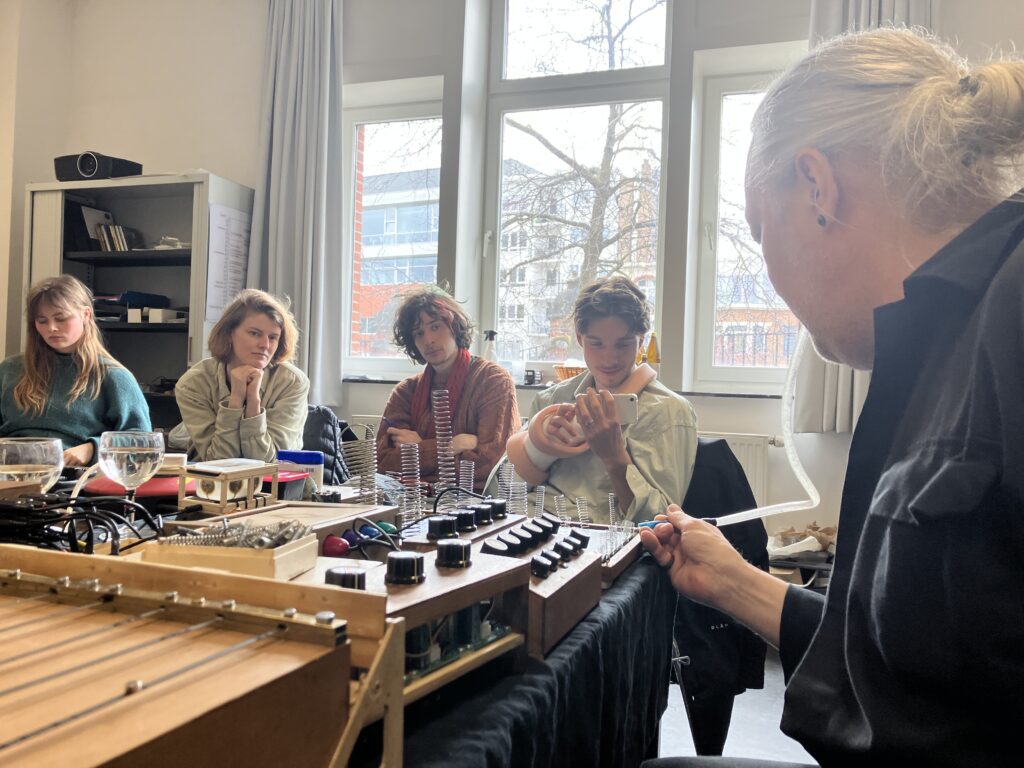
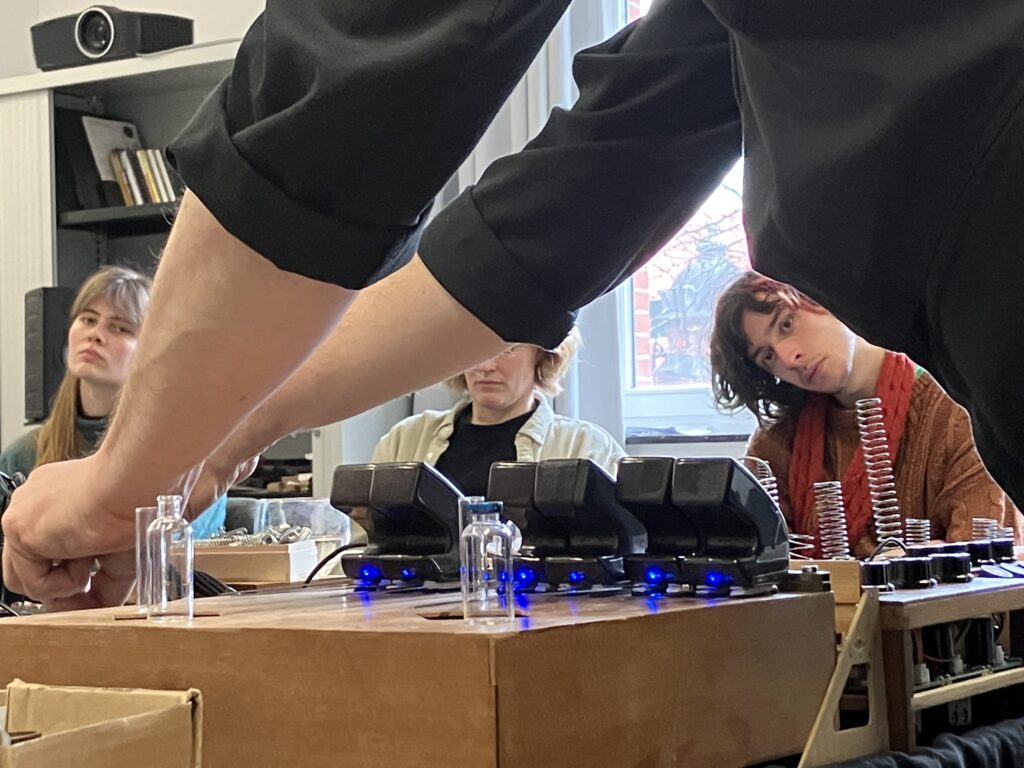
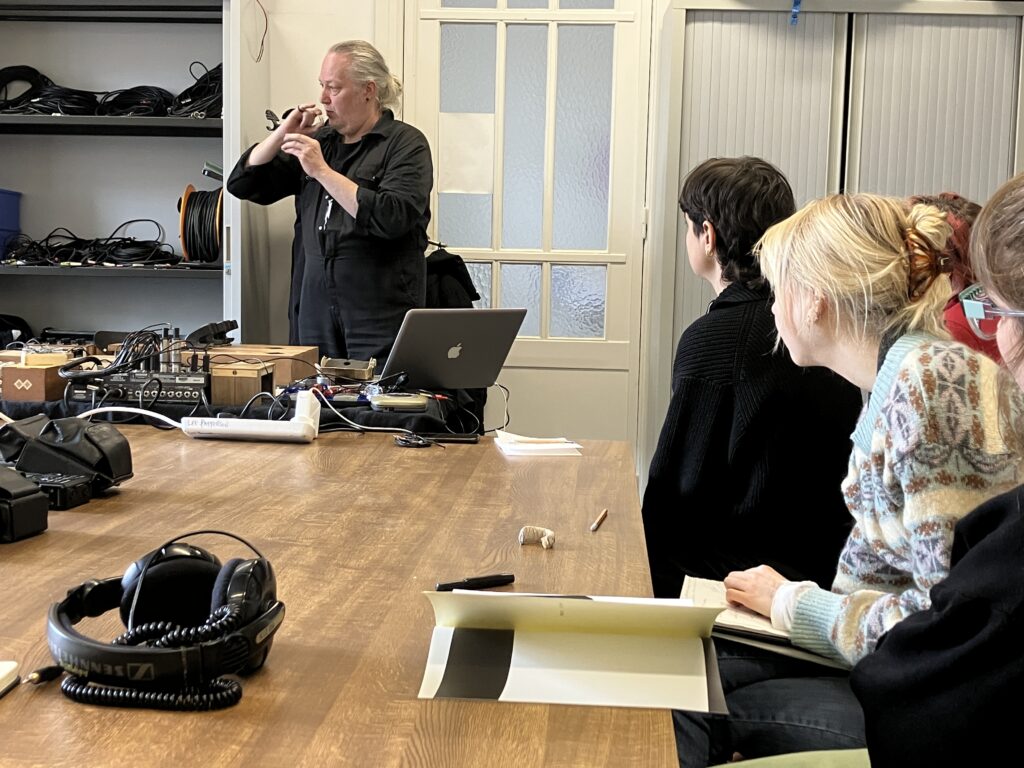
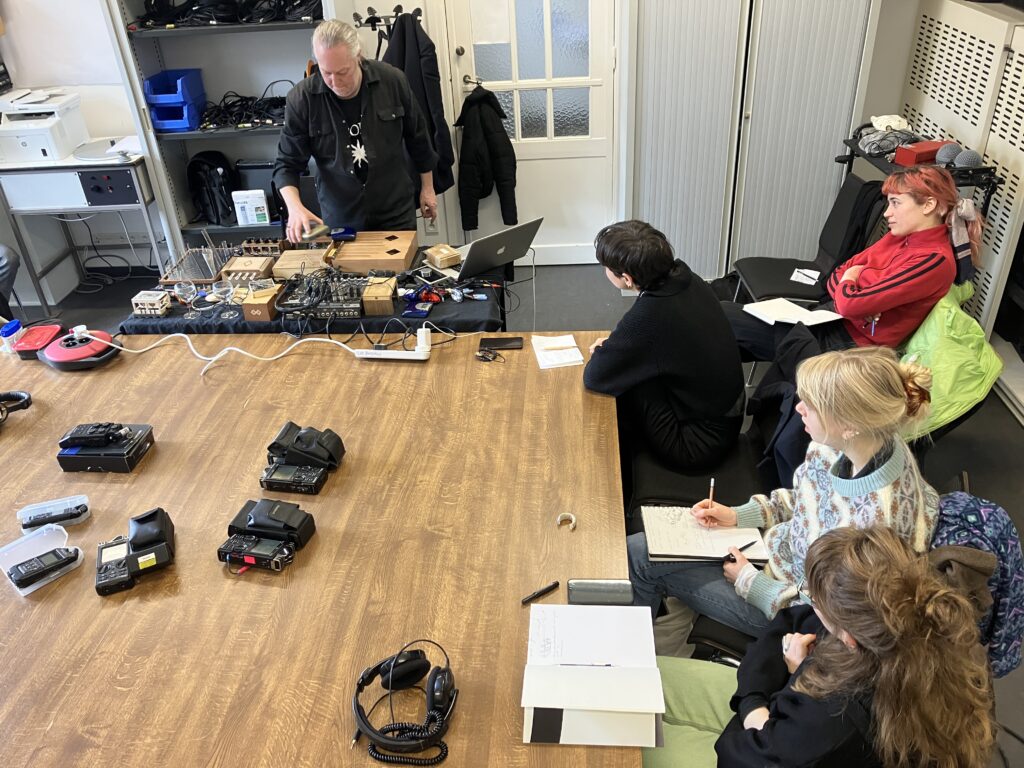
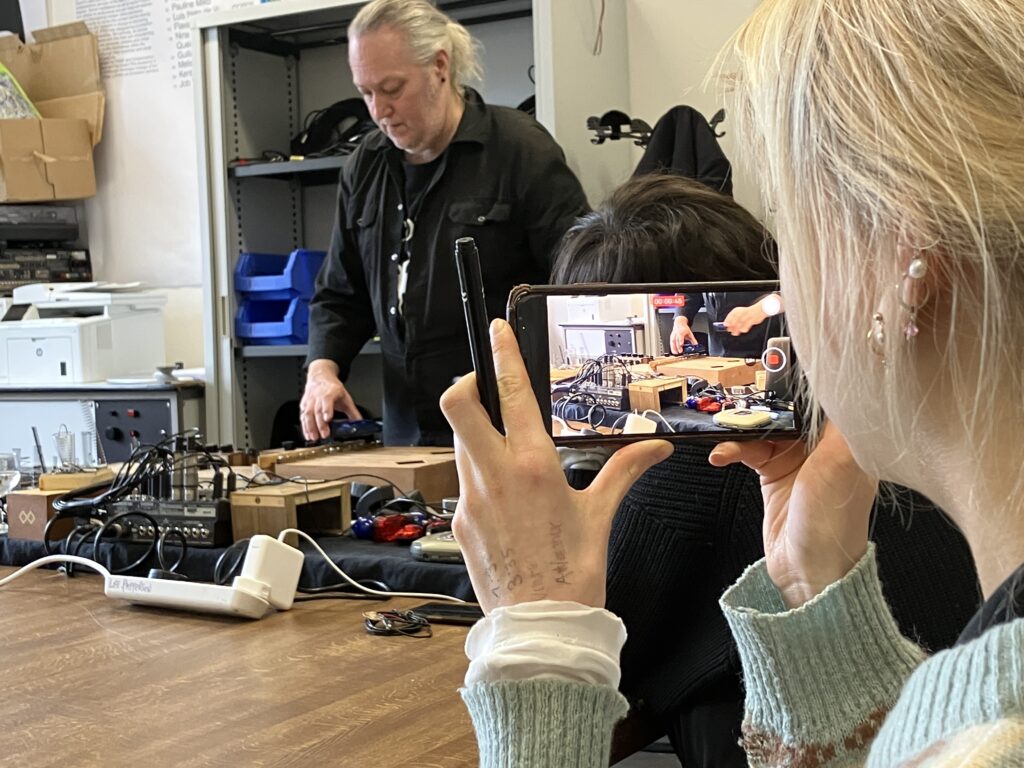
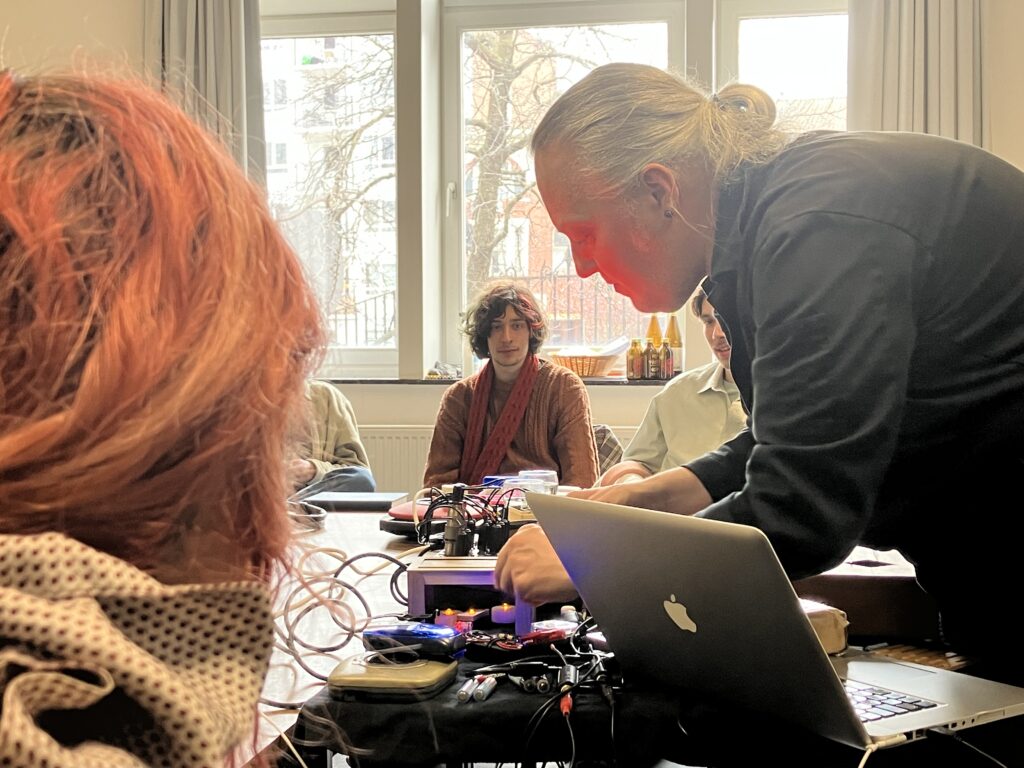
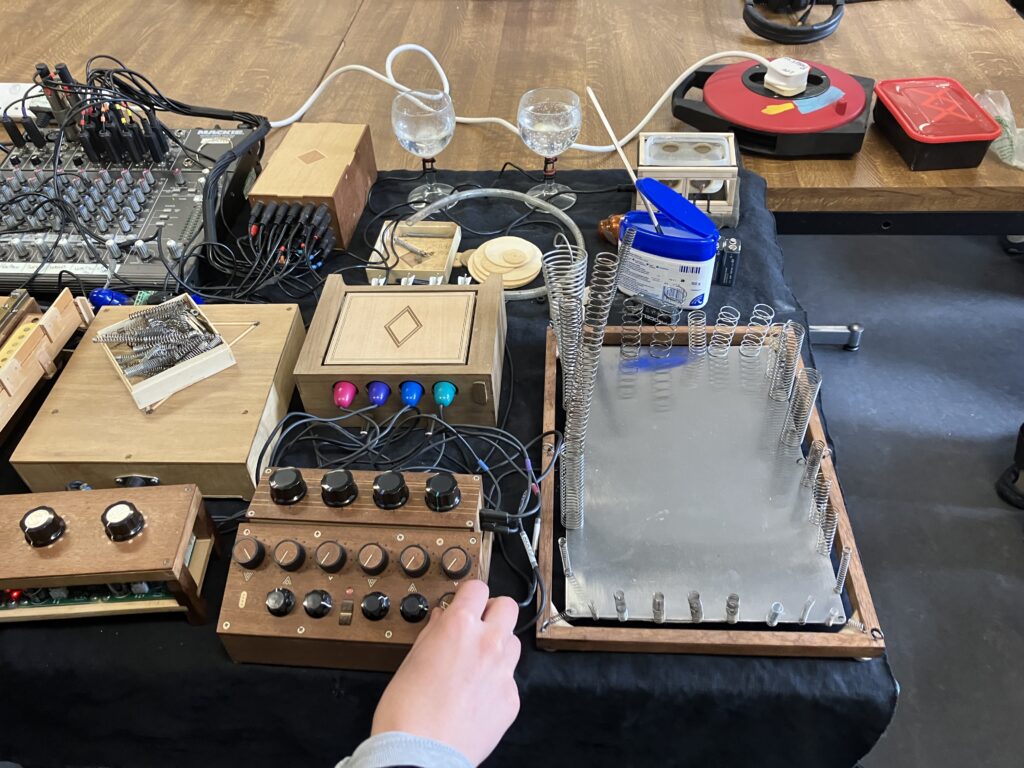
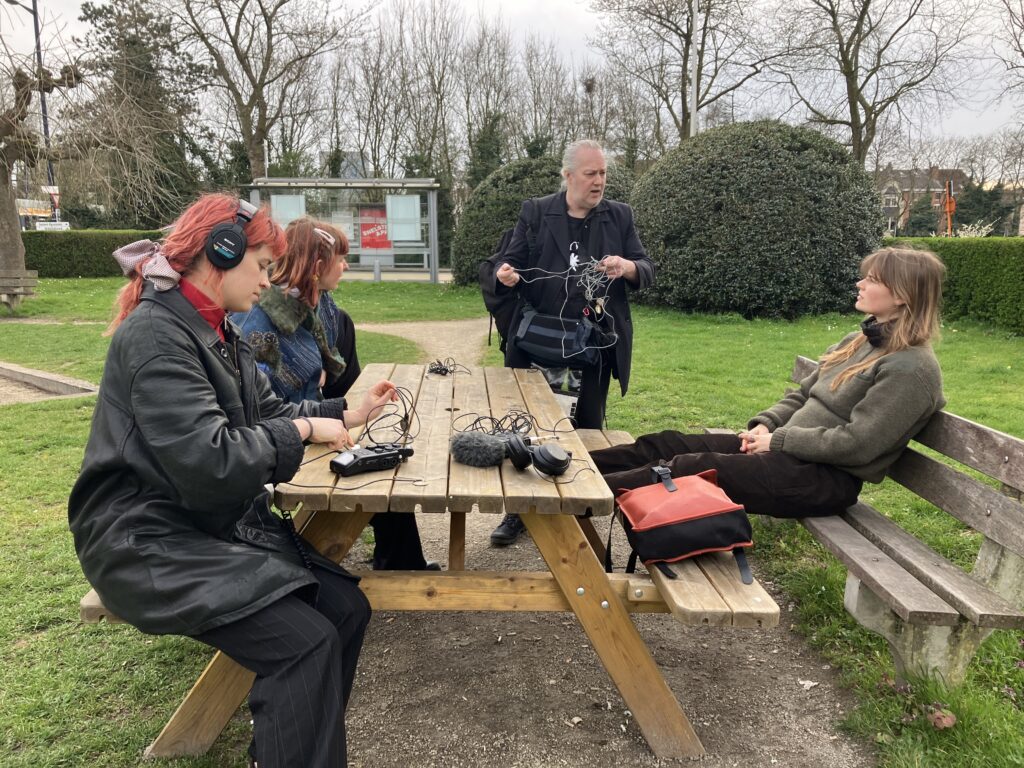
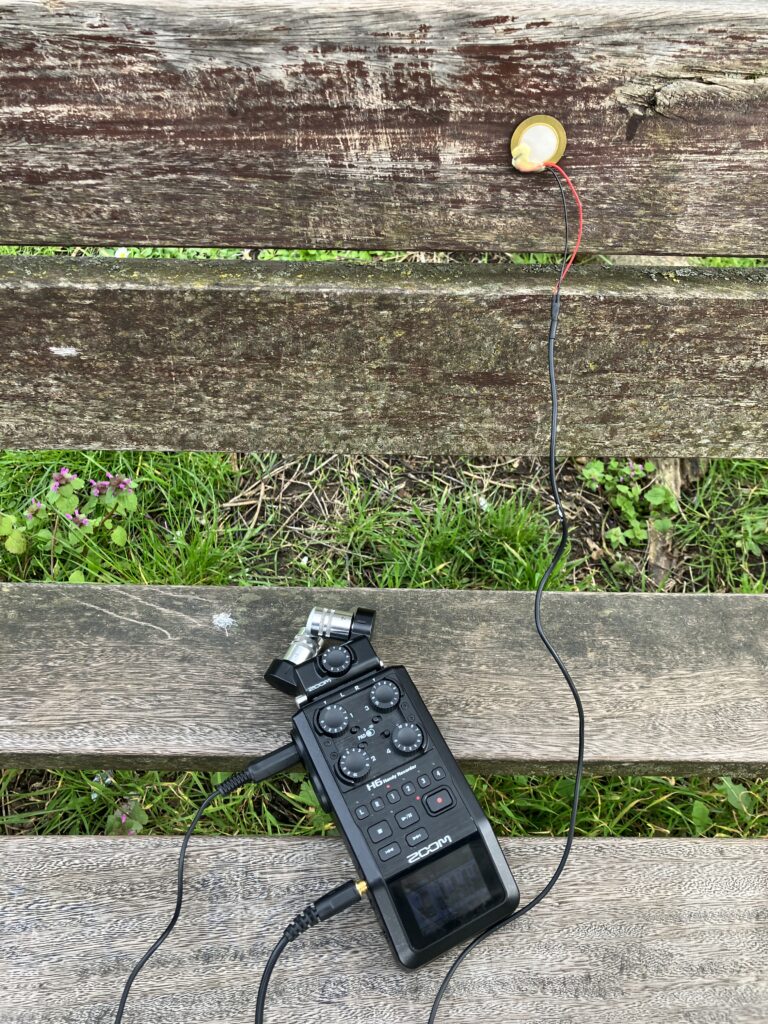
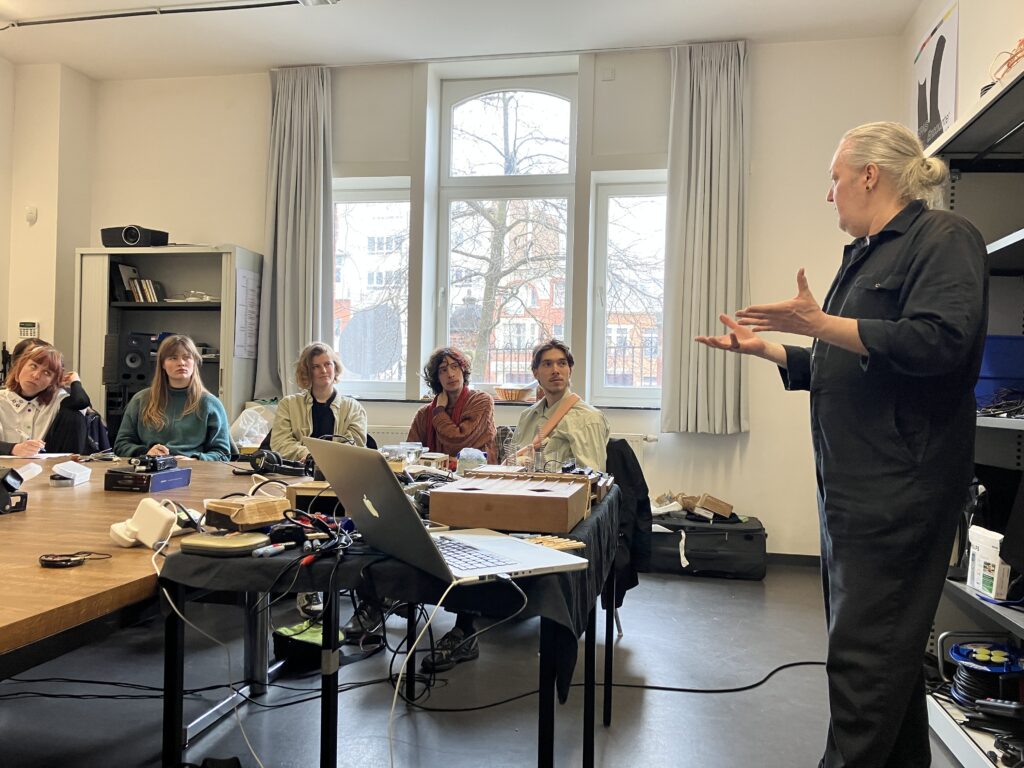
WORKSHOP LEE PATTERSON @ KASK
Shadows of the Unseen / Movement Radio 26

26th episode of “Shadows of the Unseen” for movement_radio Athens. Aired March 2023

1. Mikael Tariverdiev, Boys and The Sea – part 1 (From Goodbye, Boys, Mikhail Kalik, 1964)
2. Simon Fisher Turner, The Garden part 8 (From The Garden, Derek Jarman, 1990)
3. Boris, Theme (imaginary soundtrack for Mabuta no Ura, 2005)
4. David Cunningham, The Listening Room (From The Listening Room installation, David Cunningham, 2003)
5. Biosphere, Chamber + Proem (From Insomnia, Erik Skjoldbjærg, 1997)
6. Simon Fisher Turner, The Garden part 1 (From The Garden, Derek Jarman, 1990)
7. Nkisi, Ndombala (From Journey to Avebury, Stanley Schtinter, 2022)
8. The Residents, Finding My Father (From Triple Trouble, Homer Flynn and The Residents, 2022)
9. Boris, Amber Bazaar (imaginary soundtrack for Mabuta no Ura, 2005)
10. Felix Kubin, Somnambule (From Somnambule, Anke Feuchtenberger, 2006)
11. Angus Maclise, Shortwave India (From The Invasion of Thunderbolt Pagoda, Ira Cohen, 1968)
10. Tim Hecker, Masquerade (From Infinity Pool, Brandon Cronenberg, 2023)
11. Rutger Zuydervelt, Night Music 3 (From Porselein, Jenneke Boeijink, 2019)
12. Boris, Melting Guitar (imaginary soundtrack for Mabuta no Ura, 2005)
13. Mikael Tariverdiev, Goodbye Boys (From Goodbye, Boys, Mikhail Kalik, 1964)
14. Hildur Guðnadóttir, Always (From Women Talking, Sarah Polley, 2022)
15. Simon Fisher Turner, The Garden part 3 (From The Garden, Derek Jarman, 1990)
16. Nkisi, Ndombala (From Journey to Avebury, Stanley Schtinter, 2022)
17. Stomu Yamashta, Tempest Fantasia (From Tempest, Paul Mazursky, 1982)
18. Ry Cooder, Jon Hassell, Heroin (from Trespass, Walter Hill, 1992)
19. Mikael Tariverdiev, Boys and The Sea – part 2 (From Goodbye, Boys, Mikhail Kalik, 1964)

ARTIST IN FOCUS: Robert Kramer

In the context of Courtisane Festival 2023 (Gent, 29 March – 2 April 2023). Curated by Stoffel Debuysere.

“For me, at the beginning of every film, there is always virtually nothing. You could carve this on my headstone. That is my conception of political cinema. Something can be done with even the most minuscule fragment of life; an ideal to be reconstruc­ted. This supposes constant movement, an entire existence being on the alert. Staying face to face with the world, head held high, without trembling, no matter what.”

He liked the word ‘trajet’. The connotation of the English ‘trajectory’ was way too mechanical for him – alluding too much to the trajectory of a bullet, for example. For Kramer, the French word, on the other hand, sounded very much in tune with a human scale of movement, with the coming and goings, dwellings and wanderings that define most of our lives’ paths. A word that’s more than apt for a filmmaker who was always on the move. Whether by choice or necessity, he was always the traveller who, seemingly, never fitted anywhere – always looking for ways of living differently, following his taste for adversity and complexity. How could his films, then, be anything but the expression of this restless search?

Growing up, he lived in two worlds. As a doctor’s son, he was set in a comfortable scene. And even then, he was already an outsider. Wherever he looked seemed foreign to him. A mysterious fiction that had to be deciphered at all costs. He could never shed the feeling that a war was raging. “Survival is at stake,” he said, “and our dreams are the first to go.” For a while though, dreams were flaring up like flames. To Robert Kramer, the experience of the 1960s remained the touchstone for his life and work, the moment when his ‘trajet’ really took off: first as a journalist in Latin-America and a community worker in Newark, later as a filmmaker and a member of the Newsreel Collective. Again and again, Kramer sought out the battlegrounds: in Venezuela, Vietnam, Angola, but also closer to home, in the heart of the radical movements challenging the American political structures, which he portrayed so well in Ice (1969). Time and again, he found himself committed to the search for adverse communities, of which he himself depicted the breakdown in Milestones (1975): an unsettling portrait of his ‘lost’ generation.

But filmmaking, for Kramer, remained. Filmmaking as yet another way of creating temporary communities to inhabit, the shelters and campsites that he so greatly needed. After moving to Europe in 1980, cinema would, more than ever, become his true habitat. Working from his base in Paris, he produced more than twenty films, varying in length, genre, medium and degree of achievement. Armed with his camera, Kramer not only kept on exploring the contours and edges of the world, but also of himself, as critical cartographer of a fast changing society, rebounding between private and public, interior and exterior, choice and necessity. The theme of ‘the return’ would become central to his work. The character of Doc, who first appeared in Ice played by Paul McIsaac, returns in both Doc’s Kingdom (1988) and Route One/USA (1989), which marked Kramer’s own return to the US after ten years of absence. Through this character, who is also his alter-ego, Kramer crafted diverging perspectives on his relation to what he left behind him, to that “what you are inevitably a part of and what you are forever outside.” He would also return to another ‘starting place’, the place that he first visited to make the Newsreel Collective’s People’s War (1969): Vietnam. In both Point de départ (1993) and Say Kom Sa (1998), he charts the country’s struggle through an uncertain and daunting past, present, and future. Yet another return would lead him to the city where his father was born, resulting in Berlin 10/90 (1990): an intimate dialogue with all the resonances that ‘Germany’ came to have, both in his family history and in global history.

Finally, the act of returning would also take the form of ‘feedback’, which was the original title of Notre nazi (1984). In this ‘behind the scenes’ film, Kramer ingeniously doubles up and problematizes the mise-en-scène of the film Wundkanal, with which its director, Thomas Harlan, attempted to exorcize a haunting past. But perhaps Kramer’s most personal form of feedback is Dear Doc (1990), a video letter addressed to his dear travel companion, in which he looks back on the creation of Doc’s Kingdom and Route One/USA. Returning, revisiting, going back – not home, but back: here’s the red thread running throughout this homage to a filmmaker whose ‘trajet’ is unlike any other.

——

Thanks to Keja Ho Kramer, Ricardo Matos Cabo, Céline Paini (Les Films D’Ici), Diana Vidrascu & Pip Chodorov (Re:Voir), Matthieu Grimault (Cinémathèque Française), Hugo Masson (Documentaire sur grand écran)

——

Route One/USA
Robert Kramer, UK, FR, IT, 1989, DCP, 255′, English spoken

In September 1987, Robert Kramer returned to the US after a decade of self-imposed exile, where he spent five months filming along Route One, which connects Canada to Key West in Florida. In 1936, it was the most travelled route in the world, meanwhile it runs alongside superhighways and through suburbs – a thin strip of tarmac that cuts through all the old dreams of a nation. Together with fellow traveller Doc (Paul McIsaac), Kramer enters a succession of private worlds that steadily reveal themselves to the camera: from a Native American reservation in Maine to the Vietnam Veterans Memorial in Washington DC, from a Thanksgiving dinner at a homeless shelter to a sermon at an evangelical church. The grittiness of Kramer’s earlier militant work has given way to a casual mise en scène, with a fluid camera moving amidst ever-changing characters. Rarely did a filmmaker so fearlessly tread the fault lines between documentary and fiction, between inside and outside, to the point where the film almost breaks in half.

“There is a structure that is almost the same for all the films: you arrive in the middle of something, and lots of elements are given to you. It’s fragmentary, chaotic, you get a lot of signs, a lot of little things to work with. As you go along, it starts to fall into place. I think it’s a very accurate reflection of how my mind works. In the beginning, films are like a vast area, a geography. They are populated with people. Places are extremely impor­tant. And I don’t know where I’m going.”

——

Doc’s Kingdom
Robert Kramer, FR, PT, 1988, 35mm, 90′, English spoken

Twenty years after Doc first appears in Kramer’s film Ice, as the leader of a mythical underground revolutionary organisation played by Paul McIsaac, his character returns here as a disillusioned former activist who practices medicine as a way to stay true to his beliefs. After a stint in Africa, he ended up in Lisbon, where he divides his time between the local hospital and his lonely cottage on the docks. “Go home,” says the local café owner (played by filmmaker João César Monteiro). But Doc no longer knows a home. His past catches up with him when his son (a young Vincent Gallo) visits him from the US. A prelude to Route One/USA that draws inspiration from one of the filmmaker’s favourite books, Malcolm Lowry’s Under the Volcano, and reverts back to some of Kramer’s main themes: “the US, a home, a homeland, of which you are inevitably a part and of which you are forever outside.”

“I am very attached to the idea of geography. Most often, for me, places come before people. Starting with Doc’s Kingdom, what was an important formal idea was the idea of the trajet, a very beautiful word that doesn’t exist in English. It was this idea of filming bodies moving through spaces that interested me. I never liked travellings, very concretely: I couldn’t stand the idea of placing the rails. It seemed to me that it was an incredible pain to lay fifty meters of rails in order to accompany a character. The question was also: how to move in a space in a reasonable length of time, which does not become unbearable?”

Dear Doc
Robert Kramer, US, FR, 1990, video, 35′, English spoken

A video letter addressed to Kramer’s fellow traveller and accomplice, Paul McIsaac, aka Doc, the main character in Doc’s Kingdom and Route One/USA. This candid letter, written, filmed and composed after the editing of Route One/USA, expresses all the strength and density of a long-term friendship that would last.

“I’ve always been frightened of what you might call the Jonas Mekas syndrome, which means: ‘I totally embrace my subjec­tivity’. I had decided to go to the very end, I was going to say everything. Show everything, for once. And then, there’s every way to not even show what you thought you were going to show. I really wanted to reach another level. I wanted to do this by working twenty­four hours a day. You could also call it the Chris Marker syndrome. I was going to plunge into it com­pletely. I wasn’t going to answer the phone, go home, and I’d see what would happen. What did happen is
Dear Doc.”

——

Point de départ (Starting Place)
Robert Kramer, FR, 1993, 35mm to digital, 90′, French, English and Vietnamese spoken, English subtitles

More than 20 years after People’s War, which shaped his commitment against US war policy, Kramer returns to his starting point: Vietnam. “This was,” says Kramer, “what I knew, what I was interested in, what I was most invested in, where I had already made another film. I wondered how they could see things there: having paid such a price, being given the chance to participate in the New World Economy at gunpoint on the terms of the New World Order. It was either that, or disappear into oblivion, like Cuba.” Point de départ is an attempt to connect an immutable past with an irrefutable present. In Hanoi, despite economic transformations, the revolutions of the past half century live on in the memories of those who lived through them, people such as Kramer’s former guide from 1969, who has since translated Don Quixote, or a tightrope walker in the national circus who balances away the ghost of lost hope, or a man who took photos of B52s and another who lost his fingers shooting them down. But also activist Linda Evans, who was part of the crew that filmed People’s War and was sentenced to 40 years in prison in 1985. “You can see my film as a mourning process for the ideas that put Linda in prison. My ideas are in prison.”

“Many of the ideas that some people died for have been forgotten. It is necessary to read through the pages of recent history. The ‘starting place’ is really after the film. It is now. I could have made this film in another place. The most important thing was not to talk particularly or exclusively about Vietnam, but was, above all, this idea of ‘starting place.’ Because that’s the way things are, we have to start out from a look at what we have experienced over the last thirty years.”

Say Kom Sa
Robert Kramer, FR, 1998, video, 19′, French spoken, English subtitles

In 1997, Kramer visited Vietnam for the third time and shot this film, concluding his ‘Vietnam Trilogy’. His DV camera observes the accelerated transformation of society into the free-market capitalist system and the things that are about to be forgotten and lost in the process. The intimate travel diary turns into a deep meditation on globalisation and the filmmaker’s point of view.

“In the apartment, there are gifts from old friends in Vietnam: reminders of a different history. But the time is now, 1998: The ‘market economy’, that’s our common fate. A construction­site on the edges of ‘West lake’ in Hanoi. This lake in the centre of Hanoi is being gradually walled in by huge modern hotels. The village ist disappearing. Everybody knows: It’s just a matter of money now. Who’s rich and who’s poor, who can and who can’t. That is how it is: ‘C’est comme ça …’ ”

——

Berlin 10/90
Robert Kramer, US, FR, 1990, video, 64′, English spoken

This film is part of the television series Live, curated by Philippe Grandrieux, conceived as a series of 14 episodes, each consisting of a single 60-minute long take, filmed on Hi8 video, without additional text, sound or post-production. Kramer’s contribution was shot in Berlin, his father’s birthplace, on 25 October 1990. Seated in the bathroom of his flat, he dialogues with images of the fall of the Berlin Wall and the Gulf War, and confronts his own hauntings. “Berlin has a lot to do with that idea of returning, going back to my father and a certain idea of the family past,” he says.

“They called this TV series Live, and it was offered up with a lot of old­sounding words what came out of the period of ‘Cinéma Verité’ or ‘Direct Cinema.’ Throughout there was the assumption that a camera running continuously can somehow access ‘the real.’ I don’t think that I realize how much I was moving in another direction or for how long. I was, for better or worse, involved in a very complicated dialogue between myself then­and­there in Berlin, and the many dif­ferent connections that I have, inevitably, with Germany. You could say, a dialogue between myself and the reverberation that ‘Germany’ has become.”

Les yeux l’un de l’autre (I’ll Be Your Eyes, You’ll Be Mine)
Keja Ho Kramer & Stephen Dwoskin, US, FR, 2006, video, 47′, English spoken

A poetic ode that takes on the narrative framework of an afterthought: a detective, Keja Ho K., goes in search of a phantom, Robert Kramer. Together with Stephen Dwoskin, with whom Kramer exchanged video letters for years, Keja Ho creates an imaginary dialogue based on images from Kramer’s archive, fuelled by numerous memories and imbued with everything that would be close to his heart: the act of sharing, and the obligation to think for ourselves and to never betray our dreams.

“Working on I’ll Be Your Eyes, You’ll Be Mine was a way of being with you in the splendor of all the contradictions… it was also my relationship to the world, a reflection on how we work and take a point of view, try to be in the world in our own way. I met a wonderful friend of ours on this trip, Steve Dwoskin. I wanted to tell you how important this sharing with Steve was for me and how amazing it was to enter into the arrangement of ‘parts and pieces’ with him. Feeling this great connection in the work… the world of metaphor and symbolism, sculpting images, working with pixels as pigment, extensions of thought seeping into the computer canvas; amazing minds breaking through boundaries. How can I express how grateful I am to be on this walk, how sweet it has been (and always will be) to have known you and to have benefited so fully from your marvellous gift… Oh, Dad, you gave us so much freedom, and how hard that responsibility is… ”

——

Notre nazi
Robert Kramer, DE, FR, 1984, video, 114′, English spoken

This gripping portrait was shot during the filming of Thomas Harlan’s Wundkanal, in which Alfred Filbert, a former Gestapo officer, plays an ex-Nazi kidnapped by a terrorist organisation. Kramer observes how Harlan – whose father, Veit Harlan, directed the infamous anti-Semitic propaganda film Jud Süß – gradually adopts the enemy’s methods in an attempt to come to terms with his past. Thus becoming, as it were, his own worst enemy. It is the story of two German generations, and also of an observant outsider, Kramer, who didn’t experience any of that history but said he felt connected to it in an abstract way through his Jewishness. He himself labelled the film “a really alive attempt to get inside an enigma.” With his camera, Kramer approaches and stalks Filbert as an unbreakable and opaque block of history that seethes at the centre of the dark film studio and of everyone’s attention. “My film is perhaps another fiction: the story of a certain T., son of the greatest Nazi filmmaker, and himself a film director. All his life he has tried to undo his past. Today he is shooting a fiction film, he has given the main role to a Nazi war criminal who is more or less the same age. By this act T. releases a whole torrent of unforeseeable energy which sweeps the set and even more than the set.”

“For me, the film is fundamentally about the question of judgment, about the complexity of a situation. On the one hand, we have Veit Harlan’s son, obsessed with his past and having such an understandable need to disassociate himself from that past and confront it within himself. It shakes up this strangely solid and integrated old man, who we know from the start is guilty of the worst we can imagine. And me, once again, an involved observer on camera. The film goes down some paths that lead nowhere. I’m not sure any of them lead anywhere. But they all revolve around the question of judgment: who has the right to judge? What are the right ways to judge?”