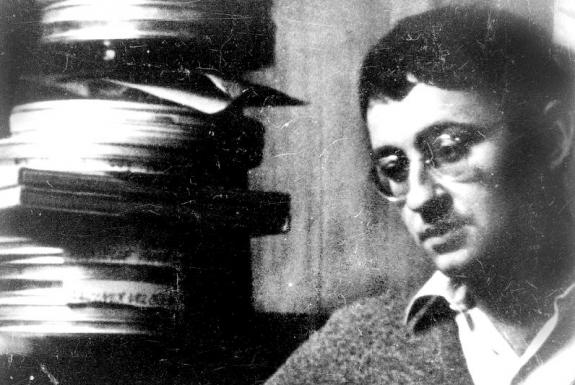
In eternal circumstances from the depths of a shipwreck

debord.jpg

By Olivier Assayas

Originally published as ‘Dans des Circonstances éternelles du fond d’un naufrage‘ in Cahiers du cinéma 487 (1995). Written in memory of Guy Debord (December 28, 1931 – November 30, 1994). Olivier Assayas will take part in the DISSENT ! series on 22 November 2013.

NOTE: in the meantime, a much better translation of this text has been published as part of the English version of ‘Une adolescence dans l’après-Mai’, published by the Austrian Filmmuseum.

I would have never imagined finding myself writing these lines on Guy Debord.
He has always kept himself out of the media glare, as subject as well as object.
And I have always dreaded that, in expressing the vital and essential importance his thinking, his writing, his art has had for me, I could only give to understand something as far as I would be authorized to do so.
Yet nothing authorizes me.
If, amongst the artists of this century, I consider Debord as the equal of Duchamp, Mallarmé and even if – he would have hated this affiliation – I consider Warhol and Beuys as their cousins, how can one pretend, when practicing cinema, cinema today, having received, having understood, having accepted what they have said, when one hardly puts it in practice?
In the aftermath of his disappearance I nevertheless need to try to say a word or two.
To recount what his work has represented to me.
Even if it means venturing on a terrain where he didn’t allow anyone.

I belong, we belong to other times, other times that Debord hated or perhaps more simply despised. And me, I don’t despise this time, one doesn’t choose his historical moment, one tries to get the most out of it, the best one can.
Debord has chosen to take his own life and turn it into his work.
He also wanted to be its chronicler, instead of waiting for others to come, who’d understand nothing and make up absurd accounts: he thought that there were no more real historians nowadays to rapport the simplest of histories and moreover, that his real history was at risk of having no place in a world which stability it aimed to undermine.
And we?
Do we write our history? Oh certainly not, there are few artists and men left with the arrogance to think they could, it would already be a lot if they had the sense of living it. But no, today the object is accepting the instant, its consumption, its miserable and sinister jouissance. The most subversive thing would certainly be to take Debord literally and restitute the historical consciousness: to remind us that, as time passes by, it is up to men – for a miniscule period of time – to transform it. And that, just when it comes in sight, it has already passed. “One traverses his time like one passes the point of the Dogana, that is to say fast.”
Each generation has, for a short while, the power to act on the world and, after all, it is not much else then its capacity of having done so that posterity will judge it on.
“What this era has written and filmed is so utterly contemptible that the only way anyone in the future will be able to offer even the slightest justification for it will be to claim that there was literally no alternative — that for some obscure reason nothing else was possible. Unfortunately for those who are reduced to such a clumsy excuse, my example alone will suffice to demolish it. And since this gratifying accomplishment has required relatively little time and trouble, I have seen no reason to forgo it.”

This should be the foreword to every life and every life’s work. It is the substance itself of the confrontation between the artist and the world. And henceforth, when one accepts that films are objects, that they are determined by the rules of circulation of goods – and even at the moment when potato mashers and lawnmowers are exhibited in museums as witnesses to their times – we accept to withdraw the cinematographic practice from the movement of history in order to entirely pledge it in consumption, which laws are governed by economy. We renounce its time and we renounce its only, very tiny chance to belong to the history of its art.
What did Jean Eustache say again when, in this sequence that sends the same shivers down my spine that Debord’s cinema often does, he asks Jean-Pierre Léaud to retake the refrain of La chanson des Fortifs, sung by Fréhel: ” …mais d’autres viendront, héros différents, qui disparaîtront, à chacun son temps… “ (“but others will come, different heroes, who will disappear, to each his times”).
Different heroes, stresses Jean-Pierre.
What to make of our time, lost as it is in its narcissism and its good taste?
Will we be, different heroes, will we have been, did we miss all chances of being it? Or else the good professionals, the good agents of reproduction, depressed by boredom and the past and good savoir-faire.
The recovery of the public lost by the crisis of cinema: here’s the exhilarating task at hand, seemingly arousing the energy around us, thanks to the efficient, bulletproof scenarios and the state-of-the-art techniques inspired by vacuity and the vacant technicism of marketing strategists dominating the American film industry.
Of which we wish to be the good colonized.
Is this the impassable thinking of our times?
Are we supposed to participate in this history?
What a crock of shit.

When the times need intelligence and audacity and only the practice of poetry, through whatever art, but also through no art at all, when one knows to inscribe it in life itself, when one lets it go all the way, opens up to the sole adventures that deserve being lived.
I remember, I was twenty years old when the re-edition of the bulletins of the Situationist Internationale were published by Chez Libre, in 1975. I discovered Paris, a few months before we had demolished les Halles, and I dreamt about what this city could have been while reading Debord abouts dérives, reading the theory of situations, exclusions and debates, the congress in the gates of Europe, while examining the pictures. And most of all, I was haunted by this announcement that appeared in the first issue, in 1958, that said:
“YOUNG MEN, YOUNG WOMEN,
Some aptitude for excelling and playing.
Without special knowledge.
So intelligent or beautiful.
You can go in the direction of History.
WITH THE SITUATIONISTS
Don’t phone. Write or come by:
32, rue la Montagne-Geneviève, Paris 5e”

Aptitude for excelling? I don’t know, I don’t know if I, in my existence, have proven myself of this particular aptitude, but I don’t have the feeling either of having observed a lot of convincing examples. On the other hand, I felt apt enough for destruction. In any case at the time that’s what seemed to be compelling. And I thought that they could be of equal merit; that through the years this message was perhaps destined for me.
But how to respond?
And to which address to address.
Would they only want me?
It was too late.

And even if I made myself dizzy reading and rereading Debord and IS, it was impossible to escape from the idea that it was up to my generation to write its history. But it resolutely kept delaying it, stuck as it was in the ultimate fights at the rearguard of a leftism that discouraged me with its intrinsic bureaucratism, the daft transfer of its desire for allegiance to totalitarianism, over the heads of the USSR which were regrettably indefensible from then on, to the bloody dictatorship of Mao Tsé-Toung.
And after all it wasn’t much later, around 1976, that the crypto-situationism of the London punk revived for a short while the revolt against a society that had it for breakfast: everything went back to normal very quickly.
But there were a few years there.
And me, who was Thirteen in May 68, I immediately recognized the same shiver, unforgettable, of the foundation of things trembling.
Of the society in fear because it is under attack were it wasn’t expecting it and the antidotes are not available right away.
Useless to say that the system, today, is much better protected against these incidents.
And that through the great ideological and social calmness of the world where I have lived the essential part of my youth and my adulthood, through its torpor via media or chemicals, the thinking of Guy Debord, his art, his writing have been the only place where I have always felt living life, revolt and history intact and so, through him, there is always the possibility that the fake has not ended up covering up the world and that a movement, somewhere, something, can soon relight the fire.
Of which Debord will have been the watchman.

I wish I could write simply about Guy Debord.
To say that to me he is first and foremost one of the great poets of this century, maybe the greatest. That the admirable collage of Mémoires, created between 1952 and 1953, printed for the first time in 1958 and only published the year after in overall silence (precursory sign of the disappearance of its author?) is the shattering work of a twenty year old poet, heir of Mallarmé. And without a doubt one could say the same about his first film without images, Hurlements en faveur de Sade, produced in 1952, of which I only know the text.
“Totally dark, eyes closed to the enormity of the disaster.”
“Order reigns but does not govern.”
“Guy, one more minute and it’ll be tomorrow.”
“I knew it. And there was a time when I regretted it very much.”
“Like lost children we live our unfinished adventures.”

By chance, on two pages of Mémoires (pieces of printed and cut up sentences are dispersed on the page amidst strokes of ink by Asper Jorn)
“In the history of discoveries
A floating city
A game of life and setting
The effect of such or such center of attraction
The decors, the characters participated so well in this vision
In the fire of insults, threats, execrations and blasphemies
It is probably too soon
A notice put up on the walls of Paris announced the ephemeral passage
Spectacle without well-defined specialty other than scandal
Open all night long
Such adventure in the heart of the XX century is unheard of.”

In Panégyrique in 1989, Debord wrote “I rather believe that what, with me, has aggravated in a hard-wearing way, is what I’ve done in 1952.”
Ah yes.
Absolutely.
Because he knew, just like the other great poet of those days, Jean Genet, that poetry would henceforth, at once, be nothing else but a declaration of war to society.
And that the only poets, for those times, would be those who would be able to put their poetry in action.
In accordance with the programme of the dadaists, such as only Duchamp and Schwitters applied.
But Debord would have done it better than them, in the matter of excelling.
In the matter of excelling art as well.
Taken off where they had arrived, he started with the conviction that from then on, if art could no longer subscribe to society and its new order, if it could no longer be its mirror, he would take it upon himself to be the radical contradiction.
It is artistic poetry and theory that have led Debord to think the world, decipher it, and inscribe the traces of the struggles that he will have fought, in acts in the annals of his time.
His work is there.
In its absolute coherence.
It’s that which all that counts in the artistic thinking of the century will have theorized and which only he will have realized.

No doubt his poetry will be acknowledged.
No doubt his place amongst the great writers of the century is already assured.
No doubt his thinking in France and the world will give the century to come something to take up.
But I also maintain – and as Léo Ferré said, “j’prends date”, that he was a filmmaker of major importance.
If I dream of seeing Hurlements en faveur de Sade, Critique de la séparation, or Sur le passage de quelques personnes à travers une assez courte unité de temps, it is of course due to reading his texts.
But also due to the description Debord gave of their images:
“A girl
Inside the labyrinth of bricks.
Police vans depart.
The isle of Saint-Louis at dusk.”

Or
“Tracking shot in a café. Its movement is arbitrarily cut by boards: “the celebrations and passions of a violent age”; “in the course of movement and accordingly on the transitory side.”; “the most exciting suspense.”
Or
“Tracking shot over a group of people on a café terrace. The camera, hand-held as in a news report, zeoes in on Debord talking to a young brunette. Medium-long shot of the two of them walking together. Another young woman, blonde.”
Or still
“A couple kiss on the street. Teenagers at a café table. Two of the “lost children” of Saint Germain des Prés. A prison guard in a watchtower. THE SCREEN REMAINS DARK”

Since its publication in 1978, Complete Cinematic Works has been one of my bedside books.
But that would not be enough: I also have to mention the overwhelming effect that the discovery of In girum imus nocte et consumimur igni had on me, when it came out in 1981 in cinema ‘le Quintet’, that since then has closed down.
I have seen it several times back then, each time in the same state of feverish exaltation.
Something I have only felt, I think, a few other times, discovering Bresson’s L’Argent and Pickpocket, Garrel’s L’enfant secret and each time I have seen La Maman et la Putain.
The scenes on the water in Venice, the voice of Debord, the echoes of the voices of the past.
“Gun Crazy. You remember. That’s how it was. No one was good enough for us. And yet . . . Hailstones striking banners of glass. We won’t forget this cursed planet.”
And then Marcel Herrand playing Lacenaire in a fragment of Les Enfants du Paradis: Arletty tells him “But it’s glory, Pierre-François.” He answers him: “Yes, it begins… but on second thought, I would however have preferred a brilliant literary success.”
And the faces: “Ivan Chtcheglov, Gil j. Wolman, Robert Fonta, Ghislain de Marbaix, Debord at twenty. She who was the most beautiful that year.” And then starts Art Blakey’s Whisper not.
Just by recalling tears swell up in my eyes – time again I have reread this enumeration, time again I have replaced those faces with my own, as anyone has probably done, taken up by the flow, the oblivion, the obliteration.
Would I be able to show it one day? Would I be capable?
Does it deserve to be?
Would I be able to speak about my time?
Watching In girum…, reading and rereading it, these questions have obsessed me, they have haunted my twenties, as well as my thirties.
“At this point the spectators, who have already been deprived of everything else, will also be deprived of images.”

Of course in this film he raises a terrible portrait of our world, frightening in its lucidity, burning with rage against the invasion of our passivity, the invasion of the consumptive dupery and silliness; and we were only in 1978, when antibodies still subsisted, while today, nothing blocks, nothing at all, while week after week, ever more things are taken up in the flux of the gavage of culture, neutral things, of good taste, an exhausting programme endlessly renewed for the neo-spectators of good will.
The art of the new domesticated.
Free for some time, revolted for some time, dangerous for some time, today first of all preoccupied with pleasing, being of quality. Being convenient, that is to say to suit the taste of the bourgeoisie.
In In girum…, as elsewhere, Debord depicts the disaster of today. But then, like no other he becomes lyrical to show what the world can be, what it has been in the eyes of its youth, the incandescent beauty it could have to live, love and fight in, not anywhere else, not at another time, here, on these sidewalks, in these bars and on these streets we walk on, if not sleeping, in any case fighting to stay awake in the face of the humiliating and devastating good behavior of our years.
In these footsteps we dream of Aurélia and Nadja.
Of the poetry of revolt that have their face and which ghosts haunt our boulevards, our nights, our wanderings.
He tells us it is always too soon too late.
That lost opportunities do not present themselves again.
But also that thought can shake up the city.
Not only has he said so, he has done so and set an example.
So that everyone, deep down, knows that it can be done

Isabelle told me about Guy Debord’s suicide by chance, one night in the subway, sometime after midnight, between Réaumur-Sébastopol and Château d’eau .
And for me, something in the world broke.
Writing these lines, outright humble in regards to their subject, I can still feel it.
And for a longtime: for always.

——————————————————————————————————————————————————————-
Translated by Stoffel Debuysere (Please contact me if you can improve the translation).

In the context of the research project “Figures of Dissent (Cinema of Politics, Politics of Cinema)”
KASK / School of Arts

translator’s notes
* The title of this piece is taken from Mallarmé’s ‘Un Coup de Dés Jamais N’Abolira Le Hasard’ (A Throw of the Dice will Never Abolish Chance).
* Most English translations from Debord’s film scripts are Ken Knabb’s, available on bopsecrets.org.
Sculpted Spaces

konrad-carrara-01.jpg

KASKcinema Gent, 27 September 2012 20:30

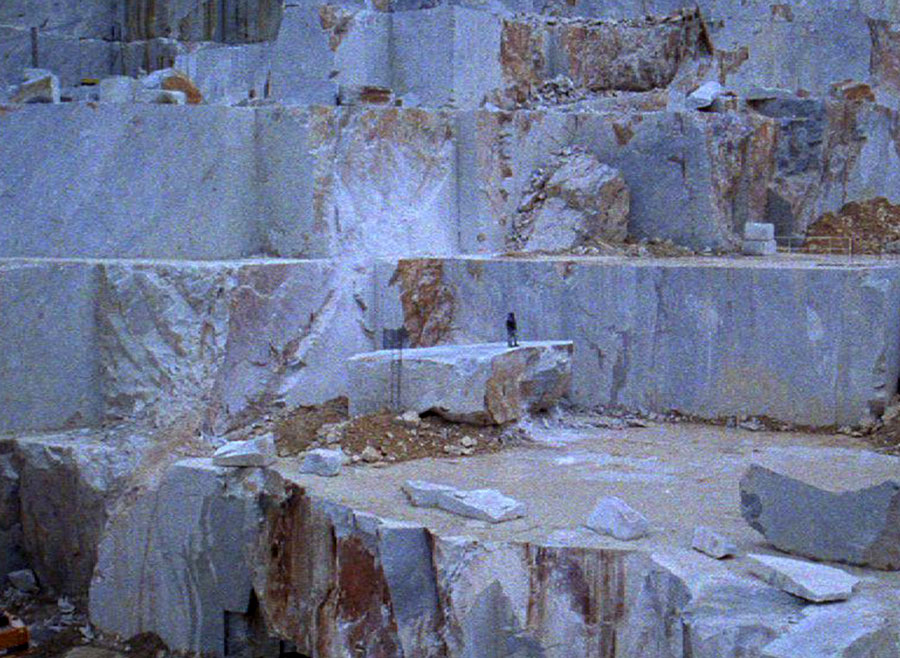
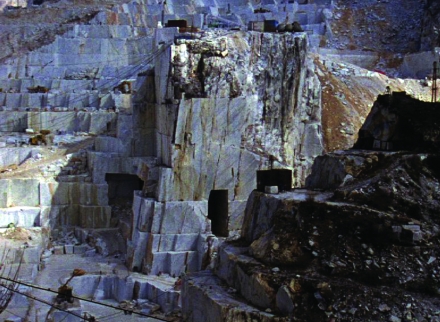
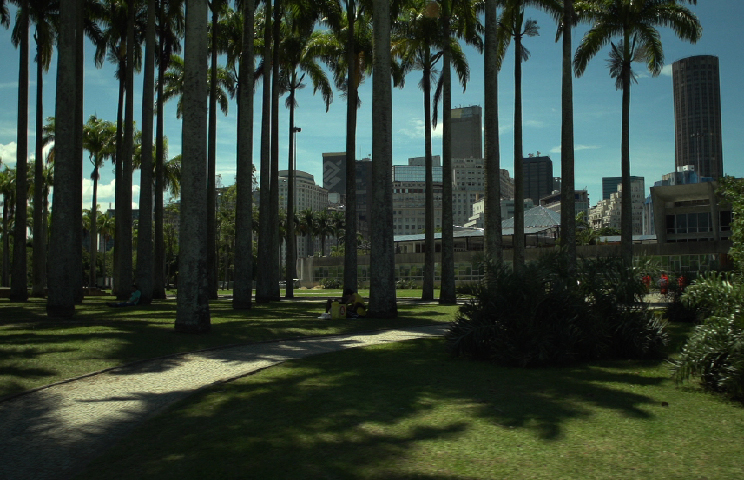
From the 19th century panoramas and Lumière’s single-shot studies to the work of Larry Gottheim, Rose Lowder or James Benning: landscapes have always taken up an important place in the (pre)cinematographic imagination. In turn the relation between cinema and landscape is part of a much longer history of fragmenting place and space, as an invitation to organized voyages inside the frame. The recent video work of Sophie Nys and Aglaia Konrad also solicit coordinated perspectives on the composition and texture of specific places: the ‘Parque do Flamengo’ in Rio de Janeiro and the Apuanian Alps in Toscany; for one the most ambitious creation of landscape architect Roberto Burle Marx, for the other the excisions of the marble out of which Michelangelo once sculpted his masterpieces. What both works make visible, under the surface of ruin and chaos, is what ultimately appears once the landscape is sculpted: architecture.

sophienys_parque_do_flamengo-1.jpg

Sophie Nys
Parque do Flamengo

2012, video, color, stereo sound, 16:9, non spoken, 45’

Drawn by her interest in history and architecture and the ambiguity which is emerging from modernist utopias, the Belgian artist Sophie Nys left in January 2011 for Rio de Janeiro to shoot the film Parque do Flamengo. From this a semi-documentary resulted whose main character is the Parque do Flamengo, a park designed by the landscape architect Roberto Burle Marx between 1954 and 1959. Simultaneously a painter, sculptor, poet and botanist, Roberto Burle Marx is known worldwide as one of the greatest landscape architects of the twentieth century. The film by Sophie Nys is a 45 minute tracking shot and represents the whole of the park as an isolated entity. The space is crossed from A to Z at a walking pace. As a stroll, the route follows the curved and sensual line of the park. The film is a physical and artistic portrait of the place, a recording of a living space between culture and nature. At Sophie Nys’s request, composer and musician Arto Lindsay composed an original sound track based on the plants that appear in the park. Faithful to her artistic practice, Sophie Nys develops a project which, behind a minimalist conceptual rigour, succeeds in revealing and eluding both the poetry and the absurdity of nature in a frame. Never objective, but always precise, the works of Sophie Nys evade historical and scientific linearity in favour of an approach based on intuitive research and free associations.

carrara_web.jpg

Aglaia Konrad
Concrete & Samples III Carrara

2010, 16mm transferred to video, color, 4:3, no sound, 19′

Concrete & Samples I, II, III is a series of 16mm films on sculptural architecture. What the buildings and site in all films have in common is the idea of ‘architecture as sculpture’ and a very distinct use of concrete that seem to depart from the free form of the whole in a sculptural manner. In the absence of a traditional narrative, it is the space itself, that takes the role of the protagonist, while the camera proposes a narration through its travel and observation.The film Concrete & Samples III Carrara, shows the marble quarry; within its ‘sculpted’ landscape, its temporary architecture and art-historical references form a more radical complement, to the two churches.

The Death of Glauber Rocha

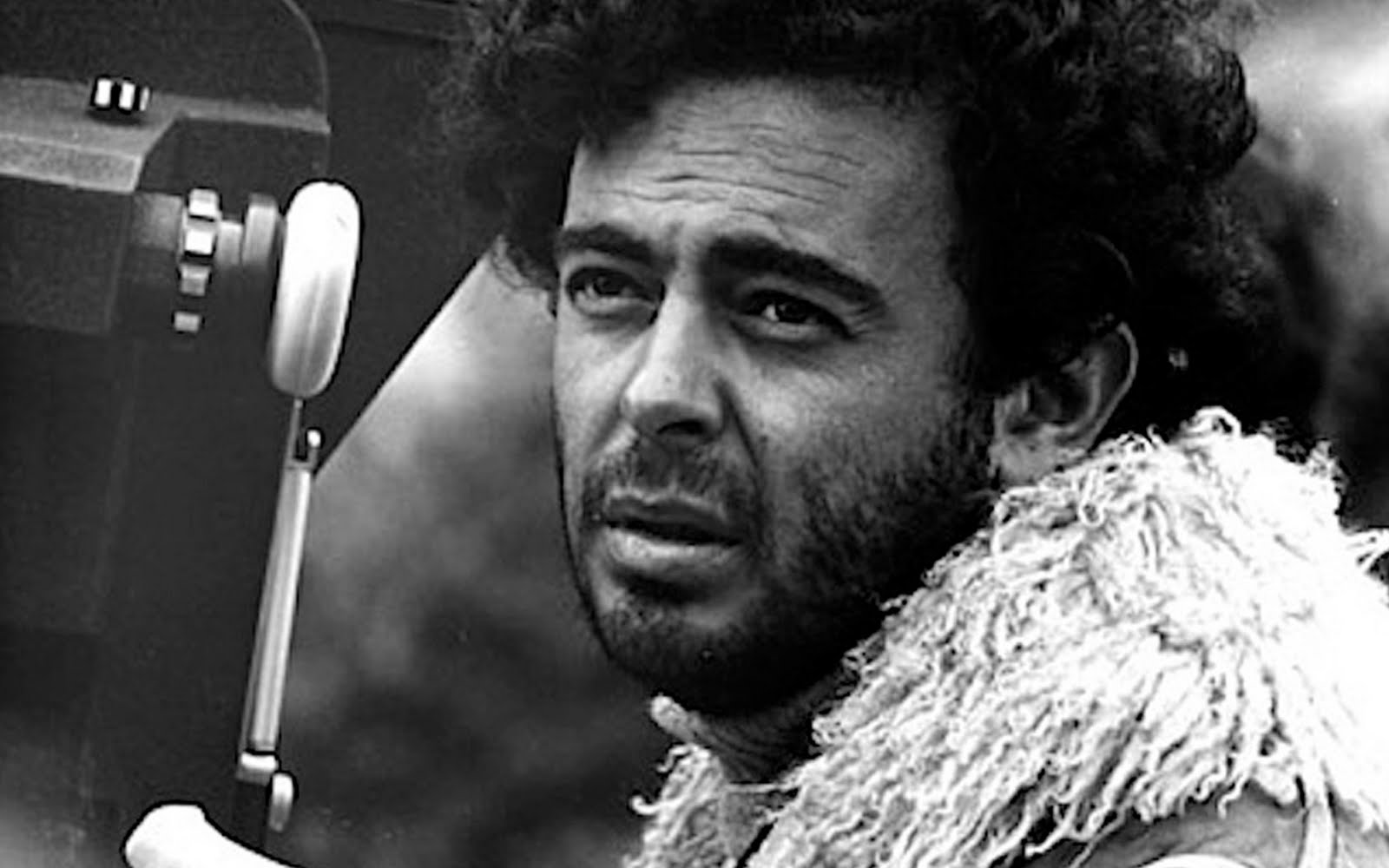
glauber-rocha.jpg

By Serge Daney

Originally published as ‘La mort de Glauber Rocha’, Libération, 24 August 1981. Revised version of the translation found on signododragao.blogspot.be.

Inspired and irritating; the best known – and I dare say the greatest – Brazilian director was somewhat forgotten. Cinema novo, tropicalism, tricontinentalism – where are they now? Glauber Rocha himself forgot nothing.

The last time I saw Glauber Rocha was in the office of Cahiers du Cinéma, near Bastille. I didn’t know him, but I’d seen his films ten years earlier. Nobody talked about him anymore, except to say that he had gone crazy or that he’d compromised himself with the Brazilian military regime. He had come to France for what was virtually a sneak screening of his latest film, a film he’d spent a lot of time, money and work on and which had left the Venice Festival-goers perplexed, to say the least. It was called A Idade da Terra (The Age of the Earth) and was like nothing known to man. A torrential, hallucinatory film. A filmic UFO, no more, no less. Glauber was in Paris to try and get the film distributed, to renew old contacts, take his bearings. He talked a lot, he was probably raving: nothing of what he said was without significance.

At Cahiers we asked him whether he would write or say something about Pasolini, whom he had known, and to whom we were devoting a special issue. He locked himself in an office and, having no need of an interviewer, talked alone for two hours in front of a small tape recorder. Ill at ease, we could hear his vehement tone of voice, the charm of his Brazilian accent in French, his bad-tempered and affectionate settling of scores with PPP, his post-mortem reproaches. It was already a dialogue of the dead. We didn’t see him again, for he went off to Portugal where he seemed to be working on a film project. He has just died, on his return to Brazil, of complications from an illness we knew nothing about.

Of the great mischief makers of modern cinema, Glauber Rocha was perhaps the furthest from us. Firstly because from the seventies on, his reputation became downright bad: he had done a backflip, he had spoken in favor of the military regime of Geisel, then of Figuereido, and the state cinema organization, Embrafilme, had swallowed up a lot of money in that crazy film-fleuve of his, the UFO A Idade da Terra. And then because, deep down, he had always been far away, as far from us as Brazil can be. We had only come together because in those crazy times there was still something called “the history of the cinema”, which, before our very eyes, would weave the most paradoxical alliances. Glauber Rocha could discuss Eisensteinian montage with Godard, say what made Faulkner a cinematographic writer, or, paradoxically, why one should regard Bunuel as a “tricontinental” director. There seemed to be no differences between the guerrillas who were leading the “new waves” all over the world, whatever shores they died on. We were resisting; we were resisting Hollywood-Mosfilm, with a mixture of revolt and piety. We did not yet believe that America had conclusively won in the realm of sounds and images.

In 1963, Glauber Rocha and his friends (Diegues, Hirzman, Guerra, Dos Santos, Saraceni, etc.) published a pamphlet: “A Critical Revision of Brazilian Cinema”. Born in Bahia in 1938, Glauber, like everyone else, had run a cine-club and had written film criticism. Like everyone else in Latin America, he and his friends had made the most of a brief period of liberalization, a breathing space, to try and change Brazilian cinema from the inside. Three films established his reputation: Black God White Devil (1963), Terra en Transe (1966) and Antonio das Mortes (1968).

Western criticism, always curious about folklore and addicted to labeling, loved this new cinema, this “cinema novo” which Glauber symbolized. Knowing nothing of its old cinema, nor of Brazil, it loved it all the more. Then, as the military started to make a comeback (and what a comeback!), it forgot all about it. Returned to their contradictions, the cream of the aforesaid cinema novo faced the events that followed each in his own way: Glauber going into exile in 1971, Hirzsman clamming up, Ruy Guerra going off to Mozambique, only Diegues gradually becoming the Brazilian director. Glauber Rocha, the most patently “brilliant” of them all, will have the most erratic evolution. Two monstrous films which ought to be seen again today, Der Leone Have Sept Cabecas (1969) and Cabecas Cortadas (1970), the failed project for a History of Brazil, an unsuccessful film in Italy (Claro), a gag appearance in Godard’s Vent d’Est, a controversial short (Di Cavalcanti), and to wind up, A Idade da Terra.

Brilliant but embarrassing, a figure vaguely admired, feared or scorned in the Brazilian intellectual landscape, a public figure who was hard to manipulate, even for the military, whose merits he had noisily praised (as a tactic?) but without it being clear how he could become their hostage or official film maker. Too crazy. So Glauber Rocha laid a lot of false trails, wore out a lot of friends, spouted a full complement of horrors. In Venice in 1980 he behaved very badly, insulting Louis Malle, whose Atlantic City had just been honored. Everywhere he saw American imperialism, everywhere he saw the hand of Hollywood.

This was nothing new. In 1967 he stated – a banal enough idea at the time – that “the tools are Hollywood’s just as others belong to the Pentagon. No filmmaker is free enough”. It was the era of the tri-continental dream: “For the tricontinental filmmaker the moment of choice comes when the light strikes, I mean when the camera opens up on the Thirld World, an occupied territory. In the street, in the desert, in the forest and the city, choice has to be made, and even though the material is neutral, the editing speaks. As a discourse which can be inprecise and vague, wild and irrational, but whose every resistance is significant.” Watching A Idade da Terra fourteen years on, I told myself that Glauber hadn’t changed on this point. A film in the image of Brazil, “a verbose, loquacious, energetic, sterile and hysterical people” (still the words of G.R.).

In this film in which he didn’t deal with anyone anymore, left all alone with his delirium, Glauber made us recall a forgotten dream, the dream of an other cinema, something other than what is “made in USA”. For there had been various times when this existed – this idea that filmmakers of every continent could assemble images differently, offer the cinema something other than its bad televisation or its sinister musealisation. A cinema of montage, physical and dissonant, an opera-cinema to convert us from the American operetta. It had once existed.

As I re-read old interviews with Glauber in Cahiers, the image of the unrelenting and dubious prophet, with which in the end he had merged, becomes dimmed. It’s true, more than anyone else he had been the petit-bourgeois artist which all orthodoxies throw up, the eternal sorcerer’s apprentice of politics, the inconstant provocateur, etc. He was even the subject of Terre en Transe, a brilliant masochistic film: which dictator will the poet serve? Yet what’s striking in these interviews is Glauber’s prodigious knowledge: his intimate acquaintance with movies (American ones included), the revendication of ‘Brazilian-ness’ and at the same time the idea that everywhere, beneath the garb of the official saints, are the idols of the dominated. Behind which they sometimes rise up. Glauber’s films are westerns where cangaceiro killers, peasant mysticism and political manipulations create a single scenario. When it came to “folklore” he had a lot to teach us. As someone with a Protestant upbringing, he was fascinated by Catholic rituals, finding African gods behind them, and behind Saint George deities named Oxosse or Ogun, behind the Church the Candomble.

Be aware: for him there are no true or false gods, there are (as Deleuze and Guattari would say) “rhizome” gods, there are images sliding ones beneath the others, all of them true or all of them false. What matters is not the Earth but the Age. If the word culture has any meaning nowadays, where but in Brazil? A filmmaker plugged into the flux of images, the languages of the whole world, who but Glauber? It’s a bit like the reproach he made to Pasolini in the Cahiers du cinéma office: PPP was perverse when what was needed was subversiveness; worse still he dreamt of an Oedipus-Christ when what was needed was a black and naked Christ *.

No wonder Glauber Rocha constantly referred to Eisenstein. In the ruins of our cine-clubs the director of Potemkin has today become a remote and virtually incomprehensible glory. We forget that every filmmaker starting out in that part of the world which is itself starting out (the part we call “Third”) meets him along the way. There’s nothing political about this. Eisenstein brings back the cabaret and the circus, transvestism and gay paranoia, a fondness for forms and their metamorphoses, for the great and the small, the macro and the micro. Encyclopaedic learning and the Samba in front of idols. Bringing forth the impure, mongrel beauty of things. For Glauber there is no end to the dialogue with Eisenstein. “Even for Eisenstein, the project of aestheticizing the New World was the same as taking the word of God (and the interests of the conquistadors) to the Indians” he said. In the age of video, zoom lenses and over-saturated sound, A Idade da Terra is to some extent an answer to S.M.E., the third part of Ivan the Terrible.

He disconcerted, invented, shocked, disappointed. He gave up nothing of his desire. Stubbornly, he never ceased asking a question which, I fear, has become obsolete: what sort of cinema might there be that owed nothing to the USA? It is maybe asking too much. But who will answer?

glauberrocha.jpg
——————————————————————————————————————————————————————-

Notes

* See also Glauber Rocha’s speech at the end of A Idade da Terra:

“On the day when Pasolini, the great Italian poet, was murdered, I thought about filming the life of Christ in the Third World. Pasolini filmed the life of Christ at the same period as Pope John XXIII broke the ideological imobilism of the Catholic Church in relation to the problems of the underdeveloped peoples of the Third World and also in relation to the European labour class. It was a rebirthing: the ressurection of a Christ that was not adored on the cross, but a Christ that was worshipped, revived, revolutionized in an ecstasy of ressurrection.

Over Pasolini’s dead body, I thought that the Christ was a new, primitive phenomenum, in a new, very new civilization. (…)
There have been five hundred years of white, Portuguese, European civilization, blended with indigenous and blacks, and there have been thousands of years beyond the arithmetic times or the mathematic craziness, along which no one has ever even known where the nebula of chaos came from, whithin the nothingness. That is, God or nothing. Either you believe in God or you believe in nothing. If nothing is God…

So, history is very fast. It is a history with a fantastic velocity, it is a lysergic despair. (…)
Here, for instance, in Brasília, on this fantastic stage in the heart of the Brazilian highlands, strong irradiation, light of the Third World, a metaphor that doesn’t come true in history, but meets a feeling of greatness, the vision of paradise, that pyramid, this pyramid that is the dramatic geometry of the social state: above, the power; below, the bases; and then, the intricated labyrinths of the mediations.

All this ideology of love would be concentrated in Christianity, which is a beautiful religion of the African, Asian, Latin-American peoples, of the total peoples, a Christianity that doesn’t happen solely inside the Catholic Church, but in all religions that find their deepest, most recondite, most eternal, most subterranean, most lost symbols in the figure of Christ, a Christ that is not dead, but alive, spreading love and creativity. The search for eternity and the victory over death, because death is a structuring determined by a fatalist code, perhaps with sexual or genetic origins, quien lo sabe, pero death can be beaten. ”

More texts via www.tempoglauber.com.br

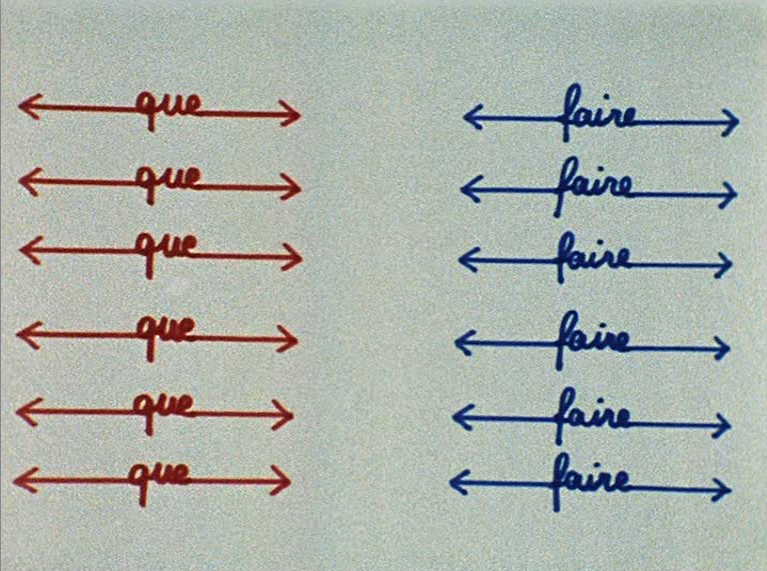
What is to be done ?

que-faire.png

By Jean-Luc Godard

Written in January 1970 at the request of Simon Field and Peter Sainsbury for the magazine Afterimage, produced by Peter Whitehead. Published in Afterimage n°1, April 1970. Translated from French by Mo Teitelbaum.

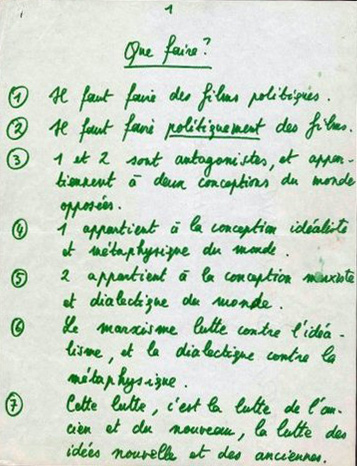
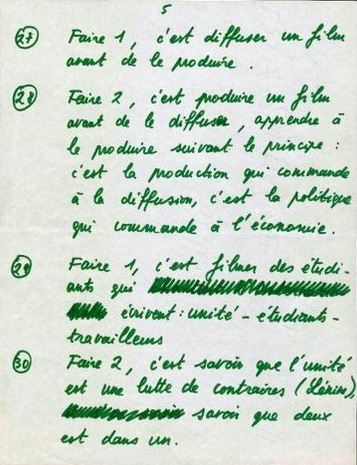
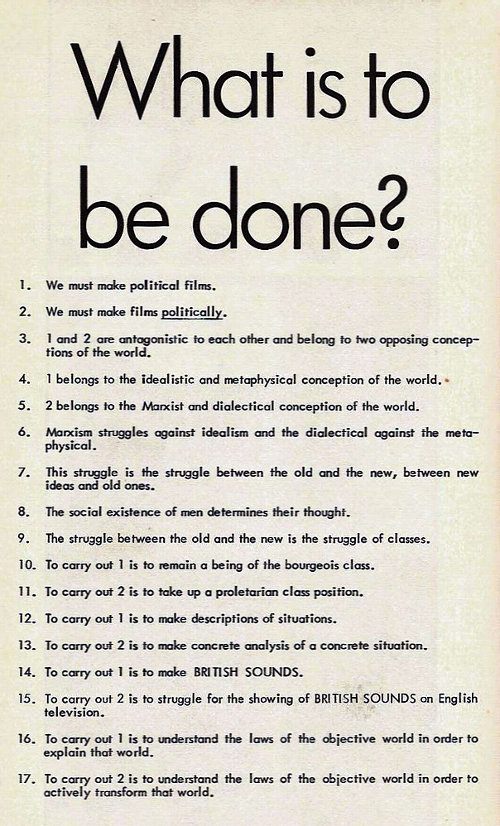
1. We must make political films.

2. We must make films politically.

3. 1 and 2 are antagonist to each other and belong to two opposing conceptions of the world.

4. 1 belongs to the idealistic and metaphysical conception of the world.

5. 2 belongs to the Marxist and dialectical conception of the world.

6. Marxism struggles against idealism and the dialectical against the metaphysical.

7. This struggle is the struggle between the old and the new, between new ideas and old ones.

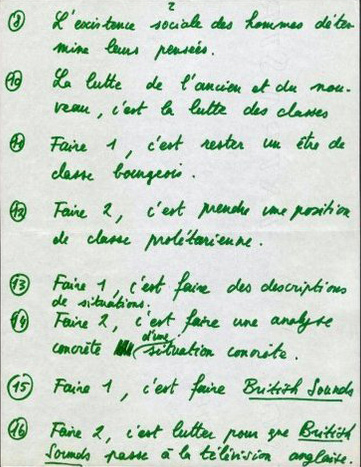
8. The social existence of men determines their thought.

9. The struggle between the old and the new is the struggle of classes.

10. To carry out 1 is to remain a being of the bourgeois class.

11. To carry out 2 is to take up a proletarian class position.

12. To carry out 1 is to make descriptions of situations.

13. To carry out 2 is to make concrete analysis of a concrete situation.

14. To carry out 1 is to make BRITISH SOUNDS.

15. To carry out 2 is to struggle for the showing of BRITISH SOUNDS on English television.

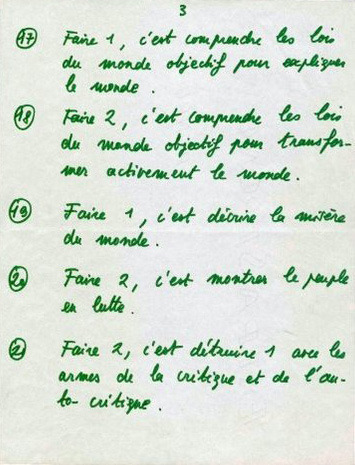
16. To carry out 1 is to understand the law of the objective world in order to explain the world.

17. To carry out 2 is to understand the law of the objective world in order to actively transform that world.

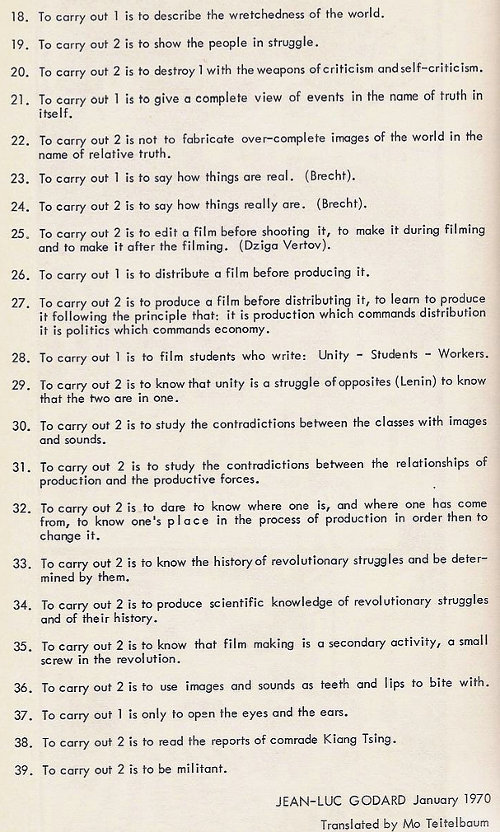
18. To carry out 1 is to describe the wretchedness of the world.

19. To carry out 2 is to show the people in struggle.

20. To carry out 2 is to destroy 1 with the weapons of criticism and self-criticism.

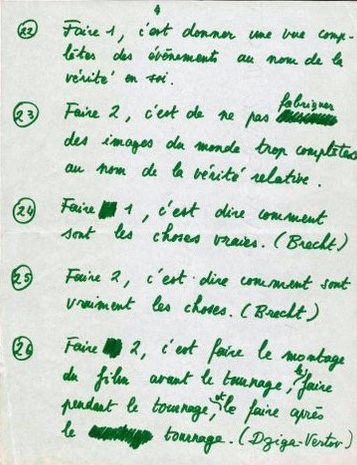
21. To carry out 1 is to give a complete view of events in the name of truth in itself.

22. To carry out 2 is not to fabricate over-complete images of the world in the name of relative truth.

23. To carry out 1 is to say how things are real. (Brecht)

24. To carry out 2 is to say how things really are. (Brecht)

25. To carry out 2 is to edit a film before shooting it, to make it during filming and to make it after the filming. (Dziga Vertov)

26. To carry out 1 is to distribute a film before producing it.

27. To carry out 2 is to produce a film before distributing it, to learn to produce it following the principle that:
it is production which commands distribution
it is politics which commands economy.

28. To carry out 1 is to film students who write: Unity – Students – Workers.

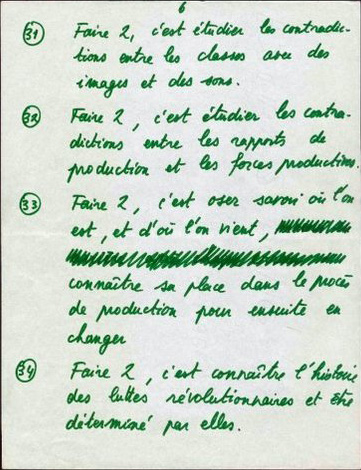
29. To carry out 2 is to know that unity is a struggle of opposites (Lenin) to know that two are in one.

30. To carry out 2 is to study the contradictions between the classes with images and sounds.

31. To carry out 2 is to study the contradictions between the relationships of production and the productive forces.

32. To carry out 2 is to dare to know where one is, and where one has come from, to know one’s place in the process of production in order then to change it.

33. To carry out 2 is to know the history of revolution struggles and be determined by them.

34. To carry out 2 is to produce scientific knowledge of revolution struggles and of their history.

35. To carry out 2 is to know that film making is a secondary activity, a small screw in the revolution.

36. To carry out 2 is to use images and sounds as teeth and lips to bite with.

37. To carry out 1 is only to open the eyes and the ears.

38. To carry out 2 is to read the reports of comrade Kiang Tsing.

39. To carry out 2 is to be militant.

——————————————————————————————————————————————————————-
Notes

14/15 British Sounds, Dziga Vertov Group’s third film, came out in 1969. The transcript of the film is available here.
23/24: “Realism doesn’t mean showing real things, but showing how things really are.” Godard also quoted this dictum by Brecht in the scenario of Les Carabiniers (1963).
25: A reference to Vertov’s text “Provisional Instructions to Kino-Eye Groups” (1926).
29: According to Lenin, “dialectics can be defined as the doctrine of the unity of opposites” (1961).
38: Kiang Tsing (or Jiang Qing) was Mao Zedong’s last wife, well known for her role in the Cultural Revolution (1966–76) and for forming the political alliance known as the “Gang of Four”. During the Cultural revolution, Joang Qing, who used to be a Shanghai movie star in the 1940s, created the “internal screenings” (or “internal reference material film”) system which allowed for some filmmakers and elite intellectuals to watch Western films in screenings that were closed to the general public. Godard pays homage to her in Vent d’Est (1970), refering to her text “Summary of the Forum on the Work in Literature And Art in the Armed Forces With Which Comrade Lm Piao Entrusted Comrade Chiang Ching”.

quefaire1.jpgquefaire2.jpg
quefaire3.jpgquefaire4.jpg
quefaire5.jpgquefaire6.jpg

quefaire7.jpgquefaire8.jpg

Glorious Catastrophes

littlestabsathappiness-ken_jacobs_1.jpg

31 October 2012, Beursschouwburg, Brussels., in the context of the ‘I Fail Good’ project. In collaboration with Courtisane.

“A seriousness that fails”: this is how Susan Sontag described the essence of “camp”, this transient mixture of excess, fantasy, passion and naivety that has taken up a distinctive place in the cultural firmament since the 1960’s. Andy Warhol, who emphatically responded to this trend with his film Camp (1965), saw it differently: he was rather interested in the idea of failure itself, a failure that has to be taken seriously. After all the majority of Warhol’s films consists of observations of people in and as image, who in all their fallibility reveal a genuine authenticity and startling vulnerability. Two characters who play lead roles in Camp also take up a central place in this film programme: Paul Swan and Jack Smith. Warhol’s self-titled portrait of Swan, a dancer and actor who was once lauded as the “most beautiful man in the world” is an as ruthless as affectionate observation of a man who alternately falls in and out of the role of his lifetime. The area of tension between playing and being, playful fantasy and harsh reality, is also the arena of Jack Smith, the “enfant terrible” of the post war American underground scene. The early films Smith made in collaboration with his then confidant Ken Jacobs manifest a brutal beauty and audacious hedonism, unleashing a bewildering vitality not despite but because of their deliberate “trash” esthetics. Between innocence and nonsense, order and disorder, catastrophe and utopia: what the films in this programme have in common, are forms of expression that thrive in relation to their own failing.

With film works by Andy Warhol, Ken Jacobs, Jack Smith

paulswan.jpg

Andy Warhol
Paul Swan

1965, 16mm, color, sound, 66’

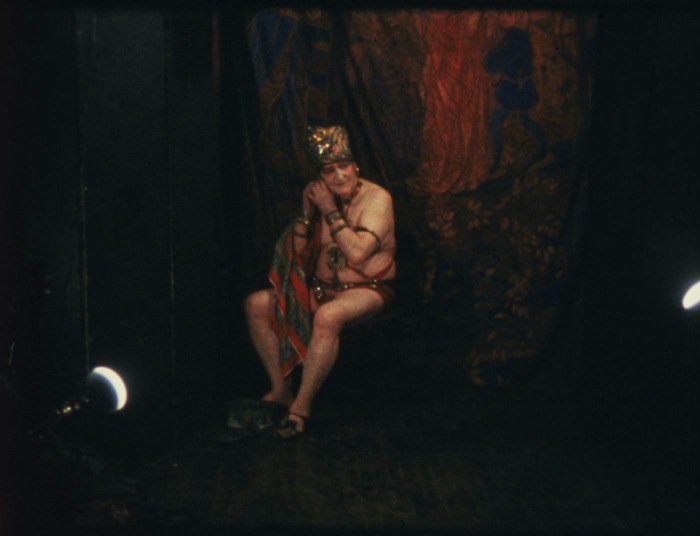
“Paul Swan is Andy Warhol’s two-reel portrait of the dancer once billed as “the most beautiful man in the world.” In 1965, when Warhol filmed him, Swan was eighty-two years old and still performing his aesthetic dance routines in weekly salons attended by the likes of Marcel Duchamp and Alexander Calder. In Warhol’s film, Swan dances such numbers as “Two Hero’s Slain,” his elegy for World War I soldiers, “The Elements: Earth, Water, Fire, and Air—the Movements Seen and Unseen in Nature,” and “Three Oriental Numbers” in skimpy costumes that he spends a great deal of the time getting into and out of. Paul Swan is one of the few films Warhol shot it color in 1965, and though the camera is stationary in the first reel, trained throughout on the tapestry backdrop Swan uses for a set, in the second reel Warhol zooms right in on Swan’s aging flesh and shoe-polish eye make-up. For much of that reel, though, Swan remains off-stage (and off-screen) looking for a particular pair of black slippers that he insists must be worn with his French peasant costume. Swan’s pianist helps him look for the slippers while the crew behind the camera becomes increasingly impatient to get Swan back in front of the camera. Not surprisingly, Warhol is content to let the action take its own course. Callie Angell wrote that “Warhol’s interest in Paul Swan seems to have been based on the observation that, in his unswerving dedication to his increasingly anachronistic art form, Swan had become the living embodiment of camp.” And in fact Swan had appeared in Warhol’s film of that title around the same time that Paul Swan was made. Angell also noted that Swan’s performance in Warhol’s film recalls “the equally disorganized, equally uncompromising performances of Jack Smith,” with whom he appears in Camp.” (Douglas Crimp)

stabs.jpg

Ken Jacobs (featuring Jack Smith)
Little Stabs At Happiness

1958-1963, 16 mm, color, sound, 15’

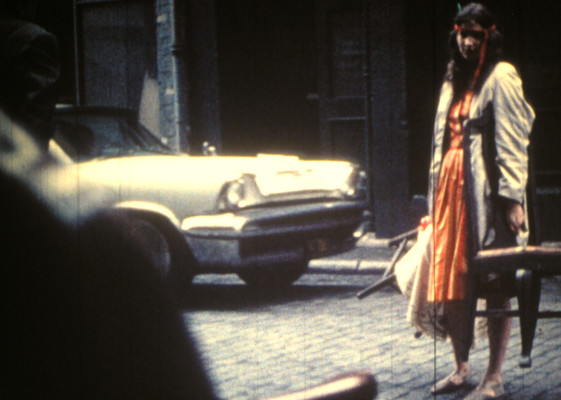
“’Down’ and person to person, cinema officially gets grabbed back from the professionals here. Material was cut in as it came out of the camera, embarrassing moments intact. 100′ rolls were used, the timings fitted well with music on old 78’s. I was interested in immediacy, a sense of ease, and an art where suffering was acknowledged but not trivialised with dramatics. Whimsy was our achievement. And breaking out of step.” (KJ)

“Nasty overstuffed clogged and airless American fifties. The few good Hollywood films after the Left-dumping, ‘The 5.000 Fingers of Dr. T.’, ‘The Sweet Smell of Success’, etc., are skyscrapers on the Mojave. Overwhelmed, hopeless, it was a good time for irreverence. In particular, for art film in the vernacular, like an amusing letter, me to you. Sketchy, airy, anti-precious, without a lot of geniusing at the audience. Slices of imaginative life, not choosing to hide a N.Y. specific economic reality but I can dream, can’t I? Not anti-art, which my superiors, the critics of the period, assumed. To my bafflement. I had decided, with the examples of jazz improvisation and of action painting which would buil don one impulsive stroke, and let things hang out – indications of wrong turns towards the emerging clarity, not to edit and doll up the 100-foot camera rolls. Bot to let the film materials show, the Kodak perforations and start and end roll light flares; to feature the clicks and scratchings of the 78 r.p.m. records I pirated for accompaniment (“The Happy Bird” and south-of-the-border barnyard music I’d become attached to in Alaska in the Coast guard). Camera sequence as determined impulse opon impulse by the cinematographer seemed sensible to me, and to be respected. The off-moments, vagaries, ‘tis-human-to-errs, such beatings about the bush also delineated the bush; there was the example of Cezanne’s outlines, groping for the contour. Follow the impulses, I thought, and let appearances fall as they may. That’d be perfect enough.” (KJ)

cobra3.png

Ken Jacobs (Camera: Bob Fleischner, featuring Jack Smith)
Blonde Cobra

1963, 16mm, color and b&w, sound, 33’

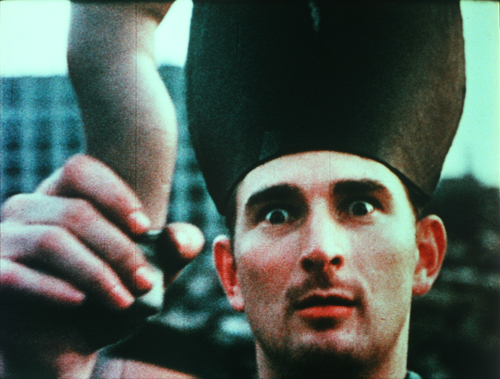
“BLONDE COBRA is an erratic narrative -no, not really a narrative, it’s only stretched out in time for convenience of delivery. It’s a look in on an exploding life, on a man of imagination suffering pre-fashionable Lower East Side deprivation and consumed with American 1950′s, 40′s, 30′s disgust. Silly, self-pitying, guilt-strictured and yet triumphing -on one level- over the situation with style, because he’s unapologetically gifted, has a genius for courage, knows that a state of indignity can serve to show his character in sharpest relief. He carries on, states his presence for what it is. Does all he can to draw out our condemnation, testing our love for limits, enticing us into an absurd moral posture the better to dismiss us with a regal “screw-off”.” (KJ)

“Jack says I made the film too heavy. It was his and Bob’s intention to create light monster-movie comedy. Two comedies, actually, two separate stories that were being shot simultaneously until they had a falling-out over who should pay for the raw stock destroyed in a fire started when Jack’s cat knocked over a candle (Jack was behind in his electricity bill). Jack claimed it was an act of God and wouldn’t (couldn’t) pay for the burnt film. In the winter of `59, Bob showed me the footage. Having no idea of the original story plans I was able to view the material not as the fragments of a failure, of two failures, but as the makings of a new entity. Bob gave over the footage to me with the freedom to develop it as I saw fit. I think it was in late 1960 that Jack and I ignored our personal animosities long enough to record his words and songs for the sound track. The phrases he repeated for me into the tape recorder were mostly ones I’d at some time heard him say; most were pet phrases he loved to recite, over and over, his lessons, and a very few I made up in his style. This was the procedure for recording his monologues and songs: I played him selections from my 78 collection, music from the `20′s and `30′s, often only the beginning of a record and if he liked it we would restart the record and immediately record. I don’t think there was a second take of anything, the Cult Of Spontaneity was in the air. Any lack of clarity is due to the very second-rate equipment, third-rate, fourth-rate, we were using. I play a piano harp for the Madame Nescience monologue, Jack supplied the Arabic music from his small but choice collection. There’s also some SAFARI IN HIFI; a Villa-Lobos string quartet speeded up; a haunting section of a children’s 45… Baby Wants To Sleep. A small amount of my own previous shooting was cut into the film, the “drowning in nescience” color sequence near the beginning.” (KJ)

scotch.jpg

Jack Smith (featuring Ken Jacobs)
Scotch Tape

1959-1962, 16 mm, b/w & colour, sound, 3’

“A Master sense of spiritual nothingness…the most recent explosion of a major creative force in cinema has in this film filled a New Jersey junkyard with life and movement and spiritual
weightlessness.” (Jonas Mekas)

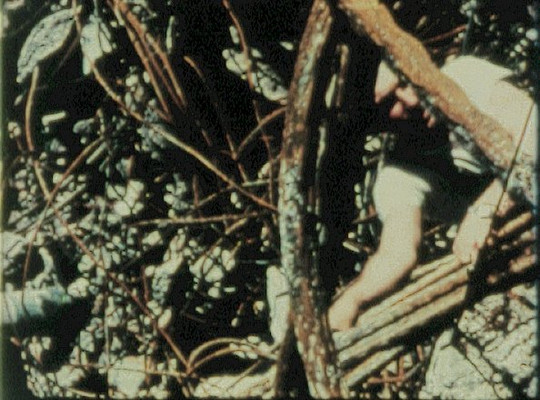
“Jack Smith’s first released movie is an apparently edited-in-camera 100-foot roll of Kodachrome II shot in 1959, using Ken Jacob’s 16mm Bell & Howell at one of Jacob’s Star Spangled to Death locations – the rubble-strewn site of the future Lincoln Center on Manhattan’s west side. Despite its brevity, Scotch Tape anticipates the epic quality of Smith’s subsequent films and theater pieces. The alternation of long shots and close-ups suggests considerable elapsed time between each set-up. Jacobs, who appears in the film, frantically dancing and mugging along with another Star Spangled to Death performer Jerry Sims, proposed that Smith call his film “Reveling in the Dumps” and even drew titles. Instead, Smith chose to name his movie after the dirty piece of stickum that had wedged out in the upper right corner of the frame. For a three-minute film, Scotch Tape carries considerable conceptual weight. The title anticipates Andy Warhol’s go-with-the-flow acceptance of cinematic “mistakes”, even as it draws the viewer’s attention to the perceptual tension between the film’s actual surface and its represented depth. Scotch Tape’s audio accompaniment was created, some three years rhumba, “Carinhoso,” to match the footage. The resultant sync event, Conrad recalled, had a decisive effect on his own life, inspiring him to become a filmmaker. Flaming Creatures aside, Scotch Tape would be Smith’s only completed film.” (J. Hoberman)