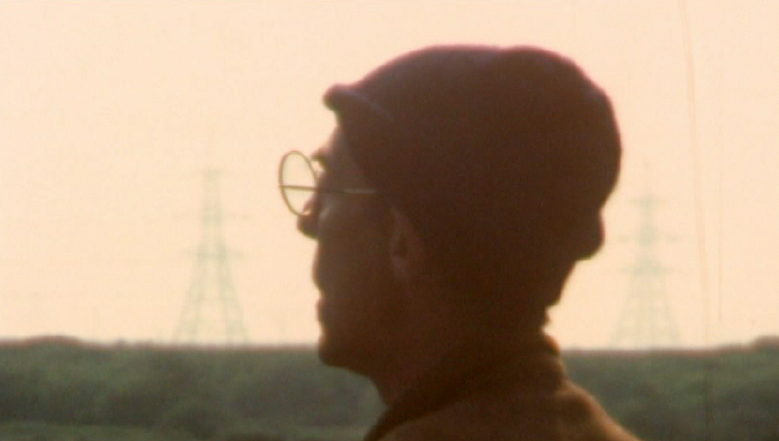
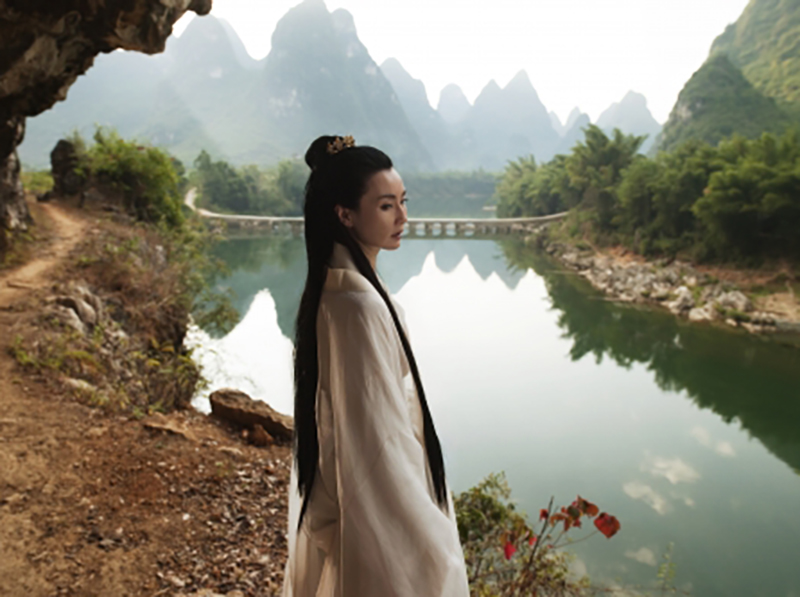
Encontros

In the context of Courtisane Festival 2022 (Gent, 30 March – 3 April 2022). Curated by Stoffel Debuysere with Ricardo Matos Cabo.

Diz-se que na morte se vem sempre de longe
ao encontro de alguma coisa.
Reencarnamos no reconhecimento de uma voz,
e qualquer voz longínqua nos traz a certeza familiar
de não termos estado nunca sozinhos.
Porque nos reconhecemos nos bancos de jardim
onde nunca estivemos sentados.
Porque a lembrança que se extingue
é na memória que perdura.
Que mistério de memória é essa,
a da vida que, rasurando,
escreve de novo o que não deixa de sentir?

They say that in death one comes from afar
to encounter something.
We find reincarnation in the recognition of a voice,
and some far-off voice brings us that familiar certainty
that we have never been alone.
For we find familiarity on a park bench
where we have never been seated.
Because a recollection that fades
lives on in our memory.
What mystery of memory is this?
That of life, which rubs things out,
then rewrites what it continues to feel?

– Sérgio Godinho, original poem from Encontros

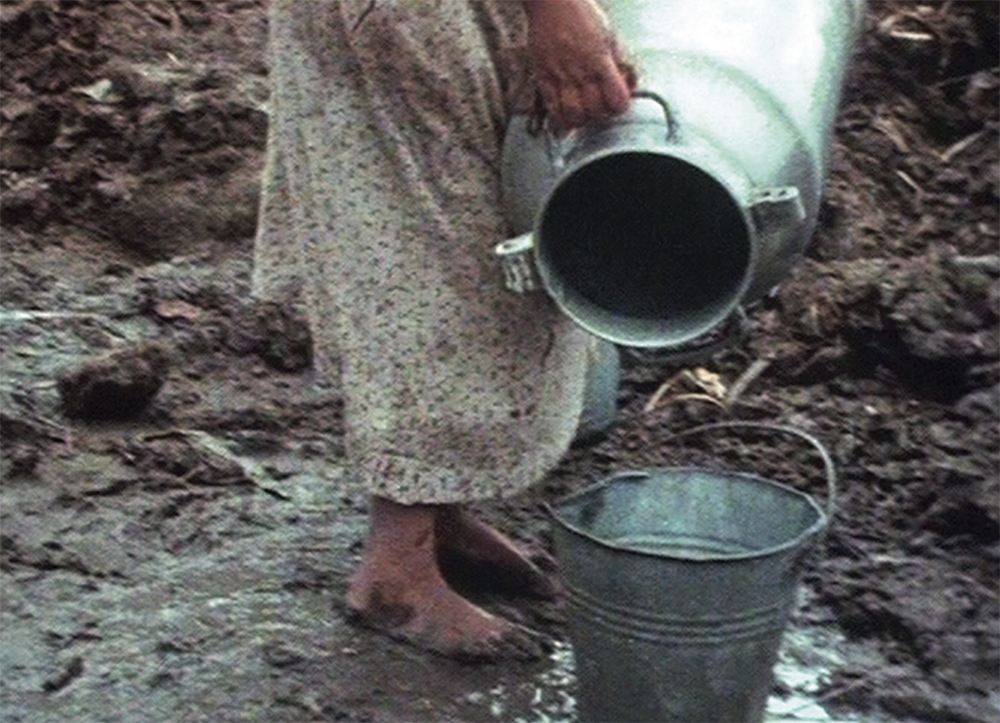
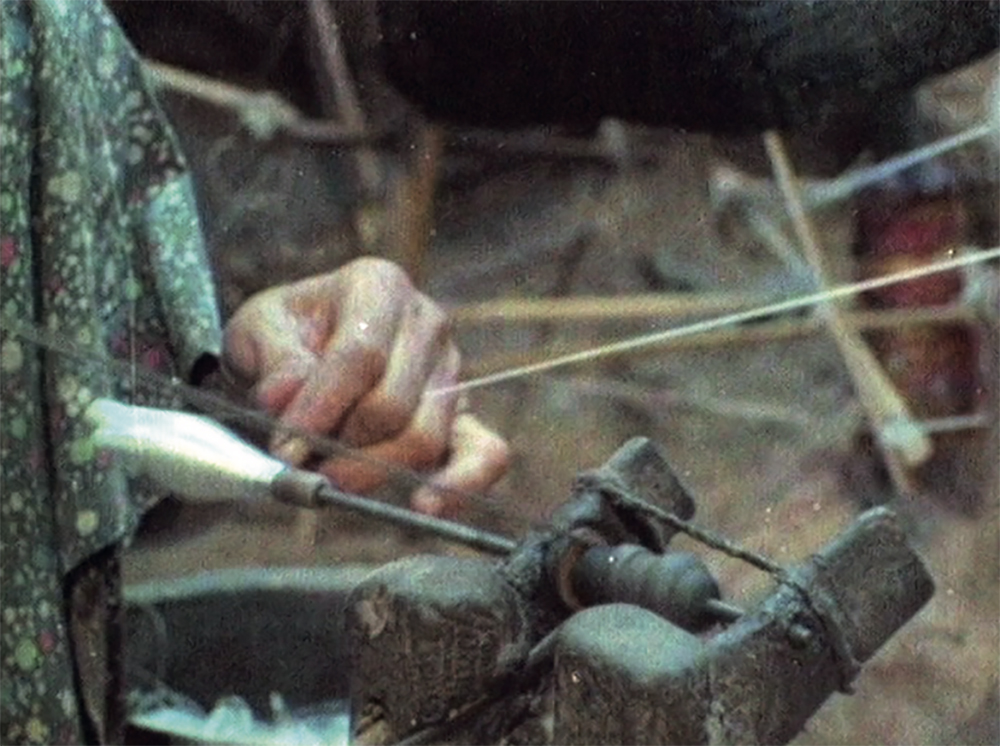
Encounters were at the heart of the life and work of Pierre-Marie Goulet (1950-2021). His filmmaking consisted of a process of searching and accumulating elements that then needed to be forgotten, to be reborn in ways that he himself could not have anticipated. What interested him the most were those small miracles that would emerge almost by chance. “I need to impregnate myself in an obsessive way with a universe that will then give me back the film,” he said. This process of finding and connecting unsuspected threads, geographical, cultural, or cinematographic, was nowhere as pronounced as in Encontros (2006), a film that revealed itself at the crosspoint of different paths and times based around the polyphonic songs from southern Portugal’s Alentejo region. The film grew out of the desire to extend the adventure of a previous film, Polifonias (1998), and to “circumscribe the presence of a sonorous, musical, poetic, human tribe, an analogical and surprising tribe whose territory does not correspond to any geographically known territory”, but it developed into a form entirely of its own, as a resonance chamber where a multiplicity of invocations resound.

Invocations such as that of young poet António Reis, not yet a filmmaker at the time, who became mesmerized by the songs of Peroguarda villagers and decided to visit the village in 1957, where he recorded poems recited by inhabitants, amongst whom the extraordinary Virgínia Maria Dias… Of Corsican ethnomusicologist Michel Giacometti who moved to Portugal two years later, where he would dedicate the rest of his life studying and recording popular oral traditions which were being lost or forgotten. It was Reis who sent Giacometti to Peroguarda where he would return periodically, and where, according to his wish, he was buried… Of poet Manuel Antonio Pina who, accompanied by other aspiring poets, chose to follow in the footsteps of António Reis in the mid 1960s… Of filmmaker Paulo Rocha, who shot his second film, Mudar de Vida (1966), in the village of Furadouro, setting the story among the fishermen who had fascinated him during his childhood. It was again Reis, having already worked alongside Rocha as assistant director of Manoel de Oliveira’s Acto da Primavera (1963), who wrote the film’s dialogues… From these intertwining invocations Pierre-Marie Goulet has crafted a tender meditation on the persistence of memory, sharing with us the echoes of a time that has passed, of a culture that is at risk of being erased. Not as a lament of what has been lost, but to make room for all that is alive.

Encontros acts as a guiding thread for this program, which brings together works by Pierre-Marie Goulet, Margarida Cordeiro and António Reis, Paulo Rocha, and Manoel de Oliveira; but also of Jean-Daniel Pollet, close friend and collaborator of Pierre-Marie Goulet, with whom he shared a profound love for the spaces, the rites, the memory and culture of the Mediterranean; as well as of Sumiko Haneda, who worked with Paulo Rocha on two of his films, and whose Ode to Mt. Hayachine (1982) provides another echo of traditions whose vital force continues to reverberate in the present.

——

In the presence of filmmaker and educator Teresa Garcia, who collaborated on the films of Pierre-Marie Goulet and with whom she developed Os Filhos de Lumière, a remarkable film education movement in Portugal.

Thanks to Teresa Garcia, Paulo Trancoso (Costa do Castelo), Martine Barbé (Image et Création), Sara Moreira (Cinemateca Portuguesa), Manuel-Casimiro de Oliveira, Sumiko Haneda, Tokue Sato (Kanatasha), Takeshi Yoshida (Japan Foundation), Christophe Piette (CINEMATEK), Matteo Boscarol, Rita Morais.

——
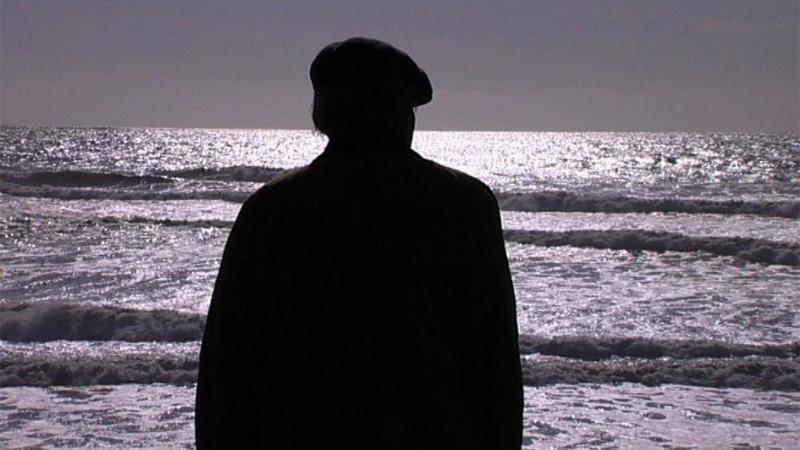
Encontros
Pierre-Marie Goulet, PT, 2006, HD, 105′

Portuguese spoken, English subtitles

Mesmerized by the songs of Peroguarda villagers in southern Portugal’s Alentejo region, young Portuguese modern poet António Reis, Corsican researcher of Portuguese folk music Michel Giacometti, and film director Paulo Rocha visited the village one after another in the late 1950s. Encontros aims at circumscribing a tribe made of sounds, music, poetry and people; an analogical and outstanding tribe that doesn’t belong to any geographically known territory. The film intertwines different present and past gatherings between people and memories. Through that intertwining, one is made to wonder about what one is made of and how memory, the way others view us and the act of sharing enriches our lives.

“After finishing Polifonias, a film dedicated to Michel Giacometti, the desire was born not to lose everything that had been offered to me throughout the shooting and that I had not used in the final editing: songs, narratives, poems that were recorded and whose memory risked being lost if they were not integrated in a new project. There was also the desire to follow some of the paths that had been indicated to me during this time: that of the visit of António Reis, then still a poet, to the village of Peroguarda in Alentejo, the very same place in which Michel Giacometti wished to be buried, and others I wished to visit for my own reasons, such as, for example, to approach Paulo Rocha’s film Mudar de Vida, which fascinated me particularly by the interaction between the narrated story and the end of the fishing communities of Furadouro. Little by little it became clear what, beneath the surface, constituted in my mind one of the faces of Encontros: the echo of the past, of a time gone by, of a culture which had died out, but an echo one hears in the present and which resounds in its appeals. It thus became a question not of deploring what has disappeared, not of making a nostalgic return to the past, or bringing fragments of the past into the present, but of letting go of memory to make way for the living.” (Pierre-Marie Goulet)

——

Polifonias – Paci è Saluta, Michel Giacometti
Pierre-Marie Goulet, FR, PT, 1998, 35mm, 82′

Portuguese spoken, English subtitles
35mm print courtesy of Cinemateca Portuguesa

Michel Giacometti, “The Corsican who loved Portugal” was born in Ajaccio. In 1959, he arrived in Portugal and never left. For thirty years, he collected music, tales, stories and poetry, sayings and adages, recipes for popular medicine, giving back to men and women the pride of their culture. This Corsican reinvented himself an island in Portugal, saving the roots of others to discover his own. By saving the memory of a people, he pursued a quest, that of the sometimes-mythical roots that we all carry deep within ourselves. It is on this terrain that Polifonias crosses the traces of his journey, questions the living memory of the elders, and shows the ever-present vivacity of traditional music in Portugal and Corsica.

“I made the Giacometti film with Antoine Bonfanti, a sound engineer who had always worked with me since 1978. He was the great engineer of direct sound. Chris Marker, Godard, Marguerite Duras, André Delvaux, Resnais… Bonfanti, who was a Corsican, before arriving in Portugal heard about Giacometti, who was also a Corsican. They struck up a friendship and thanks to that we developed, the three of us, a project that was to be filmed. But Giacometti died before we could start the film. Five years later Antoine and I still wanted to make the film and we finally decided to make
Polifonias, which took up Giacometti’s desire to bring together the Corsican and Alentejan cultures. I added to the film a tribute to Michel Giacometti’s own path.” (Pierre-Marie Goulet)

——

Acto da Primavera (Rite of Spring)
Manoel de Oliveira, PT, 1963, 35mm, 94′

Portuguese spoken, English subtitles
Restored 35mm print courtesy of Cinemateca Portuguesa

While location shooting for another film, Oliveira stumbled upon the subject for Rite of Spring, the annual passion play enacted in a village in the same remote northern region of Portugal (Trás-os-Montes) that would inspire Antonio Reis’s most important work. Intrigued by the ritualistic and incantatory qualities of the vernacular production, Oliveira returned with Reis and set about directing the villagers in a re-enactment of the passion play, adding a rich performative layer to the film. A fascinating meta-ethnographic study of local tradition and history that folds in on itself, Rite of Spring climaxes unexpectedly in a furious Bruce Conner style apocalyptic montage that links Christ’s death to the violent lunacy of the Vietnam era. (Harvard Film Archive)

“There was stubbornness in his consciousness, that of a solitary man who, through his camera, reacted to what he saw by trying to perceive where the good was and where the evil was, what were the forces of things which he saw. You could clearly feel the hesitation. And in the midst of the struggle, of the hesitation, suddenly, a decision: this angle, that frame. And such a formal decision did not come from any model, it was like a visceral, instantaneous reaction, without a parachute, taking the risk… What struck me most was this intimate exercise in the rough and tumble of perceiving the world, the camera’s gaze, if you like, but how the perceived matter resists our will, which is good. The camera shakes because it cannot properly perceive what it is seeing. He has never been greater than in these moments, and never has he been more inimitable. This side of him is like an X-ray of emotion, of conscience, of doubt, and there are few equivalents in world cinema.” (Paulo Rocha)

——

Mudar de Vida (Change of Life)
Paulo Rocha, PT, 1966, DCP, 94′

Portuguese spoken, English subtitles
Restored version courtesy of Cinemateca Portuguesa

The second and arguably most important film by Paulo Rocha, one of the central figures of the Novo Cinema, Mudar de Vida is a direct response to Oliveira’s Rite of Spring and an important precursor to the radical documentary shaped fiction of António Reis and Margarida Cordeiro. Captivated by the remote Portuguese fishing village of Furadouro, Rocha chose not to make a traditional documentary but rather to engage the specificities of the people and place through fiction, crafting a melancholy story about a soldier’s return to a changing world. Inspired by his experience working with Oliveira on Rite of Spring, Rocha “cast” the local villagers as themselves, interspersed with experienced actors led by the great Isabel Ruth, who would go on to become an Oliveira regular. The poetry of the local vernacular is captured in the textured dialogue written by António Reis, who met Rocha through Oliveira. Despite the steadily building critical acclaim that followed the release of Mudar de Vida — and despite its controversial depiction of a disillusioned Angola War veteran — Rocha effectively ceased filmmaking until the 1980s. (Harvard Film Archive)

“António gave me a great lesson. He worked on the dialogues for six months, scratching and throwing them away. Every day thinner, always in a cold sweat, searching for the comma, the pause, the secret and expressive assonance. The dialogues, dragged out in irons, arrived at the filming at the last minute, and there was no time to reflect on them. It was only years later, when Mudar de Vida had its premiere in Tokyo, that I had the opportunity to study them. The work of translating them into Japanese was very slow, and only then could I discover the musical concision, the secret wealth of those phrases written with an infallible ear. How many dialogues in our language can compare to that?” (Paulo Rocha)

——

Trás-os-Montes
António Reis, Margarida Cordeiro, PT, 1976, DCP, 111′

Portuguese spoken, English subtitles
New digitized version courtesy of Cinemateca Portuguesa

For Jean Rouch, “this film reveals a new cinematographic language.” Reis and Cordeiro’s indisputable masterpiece exploded the meaning and possibilities of ethnographic cinema with its lyrical exploration of the still resonant myths and legends embodied in the people and landscapes of Portugal’s remote Trás-Os-Montes region. Evoking a kind of geologically Bergsonian time, with past and present layered upon one another, Trás-os-Montes interweaves evocative recreations of the ancient worlds and encounters with atavistic peasantry, following the pilgrim’s path traced by Reis and Cordeiro as they led their skeletal crew from village to village in search of the poetic essence of the Portuguese language and imagination. Painstakingly researched and shot over the course of one year, Reis and Cordeiro became intimate with every person included in their ambitious film, carefully selecting the different voices, faces, and gestures that would together provide an extraordinary composite, associative, and mythological response to the question of how to define a ‘national cinema’. (Harvard Film Archive)

“António Reis was a kind of visionary scientist. He looked at the world, at the stones, at nature, with the eyes of a sage and a poet. He found in them the magical side and the geological side… António and Margarida’s film was a masterpiece that brought them European fame. When the film premiered in Paris, Le Monde published a terrorist order signed by Joris Ivens and Jean Rouch, the two supreme masters of documentary cinema: ‘Allez voir, toutes affaires cessantes, Trás-os-Montes!’” (Paulo Rocha)

——

Hayachine no fu (Ode to Mt. Hayachine)
Sumiko Haneda, JP, 1982, 16mm, 186′

Japanese spoken, English subtitles
Print courtesy of Japan Foundation and Kanatasha

Shot in the foothills of Iwate Prefecture’s mystical Mt. Hayachine, the film records a year in the life of the area’s villages and villagers as they prepare for kagura performances, a dance-theater form with origins in religious rituals (now mainly performed for tourists). The film can be enjoyed and processed on many levels: a musicologist’s fascinating glimpse into kagura traditions and performances; an ethnographic portrait of rural life and village hierarchies; and most of all, a study of a key moment in Japanese society, when, even as Haneda filmed, rural lifestyles were exposed to modernity: paved roads, cars, and tv sets. Fittingly, the film’s true beauty comes not through its thesis, but in its attunement to the mountain’s own intricate rhythms. (Pacific Film Archive)

Sumiko Haneda is one of the most prominent documentary filmmakers from Japan and one of the few women working in non-fiction cinema there in the postwar period. Born in 1926, in Dalian, China (then Manchuria), in 1949 Haneda entered Iwanami Shoten, a publishing company producing educational and promotional films, where she would make films about the arts, education, and nature. In 1976 she directed her first independent film, Usuzumi no sakura (The Cherry Tree with Gray Blossoms, shown at the Courtisane festival 2021). She continued to direct over 80 short and long films and worked with Paulo Rocha on A Ilha dos Amores (1982).

“What is art for, what is fiction for, what position does the profilmic material occupy in a movie, what position does fiction occupy in art? What about the artist? What happens to the artists filmed? Rarely in the history of cinema have such essential questions been asked in such a direct, simple, generous, and intelligent way. I am a filmmaker, and until now I believed that I would be closer to the truth if I approached it through fiction, but now, after seeing Haneda’s
Ode to Mt. Hayachine, I realize that the idea is an arrogant one, we must take advantage of this opportunity, we must learn to see reality correctly to know the truth. Ode to Mt. Hayachine gave us the best example of this.” (Paulo Rocha)

——

Trois jours en Grèce (Three days in Greece)
Jean-Daniel Pollet, FR, 1991, DCP, 94′

Greek / French spoken, English subtitles
Restored version courtesy of La Traverse / English subtitles created by Courtisane

Jean-Daniel Pollet used to say that Greece was his “second home”. He encountered it in 1962, at the age of twenty-six, during the journey that preceded the making of Méditerranée (1963). On his return, he spent several months locked up in a cellar looking for the montage, which he found one Easter day. Never before had we seen such a thing: a series of images that return and are arranged in a fugue whose loops replay the circularity of the journey around the Middle Sea. Over the years, Pollet never stopped going back to Greece, filming some of his major films there. In 1991, Three days in Greece closed the series. The filming, three decades after the first trip, would be his last stay in the motherland. The last Greek film, it is also, in accordance with the deep law of Pollet’s cinema, a return to the origin, remake, reworking and relaunching of Méditerranée. Reinvention of its broken circularity, of its syncopated pace, the same vertigo danced above the abyss, but untied, unfolded, lightened or lifted by the grace of a new serenity… Pollet’s cinema, transported by the spirit of dance, reaches in Trois jours en Grèce the amplitude of a cosmogony. (Cyril Neyrat)

“In a classic film, Belmondo gets out of a car, enters a restaurant, goes to the phone. We follow him. It’s not editing, even if there are connections, several shots: we just follow him, from one shot to the next. The ellipsis — you cut a little bit of time and the viewer is supposed to understand what you cut — it’s still not really editing, you have to cut even more — you don’t know why you go from one shot to another. Then you get a certain logic, poetry… For me, this language comes naturally: there, long live the editing and the mechanism of dreams soaked in the unconscious!… long live the editing at night just before going to sleep. An enlightening montage, as with dreams, where there is no other logic than that of the unconscious. A logic which is that of happiness or that of suffering.” (Jean-Daniel Pollet)

ARTIST IN FOCUS: Trevor Mathison

In the context of the Courtisane Festival 2022 (30 March – 2 April). Curated by Stoffel Debuysere.

“Within the spectral temporality of the tape loop, the imperial anxieties of the early twentieth century resonate with the multiple fears of the present.” This is how Kodwo Eshun described the sound piece Trevor Mathison created for Expeditions, the very first work of the Black Audio Film Collective (1982-1998). With this impressive composition, which incorporates elements from dub and musique concrète as well as the industrial mantras of Cabaret Voltaire or the neo-Constructivist anthems of Test Department, Mathison set the tone for the soundtracks that he would subsequently provide for the films of the collective. It is no coincidence that the collective’s name places as much emphasis on “audio” as “film”, or that several of their titles — such as Handsworth Songs (1985) or Three Songs on Pain, Light and Time (1996) — refer explicitly to sonic processes: the auditory was at least as important as the visual in their multi-layered and pioneering explorations of notions of race, ethnicity, colonialism, diaspora, identity and memory. When asked why sound and music occupy such a prominent place, John Akomfrah, one of the members of the collective, replied, “because there is so much we can’t say without it.”

For Twilight City (1989), Mathison created a hypnotic aural landscape of repetitive textures and melancholic timbres that expresses the psychogeographical relief of the British capital in the grip of gentrification and segregation. In Who Needs a Heart (1991), a portrait of political exhaustion and racial drift in the 1960-70s, dialogue is exchanged for a composition of fragments from the work of jazz greats such as Ornette Coleman, Eric Dolphy and Anthony Braxton to evoke disharmony and dissonance. In The Last Angel of History (1996), Mathison’s mixture of wavering motifs and stuttering pulses accompanies a quest for the genealogy of Afrofuturism and its continuation within electronic music movements. In each case, Mathison produces deeply resonant sound worlds based on what he himself calls “post-soul noise”: “sounds that take their cue from pre-existing black musics… but they’ve been defamiliarised, put through a sonic box that renders them strange and unusual” (John Akomfrah).

After the dissolution of the Black Audio Film Collective, Mathison continued to work closely with Akomfrah, with whom he made numerous films and installations. With Anna Piva and Edward George, another former member of the collective, he formed the projects Flow Motion and Hallucinator, whose mutant techno dub featured on the leading record label Chain Reaction. Under the name Dubmorphology, he and Gary Stewart make installations that explore the relationship between culture, history and technology. He also recently produced the soundtrack for Garret Bradley’s America (2019), a reinterpretation of a forgotten history of African-American cinema.

This programme is the first chapter of Echoes of Dissent, a trajectory that aims to counter the hegemony of the eye and the subsequent disregard for the ear by considering the relationship between cinema and politics from the perspective of sound. It is therefore only fitting to begin this journey by focusing on the striking work of a sound artist who is rightly considered by Gaylene Gould as “the quiet centrifugal force behind what we now recognise as a black British aesthetic”.

Part of the event series Echoes of Dissent, produced by Courtisane, argos and Auguste Orts, in the context of the KASK and Conservatory School of Arts research project with the same title.

——

Expeditions 1 – Signs of Empire
Black Audio Film Collective, UK, 1983, video, 26′

Expeditions 2 – Images of Nationality
Black Audio Film Collective, UK, 1984, video, 22′

A two-part 35mm slide-tape text, produced while the Black Audio Film Collective were undergraduates. The work toured England from November 1984 to March 1985, using a Kodak dissolve unit to sequence images into narrative. The soundtrack to Signs of Empire, which consisted of tape loops of musique concrète and political speeches, was amplified to create a powerful environment of dread.

“There was a need for a recycling aesthetic. One thing we wanted to do was to comment on the past, because there was just no way forward without that. Tape-slide provided one of the easiest means for doing that because the reproducibility of images from slides, once you had a printer, meant you could reshoot, you could reframe, you could perform something with images. We also spent time trying to pull together a sonic backdrop which one could only call ‘black industrial’, because post-punk was in full swing by then.” (John Akomfrah)

single channel 35mm colour Ektachrome transferred to video
Courtesy Smoking Dogs Films and Lisson Gallery

——

Three Songs on Pain, Time and Light
Black Audio Film Collective / Trevor Mathison & Edward George, UK, 1995, video, 25′

A rarely seen video portrait of black British artist Donald Rodney (1961-1998), who suffered from Sickle Cell Anaemia. The video uses a mixture of home movies, studio and location based tableaux, interviews and testimonies to examine how he uses his art to come to terms with constant pain.


The Last Angel Of History
Black Audio Film Collective / John Akomfrah, UK, 1995, video, 45′

The Last Angel of History is a sci-fi documentary about Africa, history and memory. Legend has it that in the 1930s itinerant blues man Robert Johnson sold his soul to the devil in order to play the blues. What Johnson got in return for his soul was a black secret: technology which would produce the history of black music. 200 years into the future another itinerant figure, the Data Thief, sells his soul for the knowledge of his future. He has been told to go to the past (our present) and unearth black culture’s speculations about the future. Piece together these speculations and you will find the secret of the black secret technology which will unlock your future. The Last Angel Of History takes us on a voyage, from the margins of black culture to its interstellar heart. The film charts a new interface, striking up connections and dialogues between diverse black interstellar parties who have so much in common, and yet for the most part remain unaware of each other’s existence from Sun Ra to Nichelle Nichols, George Clinton to Lee Perry, A Guy Called Gerald, Goldie and Underground Resistance. John Akomfrah: “Last Angel proved conclusively to both me and Trevor that you could actually use your own sounds to bring these worlds into being.”

——

Twilight City
Black Audio Film Collective / Reece Auguiste, UK, 1989, video, 52′

A cinematic exploration of London as a symbolic as well as a civic space, representing ideals of affluence and the hope of a new beginning, and contrasting it with the reality of the harsh welcome offered to many migrants. By 1989, the conservative government was three years into a programme of wealth creation and urban redevelopment unparalleled in 20th Century Britain. Black Audio Film Collective’s third work Twilight City can be seen as the first essay-film to map the new London through an excavation of Docklands, the City, Limehouse and the Isle of Dogs. In its movement between archival image, fictional script, studio interview, photographic tableau and travelling long shots, London is reimagined as a nighttime city of light and glass, bordered by a landscape of dreams, sequenced by electronic pulses.

“Mathison’s modus operandi is to exploit the synthesiser’s innate ability to be inhuman. The result is that sound offers no refuge from deterritorialisation. There is no ‘core of affect’ — whether gospel or reggae or blues or jazz — around which the film can secure an inviolable core of identity; on the contrary, the score marshals its affects and identifications from within electro-modernity, from inside the synthesiser’s inherent alienation- effect.” (Kodwo Eshun)

America
Garret Bradley, US, 2019, DCP, 27′

“I see America as a model for how the assembly of images can serve as an archive of the past as well as a document of the present,” Bradley has said. This film cites historical events, ranging from African American composer and singer Harry T. Burleigh’s publication of the spiritual Deep River in 1917, to the murder of popular jazz bandleader James Reese Europe in 1919, to the founding of baseball’s Negro National League in 1920. By including borrowed footage from Lime Kiln Club Field Day, she also shines a light on a film that was radically progressive for its time by celebrating Black vernacular culture. America is also a sonic exploration set to a score by Trevor Mathison and sound designer Udit Duseja, which reminds us of the importance of sound to conjure memories.

——

Who Needs a Heart
Black Audio Film Collective / John Akomfrah, UK, 1991, video, 78′

Who Needs a Heart is a parable of political becoming and subjective transformation and remains BAFC’s most controversial film. Akin to a sophisticated home-movie history, a record of life on the fringes in London between 1965 and 1975, the film explores the forgotten history of British Black Power through the fictional lives of a group of friends caught up in the metamorphoses of the movement’s central figure; the counter-cultural anti-hero, activist and charismatic social bandit Michael Abdul Malik aka Michael X. Who Needs a Heart is a largely silent film whose soundtrack of Eric Dolphy, Ornette Coleman, The Art Ensemble of Chicago, Albert Ayler, Anthony Braxton, John Coltrane and the ritual music of the Llamas and Tibetan Monks of the Four Great Orders investigates the expressionist potential of music to create the conditions for the movement of images. As John Akomfrah stated, “we were convinced that sound itself had a gaze, a way of constructing a look, and I think Who Needs A Heart is probably the best way we’ve found so far of substantiating that thesis.”

——

Exif_JPEG_PICTURE

Performance

Sound artist and composer Trevor Mathison has been creating groundbreaking sonic work for almost four decades, first as a member of the Black Audio Film Collective, later with projects such as Flow Motion, Hallucinator and Dubmorphology, and as sound designer for various films and installations. In this live performance he will explore his current ideas about sonics.

——

Conversation

“What happens if critical analysis slows down the rate of perception and sustains a close hearing? If the revisionary archaeology that Black Audio Film Collective are so famous for is listened to as intensively as it is watched? If the ear, for once, pilots the eye through the counter-memorial practice? This is not a matter of downgrading the visual in favor of the sonic; rather it concerns one carefully situating the optical within the trialogical relay of narration, montage, and sound design so as to gauge the full implications of the BAFC project… Attention to the nervous routes between the dimensions of the aural and the filmic has been resoundingly silent.” (Kodwo Eshun)

A close hearing to the work of Trevor Mathison and others will provide the basis for an extended conversation about his sonic practice.

ARTISTS IN FOCUS: C.W. Winter & Anders Edström

In the context of Courtisane Festival 2021 (Gent, 20 – 24 October 2021). Curated by Stoffel Debuysere.

Have you ever lived in a film? Ever had the feeling that cinema could, at least for a day, let you sway to the natural and human rhythms of a place unknown to you, get lost in its landscapes and sound fields, become familiar with its customs and traditions? If one recent film is worthy of such merit, it is undoubtedly The Works and Days (of Tayoko Shiojiri in the Shiotani Basin) (2020), the second film by C.W. Winter and Anders Edström, shot in a rural village of forty-seven inhabitants in the mountains of Kyoto Prefecture, Japan. For eight hours, divided into five chapters, the film follows the daily groove and grind of the oldest family in the village, the Shiojiri-Shikatas, whose members have been farming the land for eleven generations in constant dialogue with their natural environment, and their circle of acquaintances. The protagonist is Tayoko, the grandmother of the family, who diligently discharges her mundane duties and faces change and loss throughout the shifting seasons. Anders Edström, a renowned Swedish photographer who has maintained close ties with the family for two decades, and C.W. Winter, a California-born CalArts alumnus attached to Oxford University, have distilled an unforgettable epic from this special place and the prosaic lives of its inhabitants, which, against all appearances, has been achieved through thoughtful construction and thorough staging.

The filmmakers previously applied a similar approach, which they themselves have described as a “topological reworking of the real into the fictional,” when making The Anchorage (2009), a portrait of Ulla Edström, Anders’ mother. The film is a reconstruction of three days in her life on a Swedish archipelago around Stockholm, during which isolation, serenity and routine are broken by the appearance of a mysterious hunter. Once more, plot is secondary to the sophisticated attention paid to the everyday exchanges between the human and the natural, the lived and the constructed. But whereas The Anchorage seeks rather a formal homogeneity, The Works and Days draws on a multitude of formal and sensory registers, with the dedication to sound timbre and composition particularly notable.

This preoccupation with sound is no accident: indeed, both creators share a love of the work of sound artists such as Alvin Lucier, Éliane Radigue or Akio Suzuki, which can be heard subtly in their most recent film. One of their heroes is guitar improviser-par-excellence Derek Bailey, of whom they made a portrait sketch in 2003, driven by a shared fascination with duration and “the idea of delivering with a restraint that emerges over extended time”– a description that also graces their own work. If Bailey’s spirit permeates the work of C.W. Winter and Anders Edström, it is almost certainly to be found in their non-idiomatic approach: a cinematic approach founded on discipline and dissensus, openness to contingency and investment over time. An approach that does not advocate for the overly determined and pre-ordained, but for cinema as a medium of shared experiences and lasting rewards.

Program on www.courtisane.be

Out of the Shadows

THE PIONEERING WORK OF ATTEYAT AL-ABNOUDY, ASSIA DJEBAR, JOCELYNE SAAB, HEINY SROUR

In the context of Courtisane Festival 2021 (Gent, 20 – 24 October 2021). Curated by Stoffel Debuysere in collaboration with Reem Shilleh and Mohanad Yaqubi (Subversive Film).

« Nous toutes, du monde des femmes de l’ombre, renversent la démarche: nous enfin qui regardons, nous qui commençons.»

“All of us, all of us who come from the world of women in the shadows, are turning the direction around: at last it is we who are looking, we who are making a beginning.”
– Assia Djebar

When exploring a cinematic history as extensive and rich as that of the Arab Mediterranean, one is faced with an exhilarating range of forms and manifestations. From the silent era up to the present, the regional cinemas of the Maghreb and the Mashriq have produced a myriad of remarkable works. Yet, when poring over the canonical historiographies of cinema, one cannot help but being struck by their relative obscurity, which is even more striking when it comes to films that have been made by women. Although there has been a notable rise of Arab female film directors in recent decades, the work of many pioneers tends to remain painfully neglected.

The aim of this program is to address this obscurity and revitalize the work of four filmmakers whose films remain overlooked and underscreened: Atteyat Al-Abnoudy, Assia Djebar, Jocelyne Saab and Heiny Srour. Coming from different backgrounds and regions, these filmmakers all started to produce films in the 1970s, at a moment of great political and cultural ferment. Often working against the grain, they set out to attend to voices and stories that were at risk of being drowned out by official History. While each of these filmmakers developed different approaches, their works explore shared themes such as memory and identity, oppression and liberation, violence and exclusion, and the social and political role of women in Arab societies and histories.

Each of these filmmakers, whose work is shown side by side here for the first time, has been shaped by different traditions and realities. For the Arab woman filmmaker exists no more than the Arab woman. Accordingly, this program seeks to follow Assia Djebar’s appeal to “not to presume ‘to speak for’ or, even worse, ‘speak on’, barely speak near to, and if possible right up against.” In order to explore in depth the singularities as well as the communal resonances of the distinct bodies of work in this program, a variety of guests have been invited to speak “right up against” the films. Furthermore, an accompanying publication brings together a selection of writings and interviews which have been newly published or translated on this occasion.

——
This program consists of a selection of films from the period 1970-1990 which will be shown in the best available quality. This program was developed with the support of The Arab Fund for Arts and Culture (AFAC) and CINEMATEK.

On the occasion of this program, Courtisane and Sabzian have collected a series of writings and interviews in a small-edition publication. With the support of KASK / School of Arts.

Thanks to: Viktoria Metschl, Christophe Piette, Céline Brouwez, Mireille Calle-Gruber, Heiny Srour, Mathilde Rouxel, Asmaa Yehia El-Taher, Alexander Horwath, Regina Schlagnitweit, Tobias Hering, Mai Abu ElDahab, Ahmed Bedjaoui, Stephanie Van De Peer, Léa Morin, Mary Jirmanus Saba, Natasha Marie Llorens, Debra Zimmerman, Colleen O’Shea, Yasmin Desouki, Olivier Hadouchi, Salim Aggar, Aziz Kourta, Tewfik Abdelkader Mahi, Emma Hedditch, Louise Shelley, Matthieu Grimault, Omar Jabary Salamanca, Tamer El Said, Stefanie Schulte Strathaus and many others …

——

Assia Djebar

“Can it be simply by chance that most films created by women give as much importance to sound, to music, to the timbre of voices recorded or captured unawares, as they do to the image itself ? It is as though the screen had to be approached cautiously and be peopled, if need be, with images seen through a look, even a short-sighted, hazy look, but borne on a full, commanding voice, hard as stone but fragile and rich as the human heart.”

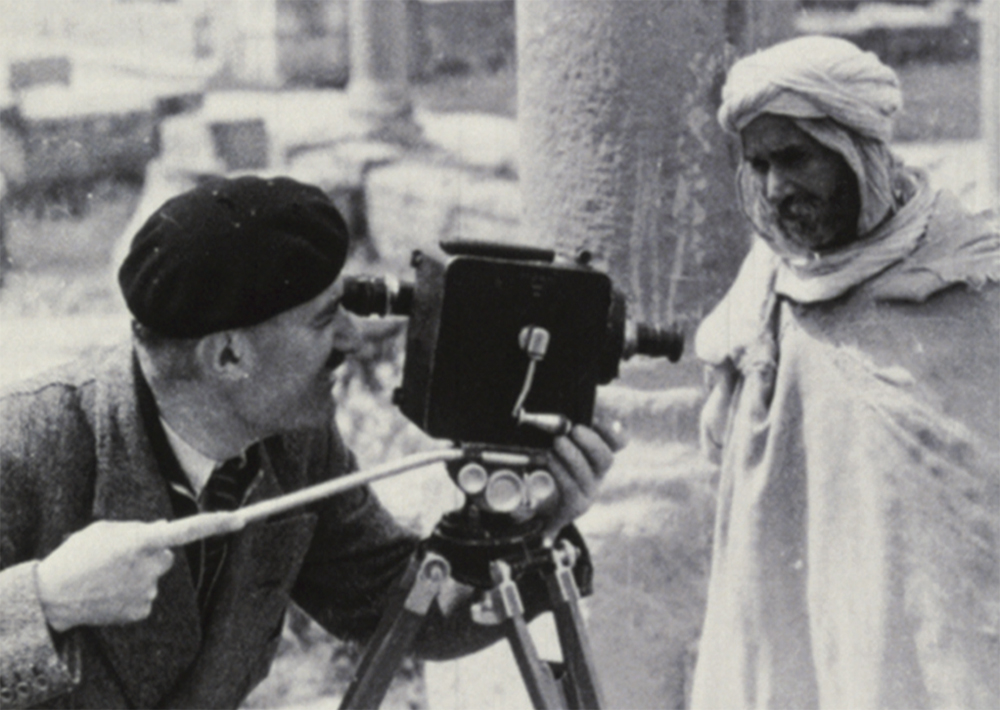
Assia Djebar (1936-2015) was born Fatima-Zohra Imalayen in Cherchell, Algeria, to a family of Berber origin. She was the first Algerian woman to attend the École normale supérieure de jeunes filles outside Paris. During the Algerian War of Independence (1954-1962), she worked with Frantz Fanon for the newspaper El moudjahid, conducting interviews with Algerian refugees in Tunisia and Morocco, before going on to teach history in Rabat and later in Algiers. Between the ages of twenty and thirty, she wrote four novels. But in the mid-1960s, she decided to abandon writing in French, the language of Algeria’s colonizer. Cinema offered her new ways to approach language as well as the world of the women in her home region, which sharpened her attention to sounds spoken and sung. “I made the decision to make a first film, not knowing really if I’m a filmmaker, I think in November 1975: because it was the day of Pasolini’s death. His relation to popular poetry, to the spoken dialects of these regions, which he has conveyed in a certain way on the screen, is what I felt concerned about.” To film The Nouba of the Women of Mount Chenoua in 1975-77, Assia Djebar went back to the mountain of Chenoua in order to listen and give voice to the oral histories as transmitted by otherwise silenced women. The film was awarded with the Critics’ Prize at the 1979 Venice Film Festival, but was received with hostility in Algiers, where it was considered as too “personal” and thus anathematic to the nationalist project of decolonized Algeria. In 1980, she resumed her career as a writer with Women of Algiers in Their Apartment, a collection of stories expressing Algeria’s collective memory through polyphonic narratives by female voices. This book was going to be the seed for a film on the urban women of Algiers, intended to complement its other half on the rural women of the hinterland. Instead, for what turned out to be her final film, The Zerda or the Songs of Oblivion (1978-1982), she spent two years sifting through archival footage shot by French colonizers in the first half of the twentieth century, weaving it into an alternative vision of the history of the Maghreb. As Assia Djebar grew to be one of the most important figures in North African literature, she continued to raise the issue of women’s language and the circulation of women’s voices, all the while developing what she has termed her “own kind of feminism.”

La nouba des femmes du Mont Chenoua (The Nouba of the Women of Mount Chenoua)
Assia Djebar, DZ, 1977, 16mm, 115′

“This film, in the form of a nouba, is dedicated, posthumously, to Hungarian musician Béla Bartók, who had come to a nearly mute Algeria to study its folk music in 1913; and to Yaminai Oudai, known as Zoulikha, who organised a resistance network in the city of Cherchell and its mountains in 1955 and 1956. She was arrested in the mountains when she was in her forties. Her name was subsequently added to the list of the missing. Lila — the protagonist in this film — could be Zoulikha’s daughter. The six other talking women of Chenoua recount fragments of their lives. The Nouba of the Women is their moment. But the Nouba is also the Nouba of the Andalusian music in its particular rhythmic movements.“

La Nouba borrows the structure of the nouba, a five-part traditional Andalusian music form, to tell the story of a woman who returns to the town of her childhood fifteen years after the violent War of Independence. Reading the history of her country as written in the stories of women’s lives, La Nouba des Femmes du Mont Chenoua is an engrossing portrait of speech and silence, memory and creation, and a tradition where the past and present coexist.

Arabic spoken, English soft-titled. Print courtesy of the Centre Algérien de la Cinématographie.
Introduced by Viktoria Metschl.

La Zerda ou les chants de l’oubli (The Zerda or the Songs of Oblivion)
Assia Djebar, DZ, 1982, DCP, 60′

“In a Maghreb region subjugated by colonial domination and reduced to silence, photographers and filmmakers invaded to capture us in images. The Zerda is their bleak “celebration” of our society. In stark contrast to their images with their penetrating gaze, we attempted to create an alternative vision, offering glimpses of a daily life held in contempt … But above all, behind the veil of this now exposed reality, we collected anonymous voices that re-imagined the soul of a reunified Maghreb, and of our past.”

As a historian, Assia Djebar had been asked by Pathé-Gaumont to sift through some old film reels, which turned out to be discarded newsreels on the colonies, focusing on the everyday life of the Maghrebi peoples from the early twentieth century to the Second World War. Out of the colonial discards, Djebar, in collaboration with poet Malek Alloula and composer Ahmed Essyad, wove together footage of the Zerda ceremony with poetic voice-overs recounting the lived experiences of indigenous Algerians, interspersed with “songs of oblivion” to recognize traditions that are being lost to colonialism even as they are tokenized by and subjugated to the colonial gaze.

Arabic / French spoken, German & English subtitles. Digital Restoration by Arsenal – Institute for Film and Video Art.
In the presence of Viktoria Metschl and Ahmed Assyad. With the support of Goethe-Institut Brussels.

——

Jocelyne Saab

“Once you hold a camera, you assert yourself through your profession. You react with your sensitivity as a woman — I don’t deny it. On the contrary … Maybe, in order to define it, although I can’t say for sure, maybe it’s about a gaze that lingers less on the surface of things, like that of cannons or armies. I always preferred to know the sensitivity of people in their details, the children, the women, the men, the daily life of human beings … In this field, people are so astonished to see a woman arriving that they make space for her and they respect her.”

Jocelyne Saab (1948-2019) was born and raised in Beirut. After completing her studies in economic sciences at the Sorbonne in Paris, Saab worked on a music program for the national Lebanese radio station before being invited by poet and artist Etel Adnan to work as a journalist. Unlike most war reporters, who must travel to war zones to pursue their profession, war came to Saab’s native Lebanon in 1975, and that same year saw the beginning of Saab’s filmmaking career with Lebanon in Torment, an account of the various forces and interests behind the incipient conflict. The war would last another 15 years, and Saab’s chronicling of its horrors — particularly in her remarkable “Beirut Trilogy”, comprising Beirut, Never Again (1976), Letter from Beirut (1978), and Beirut, My City (1982) — is unequalled in both its ethical integrity and emotional impact. The same candour and empathy Saab applied to the war in her homeland can be found in her other documentaries. Filming the struggle of the Polisario Front in the desert of Western Sahara, the consequences of the Infitah on Sadat’s policy in Egypt, or the aftermath of the Iranian revolution of 1979, a picture of a Middle East removed from reductive simplifications emerged through the polyhedral prism of her camera. “I believe that what makes up the specificity of my trajectory is that I have always wanted to remain coherent; I have always been ready to fight for what I believe in, to show and analyse this changing Middle East that I’m so passionate about. Yet the day came when I grew tired of it, or rather my eyes grew tired. I couldn’t see anything anymore — there had been too many deaths and too much suffering. I then moved on to fiction.” Her entry into fiction filmmaking came in 1981 when she worked as second unit director on Volker Schlöndorff ’s Circle of Deceit. Shortly after that, she directed her first fictional work, A Suspended Life (1985), set in the same war-torn Beirut she had documented ten years prior. After the war reconfigured the whole country, in Once Upon A Time in Beirut (1994), Saab tried to rescue the cinematographic memory of the Lebanese capital in the same year that cinema turned 100 years old. In 2005, she was censured and her life threatened for making Dunia, a film shot in Cairo about desire, pleasure and female sexuality in the context of Islam. Until her death in January 2019, Jocelyne Saab remained devoted to what she called her “two permanent obsessions: liberty and memory.”

Introduced by Ricardo Matos Cabo.
New digital scans produced as part of the research project “Imperfect Archives” (KASK / School of Arts). Copies courtesy of Association des Amis de Jocelyne Saab and CNC (Centre national du cinéma et de l’image animée)

Les femmes palestiniennes (Palestinian Women)
Jocelyne Saab, FR, LB, 1974, DCP, 12′

Palestinian women, the often-forgotten victims of the Israeli-Palestinian War, are here given a voice by Jocelyne Saab. Commissioned by Antenne 2, but never aired.

“I wanted to present images, of which there were very few then, of these women, Palestinian fighters in Syria. We are talking about just before Sadat’s visit to Israel, and therefore the situation was very tense. While I was editing the film in the offices of Antenne 2, Paul Nahon, then head of the foreign editorial department, grabbed me by the collar and threw me out of the editing room. Palestinian Women was put in the freezer and has never been shown on television.”

Arabic / French spoken, English subtitles. Digital restoration by Cinemateca Portuguesa.

Beyrouth, jamais plus (Beirut, Never Again)
Jocelyne Saab, FR, LB, 1976, 16mm, 25′

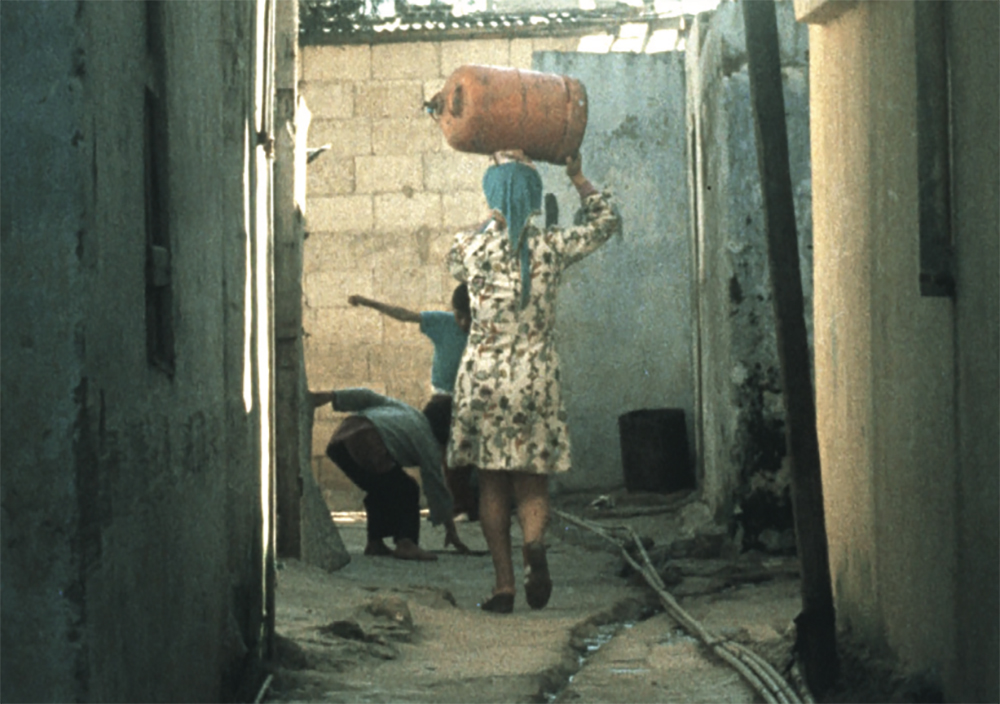
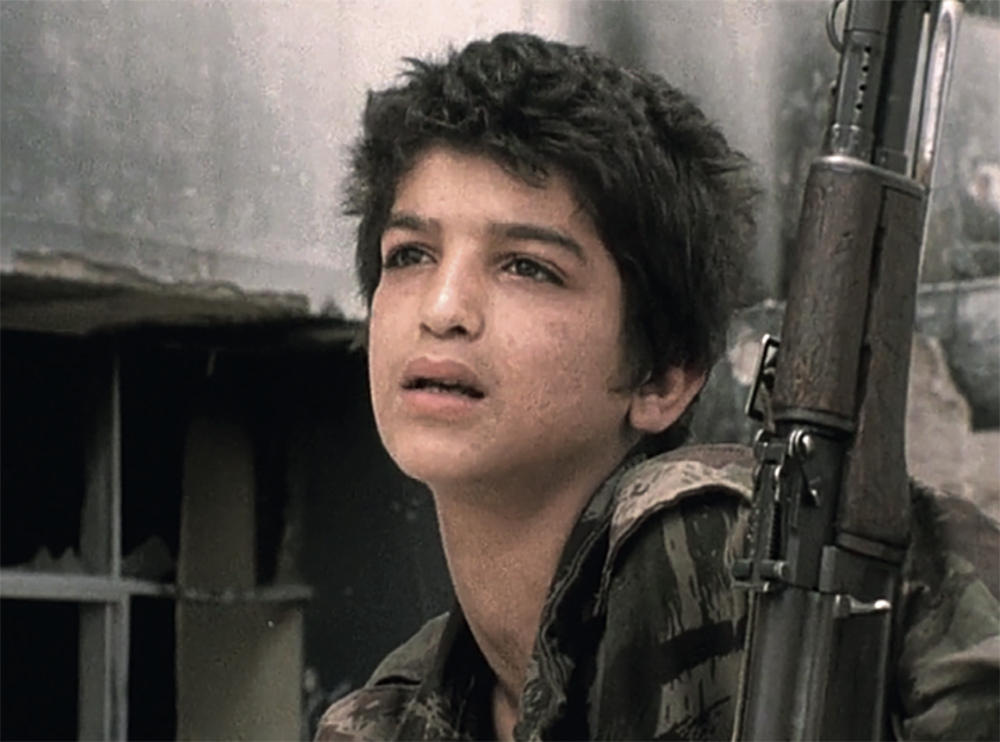
Gunfire and song mix with a poetic voice-over written by the Lebanese writer and painter Etel Adnan (who also wrote a text for Letter from Beirut) in what would become the first entry in Saab’s “Beirut Trilogy”, which searches for traces of life amid the bombed-out buildings and errant fires of a ghost city, where even the children have become soldiers, looters, and scavengers.

“This film marks a turning point. It’s a wandering drift through a destroyed Beirut. To express my sensitivity to a country that I love and that has been destroyed, I asked the Lebanese poet Etel Adnan to write the commentary. Our two sensibilities found one another. This commentary was surprising to many because it doesn’t respect the rules of reportage. It’s a poem expressing personal impressions that could be those of all Lebanese.”

Arabic / French spoken, English subtitles

Lettre de Beyrouth (Letter from Beirut)
Jocelyne Saab, FR, LB, 1978, video, 47′

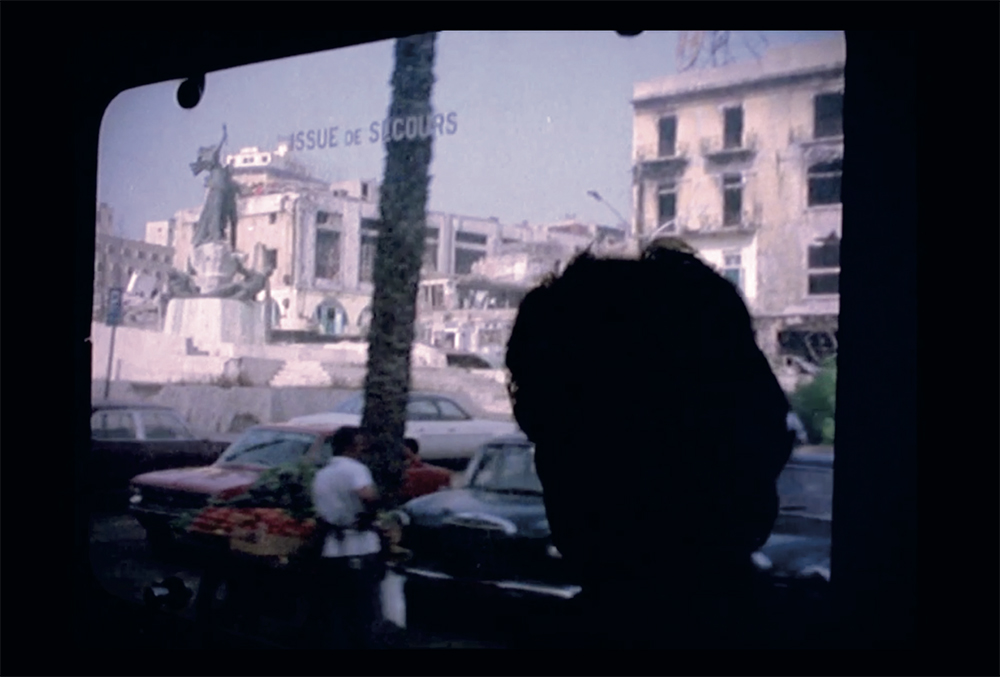
Three years after the beginning of the civil war in Lebanon, Jocelyne Saab returns to a Beirut that has irrevocably changed, where she wanders the streets, rides buses, chats with refugees and peacekeepers, and reflects on the war’s toll during a brief moment of peace.

“I feel that a film should be able to envelop the spectators in the atmosphere. In Letter from Beirut, I wanted to show how abnormal things become normal. And I had recourse to a game of notations on the characters because I believe that, very often, the gestures of everyday life have more weight than political declarations.”

Arabic / French spoken, English subtitles

Les Enfants de la guerre (Children of War)
Jocelyne Saab, FR, LB, 1976, 16mm, 10′

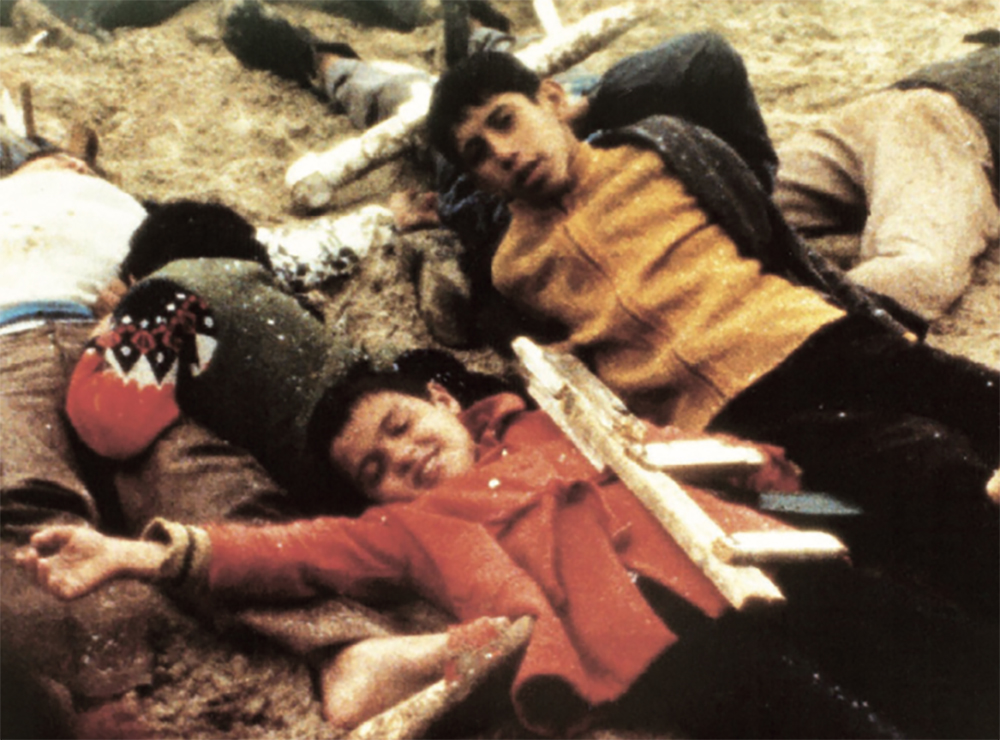
Days after the massacre of Karantina, in a predominantly Muslim shanty town in Beirut, Jocelyne Saab met children who’d escaped, and who were deeply traumatised by the horrific fighting they’d seen with their own eyes. Saab gave the children crayons and encouraged them to draw while her camera turned. She made a bitter discovery: the only games the children engaged in were war games, and war would quickly become a way of life for them as well.

“Children of War denounces the violence that is inflicted on children of ten years old who can no longer speak, think or draw other than in terms of war: they mimic war.”

Arabic / French spoken, English subtitles. Print courtesy of Internationale Kurzfilmtage Oberhausen.

Madinat Al-Mawta (Egypt, City of the Dead)
Jocelyne Saab, FR, LB, 1977, 16mm, 37′

A portrait of the City of the Dead, an inhabited cemetery just outside of Cairo and on the fringes of the city’s public dumping ground, like a living reproach and a bad conscience. Starting from the City of the Dead, the film shows the populous neighborhoods of Cairo in the grip of hypertrophy and misery, every day more threatened by paralysis.

“I still ask myself how I was able to combine surrealism and social reality in this film. The great poet Ahmed Fouad Negm was then in prison, because the regime was displeased with his contestatory texts, and at the time one was imprisoned for no apparent reason. So, I followed his companion Azzam below the windows of the prison to pick up the poems Negm would throw through the bars of his cell. Cheikh Imam sang his poems to revolutionary students who gathered in the City of the Dead. It was exhilarating. We still believed we could change the world.”

Arabic / French spoken, English subtitles. Print courtesy of Cinémathèque Française.

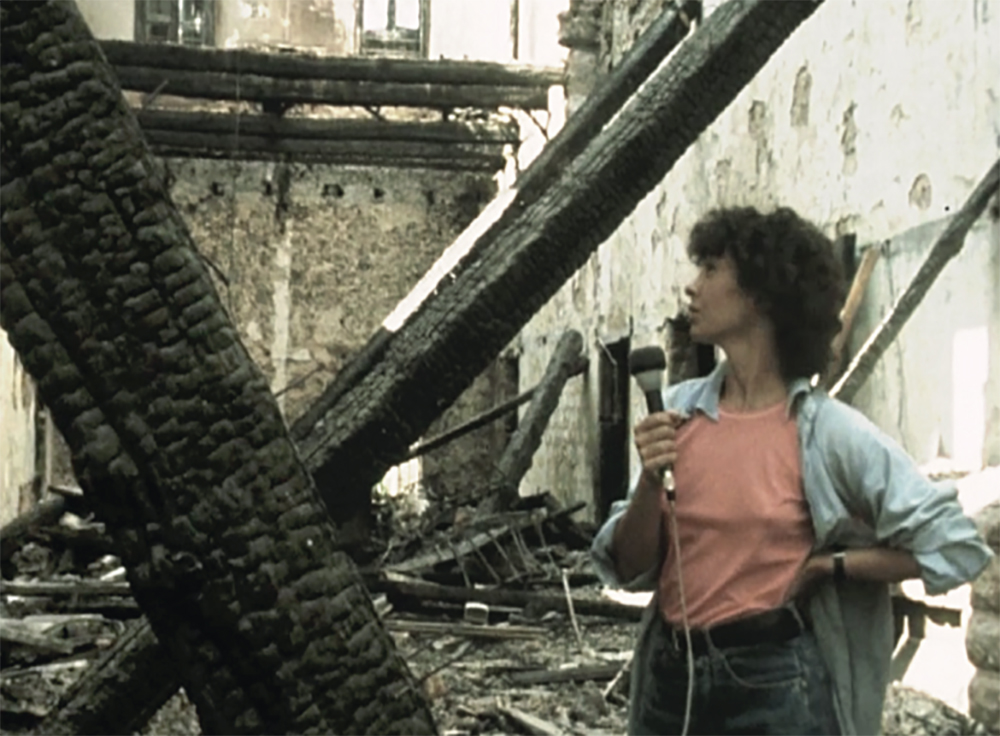
Beyrouth, ma ville (Beirut, My City )
Jocelyne Saab, FR, LB, 1982, 16mm, 35′

Beirut, My City finds Saab and her collaborator, the playwright and director Roger Assaf, returning to the shell of her former home following Israel’s 1982 invasion, finding small glimmers of hope in the chaos of refugee camps and the rubble of decimated neighborhoods.

“I consider this to be my most important film, the one that is the closest to my heart. In 1982, my house was burning. That’s not nothing. It was a very old house. 150 years of history went up in flames and disappeared. All of that is suddenly destroyed. The family home, wiped off the map, gone from the city, having become a pile of ruins.”

Arabic / French spoken, English subtitles. Print courtesy of Cinémathèque Française.

——

Heiny Srour

“Those of us from the Third World have to reject the idea of film narration based on the nineteenth century bourgeois novel with its commitment to harmony. Our societies have been too lacerated and fractured by colonial power to fit into those neat scenarios. We have enormous gaps in our societies and film has to recognize this.”

Born in 1945 in Beirut, Heiny Srour studied Sociology at the French University of Beirut (Ecole Supérieure des Lettres) and went on to study Social Anthropology at the Sorbonne in Paris, where she was a student of both Marxist sociologist Maxime Rodinson and anthropologist filmmaker Jean Rouch. In 1969, while pursuing a PhD on the status of Lebanese and Arab women and working as a journalist for AfricAsia magazine, she discovered the struggle of the Popular Front for the Liberation of the Occupied Arabian Gulf, which led an uprising in the province of Dhofar against the British-backed Sultan of Oman. Determined to make a film about this feminist movement, she spent two years doing intensive research and finding the necessary funds before setting out to Dhofar. From the Yemeni border, Heiny Srour and her team crossed 500 miles of desert and mountains by foot, under bombardment by the British Royal Air Force, to reach the combat zone and record the only document shot deep inside the Liberated Area. The Hour of Liberation was completed in 1974 and selected at Cannes Film Festival, making Srour the first woman from the Third World to be selected at the prestigious international festival. Including four years of restoration, this documentary took, all in all, ten years of her life. It took her six years to achieve her next film, Leila and the Wolves (1984), in which she unveiled the hidden histories of women in struggle, in particular in Palestine and Lebanon, by weaving an aesthetically and politically ambitious tableau of history, folklore, myth and archival footage. In her words: “Why shouldn’t women be ambitious? Because men only want women to exclusively deal with women’s issues like home, family and so on, they want to ghettoize us. I resent this. We should deal with the public affairs and political issues too.” Since initiating a feminist study group in Lebanon in the early 1960s, Heiny Srour has been vocal about the position of women, in particular in Arab societies. She has written and spoken extensively about the image and role of women in Arab cinema. In 1978, along with Tunisian filmmaker Selma Baccar and Egyptian film historian Magda Wassef, she co-authored a manifesto ‘For the Self-Expression of the Arab Woman’, remaining passionately active in her feminist advocacy to this day. More recently, she shot a film in Vietnam (Rising Above: Women of Vietnam, 1995) and was the only filmmaker to film Egyptian protest singer Sheikh Imam in his home and neighbourhood (The Singing Sheikh, 1991).

In the presence of Heiny Srour

Saat El Tahrir Dakkat (The Hour of Liberation)
Heiny Srour, UK, FR, LB, 1974, DCP, 62′

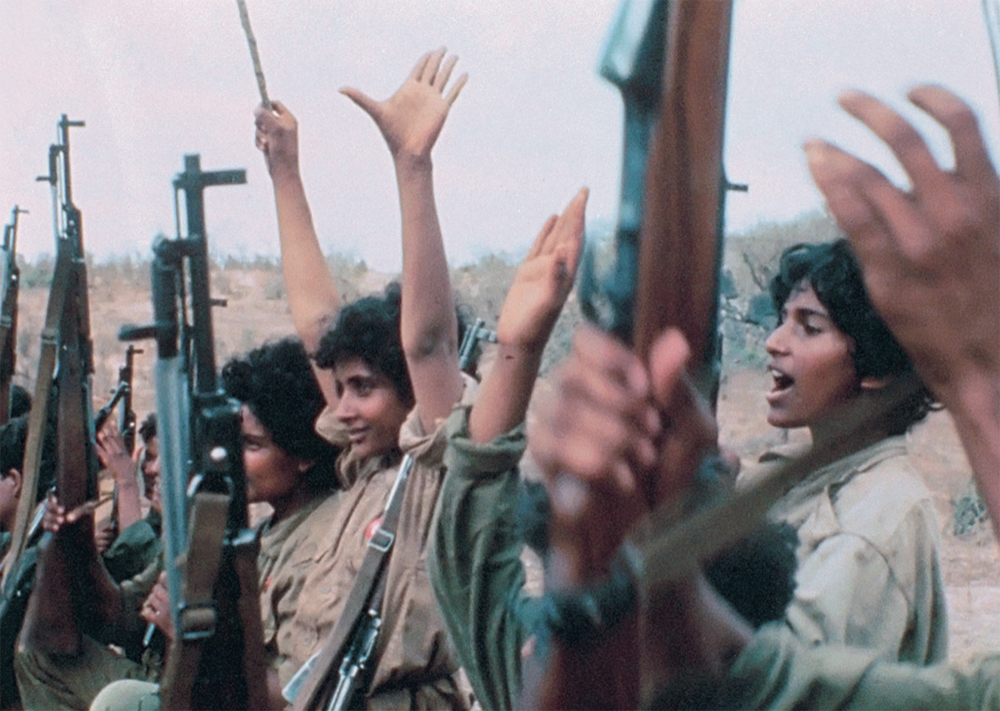
“In the Arab world, it is the very first time that an organized political force considers the liberation of women as an end in itself and not only as a way to get rid of imperialism more rapidly. In the Arab world, it is the first time that practice goes as far as slogans.”

In the late 60s, Dhofar rose up against the British-backed Sultanate of Oman, in a democratic, feminist guerrilla movement. Heiny Srour and her team crossed 500 miles of desert and mountains by foot, under bombardment by the British Royal Air Force, to reach the conflict zone and capture this rare record of a now mostly-forgotten war. The People’s Liberation Army — barefoot, without rank or salary — freed a third of the territory, while undertaking a vast program of social reforms and infrastructure projects — schools, farms, hospitals, and roads were built, while illiterate teenage shepherdesses became more forceful feminists than Simone de Beauvoir or Germaine Greer, and 8-year-old school children learned to practice democracy with more maturity than so many adults. A still-topical portrait of a liberated society and an exploration of the role of oil in U.S. and British involvement in the Middle East, The Hour of Liberation Has Arrived was the first film by an Arab woman to screen at Cannes. (Film Forum)

Arabic spoken, English subtitles. Digital Restoration by Cinémathèque Française & CNC.

Leila wal Zi’ab (Leila and the Wolves)
Heiny Srour, UK, LB, 1984, DCP, 90′

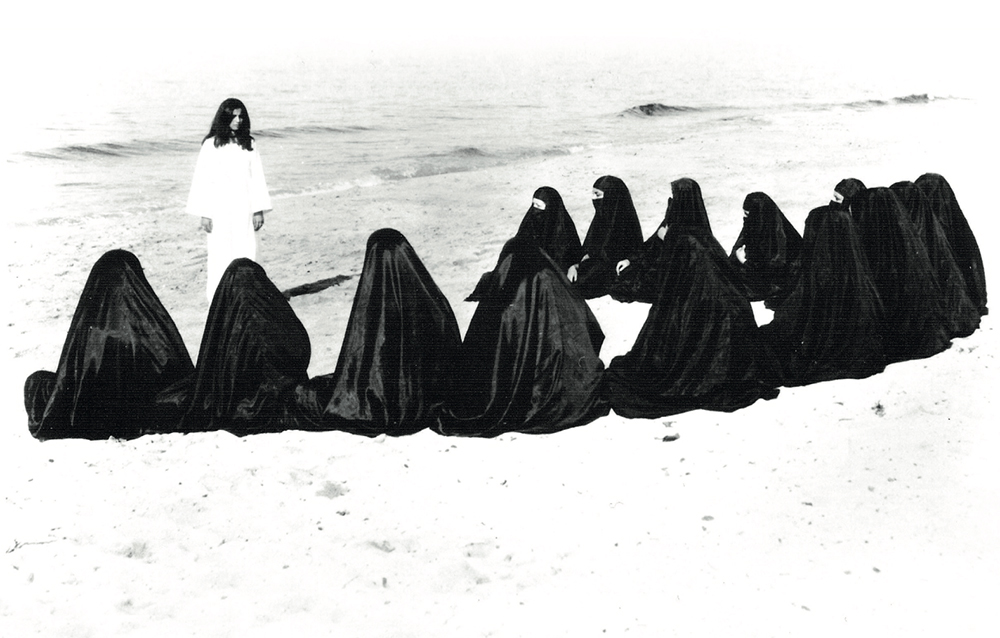
“The visual leitmotiv of the film is Arab women sitting immobile under the high sun, while half-naked men bathe joyfully on the beach. Gradually, women will start getting impatient, as historic events go by, and they will move towards the water for a dip … but in the Middle-East, the dance of death still continues.”

A film which questions the gospels of the gun; its images flowing in search of woman’s political and historical identity in the Middle East … Throughout the film, an Arab woman wanders through real and imaginary landscapes of Lebanon and Palestine encountering voices from the peripheries of middle-Eastern politics: uncovering submerged yearnings and testaments of Arab women’s resilience. In her wanderings, she returns over and over again to Lebanon, the “jewel in the crown” of French colonial twilight states, a country in which crimes of honour took the lives of two women a week during the 70s. Yet Leila is not an anthropological journey but a survey of mythic and symbolical protest. Through her “eye” comes a search for political character in a Lebanon now permanently stained by the massacre of Sabra and Chatilla; caught in the throes of bitter civil war, Israel’s ‘backyard’. Leila prods these moments of loss and discovers ghosts of a very different life before the wolves. (John Akomfrah)

Arabic spoken, English subtitles. Digital Restoration by CNC. Selected for Venice Classics 2021.

——

Atteyat Al-Abnoudy

“I don’t want to be labelled a women’s filmmaker because I make films about life, and women are only a part of this life. I make films about people who I know, who I relate to (class-wise speaking) — humble and poor people. About their struggle to live, about their joy, and about their dreams. I still learn from them, from what they are doing and of their wisdom about life. I give the floor to my people to speak out. That is why they call me ‘the poor people’s filmmaker’.”

Atteyat Al-Abnoudy (1939-2018) was born Atteyat Awad Mahmoud Khalil into a family of labourers in a small village along the Nile Delta. A child of Nasserism, she studied law at the University of Cairo while supporting herself financially by working as an actress and assistant director at the theatre. At the beginning of the 1970s, she decided to study film at the Cairo Higher Institute of Cinema, where she created Horse of Mud, which was not only her first film but also Egypt’s first documentary produced by a woman. Her graceful focus on the disadvantaged and the unrepresented in Egyptian society would earn her the nickname “the poor people’s filmmaker,” but it also enkindled a confrontation with censorship. “The censors didn’t like to show the people as very poor after twenty years of revolution in Egypt. They think cinema, especially documentary, should be propaganda for the state. In a way, it’s the fault of the filmmakers who were making documentaries over the past twenty years. They made at least eleven films about the construction of the Aswan High Dam, but they spoke only about the machines, the tractors, the engineers. Nobody talked about the working people who died and suffered to help build this Dam.” Despite its limited circulation, Horse of Mud went on to win numerous international prizes, after which Al-Abnoudy made her graduation film, Sad Song of Touha, a portrait of Cairo’s street entertainers — which she created in collaboration with her husband, poet and songwriter Abdel Rahman Al-Abnoudy. She continued her studies at the International Film and Television School in London until 1976 and persisted to document the daily lives and struggles of economically and socially marginalized groups in Egypt, while exposing the structural inequalities within the socio-economic system. In films such as Permissible Dreams (1983) and Democracy Days (1996), she attended to the lot of Egyptian women, a choice of subject matter which has frequently invited the displeasure of government authorities. Against the grain, Atteyat Al-Abnoudy managed to produce more than thirty films which were shown worldwide, albeit rarely in her own country. Before her death in 2018, she left her film estate to the Cimatheque — Alternative Film Centre in Cairo, which continues to advocate her legacy of independent and committed filmmaking.

Copies and texts courtesy of Asmaa Yehia El-Taher, Yasmin Desouki and Cimatheque — Alternative Film Centre in Cairo

Husan al-Tin (Horse of Mud)
Atteyat Al-Abnoudy, EG, 1971, 16mm, 12′

In her first film, made on a shoestring with borrowed equipment, Atteyat Al-Abnoudy captures the basic process of mud-brick making on the banks of the Nile. The film was refused by the censors, who didn’t like to show the people as very poor after twenty years of revolution in Egypt. Eventually, they gave permission for non-commercial screenings, after which the film went on to win more than thirty international prizes.

“For the first time, the people talk about themselves, and we listen to their voices, not a cleverly written commentary on what the people are doing, like strangers coming from the sky, telling us what we are seeing now … The brick factory workers dominate the screen: their faces, their hands and their suffering … I worked on this 10-minute film for two years, because I had no money, and also because the bricks have to be dried in the sun. I shot the film at the end of the summer, and I had to wait till the next summer to complete it.”

Arabic spoken, English subtitles. Film prints courtesy of Arsenal – Institute for Film and Video Art.

Ughniyat Touha al-Hazina (Sad Song of Touha)
Atteyat Al-Abnoudy, EG, 1972, 16mm, 12′

In many ways the sister film to Horse of Mud, Al-Abnoudy’s second film, her graduation film at the Film School in Cairo, is a portrait of Cairo’s street performers. The artistry of this community of fire-eaters, child contortionists, and other performers is captured through the lens of Al-Abnoudy’s unobtrusive camera, accompanied by the spare and haunting narration provided by poet Abdel Rahman Al-Abnoudy.

“I don’t want to make films because of some beautiful subject or because there’s something fascinating me in the colours or anything like that. We always tend to see lovely houses and lovely hills, the decor and other fantastic things before us on the screen. But the poor people and the working class are not on the screen, when they have the right to be. When I talked to the young belly-dancer in Sad Song of Touha, for instance, she said she really would like to be a dancer in a cabaret, because she always goes to the cinema and sees these belly-dancers and beautiful girls. She said, ‘I would like to see myself on the screen.’ So I said, ‘why not!’”

Arabic spoken, English subtitles. Film prints courtesy of Arsenal – Institute for Film and Video Art.

Al-Sandawich (The Sandwich)
Atteyat Al-Abnoudy, EG, 1975, video, 12′

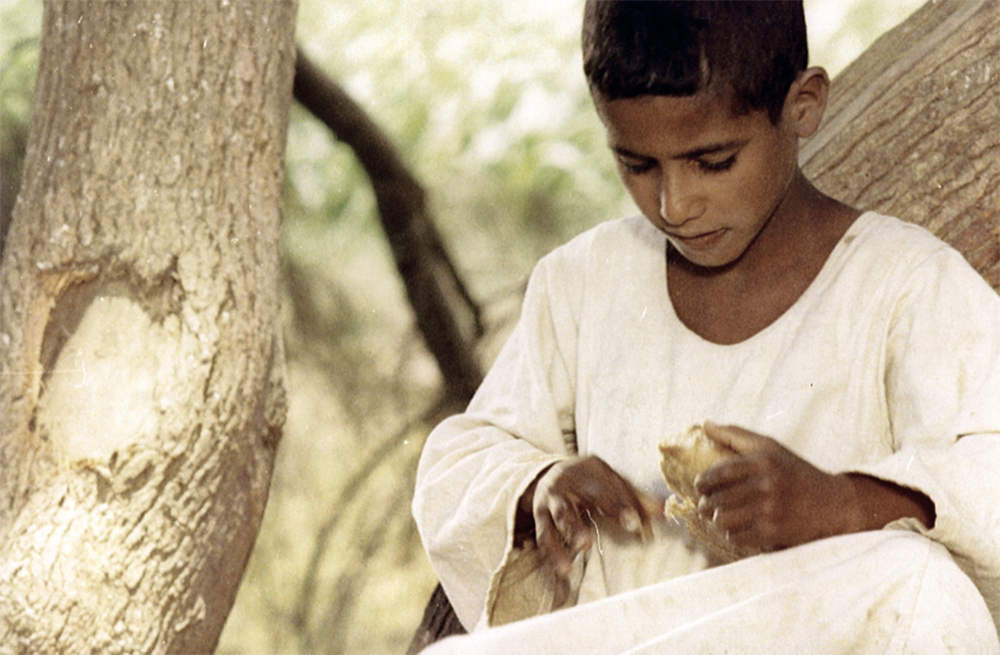
The Sandwich explores the daily life and work of children in Abnoud, a rural village located 600 kilometres to the south of Cairo, where the trains that carry the tourists to the south of Egypt pass through without stopping. A boy outsmarts the meagerness of his circumstances by dripping goat’s milk on a piece of stale bread and turning it into a special sandwich.

“I believe film is a language I can use to say many things, a poem, a short story. I once made a film without a single word in it about one day in the life of children in the village of Abnoud. At lunch, you know, they take their bread and go to the cow’s udder for milk, just to have something on the bread! That’s how poor they are.”

Arabic spoken, English subtitles

Bihar al-’Attash (Seas of Thirst)
Atteyat Al-Abnoudy, EG, 1980, video, 44′

In Seas of Thirst, Al-Abnoudy moves away from her usual exploration of Egypt’s south to the north of the country, wherein she captures communities living near the salty lakes of El Borrolos during a treacherous drought. Bearing a stark contrast to the barren landscape around them, the richness of the local characters provides the moving narrative of a struggling class in its entirety.

“As a human being, one can learn a great deal about people when working on a documentary film. I learned to wait for others and not have them wait for me. Watching the young girls and women carry tens of bricks on their heads passing before the camera one after the other, I considered capturing them from different angles but immediately stopped myself. I felt it was a form of injustice to exploit the labor of others as it happened before me for the sake of filmic content. I learned to respect them, to respect their presence, and to ensure that the camera is always brought to their level.”

Arabic spoken, English subtitles

Al-Ahlam al-Mumkinna (Permissible Dreams)
Atteyat Al-Abnoudy, EG, 1983, video, 31′

Permissible Dreams traces the life of Oum Said, a woman farmer living in a small town on the Suez Canal. Although she does not read or write, the woman in question is her family’s economist, doctor, and the planner of its future, as she dreams “to the limits of her possibilities”. This film, capturing a woman’s struggles with societal and gender inequality, was part of the German-produced series As Women See It.

“All I ask of the image is not to create an opacity between the character and what she wants to say. There is a degree of pain that cannot be transmitted. We only have a reflection of his pain. But we touch a degree of dignity, pride and wisdom. You must know how to reveal reality with its dark and luminous sides, without hiding an admiration for the total commitment of the beings whose lives meet History.”

Arabic spoken, English subtitles

Iqa’ al-Haya (Rhythm of Life)
Atteyat Al-Abnoudy, EG, 1988, video, 60′

A pivotal and rather innovative work in Al-Abnoudy’s career, Rhythm of Life can be seen as a kind of symphony depicting rural life as played out in four acts. A beautiful depiction of the daily life of farmers, the film unfolds in the filmmaker’s characteristically unobtrusive and deeply humane manner.

“For a long time already, I had it in mind to make this very big project describing the daily life of the Egyptian people. I try to play on contradictions, and I think I have something to say within the documentary form, a way of bringing to it a sense of narrative — a dramatic way of showing life. I try to re-arrange reality in an artistic way.”

Arabic spoken, English subtitles

ARTIST IN FOCUS: Isaac Julien

13 – 29 August 2021, Cinematek Brussels. In collaboration with Courtisane and Wiels. Curated by Stoffel Debuysere.

(On the occasion of the exhibition of Isaac Julien’s new multi-screen installation, Lina Bo Bardi—A Marvelous Entanglement, as part of the group show Risquons-Tout at WIELS, Courtisane and CINEMATEK planned to present a selection of Julien’s single-screen films in December 2020. Cancelled because of the Corona crisis, this program was rescheduled.)

Over the past decades, Isaac Julien has grown from being a key figure in the British workshop movement of the 1980s to being one of the most influential audio-visual artists of the early 21st century. Julien was born and raised in the East End of London as the eldest of five children of migrant parents from St. Lucia. At a young age, he became involved with local artist communities, which sparked his interest not only in performance and visual arts but also in political activism and the cultural experience of disco and punk. His studies at Saint Martin’s School of Art (now known as Central Saint Martins) were characterised by a burgeoning passion for cinema and the confrontation with growing social and racial unrest, which led him to co-found the Sankofa Film and Video Collective in 1983—one of the workshop movement’s initiatives that challenged the dominant image of minorities in Great Britain in the 1980s.

The impact of the resistance movements of the 1980s and his personal experience of navigating multiple identities is reflected in Julien’s first films, which attempted to express the complexity of the black British experience and the all too often misunderstood intersections of race, class, gender and sexuality. Looking for Langston (1989), the film that earned him international recognition, offers a meditation on the black gay experience through a lyrical and intimate homage to Harlem Renaissance poet and writer Langston Hughes. Young Soul Rebels (1991), which won the Critics’ Prize at Cannes, looks back to 1977 London as a reflection on music culture as the pre-eminent intersection of sexuality, politics and desire. Time and again, Julien explores and combines varied aesthetic approaches, borrowed from performance, photography, music and essayism, to radically challenge and reinvigorate representations of black subjectivity.

Experimentation with form and historical research are also key to Julien’s other cinematic homages. Frantz Fanon: Black Skin, White Mask (1996), made in collaboration with Mark Nash, is a portrait of the revolutionary thinker whose books Black Skin, White Mask (1952) and The Wretched of the Earth (1961) are still considered excellent signposts for the process of decolonization to this day. Developed in close collaboration with Tilda Swinton, Derek (2008) recounts the twists and turns in the life of artist and filmmaker Derek Jarman, from the explosion of punk to the solidification under Thatcher, from the eruption of homosexual emancipation to the horrors of AIDS. For each of his homages, Julien looks for an appropriate form to answer the question of how singular aesthetic, discursive or political sensitivities can be translated to the screen. But above all, each of his films offers a tantalizing response to a challenge that concerns us all: how to make ideas and ideals, intensities and sensations from a certain past resonate in the folds of the present.

Looking for Langston
Isaac Julien, UK, 1989, 16mm, 45′

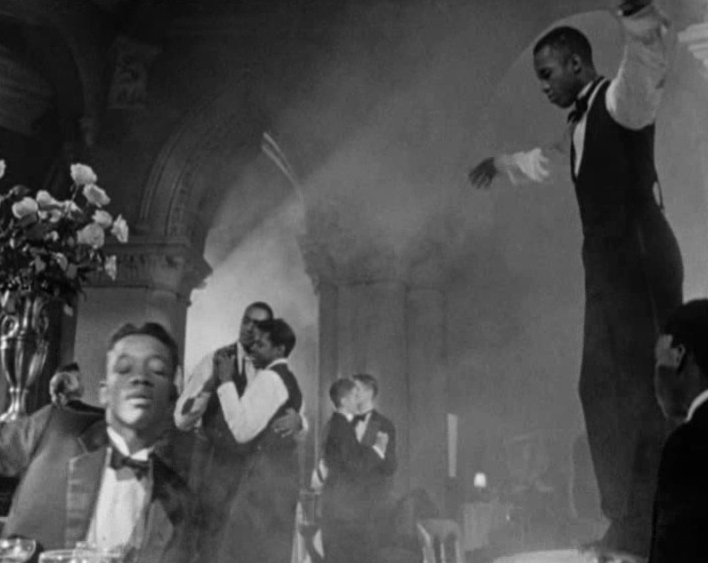
A lyrical exploration—and recreation—of the private world of poet and writer Langston Hughes (1902 –1967) and his contemporaries of the Harlem Renaissance movement, inspired by the work of photographers such as James Van Der Zee and George Platt Lynes.

Frantz Fanon: Black Skin White Mask
Isaac Julien & Mark Nash, UK, 1996, DCP, colour, 69′

Named after his book Black Skin, White Mask, this portrait of the influential thinker and psychiatrist Frantz Fanon (1925–1961) is a study of the psychological effects of colonialism. Fact and fiction converge in a complex network of stylistic and narrative approaches, with historical re-enactments and interviews with Homi K. Bhabha and Stuart Hall.

(2K restored version by the British Film Institute)

Young Soul Rebels
Isaac Julien, UK, 1991, colour, 105′

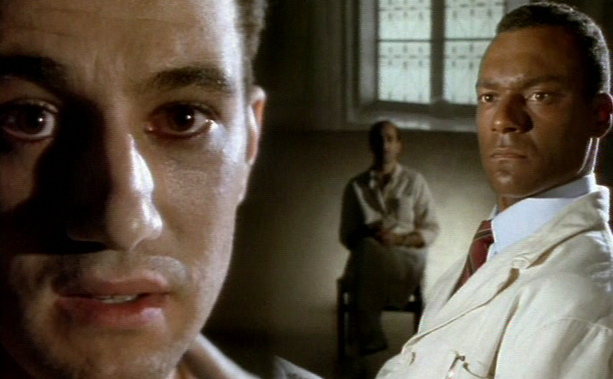
A rebellious portrait of a generation of British youth wrung between multiple identities and confronted with homophobia and racism, disguised as a coming-of-age drama about a forbidden love affair between a soul boy and a punk in 1977 London.

Derek
Isaac Julien, UK, 2008, 35mm, 76′

Developed in close collaboration with Tilda Swinton, Derek tells the life story of filmmaker and artist Derek Jarman (1942–1994) using archival footage and excerpts from an extensive interview he gave during his last battle against AIDS.

Better Life
Isaac Julien, UK, 2010, HD, colour, 55′

A single-channel version of the multi-screen installation Ten Thousand Waves, in which Julien transforms the 2004 tragedy of Morecambe Bay—where 23 Chinese migrant workers drowned whilst in search of a “better life”—into a poetic meditation on global migration across continents and throughout the ages.