L.A. Rebellion

KILLER OF SHEEP (1977)

In the context of the Courtisane Festival 2015 (1-5 April), in collaboration with Tate Modern & UCLA Film & Television Archive. Curated by Stoffel Debuysere.

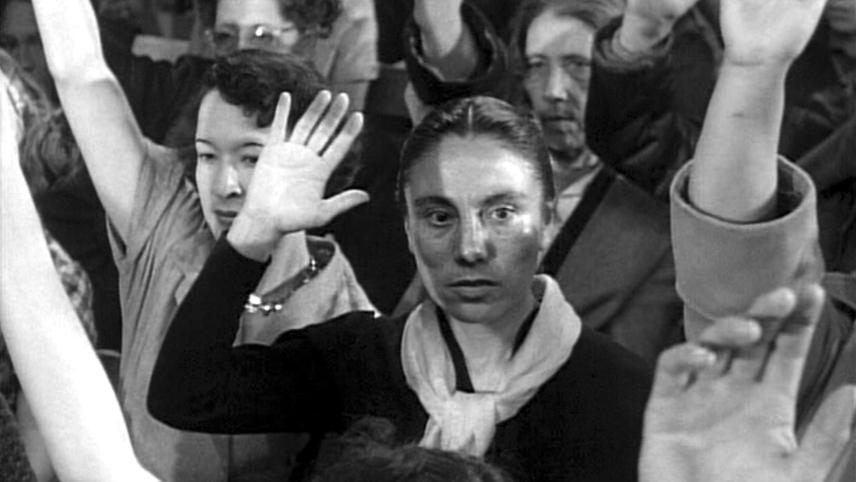
What’s in a name, really? L.A. Rebellion is first of all a handy and appealing designation for something that might actually be both too momentous and too heterogeneous to contain in a name. Nevertheless, one is faced with some bare facts: at a particular time and place in American cinema history, a critical mass of filmmakers of African origin or descent together produced a rich and venturous body of work, independent of any entertainment industry influence. At this time, in this place, buzzing with the spirit of the civil rights movement and memories of past and future uprisings, these filmmakers – most of whom studied at UCLA in Los Angeles in the late 1960s to the late 1980s – committed themselves to depicting the lives of black communities in the U.S. and worldwide.

But can one really speak of a single “movement”? Is the word “rebellion” appropriate here? And what about the notion of a “black cinema”? Are these even the right questions to ask? Perhaps we could better ask: what is it that we can do with these films today, in this peculiar time, in this particular place? If these films still resonate so strongly with us, it is perhaps because they refuse to be contained in an imposed framework, and instead choose to explore the off-track and the off-kilter, the unsettled and unsettling in the everyday. Perhaps it is because they do not profess to disclose secrets beyond the surface of what is present, and instead make sense of what is too close to see: the internal ghetto of emotional devastation, suffocation, exhaustion, trepidation, disorientation. Perhaps it is because they are about making common cause with a sense of brokenness, without offering a prescription for repair, about finding resilience and dignity in a sentiment that is no stranger to any of us: vulnerability. And perhaps this is how these films, in all their diversity and richness, find resonance in another sentiment long considered useless, but which has in recent years sparked a new sense of collective engagement and imagination. It is called indignation.

L.A. Rebellion: Creating a New Black Cinema is a project by UCLA Film & Television Archive developed as part of Pacific Standard Time: Art in L.A. 1945-1980. The original series took place at UCLA Film & Television Archive in October – December 2011, curated by Allyson Nadia Field, Jan-Christopher Horak, Shannon Kelley and Jacqueline Stewart.

Special thanks to George Clark, Steven Hill and Todd Wiener, without whom this program would not have been possible.

In the framework of the research project “Figures of Dissent” (KASK/Hogent).

———————————————————————————————–

01_passing-through_0
Thursday, April 2, 2015 – 13:00 KASKcinema
Passing Through

Larry Clark, US, 1977, 16mm, b&w, 111′

Eddie Warmack, an African American jazz musician, is released from prison for the killing of a white gangster. Not willing to play for the mobsters who control the music industry, including clubs and recording studios, Warmack searches for his mentor and grandfather, the legendary jazz musician Poppa Harris. Larry Clark’s film theorizes that jazz is one of the purest expressions of African American culture. However, jazz is now hijacked by a white culture that brutally exploits jazz musicians for profit. Following the opening credit sequence as an homage to jazz and jazz musicians, the film repeatedly returns to scenes of various musicians improvising jazz, as well as flashback scenes in which Poppa teaches Warmack to play saxophone. It is the Africanism of Poppa, as the spiritual center of Passing Through that ties together Black American jazz and the liberation movements of Africa and North America. The film’s final montage incorporates shots of African leaders with a close- up of Poppa’s eye and close-ups of Black hands holding the soil, thus semantically connecting jazz, Africa and the earth in one mystical union. (Jan-Christopher Horak)

———————————————————————————————–

02_killer-of-sheep_01_0
Thursday, April 2, 2015 – 15:30 KASKcinema
Killer of Sheep

Charles Burnett, US, 1977, DCP, b&w, 81′

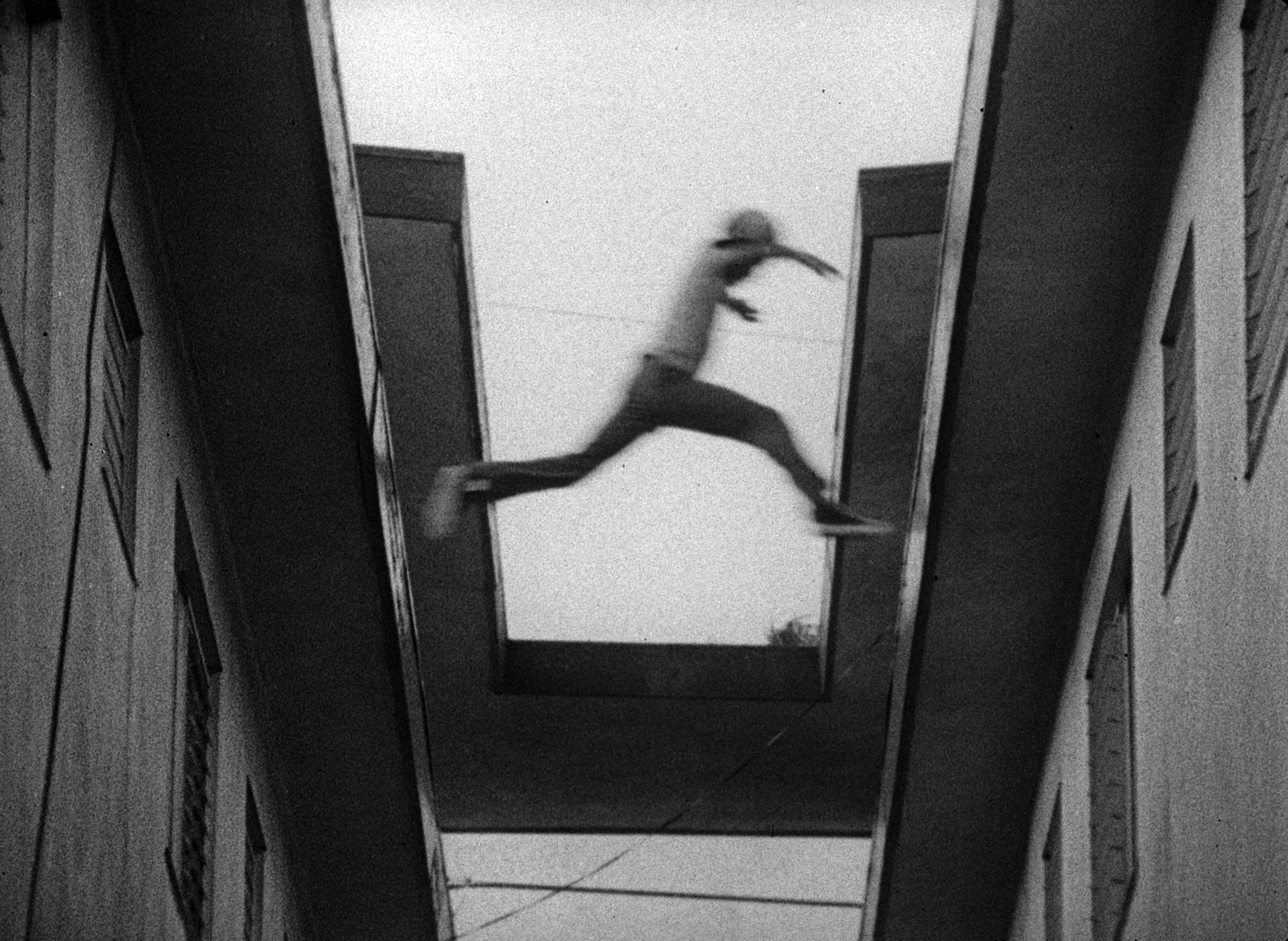
Like a slow crescendo, Killer of Sheep became one of L.A. Rebellion’s most widely celebrated films over the course of many years. Although it was preserved in 35mm in 2000, it took seven more years to clear the music rights for commercial distribution. The momentum might have waned if it wasn’t for the gravitational force of filmmaker Charles Burnett’s captivating vision of Watts in post-manufacturing decline, a community heroically finding ways to enjoy and live life in the dusty lots, cramped houses and concrete jungles of South Los Angeles. The focus is slaughterhouse worker Stan (novelist, playwright and actor Henry Gayle Sanders) whose dispiriting job wears him down, alienates him from his family and becomes an unspoken metaphor for the ongoing pressures of economic malaise. Drawing inspiration from Jean Renoir’s sun-dappled and racially sensitive The Southerner (1945) as well as the poetic documentaries of Basil Wright (one of Burnett’s teachers at UCLA), Killer of Sheep achieves a deeply felt intensity with nonprofessional actors and handheld location shooting. The film also creates a sense of immediacy and spontaneity (though much of Sheep was storyboarded) as well as quiet moments of humor and despair. Burnett finds lyricism by combining quotidian images – children playing on rooftops or Stan and his wife slow-dancing in their living room – with a highly evocative soundtrack of African American music. It’s both a time capsule and a timeless, humanist ode to urban existence. (Doug Cummings)

———————————————————————————————–

03_bless-their-little-hearts_01_0
Thursday, April 2, 2015 – 20:00 Paddenhoek
Bless Their Little Hearts

Billy Woodberry, US, 1984, 35mm, b&w, 84′

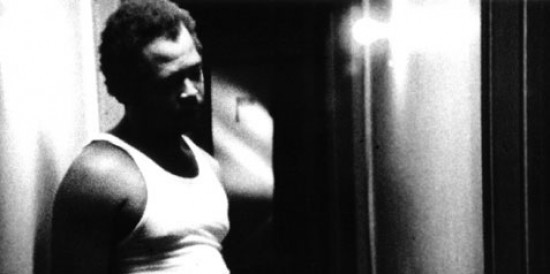
Billy Woodberry’s film chronicles the devastating effects of underemployment on a family in the same Los Angeles community depicted in Killer of Sheep (1977), and it pays witness to the ravages of time in the short years since its predecessor. Nate Hardman and Kaycee Moore deliver gut-wrenching performances as the couple whose family is torn apart by events beyond their control. If salvation remains, it’s in the sensitive depiction of everyday life, which persists throughout. By 1978, when Bless’ production began, Burnett, then 34, was already an elder statesman and mentor to many within the UCLA film community, and it was he who encouraged Woodberry to pursue a feature length work. In a telling act of trust, Burnett offered the newcomer a startlingly intimate 70-page original scenario and also shot the film. He furthermore connected Woodberry with his cast of friends and relatives, many of whom had appeared in Killer of Sheep, solidifying the two films’ connections. Yet critically, he then held back further instruction, leaving Woodberry to develop the material, direct and edit. As Woodberry reveals, “He would deliberately restrain himself from giving me the solution to things.” The first-time feature director delivered brilliantly, and the result is an ensemble work that represents the cumulative visions of Woodberry, Burnett and their excellent cast. (Ross Lipman)

Followed by a DISSENT! talk with Billy Woodberry and Barbara McCullough

———————————————————————————————–

Friday, April 3, 2015 – 13:00 KASKcinema
L.A. Rebellion – short films

04-01_as-above-so-below_01_0
As Above, So Below
Larry Clark, US, 1973, 16mm, 52′

Larry Clark’s astonishing short feature evokes a Black community in crisis, divided between a narcotizing church that preaches quietism, depicted with savage Brechtian satire that nevertheless evinces a hint of affection, and militant struggle that is both in response to and inspired by U.S. military interventions throughout the Third World. “Like The Spook Who Sat By the Door and Gordon’s War, As Above, So Below imagines a post-Watts rebellion state of siege and an organized Black underground plotting revolution. With sound excerpts from the 1968 HUAC report ‘Guerrilla Warfare Advocates in the United States,’ As Above, So Below is one of the more politically radical films of the L.A. Rebellion.” (Allyson Nadia Field)

04-02_four-women_01
Four Women
Julie Dash, US, 1975, 16mm, colour, 7′

Set to Nina Simone’s stirring ballad of the same name, Julie Dash’s dance film features Linda Martina Young as strong “Aunt Sarah,” tragic mulatto “Saffronia,” sensuous “Sweet Thing” and militant “Peaches.” Kinetic camerawork and editing, richly colored lighting, and meticulous costume, makeup and hair design work together with Young’s sensitive performance to examine longstanding Black female stereotypes from oblique, critical angles. (Jacqueline Stewart)

04-03_water-ritual_01
Water Ritual #1: An Urban Rite of Purification
Barbara McCullough, US, 1979, 35mm, b&w, 6′

Made in collaboration with performer Yolanda Vidato, Water Ritual #1 examines Black women’s ongoing struggle for spiritual and psychological space through improvisational, symbolic acts. Shot in 16mm black-and-white, the film was made in an area of Watts that had been cleared to make way for the I-105 freeway, but ultimately abandoned. Though the film is set in contemporary L.A., at first sight, Milanda and her environs (burnt-out houses overgrown with weeds) might seem to be located in Africa or the Caribbean, or at some time in the past. Structured as an Africanist ritual for Barbara McCullough’s “participant-viewers,” the film addresses how conditions of poverty, exploitation and anger render the Los Angeles landscape not as the fabled promised land for Black migrants, but as both cause and emblem of Black desolation. (Jacqueline Stewart)

04-04_child-of-resistance_01
Child of Resistance
Haile Gerima, US, 1972, 16mm, colour, 36′

Inspired by a dream Haile Gerima had after seeing Angela Davis handcuffed on television, Child of Resistance follows a woman (Barbara O. Jones) who has been imprisoned as a result of her fight for social justice. In a film that challenges linear norms of time and space, Gerima explores the woman’s dreams for liberation and fears for her people through a series of abstractly rendered fantasies. (Allyson Nadia Field)

04-05_the-pocketbook_01

The Pocketbook
Billy Woodberry, US, 1980, 35mm, 13′

In the course of a botched purse-snatching, a boy comes to question the path of his life. Billy Woodberry’s second film, and first completed in 16mm, adapts Langston Hughes’ short story, Thank You, M’am, and features music by Leadbelly, Thelonious Monk and Miles Davis. (Ross Lipman)

———————————————————————————————–

05_bush-mama_01
Friday, April 3, 2015 – 16:00 KASKcinema
Bush Mama

Haile Gerima, US, 1975, 16mm, b&w, 97′

Inspired by seeing a Black woman in Chicago evicted in winter, Haile Gerima developed Bush Mama as his UCLA thesis film. Gerima blends narrative fiction, documentary, surrealism and political modernism in his unflinching story about a pregnant welfare recipient in Watts. Featuring the magnetic Barbara O. Jones as Dorothy, Bush Mama is an unrelenting and powerfully moving look at the realities of inner city poverty and systemic disenfranchisement of African Americans. The film explores the different forces that act on Dorothy in her daily dealings with the welfare office and social workers as she is subjected to the oppressive cacophony of state-sponsored terrorism against the poor. Motivated by the incarceration of her partner T.C. (Johnny Weathers) and the protection of her daughter and unborn child, Dorothy undergoes an ideological transformation from apathy and passivity to empowered action. Ultimately uplifting, the film chronicles Dorothy’s awakening political consciousness and her assumption of her own self- worth. With Bush Mama, Gerima presents a piercing critique of the surveillance state and unchecked police power. The film opens with actual footage of the LAPD harassing Gerima and his crew during the film’s shooting. (Allyson Nadia Field)
Dissent ! Sergei Loznitsa

maidan.jpg

12 march 2015 20:30, KASKcinema, Gent. In collaboration with Cinematek

Maidan (2014, NL / UA, 133′)

In the presence of Sergei Loznitsa. Conversation with Stoffel Debuysere

“It is a popular movement, and what I wanted to show, the subject of my film, is the people… That is why I chose a style that enabled me to have many characters, groups, masses of people in the frame at the same time—to observe their actions and movements.”

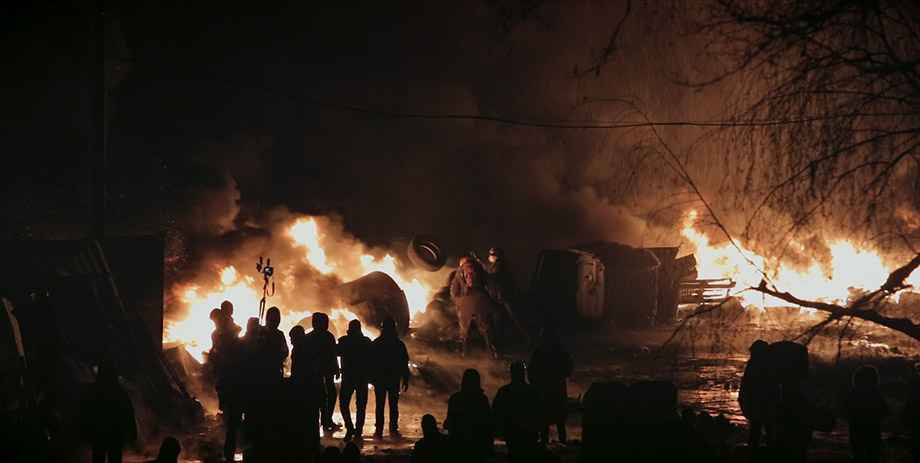
“Maidan is an enigma to me, which I am yet to solve,” declares Sergei Loznitsa. What does it mean to film an event that surpasses all the ideas and presumptions that the one who films might have? How does one film and keep on filming the making and unmaking of a singular collectivity, itself composed of countless singularities who are caught up in a political process that resists simple identification and illustration? Loznitsa found himself confronted with these questions when he went to Kiev in the middle of December 2013, a few weeks after the wave of demonstrations had begun on Maidan square. He ended up staying for ninety days, as the events unfolded: from the peaceful rallies demanding closer European integration, to the bloody street battles between the protestors and riot police. But in contrast to the tendency of many “militant” filmmakers to position themselves in the heart of the struggle and capture its flow and flux by way of hand-held camera work, vivid testimonies and dynamic editing, Loznitsa presents the mounting unrest in a series of statically framed long takes, without interviews or commentaries. Rather than focusing on individual stories – as in, for example, Jehane Noujaim and Karim Amer’s depiction of the uprisings on Tahrir Square – he seems to be more interested in the collective aspect of the so-called “Euromaidan” protests, chronicling the sheer mechanics of human mass movement. What does this choice entail exactly? How are we to relate to these images of nameless bodies and sounds of bodiless voices? Which kind of relation between the small and the large, the singular and the collective does it propose to us? And how does filming the “body of the people” relate to the dominant notions of populism that we have inherited from some of those who deplored the rise of the revolutionary movements that put an end to the reign of kings and nobles?

In the context of the research project “Figures of Dissent (Cinema of Politics, Politics of Cinema)”
KASK / School of Arts

DISSENT! Billy Woodberry & Barbara McCullough

bless_their_little_hearts_thumb.jpg

2 April 2015 20:00, Paddenhoek Gent.

Billy Woodberry & Barbara McCullough in conversation with Stoffel Debuysere, preceded by a screening of Bless Their Little Hearts (1984, 80’). In the context of the Courtisane Festival (1-5 April), in collaboration with Tate Modern & UCLA Film & Television Archive.

“The black experience, in some ways, is particular, but in that it is also universal… Our concern was to speak about these people and their relationship to the world. Their problems are in many ways the defining ones—the massive unemployment, the difficulty of male-female relationships—which seem to be universal—the maintenance of the family. These are big problems. But they aren’t unique to black people.”

Billy Woodberry and Barbara McCullough are two of the leading directors of the so-called “L.A. Rebellion” movement, a critical mass of filmmakers of African origin or descent – most of whom studied at the UCLA in Los Angeles in the late-1960s to the late-1980s – who committed themselves to depict the everyday lives of Black communities in the U.S. and worldwide. In his feature debut, Bless Their Little Hearts, Billy Woodberry boldly embraced the spirit and challenge of this movement to forge an independent mode of filmmaking in the shadow of the Hollywood studios. Filmed on location in South Central Los Angeles, Woodberry’s film gently reveals an America overlooked and all too rarely seen on screen, a wholly authentic vision of the black experience that makes clear the stubborn rigidity of racial and class hierarchies in the United States. What does it mean to represent and consider “black experience” in cinema? How can one wage war on the prevailing raciological orthodoxy in cinema, while at the same time escaping the burden of representation that tends to befall films that grapple with the lives of the discriminated and marginalized? How does one challenge, disrupt and redirect dominant renderings of blackness without falling into the trap of essentialism? How does one tell a story and find a form that is consistent with the fate and destiny of black people as a group, engaged in a protracted struggle for social equality? And how does one prolong that struggle, in cinema as elsewhere? In this session, we will talk with Bill Woodberry and and Barbara McCullough about how these challenges have been addressed in his own work, and in the L.A. Rebellion movement.

The Courtisane Festival will show a selection of films that were preserved and presented in the context of “L.A. Rebellion: Creating a New Black Cinema”, a project by UCLA Film & Television Archive developed as part of Pacific Standard Time: Art in L.A. 1945-1980.

DISSENT ! is an initiative of Argos, Auguste Orts and Courtisane, in the framework of the research project “Figures of Dissent” (KASK/Hogent), with support of VG.


About DISSENT!

How can the relation between cinema and politics be thought today? Between a cinema of politics and a politics of cinema, between politics as subject and as practice, between form and content? From Vertov’s cinematographic communism to the Dardenne brothers’ social realism, from Straub-Huillet’s Brechtian dialectics to the aesthetic-emancipatory figures of Pedro Costa, from Guy Debord’s radical anti-cinema to the mainstream pamphlets of Oliver Stone, the quest for cinematographic representations of political resistance has taken many different forms and strategies over the course of a century. The multiple choices and pathways that have gradually been adopted, constantly clash with the relationship between theory and practice, representation and action, awareness and mobilization, experience and change. Is cinema today regaining some of its old forces and promises? Are we once again confronted with the questions that Serge Daney asked a few decades ago? As the French film critic wrote: “How can political statements be presented cinematographically? And how can they be made positive?”. These issues are central in a series of conversations in which contemporary perspectives on the relationship between cinema and politics are explored.

DISSENT ! Jean-Pierre Rehm

benjamin_tiven_1.jpg

6 February 2015 20:00, Bozar Cinema, Brussels.
Carte Blanche to Jean-Pierre Rehm, in collaboration with erg (école supérieure des arts) and FIDMarseille, in the framework of erg séminaire 2015.

“Moi je pense que l’humain a besoin pour naître de faire naître cette chose incompréhensible qu’est l’art, parce que c’est incompréhensible. L’art est la preuve même de l’inhumanité de l’homme, dans un double sens : d’abord, que l’être humain ne s’appartient pas, et aussi la preuve de son côté horrible, terrible. Dans les films qui m’intéressent, je fuis le militantisme hérité des années soixante-dix où on assène des soit disant vérités sans contrepoint. Les films, ce sont des aventures artistiques, l’art n’y est pas une plus value.”

Cinema as adventure of time and movement? Cinema as potential encounter with the inhuman within the human, as an experience of the intolerable that can release us from ourselves, allowing us to imagine our world differently? These ideas seem to have some kind of hold on our thinking about the emancipatory potential of cinema, ever since a brilliant thinker proposed to think of art as an exceptional sensorium that allows us to pass over to the other side, there where the truth of being resides, from which one returns with “bloodshot eyes”. But if political emancipation is indeed about exceeding the limits of our vital and social determinations, isn’t there a way of thinking about the potential of cinema without collapsing into metaphysics, without drowning politics and art into one grand ethology in common? If cinema is indeed an art deprived of linguistic palpability or certainty of expression, how can we find words to talk about the operations, figures, resonances, metaphors, attractions and inversions that constitute a cinematic world? And yes, since we seem to have no more patience for the “isms” that prospered so well in the past “short century”, how can we grasp and further the adventures that are happening in front of our eyes? Perhaps these are some of the issues that we can touch upon with Jean-Pierre Rehm, the spirited film enthusiast and, well, enthusiast tout court who has been running, since 2002, one of the most exciting film festivals in Europe, FIDMarseille. For the occasion of this Dissent ! session he has chosen five films, which are on the surface as disparate as the background of its makers. But isn’t the blurring of borders between what is traditionally called “documentary” and “fiction” or what is neurotically categorized as either “art”, “film” or “artists’-film” (sign of the times: the coupling or hyphen) precisely what makes it possible to rekindle cinema’s sensible force of heterogeneity, counter to the consensual tendencies that try to pin everything and everyone down to specific plots and places? As long as we keep up the struggle with easy determinations, then, perhaps we can allow our eyes and ears to drift in unforeseen directions. Who knows, in a time when the real is claimed to be completely disbarred from any form of illusion or utopia, when every divergent standpoint is easily dismissed as “unrealistic”, perhaps cinema, this art of appearance, still might have something to say.

Jean-Pierre Rehm will introduce each film, followed by a discussion.

Salomé Lamas, No Man’s Land (PT, 2012, 72′)
lamas.jpg
“Is Paulo a mythomaniac? We will never know, but it is his stories that lead the danse macabre of an existence guided by arms. Through fixed shots, in a unique and stripped-down interior, the camera records his words and his laddish mask. Starting out as a simple soldier in Angola, he says, but keen to cut off the ears of black people during the war for independence from Portugese colonisation, he then worked as a mercenary here and there, and finally for various European states against the Basque movement. Paulo calmly boasts of his evilness, his efficiency and his skill as a Samurai killer, until the camera cuts away to show him in the middle of African immigrants, cooking under a bridge, a typical pathetic tramp, suddenly disarmed to play housemaid. The real career path, whatever the details, of someone who has always confused horror with the ordinary, and has been fed on obscene and conquering mythologies.” (JPR)

Pere Portabella, Mudanza (ES, 2008, 20′)
mudanza-4.jpg
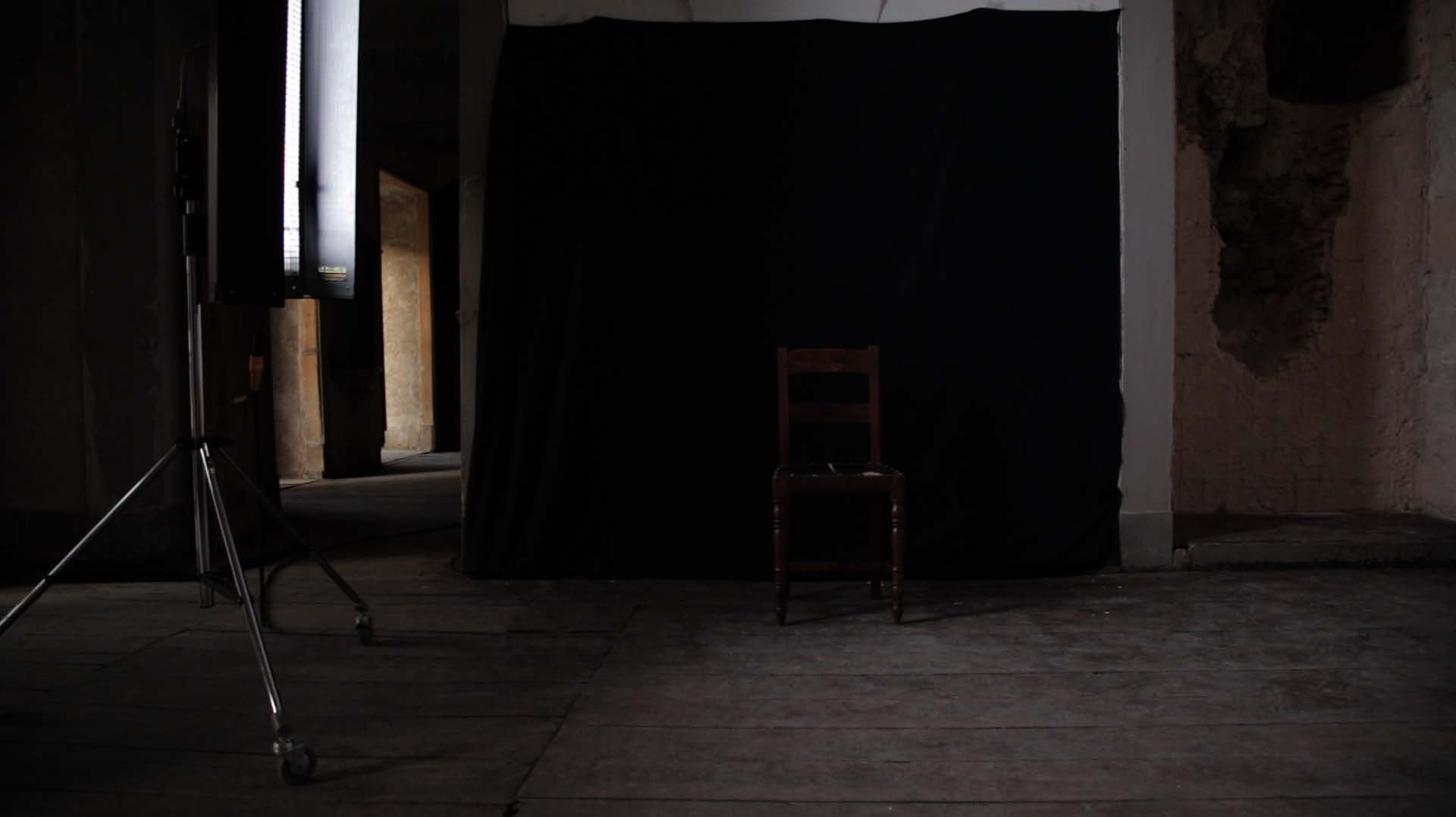
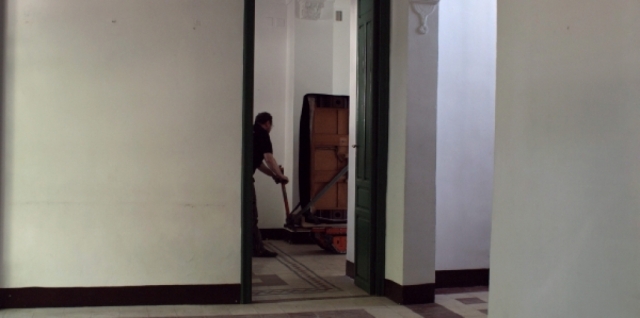
“Mudanza, Grenade, the family home of the poet Garcia Lorca. We see no one there, except the ballet of movers who empty one by one all the rooms of their furniture, pictures, etc. It will remain an empty dwelling, filled with light and traces, that has become the cenotaph for the poet murdered by the Fascists in 1936, and whose corpse was never found. Portabella, with a camerawork of an impressive virtuosity, composes here, seventy years later, more than homage: a funeral elegy.” (JPR)

Apichatpong Weerasethakul, Phantoms of Nabua (TH, 2009, 11′)
apichatpong-weerasethakul-009.jpg
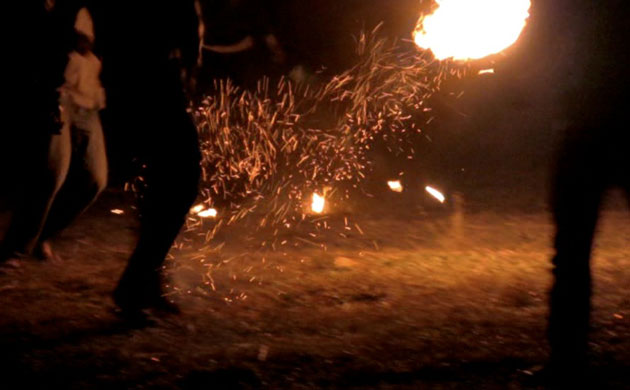
“It’s night, a neon lamp throws light onto a deserted playing field. Off to one side, on a makeshift open-air screen can be made out the image of a village struck regularly by lightning. As night finally falls the outlines of a group of young boys appear. Each one takes turns at kicking a burning ball that makes glowing lines in the grass. All the light, the neon lamp, the lightning and the fire echo each other in the midst of smoke that rises from the ground. The game continues quickly until the ball hits the screen and sets fire to it, causing a new spectacle that the little group will gaze at, stripping away the projector’s beam, a ray without image.
In extremely simple terms, the film aims at evoking a precise historical event: the war and the destruction of a village called Nabua. A short –Thai, if you will – version of an apocalypse of old. That the soldiers represented here by young carefree boys and that the memory of a village are combined with a cinema projection speaks amply of the refusal to simplify that runs through all the films of Apichatpong Weerasethakul. Because these are not so much the events described or the stylised characters that are ghostly, as the title indicates, than the horror itself. One will easily understand that to find today a cinematic form to this massacre, to light up the dark, is to surmount – as much as images can – that which has already been destroyed. It is no doubt worth pointing out that this film was initially part of a group of projections called Primitive Project.” (JPR)

Benjamin Tiven, A Third Version of the Imaginary (KE/US, 2012, 12′)
tiven.jpg
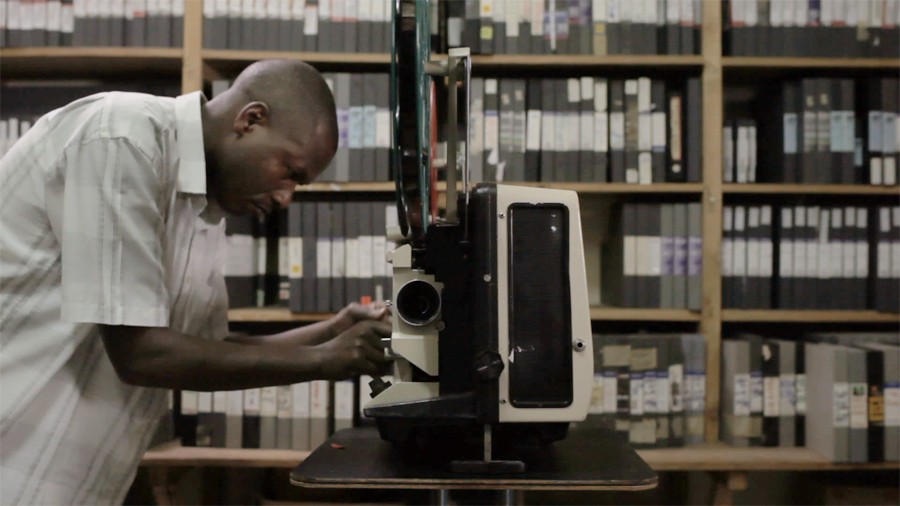
“In this very short, very intense film, we see and understand, as we so rarely do. In a place that acts as a film library in Nairobi, guided by the manager of the site, we follow a presentation of the archives shot in Kenya. From the real difficulties inherent to conservation, we suddenly move on to others. The question of language, of the representation of a language such as Swahili, shapes it into those motifs associated with censure, it is the links between image, language and censure that appear. And yet Benjamin Tiven does not consider this complex ensemble as the subject of his work — but as the very material of his very own judiciously enigmatic film.” (JPR)

Lee Lynch & Lee Anne Schmitt, Bower’s Cave (US, 2008, 14′)
schmitt.jpg
“Bower’s Cave” deals with the history of the Indians and their archives. How to pay tribute to their culture, their history? How to film their handicraft and artistic production? The couple show great rigour here in their treatment of the museography and cinematography. (Jean-Pierre Rehm)

DISSENT ! is an initiative of Argos, Auguste Orts and Courtisane, in the framework of the research project “Figures of Dissent” (KASK/Hogent), with support of VG.

——————————————————————————————————————————————————————-
About DISSENT!

How can the relation between cinema and politics be thought today? Between a cinema of politics and a politics of cinema, between politics as subject and as practice, between form and content? From Vertov’s cinematographic communism to the Dardenne brothers’ social realism, from Straub-Huillet’s Brechtian dialectics to the aesthetic-emancipatory figures of Pedro Costa, from Guy Debord’s radical anti-cinema to the mainstream pamphlets of Oliver Stone, the quest for cinematographic representations of political resistance has taken many different forms and strategies over the course of a century. The multiple choices and pathways that have gradually been adopted, constantly clash with the relationship between theory and practice, representation and action, awareness and mobilization, experience and change. Is cinema today regaining some of its old forces and promises? Are we once again confronted with the questions that Serge Daney asked a few decades ago? As the French film critic wrote: “How can political statements be presented cinematographically? And how can they be made positive?”. These issues are central in a series of conversations in which contemporary perspectives on the relationship between cinema and politics are explored.

DISSENT ! Noël Burch

red-hollywood.jpg

18 February 2015 20:00, Bozar Cinema, Brussels.
Noël Burch in conversation with Stoffel Debuysere, preceded by a screening of Red Hollywood (Thom Andersen & Noël Burch, 1996-2013, 120’)

“To the mass of filmgoers, after all, what is in focus is, indeed, the diegesis, the illusory “world experience” of film. The work of the signifier, however sophisticated, so long as it keeps a low profile, so long as it does not draw a curtain of semantic noise between that “world beyond the screen” and the “average spectator,” is invariably so out of focus as to be quite invisible.”

At a time when corporatists and politicians alike all seem to have a copy of Ayn Rand’s Atlas Shrugged on their nightstand, at a time when her self-styled brand of “radical capitalism” is promoted as a revolutionary and emancipatory force to be reckoned with (after all, aren’t the unreasonably persecuted one-percenters ultimately the symbol of a free society?), it’s pretty daunting to watch her demented testimony before the House Committee on Un-American Activities in 1947. Fulminating against the Hollywood movie Song of Russia – a bland melodrama about a symphony conductor who visits the Soviet Union, falls in love and joins the anti-Nazi resistance – Rand refuses to see the film in relation to the wartime alliance and furiously dismisses it as communist propaganda, because it shows too many Russians “smiling”. This is just one of the many scenes in Thom Andersen & Noël Burch’s Red Hollywood that illustrate the anti-communist hysteria in the throes of Mccarthyism. But who remembers the victims of the Hollywood blacklist, even the notorious “Hollywood Ten” who paid time for their refusal to give in to the coercion? In their film, Andersen and Burch reconstruct this faded period in the history of American cinema and give these screenwriters and filmmakers their due, not by simply confirming their historical status as non-talented martyrs or rejecting the allegations of the witch hunters, but by suggesting how they were actually able to express their ideas in the films they wrote and directed. The film recasts some of the arguments that Thom Andersen already made in his groundbreaking essay ‘Red Hollywood’ from 1985 and that he expanded upon in the book Les communistes de Hollywood. For the making of both the book and the film Andersen found a natural ally in Noël Burch. After all, who else could match the historical knowledge and aesthetical insight of this fellow dissenter? Ever since his Praxis du Cinéma (1969), Burch has explored – both in his writings and films – the cinematic tension between presentation and representation, statement and articulation, showing and telling, a tension that at one time used to be designated as “ideological”. The heyday of ideology critique may be long past by now, but some of its underlying questions keep on lingering today, not in the least in regards to the relation between appearance and reality, form and politics. To paraphrase the beautiful title of one of Burch’s books: how do we give life to those shadows? This Dissent! Session will take the ventures of the “left front” in Red Hollywood as a starting point to address this stubborn conundrum.

On 19 February Noël Burch will also present ‘The Forgotten Space’, a film he made with Allan Sekula, at KASKcinema.

DISSENT ! is an initiative of Argos, Auguste Orts and Courtisane, in the framework of the research project “Figures of Dissent” (KASK/Hogent), with support of VG.

——————————————————————————————————————————————————————-
About DISSENT!

How can the relation between cinema and politics be thought today? Between a cinema of politics and a politics of cinema, between politics as subject and as practice, between form and content? From Vertov’s cinematographic communism to the Dardenne brothers’ social realism, from Straub-Huillet’s Brechtian dialectics to the aesthetic-emancipatory figures of Pedro Costa, from Guy Debord’s radical anti-cinema to the mainstream pamphlets of Oliver Stone, the quest for cinematographic representations of political resistance has taken many different forms and strategies over the course of a century. The multiple choices and pathways that have gradually been adopted, constantly clash with the relationship between theory and practice, representation and action, awareness and mobilization, experience and change. Is cinema today regaining some of its old forces and promises? Are we once again confronted with the questions that Serge Daney asked a few decades ago? As the French film critic wrote: “How can political statements be presented cinematographically? And how can they be made positive?”. These issues are central in a series of conversations in which contemporary perspectives on the relationship between cinema and politics are explored.