ARTIST IN FOCUS: Claire Denis

23 March – 11 May 2019, CINEMATEK, Brussels. In collaboration with Courtisane, curated by Stoffel Debuysere & Céline Brouwez.

“We think ourselves in love / we think ourselves fiercely rooted
still it always comes / the time of unraveled ties”

— Jean-Louis Murat, Le Lien Défait

This song by Jean-Louis Murat is not only the beating heart of one of the many unforgettable scenes in Claire Denis’s work, it also alludes to one of the themes that’s dear to her : the fragility of human relationships — the filiation between brother and sister in Nénette and Boni, or father and daughter in 35 Shots of Rum, but also the passionate liaison between two fleeting lovers in Friday Night or the yearning for another portrayed as all-devouring hunger in Trouble Every Day. Over the course of thirty years, Denis has built up an idiosyncratic oeuvre that evokes a world in which amorous or familial relationships are never self-evident and in which characters relate to each other in a continuous game of attraction and rejection.

It is the attentive observation of characters who encounter each other through experiences of desire, pleasure, pain or fear that is central to Denis’s cinema. She once remarked, “capturing characters that are embodied by actors on film is what really interests me.” Hence the many dance scenes that run like a red thread through her films: just think of the aforementioned performance scene from I Can’t Sleep, but also the equally phenomenal dance scenes from Beau Travail or 35 Shots of Rum. They are all pulsating moments that are exemplary of the enormous emotional expressiveness that she knows how to extract from the patient and intuitive observation of moving bodies that are trying to position themselves in an environment where they do not always belong.

It’s no coincidence that music is a leading factor in Denis’s films: she regards music as an “ally” who has accompanied her life and work since France became her home, after having spent her first thirteen years with her parents in various colonial outposts in Africa. That childhood experience resonates strongly in her debut Chocolat and White Material, which paint a disconcerting image of the injuries and aftermath of French colonialism in Africa. But the concern for the experience of displacement and the relation to alterity can also be felt in the literary sources of inspiration that resonate in her films, ranging from Frantz Fanon’s study of the psychological effects of colonization to William Faulkner’s portrayal of the brutality of patriarchal and racial oppression.

“The desire to make a film is the desire to see others,” Claire Denis once said. Whether the focus is on a corps of the French foreign legion in Djibouti (Beau Travail), migrant communities in the margins of Paris (I Can’t Sleep), or, more recently, a prison ship adrift in another solar system (High Life), time and time again, Claire Denis’s films are characterized by a searching, sensing sensitivity towards worlds that are not necessarily her own. A sensitivity that she gladly shares with faithful long-term companions such as cinematographer Agnes Godard, co-writer Jean-Pol Fargeau, editor Nelly Quettier, composer Stuart A. Staples and actors such as Alex Descas, Grégoire Colin, Vincent Gallo or Béatrice Dalle. For Claire Denis filmmaking never implies less than “entering into a relationship”, in an intimate search for the ties that bind, for a connection in wonder, whose resonance will always be uncertain.

——
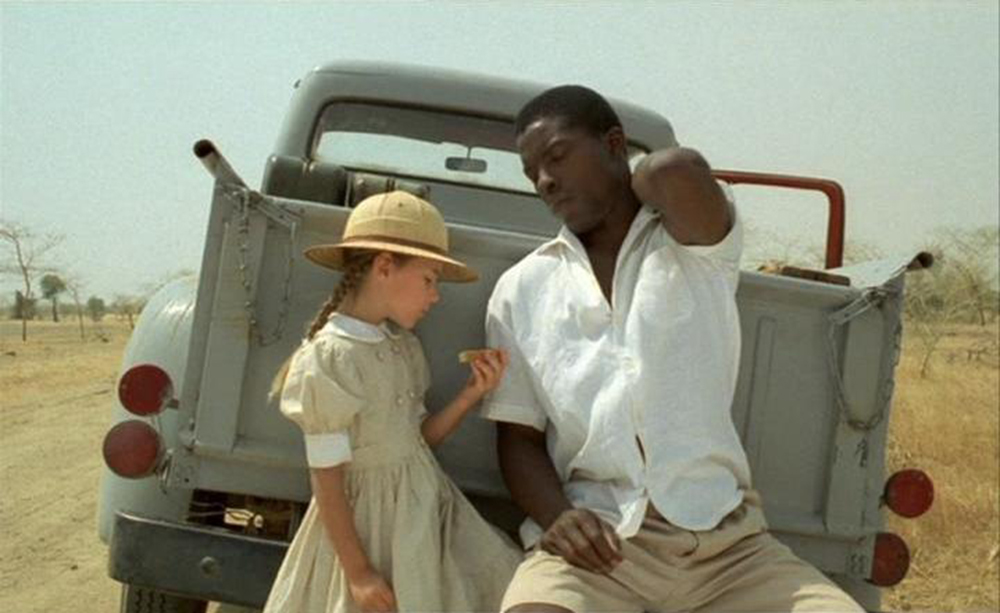
Chocolat
Claire Denis, FR, 1988, 35mm, colour, 105′

Claire Denis’s debut film takes her back to Cameroon, which is the setting for a semi-autobiographical meditation on the colonial experience. Denis focuses on the relationship between the young daughter of a white French state official (Cécile Ducasse) and the black servant of the family (Isaach De Bankolé) in the latter days of colonialism.

“The experience of white people is always the same. We approach, approach, approach, but we never quite reach the heart of Africa. In Chocolat, I always tried to maintain only the perspective of white people. I just didn’t think I should pretend to understand the black point of view.”

Man No Run
Claire Denis, FR, 1989, 35mm, colour, 90′

In her first documentary, Claire Denis follows the Cameroonian band Les Têtes Brulées – known for their interpretation of the traditional Bikutsi music – during their first European tour. Denis had previously met bandleader Jean-Marie Ahanda (who later also made an appearance in White Material) during the production of Chocolat.

“I kept in touch with them as I was editing Chocolat, and they wrote me a letter and told me they were coming to France for a tour, their first tour outside of Cameroon. So I managed to find a camera and some filmm stock and there we were. I didn’t forsee my career. Things happen.”
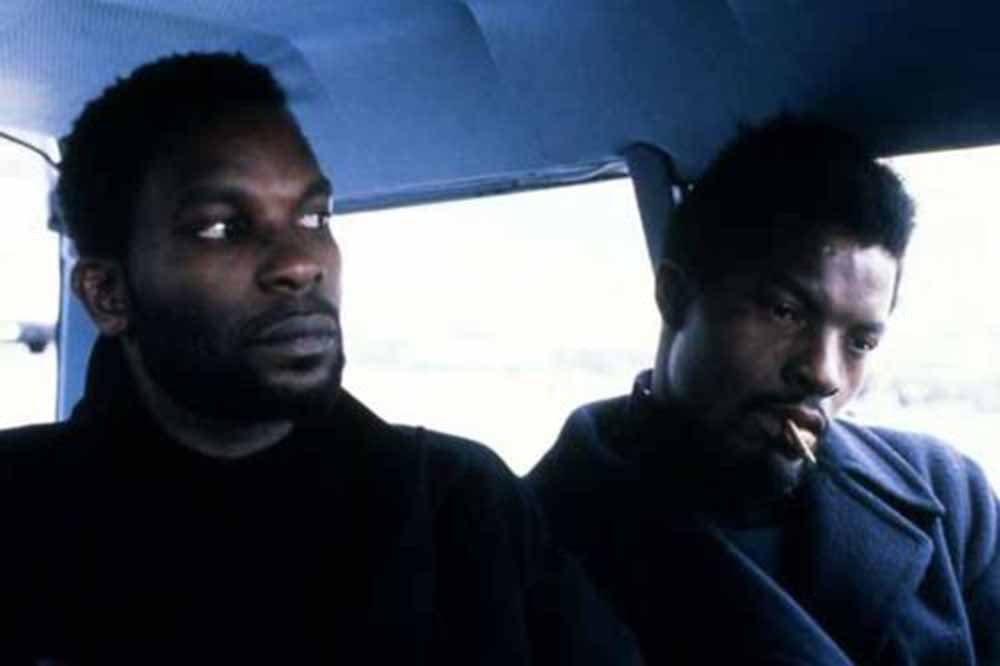
S’en fout la mort
Claire Denis, FR, 1989, video, colour, 93′

In this film, shot by cinematographer Agnès Godard, Claire Denis uses the handheld camera for the first time to explore the raw, claustrophobic world of two friends from the Antilles and Benin (Alex Descas and Isaach De Bankolé) who decide to take part to take part in illegal cockfighting in a suburb of Paris.

“During the camera tests, I thought we had to move together with the actors. That’s when we decided to mount the camera on the shoulder. At the same time I thought, in view of the clandestinity of the actors, that I could not film them in a fixed frame, nor with a travelling or traditional dispositif, but that we had to be clandestine with the camera in order to accompany them, as far as possible, even into the space where they trained.”

US Go Home
Claire Denis, FR, 1994, colour, 61′

An episode of Tous les Garçons et les filles de leur âge, a series of portraits of French youth culture in the period between the early 1960s and the late 1980s, produced by ARTE. Claire Denis drew inspiration from her own childhood and, together with Anne Wiazemsky, wrote the story of a young woman (Alice Houri) who, together with her brother (Grégoire Colin) and her friend (Jessica Tharaud), goes to a party to explore the volatility of social and sexual relationships.

“I hated parties, but I was excited about the importance of music in the series. When I was an adolescent, my records and record player were my secret. Alone in my room, I listened to the Animals, the Yardbirds, Ronnie Bird. The idea of using their music was a powerful motivation to make the film”

Jacques Rivette, le veilleur
Claire Denis, Serge Daney, FR, 1989, video, colour, 130′

An episode from the series Cinéma, de notre temps about Jacques Rivette, who himself came up with the idea to have his portrait directed by Claire Denis. In the company of Serge Daney, Rivette ruminates about his early days at Cahiers du Cinéma and the development of his oeuvre.

“Jacques Rivette had seen my documentary about the musicians (Man No Run) and asked me to make his portrait. He had already made the first film of the series, the portrait of Jean Renoir — to whom he was an assistant — and said, ‘Claire was my assistant, so she must make the film about me.’ I didn’t propose it myself. I received the assignment. I was terrified, but I did it anyway. Again, it is something that happened by chance.”

J’ai pas sommeil
Claire Denis, CH, FR, 1994, 35mm, colour, 111′

The infamous Thierry Paulin case inspired Claire Denis for this film. Paulin was a young, black, homosexual, HIV-positive man who, together with his lover, murdered nineteen elderly women in Paris in the 1980s. Denis approaches the murder case through a circumferential movement, whereby the focus is shifted to a multitude of surrounding stories and characters.

“I quickly understood that the only way to approach the mystery of this kind of murder was through a concentric circle. I thought about the Goose board game. After all, it corresponds to the street map of Paris. The film is constructed according to that logic: from the periphery we travel to the city and then to the 18th arrondissement. The only way to approach the killer that seemed right to me was through accidental connections and encounters.”

Nénette et Boni
Claire Denis, FR, 1996, 35mm, colour, 102′

Following the production of US Go Home (1994), Claire Denis wanted to give a second life to the collaboration with actors Grégoire Colin and Alice Houri. In Nénette et Boni, again, they play brother and sister. They become separated from each other’s lives in Marseille until they meet each other during Nénette’s pregnancy. The film is pervaded by references to films by Marcel Pagnol, Jean Cocteau and Jacques Demy and uses music from the Tindersticks for the first time.

“While US Go Home was completely improvised, Nénette et Boni is a film that is very close to me, immersing me in memories of a shot or a sequence. It’s very exhilarating and at the same time destabilizing, because life experience is the only matrix for me to do this work. The intellectual experience is not for me.”
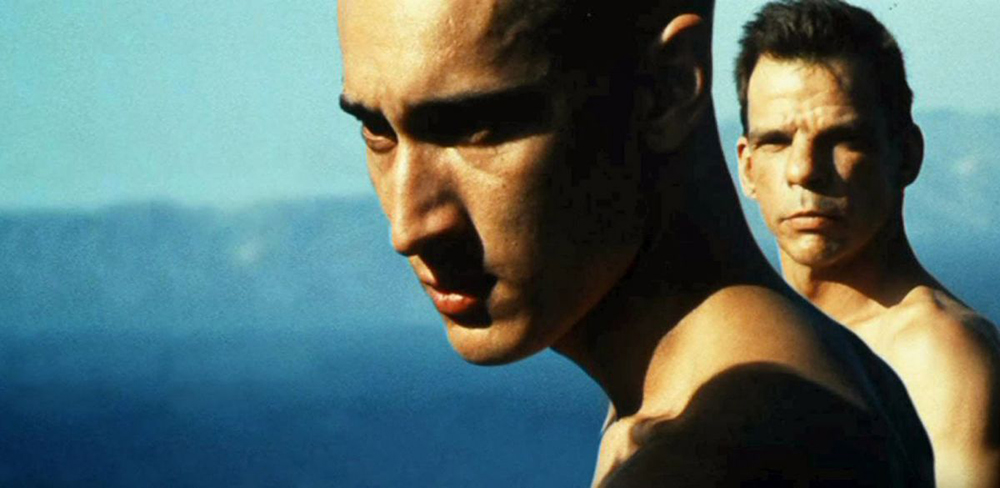
Beau Travail
Claire Denis, FR, 1999, 35mm, colour, 92′

Claire Denis’s undisputed masterpiece was created at the request of ARTE to contribute to the series Terres étrangères. The theme of the film led her to the work of Herman Melville, firstly his novel Billy Budd, Sailor and then to Benjamin Britten’s opera of the same name, and, on the other hand, to the idea of working around the French Foreign Legion in Djibouti (“For me, Africa is like the sea that Melville so dearly missed,” Denis said). The close collaboration with co-writer Jean-Pol Fargeaus, choreographer Bernardo Montet and actor Denis Lavant resulted in a miraculous “poetic rumination that pointedly doesn’t discriminate between major and minor events, intertwining both into a kind of endless magical tapestry” (Jonathan Rosenbaum).

Trouble Every Day
Claire Denis, FR, 2001, 35mm, colour, 101′

A film inspired by the desire to work again with actor Vincent Gallo and by the proposal to participate in a series of horror films. Claire Denis met the challenge by immersing herself in the fantasy novels of Joseph Sheridan Le Fanu and films such as Jacques Tourneur’s Cat People and Jean Cocteau’s La Belle et la Bête; but at the same, she time decided not to erase the horror of an erotic desire that manifests itself as a devouring hunger by simply suggesting it. Instead, she made it explicit.

“It seemed necessary to me to push current boundaries: for me, not showing the devoration scenes would have been unacceptable. I refused the comfort of the ellipse or allusion for the same reasons that kept me away from pastiche. When you tell such a story, you must confront it, accept it as it is, accept that it puts you at risk.”

Vendredi Soir
Claire Denis, FR, 2002, 35mm, colour, 90′

An adaptation of the eponymous book by Emmanuèle Bernheim, about a passionate one-night stand between a woman (Valérie Lemercier) and a man (Vincent Lindon). Claire Denis approaches the almost wordless exchange and the growing desire with tactile sensitivity, resulting in a lyrical ode to the enjoyment of unexpected encounters.

“However important it is to determine the frame of the mise en scene, it is equally important, for me, to accompany the actors in an intimate way. This was the main challenge in Vendredi Soir: how to be intimate without becoming voyeuristic? How can you penetrate something while keeping a certain distance from it? It is important for me, when I film an actor, to always preserve a certain degree of modesty.”

L’Intrus
Claire Denis, FR, 2004, 35mm, colour, 130′

L’Intrus is inspired by the eponymous book by philosopher Jean-Luc Nancy, an intimate reflection on the idea of intrusion following his heart transplant. Claire Denis transformed this story into an elliptical fiction in which a heart patient travels the world in search of a new heart, until he becomes confronted with his past in Tahiti. Denis also drew inspiration from R.L. Stevenson’s In the South Seas and Gauguin’s paintings from his South Pacific period.

“The idea of transplantation has always fascinated me. I often talk about transplantation in my work. It’s as if cinema can only be really interesting to me if there’s a transplant involved. There’s no such thing as literature on one side and cinema on the other. Cinema enters literature—it’s transplanted, as it were. Reading L’intrus meant a lot to me. The mental dialogue I have with that book keeps me busy to this day.”
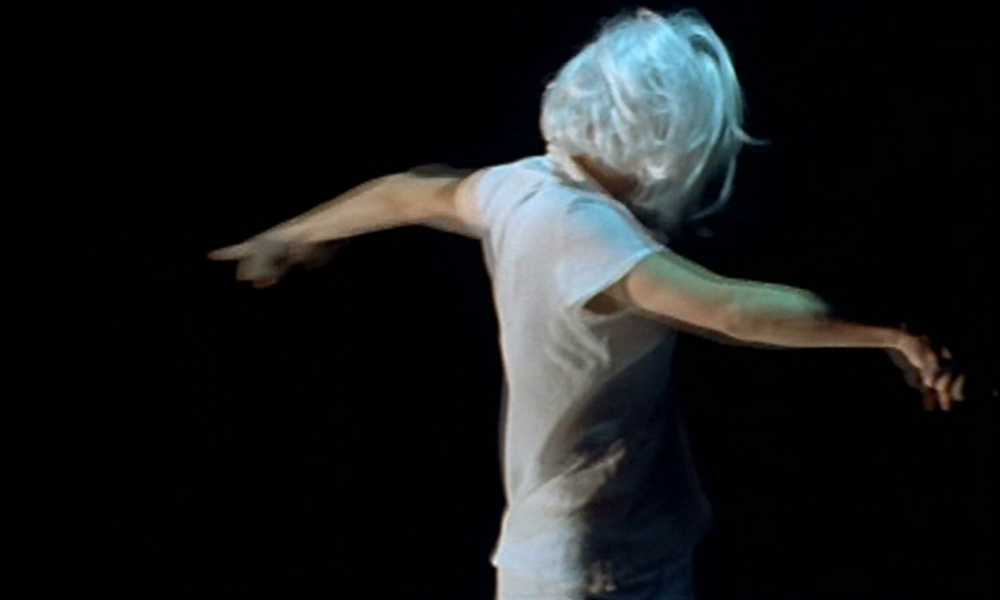
Vers Mathilde
Claire Denis, FR, 2004, 35mm, colour, 84′

Claire Denis’s portrait of the French choreographer Mathilde Monnier, with whom she shares a working relationship with Jean-Luc Nancy.

“Mathilde Monnier asked me to film one of her pieces. I told her that I didn’t have the time and that I wasn’t interested. However, because she was insistent, I proposed that I could film her work in my free time. We did it very simply: my brother did the sound, and Agnes or Ellen took care of the image. We worked like that for a year before we began to edit. I decided to focus on my relationship to Mathilde presenting her work, as if we were similar in our work processes. I felt that she wanted me to film her because she saw something similar in me, and she was right. We could be sisters.”

35 Rhums
Claire Denis, FR, 2008, 35mm, colour, 100′

An homage to the work of Yasujiro Ozu, in particular the father-daughter drama Late Spring (1949), but also to the relationship between Denis’s mother and her grandfather. A widower (Alex Descas) and his daughter (Mati Diop) live together in an apartment in a Parisian suburb, until the moment arrives to let go. With great tenderness, Claire Denis films the everyday rhythms of two closely connected people who are confronted with the passing of time.

“I once went to see some Ozu films with my mother, and I felt that the presence of the father in his films reminded her of her father — my grandfather. I felt increasingly inclined towards the desire to make a film about it. But in reality, I let go of the idea because I couldn’t immediately think of who could play that man. My grandfather was Brazilian; I could feel that he wasn’t French. Being a foreigner, it seemed as if his daughter was his only family. Even when I was little, I could see that he only had eyes for her.”

White Material
Claire Denis, CM, FR, 2009, 35mm, colour, 106′

For the shoot of White Material Claire Denis returned to Cameroon, where she spent a considerable part of her youth. With the encouragement of actress Isabelle Huppert and in close collaboration with writer Marie NDiaye, she created the story of a white coffee plantation owner who stubbornly tries to hold on to her land when a violent civil war breaks out. In this film, Denis returns to a theme that’s dear to her: the friction between intruding and belonging, between foreignness and sameness.

“The presence of foreign bodies in my work stems from my childhood. I myself have experienced how a foreign body feels and that’s also why I made the film L’Intrus, about the intrusion of a hostile body. That’s also what I wanted to do in White Material: show that even if white men think they are the rulers of the world, their whiteness is sometimes hostile.”
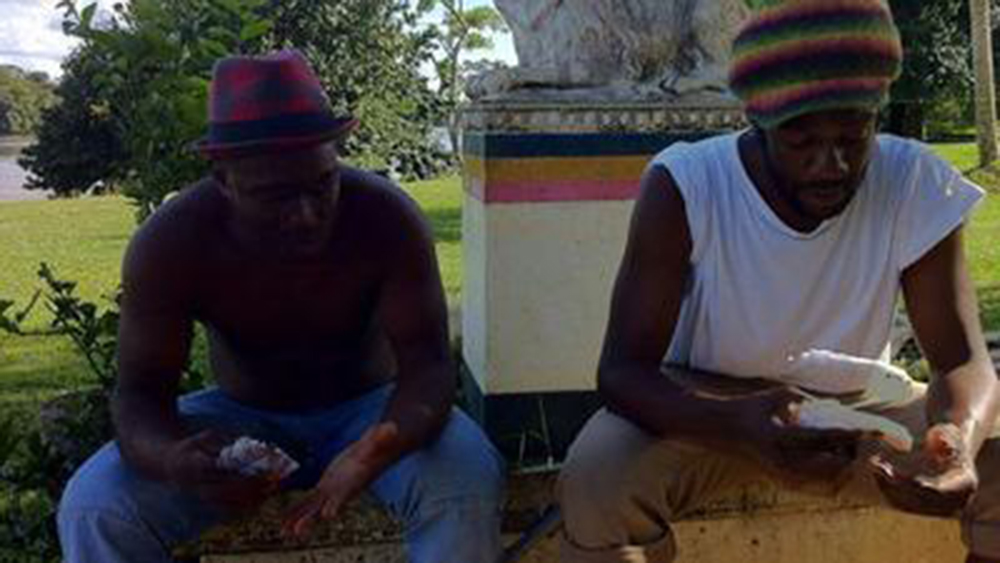
Aller au diable
Claire Denis, FR, 2011, 35mm, colour, 42′

Commissioned as part of the Jeonju Digital Project, Aller au diable blends elements of autobiography with documentary interviews (including a conversation with the notorious outlaw gold-mining boss Jean Bena) as Claire Denis and actor Jean-Christophe Folly travel to French Guiana to research an upcoming feature film about the Alukus, a group of escaped former slaves who established their own society in defiance of corrupt local governments.

+

Le Camp Breidjing
Claire Denis, FR, 2015, HD, colour, 52′

Claire Denis’s contribution to the Réfugiés project by ARTE, who asked numerous filmmakers, photographers and artists to record testimonies of life in different refugee camps. Denis filmed Breidjing camp, in the East of Chad. Over the past ten years, the camp has developed into a real city where more than forty thousand refugees from Darfur live.

Les Salauds
Claire Denis, DE, FR, 2012, DCP, colour, 100′

Encouraged by the challenge of her producer to write a film off the cuff, Claire Denis and co-scenarist Jean-Pol Fargeau invented a dark revenge drama in the spirit of Akira Kurasawa’s The Bad Sleep Well and William Faulkner’s Sanctuary. The result is an elliptically structured fate tragedy in which a sailor (Vincent Lindon) returns to Paris and ends up in a tangle of twisted family relationships, sexual exploitation and manipulation.

“I didn’t feel like I was nearing an abyss. I knew we were on the front line, certainly: death is present from the beginning until the end of the film. For me, there is nothing stronger than thinking about what is forbidden and why it is forbidden. I’m talking about what is morally forbidden. What we call taboo only exists because it is inherent in human nature.”

Un beau soleil intérieur

Claire Denis, FR, 2017, DCP, colour, 94′

The proposal to make an adaptation of Roland Barthes’s Fragments d’un discours amoureux inspired Claire Denis to write a film, together with writer Christine Angot, about the agony of love. Juliette Binoche shines as Isabelle: a divorced woman, around fifty years old, who’s looking for true love. The way in which Denis portrays the encounters, uncertainties and disappointments of her protagonist shows extraordinary warmth and intelligence.

“For me, Juliette is still the young girl I discovered in Téchiné’s Rendez-vous. Her character still believes in love. With all her body confidence, Juliette stands for the absolute parade against death. Agony is what controlled me when I was young myself. Here, however, we see the exploits of a woman who wants something that suits her.”

CLAIRE DENIS SHORTS

Bibliothèque modèle pour les enfants (Chroniques d’en France n°87)

Claire Denis, FR, 1973, 16mm, colour, 7′

À propos de Nice, la suite: Nice, Very Nice

Claire Denis, FR, 1994, colour, 10′

Voilà l’enchaînement

Claire Denis, 2014, DCP, colour, 30′

Ten Minutes Older: The Cello:Vers Nancy

Claire Denis, FR, 2001, Digibeta, b&w, 10′

Le 15 Mai
Claire Denis, 1969, video, colour, 28′

Breaking Sacred Ground

In the context of Courtisane Festival 2019 (Gent, 3 – 7 April 2019). Curated by Stoffel Debuysere

AFRICAN-AMERICAN INDEPENDENT FILMMAKING ON THE US EAST COAST, 1967-1989

“Film is, in this culture — especially for Black people — the last solid white bastion of the society. It’s the one area where we have an inferiority complex. The whole myth of Hollywood, the way film functions in this culture, has succeeded, artistically, in brainwashing all of us… Film is the largest, most powerful, most potent myth. And we have not thought about how that myth applies to us. We don’t believe it applies to us. So, we can’t believe ourselves as filmmakers when we talk about John Ford, Huston, Betty Davis, John Wayne, and so forth. Hollywood is the one mythical world that America created! The Gods and Goddesses of America are film stars! They’re the Greek mythology of America, and we don’t know who we are in that mythology. How can we talk about picking up a camera when there is a sacred imaginary mythology around film, around Hollywood, around movies, and we would be breaking sacred ground!” — Kathleen Collins, 1980

“There are times when the white critic must sit down and listen. If he cannot listen and learn, then he must not concern himself with black creativity… I want to say that it is a terrible thing to be a black artist in this country — for reasons too private to expose to the arrogance of white criticism.” — Bill Gunn, letter to The New York Times, 1973

In a tribute to the singular actor, playwright, screenwriter, novelist, and filmmaker Bill Gunn, Ishmael Reed wrote: “Gunn used the stage and the page to rail against the Movie Industry forces, not in the manner of the diatribe, but in the style of the samba and the bossa nova. With subtlety and with wit. He was too deft for the obvious. Too complicated. Too odd.” When he passed away in 1989, Gunn had directed only three films, all with problematic histories. Stop (1970), one of the first studio films to be directed by an African-American filmmaker, was shelved and remains locked in Hollywood’s vaults. Ganja & Hess (1973), which Reed called “what might be the country’s most intellectual and sophisticated horror film,” was heavily recut, retitled, and reissued without Gunn’s approval. Personal Problems (1980) was an experimental, shot-on-video soap opera that had limited showings on public television and at scattered venues before disappearing for nearly forty years.

Why is it that the work of so many African-American filmmakers seems to remain hidden from history? “Isn’t the canon debate really about identity politics?” filmmaker and critic Peter Wollen was asked over two decades ago. To which he replied: “All I want to claim is that when we set out to revise the canon, we should be able to argue our position on aesthetic grounds,” giving the work of Bill Gunn as a prime example of films “we should look at again.” This programme is a modest invitation to “look again” at a selection of African-American independent films that have sadly gone overlooked or underappreciated for too long.

Following the programme dedicated to the work of the so-called “LA Rebellion” movement at Courtisane Festival 2015, this selection will focus on manifestations of independent filmmaking emerging from the East Coast of the US, particularly from New York. Most, if not all, of these works have been largely invisible for decades. This was notably the case for William Greaves’s endlessly revelatory meta-documentary Symbiopsychotaxiplasm: Take One, filmed in 1968 and completed in 1971, but only shown publicly two decades later. At that time it became a new entry in the annals of film history, but perhaps it wasn’t the rewriting of them that it should have been. The same can be said about the films of Kathleen Collins, a playwright, writer, director, and educator who worked with Greaves on Symbiopsychotaxiplasm and the groundbreaking television show Black Journal, before embarking on her own cinematic ventures. She completed two films, most notably Losing Ground (1982), which was one of the first feature-length films produced by an African-American woman. At a time when the film industry predominantly identified “black experience” with tales of poverty and crime, this thoughtful, understated film about the interior passions and affections of a woman in a troubled marriage received little notice in the US, until it finally had its first theatrical release in 2015.

Some of these films were initially responded to with curiosity and acclaim, at least in Europe. Ganja & Hess premiered during the Critics’ Week at the 1973 Cannes Film Festival, where it received a standing ovation and the critics’ choice prize, but was largely dismissed by most American critics and quickly lumped into the category of blaxploitation films. Personal Problems had its world premiere at the Centre Pompidou in 1980 and was reportedly described by a critic as a soap opera as Godard would have done it; but due to industrial obstructions, the self-described ‘Black soap opera’ was never able to reach a wide audience. Sidewalk Stories (1989), Charles Lane’s tender homage to Chaplin’s The Kid, won the Prix du Publique in Cannes, where its 12-minute ovation set a new record, but receded from view after a limited run. Luckily these three works, too, have been given a new life thanks to recent restorations.

Other films, however, are still awaiting the consideration and appreciation they deserve. In 1989, a piece in Cahiers du cinéma read: “Twenty years after Bill Gunn’s Ganja & Hess, the intellectual Black American cinema returns with the remarkable Chameleon Street”. But despite garnering the Grand Jury Prize at Sundance and having its remake rights purchased by a major studio, Wendell B. Harris Jr.’s witty and sardonic critique of race and class relations vanished as fast as it appeared. Two years later, the same Sundance prize was won by Camille Billops and James Hatch, whose emotionally raw and uncompromising autobiographical documentaries about domestic life remain all too unseen to this day.

So let us look again at some of the films that have attempted to break the “sacred imaginary mythology” that Kathleen Collins spoke about. Let us look closely at Fronza Woods’s sensitive portrayals of everyday struggle and resolve, and Edward Owens’s poetic portrait studies of his mother and her circle, both of whose filmmaking careers were regrettably short-lived. Let us look again at the work of all those who might have been considered too deft, too complicated, too odd. For, perhaps more than ever, we need to cherish and hold on to that very notion that critic Serge Daney once reserved for the films of Bill Gunn: “unclassifiable”.

Thanks to Jacob Perlin, Louise Archambault Greaves, Brian Belovarac (Janus Films), Jonathan Hertzberg (Kino Lorber), Amy Heller & Dennis Doros (Milestone Films), Nora Wyvekens (Carlotta Films), Ed Halter, MM Serra (The Film-Makers’ Cooperative), Edda Manriquez (Academy of Motion Picture Arts), Amy Aquilino (Women Make Movies), Eugene Lee & Roselly Torres (Third World Newsreel), Céline Brouwez (Cinematek), George Clark, Wendell B. Harris Jr.

——

Symbiopsychotaxiplasm: Take One
William Greaves, US, 1971, HD, colour, 75′

When Symbiopsychotaxiplasm: Take One surfaced in 1991, it was a double surprise. It surprised those who assumed they were familiar with the major independent and experimental films of the sixties, and it surprised those who believed they understood the career of William Greaves (1926 – 2014); firstly, as a stage and film actor and a drama teacher and, subsequently, as a director and producer of documentary films. Neither of these careers seemed to account for this singular metacinematic experiment. And yet, as fully as any film he has made, his self-described “study of the creative process in action” combines his interest in acting and in actors with his need to document and interpret real events. Symbiopsychotaxiplasm, conceived as ‘take one’ of a series of ‘takes’, documents the shooting of a strange film in Central Park. “Various couples repeatedly rehearse a screen test in the afternoon sun under the indulgent eye of the director. The script is acrimonious yet somewhat clichéd, the actors tense and awkward. The crew is unnerved and wrong­-footed by the filmmaker, played by William Greaves himself, whose directing style is infuriating, inconclusive, vague and deliberately contradictory. At their wits’ end, they borrow a camera and film themselves debating the shoot in urgent, rambling, evening discussions. The frame splits in two. Greaves encourages his crew in their Palace Revolution; obstreperous tramps wander onto the non­-set to hijack the non­movie, sound levels repeatedly stutter and glitch; through it all glides the sound­track of Miles Davis’ In a Silent Way: serene, serious, enigmatic.” (The Otolith Group)

“Symbiopsychotaxiplasm is neither a documentary nor a traditional feature. At least I don’t feel that it is. It is more of a happening. Instead of being a form of conventional art it is a piece of abstract art. Abstract in the sense that it does not obey the language of convention. It obeys the mind, the heart, the intuition, the subconscious. These are the determinants, rather than the Aristotelian approach to drama — the traditional dramatic form of Sophocles or Ibsen or whomever. You’re going for — let’s call it divine action, another level of insight into the human condition, using cinema.” — William Greaves

“What if they made a revolution and nobody saw it? That’s what happened in 1968, when William Greaves filmed one of the most daring and original movies of the time… It’s one of the greatest movies about filmmaking ever made, and one that would have spoken to young independent filmmakers of the time. It’s a vision of filmmaking that didn’t get seen when it could have made a decisive difference for a new generation… The movie is no mere self-exploration or self-reflection but a vision of the times, a crucial work of late-sixties politics in action.” — Richard Brody, The New Yorker

English spoken, no subtitles

——

Ganja & Hess
Bill Gunn, US, 1973, DCP, colour, 113′

Celebrated at the Cannes Film Festival, then exorcised by timid distributors and inappropriately marketed as grindhouse blaxploitation before being revisited by Spike Lee forty years later, this eerie, sui generis work by director Bill Gunn (1929­-1989) has now been resurrected in a new restoration, which has prompted its recognition as a landmark feature of African­-American cinema. In Cannes, Gunn introduced the film by saying, “We’re not yet allowed to make personal films — so I was offered a vampire movie to do instead. When they came back, this is what they found.” Gunn was hired to make a blood­saturated exploitation movie; instead he deliv­ered a languid, baroque, and phantasmagoric exploration of addiction, assimilation and identity — ”an Africanized vision quest filtered through a ramshackle collection of psychedelic and genre elements” (Howard Hampton, Film Comment). A groundbreaking film for the period, Ganja & Hess not only became renowned for its all black cast, but also for the remarkable work of cinematographer James E. Hinton, who changed the look of African­-American filmmaking by insisting that the skin tones of the black actors and actresses in the film not be lightened photographically, a technique which was standard at the time. The film features Duane Jones and Marlene Clark as the title characters, as well as Sam Waymon (Nina Simone’s brother), who also composed the film’s haunting score.

“Ganja & Hess is quiet, literate, thoughtful and sombre — as far from Blaxploitation as it is possible to get. Its luminous cinematography and fascinating modulation from refined Europhilia to sophisticated Afrophilia constitute an African-American art-house movie that remains unparalleled to this day.” — The Otolith Group

“Almost before the credits have finished their cryptic roll in
Ganja & Hess, you know you are watching an extraordinary film. Something about the ‘voice’ of the film — its editing, camerawork and point of view — tells you this experience will be unique. The film has a vitality that seems to broadcast itself. It comes alive as only masterworks do… Like the greatest films of the horror genre, Ganja & Hess taps hidden reservoirs in our collective unconscious for its power. But unlike most of those films, it doesn’t think to emphasize the metaphor. Its terror is considerably closer to home than to Hollywood’s Transylvania.” — James Monaco

Introduced by John Gianvito.
English spoken, no subtitles. Restored in its original version by The Museum of Modern Art with support from The Film Foundation and re-released in 2018.

——

Personal Problems
Bill Gunn, US, 1980, DCP, colour, 165′

In 1979, Bill Gunn teamed up with writer Ishmael Reed and producer Steve Cannon to create what Reed has called “an experimental soap opera,” an exceptional, rough­edged ensemble piece exploring black working class lives in New York City with candor and emotional intensity, featuring powerful performances by artists such as Vertamae Smart­ Grosvenor, Jim Wright, Walter Cotton, and Sam Waymon, with music by Carman Moore, and cinematography by Robert Polidori. Remarkable for its raw early video aesthetics — which often take on a beautiful life of their own — and unpredictable narrative digressions and leaps, this two­-episode diptych has been celebrated as “nothing less than an explosion of the television form” (Chuck Bowen, Slant) and “a startling, totally idiosyncratic work of art” (Nick Pinkerton, Art Forum). Originally intended to air on public television in 1980, it went unseen for many years; the original U-Matic tapes have been carefully restored and the film is now available in its full-­length version for the first time in decades!

“So what happens when a group of unbankable individuals tell their stories? Actors who have final say over their speaking parts? A director, who was found ‘too difficult’ for Hollywood? A composer, who would not submit to the formulaic mediocre soundtracks required by the industry? A Black male lead, who was not black enough? A Black actress lead who was not light enough? An actor who had been retired because he belonged to another era? He was a star during the ‘Race Films’ era. A cinematographer who chose art over expediency? An unmarketable male, a roguish charming home wrecker who didn’t look like Clark Gable? Three producers who, having no experience in producing movies, organized a production with the amount of money that Hollywood spends on catering? Maybe less. Some consider the result to be a classic.” — Ishmael Reed

“Gunn, Reed, and Cannon used new technology to walk back a classical genre stricture, and the result is something for which the white film industry never coined a category… Only hindsight allows us to see Personal Problems as it is: another path not taken, a miniature epic of radically compassionate filmmaking.” — Steve Macfarlane, Cinema Scope

English spoken, no subtitles. Restored in its original version by Kino Lorber and re-released in 2018.

——

Losing Ground
Kathleen Collins, US, 1982, DCP, colour, 86′

Characterized by Kathleen Collins (1942­-1988) as a comic drama about a young woman who takes herself too seriously, Losing Ground was one of the first feature films by an independent African­-American woman filmmaker. Her protagonist (played by longtime collaborator Seret Scott in a role based on Collins’s own experiences) is a professor of philosophy who tries to examine “ecstasy” from a purely rational perspective, while her artist­-husband (Bill Gunn) finds it more interesting to pursue ecstasy. A rare breed, Sara is immersed in the philosophy of Western civilization, but ironically the limitations of her life are illuminated by her involvement in black folk culture. She “becomes” Frankie in a student film (within the film) based on the folk song ‘Frankie and Johnny’. Highly influenced by the work of Eric Rohmer, whom she described as “the only person who’s ever influenced me cinematically”, Losing Ground is a witty, perceptive study of the emotional awakening of a woman in a troubled marriage. At its release, the film was met with cold indifference from producers, distributors and critics, as it didn’t feature poverty, gangs, or as cinematographer Ronald K. Gray put it, “poor suffering black folk.” Rediscovered, restored, and finally released to much acclaim in 2015, Losing Ground now “feels like news, like a bulletin from a vital and as­-yet-­unexplored dimension of reality” (A. O. Scott, The New York Times).

“Essentially it’s that change is a rather volatile process in the human psyche; and, that real change usually requires some release of fantasy energy. This is why it has an element of violence… This is less a feminist statement than it is a statement that any kind of real change or disruption involves some kind of change in the psyche; some kind of fantasy or imagine release before one can actually initiate the change.” — Kathleen Collins

“Sometimes creative and artistic individuals provide the world with artifacts that may exceed the limited cultural and political aims of a particular moment. But if she and her art are really good, though we are not quite ready, they will wait for us to catch up and discover their beauty, truth, and meaning: Even if it means doing so from the afterlife. Such is the case with Kathleen Collins and the films she left us with.” — LaMonda Horton-Stallings

Restored by Milestone Films and re-released in 2015.

——

Sidewalk Stories
Charles Lane, US, 1989, DCP, b&w, 97′

The low­budget, New York-­in­-the­-’80s movie that proves that silence is not all that golden, Charles Lane’s magnetic feature debut — a retake of his 1977 student film A Place in Time — is long overdue for rediscovery. With an overlap to a more recent attempt to update silent film for a modern movie audience, Lane plays The Artist, a Chaplin­-esque street portraitist whose hapless efforts at fitting into the odd world of sidewalk performance are made all the more troublesome when he finds himself caring for an abandoned toddler, played by Lane’s adorable daughter Nicole Alaysia. The Artist’s efforts to find the girl’s mother are quickly and continually confounded by the many oddball characters he meets. Shot and released in the same year as Spike Lee’s Do the Right Thing, Sidewalk Stories is a similarly vivid encapsulation of the race and class divisions that inform life on New York City’s streets. Lane’s version centers on the homeless perspective, made all the more visceral for being shot in black­-and-­white and silent apart from Marc Marder’s wide­ranging score and a brief moment spent listening to panhandlers. The result is an ingenious, spellbinding effort by a black artist to give a voice to those who have none. (Arthur Ryel-­Lindsey)

“Charles Lane is a man with a vision. What has to be developed in filmmakers is a sense of who you are, what you want to say, and how you want to say it — a worldview or a perspective that you can express in your own terms.” — Charles Burnett

“In the annals of filmmaking by, about or incidentally peopled with blacks, there does not seem to exist a hero quite like Lane’s. With all the terrible mythology around black people as true bunglers and fools, Lane has created a black hero with true pathos — avoiding all the pathetic traps into which the Steppin Fetchits of the world have fallen. It is an act of great jubilation that Lane has replaced the bulging eye-balls of the frightened negro with the soft humane consciousness of a being whose adventure is life itself. The quest for the meaning of life is as much the black man’s inner quest, foolish, bungling and wise, as it is that of any other human soul.” — Kathleen Collins

English spoken, no subtitles. Restored by Cineteca di Bologna at L’Immagine Ritrovata and re-released in 2014.

——

Chameleon Street
Wendell B. Harris Jr., US, 1990, DCP, colour, 93′

This highly original existential black comedy charts the real-­life exploits of William Douglas Street Jr. (played with a great deal of charisma and wit by writer­-director Wendell B. Harris Jr.), a compulsive imposter whose improbable successes are spurred along by the fact that he’s black. From the late 70s to the mid­80s Street carried off a number of impersonations, presenting himself as a Time magazine reporter, a surgery intern (he performed 23 successful operations), a Caribbean exchange student at Yale, and a civil rights attorney; various other scams landed him in prison. Without wasting any time on facile psychologizing, Harris uses his subject as a means to explore the paradoxes of acting (some of Street’s real­-life victims play themselves) and the invisibility of blacks in the US; Street is also the source of some very funny comedy. In all, this disturbing yet compelling rogue’s progress calls to mind an 18th­-century picaresque novel…. Wendell B. Harris Jr. demonstrates probably the darkest sense of being black since Ralph Ellison’s Invisible Man! (Jonathan Rosenbaum)

“As it is, Chameleon Street exists as a gloriously strange one-off that deserves to be appreciated by a new generation sure to delight in its rich palette of cinematic reference, humour and formal invention. A lost masterpiece of black American cinema, Chameleon Street is, as I discovered, a cinematic road well worth walking.” — Ashley Clark, Sight & Sound

“Like its character, the film keeps on freewheeling without a horizon in sight, aggregating sketches, voice-over comments, language changes (Street is keen on French) and more or less extravagant disguises (beautiful scene in which he puts on a costume from Jean Cocteau’s Beauty and the Beast), all the while retaining a tone of acid mockery reinforced by the sickly arrogance of the black chameleon.” — Camille Bui, Cahiers du Cinéma

English spoken, no subtitles

——

Remembrance: A Portrait Study
Edward Owens, US, 1967, HD, colour, 6′

Private Imaginings and Narrative Facts
Edward Owens, US, 1970, 16mm, 12′

In the mid 1960s, Edward Owens (1949­-2009) was an African­-American teenager attending the Art Institute of Chicago when Gregory Markopoulos arrived to found the school’s film program. Owens, who was then studying painting and sculpture, had already been making 8mm movies for a few years; impressed by the maturity of his work, Markopoulos encouraged him to move to New York. Over the next four years, Owens created a cluster of films that display an increasing mastery of form, inspired by Markopoulos’s style but transformed into something purely his own. Remembrance: A Portrait Study and Private Imaginings and Narrative Facts were both shot in Chicago, and bring his formidable repertoire of techniques to bear upon nonfictional subject matter: his own family and their circle. Remembrance pictures his mother, Mildered Owens, and her friends Irene Collins and Nettie Thomas. The women are shown drinking, smoking, and hanging out, their faces lit like 17th­-century paintings, set to a soundtrack of pop songs. Originally titled Mildered Owens: Toward Fiction, the achingly silent Private Imaginings and Narrative Facts focuses more directly on his mother, setting her regal depiction amidst delicate pulses of editing and oblique superimpositions, evoking the gap between the homebound realities of life and desires for far­-off luxury and refinement. In spite of praise by the likes of Parker Tyler and Jonas Mekas, Owens’s filmmaking career tragically ended when he was only twenty years old. (Ed Halter)

“Edward Owens may well be one of the few for whom ‘amateur’ and ‘professional’ need have no significance whatsoever: true to his own native talents, with grim determination uncanny, whether the mind in the arts is for or against beauty or its opposite twin, chaos. So that with each subsequent struggle to complete a film he will leave us breathless with anticipation for his next work.” — Gregory Markopoulos

New digital preservations by The Film-Makers’ Cooperative.

——

Killing Time
Fronza Woods, US, 1979, 16mm, b&w, 10′

Fannie’s Film
Fronza Woods, US, 1979, 16mm, b&w, 15′

Fronza Woods was born, raised and educated in Detroit. She began her professional life as a junior copywriter at a small Detroit advertising agency. In 1967, she moved to New York, where she continued to work in advertising. Then, at a time when television was opening up to people of colour, she went to work for ABC news, before learning to craft her own films at the Women’s Interart Center under the aegis of Ellen Hovde and Muffie Meyer. Killing Time, an offbeat, wryly humorous look at the dilemma of a suicidal woman unable to find the right outfit to die in, examines the personal habits, socialization, and complexities of life that keep us going. When the film recently screened, Richard Brody wrote in The New Yorker: “very simply, one of the best short films that I’ve ever seen,” comparing it favorably to Chantal Akerman’s first film Saute Ma Ville. In Fannie’s Film, a 65­-year­-old cleaning woman for a professional dancers’ exercise studio performs her job while telling us in voiceover about her life, hopes, goals, and feelings. The first in an unaccomplished series of portraits dedicated to “invisible women”, Fannie’s Film offers “a brutal, brilliant allegory for women and film” (Manohla Dargis, The New York Times). In addition to making her own films, Woods has worked as camerawoman on numerous independent films, was assistant sound engineer on John Sayles’ The Brother from Another Planet (1984) and a cast member in Yvonne Rainer’s The Man Who Envied Women (1985), and taught basic filmmaking at the University of Wisconsin, Milwaukee, where she also created and curated an outreach film programme for the city’s black community. She now resides in the southwest of France.

“I like films about real people. I am inspired by almost everything but especially by struggle. I am interested in people who take on a challenge, no matter how great or small, and come to terms with it. What inspires me are people who don’t sit on life’s rump but have the courage, energy, and audacity not only to grab it by the horns, but to steer it as well.” — Fronza Woods

English spoken, no subtitles. Prints courtesy of the Academy Film Archive and Women Make Films.

——

Suzanne, Suzanne
Camille Billops & James Hatch, US, 1982, 16mm, b&w, 30′

After studying sculpture on the west coast, Camille Billops moved to New York, where she earned a master’s of fine arts degree from the City College in 1973. Together with her husband James Hatch, she subsequently founded the Hatch­-Billops Collection, an extensive archive of African American cultural history. They began their career in filmmaking in the early 1980s with Suzanne, Suzanne, the first in a series of films dealing with Billops’s family. The film profiles her niece, Suzanne Browning, as she struggles to come to terms with the legacy of her abusive, now­-deceased father, and her escape into heroin addiction as a respite. Suzanne is compelled to understand her father’s violence and her mother’s passive complicity, who suffered at her husband’s hands as well, as the keys to her own self­destruction. After years of silence, Suzanne and her mother are finally able to share their painful experiences with each other in an intensely moving moment of truth. Emotionally raw and wrenching, Camille Billops autobiographical approach has been described as “a means to a new black documentary style” (B. Ruby Rich, Sight & Sound).

“I’ve always liked Camille Billops’s films. Suzanne Suzanne is one of my favourite films, because more than any other films by independent black filmmakers, she really compels people to think about the contradictions and complexities that beset people. We’re not used to women artists of any race exerting that kind of relationship to art.” — Bell Hooks

English spoken, no subtitles. Copy courtesy of The New York Public Library and Third World Newsreel.

In the Present Tense

24 FEBRUARY, 2019 – 12:00
DE BRAKKE GROND, AMSTERDAM
In the context of Sonic Acts 2019

Accounts of dispossession and resistance, transmission and resilience. (Hi)stories told, (hi)stories heard, in the present tense. The march of the victors refuted in the smallest of gestures and the noblest of speeches. The torrent of the world contained in a look, a voice, a sigh, a place, a memory. Life separating from itself in its telling, opening up to the sense of something different, and the dignity assumed in order to pursue its possibility. This film programme is curated by Stoffel Debuysere.

Umiliati: che niente di fatto o toccato da loro, di uscito dalle mani loro, risultasse esente dal diritto di qualche estraneo
Humiliated: That Nothing Produced or Touched by Them, Coming From their Hands, Proves Free from the Claim of Some Stranger
Danièle Huillet, Jean-Marie Straub, FR, GE, IT, 2003, video, colour, 34′

A continuation and the ending of Operai, contadini (Workers, Peasants), based on Elio Vittorini’s Le donne di Messina (Women of Messina, 1949 – 64), recounting the attempts of a metaphorically ​‘shipwrecked’ group of men and women to construct a new life among the rubble of post-war Italy. In Umiliati Danièle Huillet and Jean-Marie Straub isolate the chapters in which the members of the new-born community are brutally confronted with the outside’s economic and political laws and find themselves being submitted to a tribunal that has no other purpose than their humiliation.

Farpões Baldios
Barbs Wastelands
Marta Mateus, PT, 2017, video, colour, 25′

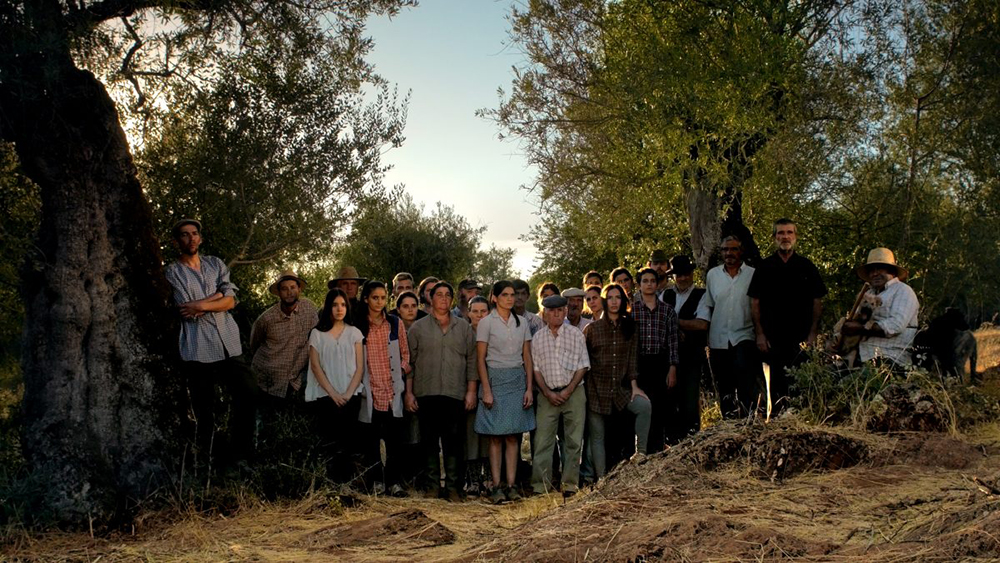
In the Portuguese Alentejo region it is said that, when something is lost, those who are looking should start to walk back to the beginning. Farpões Baldios gives an account of dispossession and occupation, of wastelands that were once part of the commons, of the people who have been living and working on these lands without ever owning them, and of their struggles for justice. Some of the people who sowed carnations and spread resistance in their own words tell their story to the youngsters of today.

Alexander Kluge: Die Macht der Gefühle

17 – 19 DECEMBER, 2018. STUK LEUVEN / CINEMATEK BRUSSELS. Curated by Stoffel Debuysere.

“The making of my film ‘Die Macht der Gefühle’ was a key experience for me. In Central Europe we have the bad habit of speaking of feelings as a sort of alchemical concoction that makes it possible to mobilise people, to capture their attention rather than serve knowledge. The mass media and advertising industry release immense quantities of ‘sentimentality’. But in reality, if feelings have any power at all, it’s not in that way. Feelings constitute a universe of precision.”

“The cinema is the public seat of feelings in the 20th century,” thus wrote Alexander Kluge in the book that accompanies Die Macht der Gefühle (1983), a film that he himself considers a key work in his continuing effort to rethink feelings in all their complexity and ambivalence. With this effort Kluge seems to take up concerns voiced earlier by Theodor W. Adorno and Max Horkheimer, who argued that the instrumentalization of reason implies a domestication of feelings. Hence the need, in Kluge’s words, “to release feelings from their Babylonian captivity,” to recall them from their banishement to the intimate sphere, where they find themselves disempowered. And where better to bring back feelings in full force than in cinema, this peculiar art form that, in the course of the twentieth century, has assumed Opera’s role as “power plant of feelings” (“Kraftwerk der Gefühle”)?

Strangely enough Kluge discovered his love for cinema due to some of those who were most influential in its dismissal as a a kind of mass opiate. It was notably Adorno and Horkheimer who introduced Kluge, then serving as a legal counsel for the Frankfurt School, to Fritz lang, for whom Kluge ended up working as an assistant on the making of Der Tiger von Eschnapur (1959). As it turned out, the critical theorists who thought they could cure an educated lawyer of his affection for literature, an art form which they considered worn out, by sending him to the depraved industrial arena of cinema, accidentally nurtured the singularity of an artist who went on to “make cinema like writing books with moving images” as well as “writing books with the means of cinema.” Appalled at the indignities Lang suffered at the hands of his producers, Kluge began writing the short stories that would later be collected in his first publication Lebensläufe (1962) and he teamed up with Peter Schamoni to direct his first film, Brutalität in Stein (1961), which inaugurated a new attention towards Germany’s relationship to its fraught past, at odds with the cinematic amnesia that characterised “Papas Kino”.

The example of the French Nouvelle Vague confirmed Kluge in his conviction that a newborn, independent kind of cinema was necessary if a vibrant film culture was to emerge in Germany. In 1962 he was one of twenty-six signatories to the Oberhausen Manifesto and co-founder of the Ulm Institut für Filmgestaltung, which both laid the foundation for the so-called “New German Cinema”. In his venture to safeguard alternative forms of production and wrest media from the exclusive control of the culture industry, Kluge founded the Development Company for Television Program (DCTP), which proudly calls itself an “independent producer in the midst of commercial-TV”. Since 1987, DCTP has served as the platform for Kluge’s own Kulturmagazine which consciously both appropriate and subvert standard television formats. Instead of reporting on cultural events in the same old standardized ways, Kluge chooses to “develop forms that can survive inside this impossible situation which destroys expression,” forms that aim to put pressure on the viewer’s “muscles of imagination.”

Kluge posits himself as an ally of the “suppressed classes” of the human senses, dramatising qualities like curiosity, memory, stubbornness, the hunger for seeing, hearing and correlation. He contrasts the “dramaturgy of inescapable tragedy”, which characterises nineteenth-century opera with a “dramaturgy of Zusammenhang”, based on principles of montage, cross-mapping, simultaneity and polyphony. This search for Zusammenhang is also central to his literary oeuvre, which has been largely collected in Chronik der Gefühle (2000), bringing together a multitude of socio-fictional miniatures that interconnect and interact with one another. At the heart of this “livre-océan”, as Georges Didi-Huberman has recently described it, is an endeavour that has been Alexander Kluge’s decades-long preoccupation: “to tell stories of how feelings are not powerless.” An endeavour which deserves all our attention.

In collaboration with CINEMATEK, STUK & Goethe-Institut. The screening in Leuven is organised by STUK and Courtisane, in collaboration with the Lieven Gevaert Centre, the Institute of Philosophy (KU Leuven) and the Research Group German Literature, Fac. of Arts (KU Leuven).

Die Macht der Gefühle
Alexander Kluge, DE, 1983, 35mm, 112′

“The film’s title (The Power of Emotion) is to be taken literally. For Kluge it is indeed about devising the genealogy of emotions (XIXe and XXe century). An operation that he conducts in a musilo-brechtian fashion, by way of collages, aphorisms and sketches, by considering emotions as objects and opera as the factory that, historically speaking, has fabricated this object on a large scale.“ (Serge Daney)

“I believe that, in the end, it is feelings that affect everything in our world, that move everything, yet these feelings have no institutional power. “They pervade us. You just can’t see them.”

When I started working on Die Macht der Gefühle, I was not in a rational state. I did not say, I have a subject and now I will make a film about it. Instead I was spellbound and observed in my direct surroundings, for example, how feelings move. I have not really dealt with the theme of my mother’s death and the fact that she was the one who taught me “how feelings move.” Nor have I dealt with how she died. That was an entire palette of feelings: “All feelings believe in a happy end,” and everyone believes tacitly that they will live forever: The entire palette is somehow optimistic, a positive attitude towards life having been put on the agenda as long as she was young, as long as her body held out, from one day to the next she collapsed. She just suddenly collapsed, like in an opera where disaster takes the stage in the fifth act. It felt as if I had observed an air raid or a disaster.

The film Die Macht der Gefühle is not about feelings, but rather their organization: how they can be organized by chance, through outside factors, murder, destiny; how they are organized, how they encounter the fortune they are seeking.

What is all this organization of feelings about? Generally feelings tend to be a dictatorship. It is a dictatorship of the moment. The strong feeling I am having right now suppresses the others. For thoughts this would not be the case. One thought attracts others like a magnet. People therefore need affirmation by other people to be sure about their own feelings (to counteract the acquisition of their feelings through outside forces). Through the interaction of many people, for example, in public, the various feelings also have a magnetic attraction to one another just like thoughts do. Feelings communicate through their manifestation in public.

The cinema is the public seat of feelings in the 20th century. The organization is set up thusly: Even sad feelings have a happy outcome in the cinema. It is about finding comfort: In the 19th century the opera house was the home to feelings. An overwhelming majority of operas had a tragic end. You observed a victim.

I am convinced that there is a more adventuresome combination: Feelings in both the opera and traditional cinema are powerless in the face of destiny’s might. In the 20th century feelings barricaded themselves behind this comfort, in the 19th century they entrenched themselves in the validity of the lethal seriousness.”

Alexander Kluge, Die Macht der Gefühle (Frankfurt am Main: Zweitausendeins, 1984)

Der Angriff der Gegenwart auf die übrige Zeit
Alexander Kluge, DE, 1985, 16mm, 106′

“Alexander Kluge’s films comprise some of the most thought-provoking, original works to come out of the New German Cinema. He is noted for his use of complex narrative structure, innovatively combining disparate elements. In Der Angriff der Gegenwart auf die übrige Zeit (The Assault of the Present Upon the Rest of Time), Kluge continues his fascination with history, culture and cinema as he examines the close of the twentieth century. Opening with a production of Verdi’s Tosca, he sets up a contrast between the treatment of moral and aesthetic issues in the nineteenth century, and their examination in the cinema. Several stories are juxtaposed, creating a filmic essay, a montage of ideas and reflections on a present which affects our perceptions of both the past and the future. At the center, serving perhaps as a metaphor both for his film and for cinema, is the story of a director who goes blind while working on his latest film. He continues working, his head full of images, trying to create what he cannot see.” (Kathy Geritz)

“We speak about the opera of the 19th century; it is considered the summit of dramatic art. In the film Die Mach der Gefühle (The Power of Emotion), opera was likened to a “power plant of emotions.” The film Carmen by Carlos Saura has shown that such older forms of dramatic art tap certain currents in spectators; this is something we did not know before. Bound up with our own century is another “power plant of emotions” – the cinema. Presumably, in the next century, beginning sixteen years from now, we will call it the cinema of the 20th century. This art form is ninety years old – a love affair of the century. The cinema consists of screening rooms, movie palaces, theaters on the front-lines, as well as many other gathering places, wherever films are shown for money. It also consists of a series of fascinating technical inventions which, though very elementary compared with the capabilities of electronics, all have to do with with the construction of a time machine. This cinema tells stories and it has produced artistic figures [Kunstfiguren] and idols. Obviously, this medium intrigues me. The present film project deals
(1) with elements of cinema;
(2) with the illusion of the city;
(3) with people acting in the city who have all kinds of things moving through their heads: personal experiences, notions about cinema, the reality of the city.

The stylistic link, and simultaneously the basis for a certain comic dimension corresponding to the seriousness of the situation, is the category of time. Cinematic time, the “condensed dramatic time of cities,” a lifetime – wrestling with time obviously occupies the course of our lives.”

Alexander Kluge, Der Angriff der Gegenwart auf die übrige Zeit (Frankfurt am Main: Syndikat Autoren und Verlagsgesellschaft, 1985)

ARTIST IN FOCUS: Bi Gan

30 – 31 OCTOBER, 2018, BOZAR, BRUSSELS. In collaboration with Courtisane, curated by Stoffel Debuysere.

‘Kaili Blues’ was written as a poem from the beginning—the structure, the flow—so it was born already from the logic of poetry. I’m not a screenwriter, even though I have stories in my head. Writing them out in a screenplay doesn’t feel natural to me. ‘Long Day’s Journey Into Night’ is different, though. I think of this film as a murderer. It operates under the logic of murder rather than poetry…. I always felt like I was in danger during the production—like I was always about to either destroy the film by making the wrong decision, or destroy myself. I was always at risk. (Bi Gan)

It’s hard to think of another recent debut film that has excited critics and audiences alike with its unique poetic and aesthetic sensibility than Kaili Blues (2015), Bi Gan’s first foray into the wondrous world of feature cinema. Bi, however, did not learn his craft in film schools or hone his skills by working on film sets. His teachers were online movies and pirated DVDs Bi talked his college roommate into buying. “I know none of the formula in text books to solve problems when making a film. I come up with my own solutions. They are basic and raw.” Bi says. He attributes his artistic enlightenment to a copy of Andrei Tarkovsky’s Stalker (1979), a film he only learned to appreciate after forcing himself to watch it piece by piece. In a way, the work of Bi Gan is perhaps one of the closest continuations of Tarkovsky’s approach to cinema as “sculpting in time”, but where Tarkovsky sought to incite a sense of spirituality and metaphysicality, Bi takes a far more playful and jumbled approach. In Kaili Blues, he sets the tone with an excerpt from a Buddhist text that states that “neither the past, the present nor the future mind can be found.” Conceived as a road movie through China’s subtropical Guizhou province that was subsequently, as Bi has indicated, “destroyed from the inside, little by little,” the film unfolds like a daydream in which past, present, and future flow together, reality commingles with imagination, memory segues into hallucination. The excerpts from Bi’s own poems that serve as the film’s rhythmical and tonal filaments accentuate its fundamental poetic logic, indifferent to conventional plot development or narrative cohesion. The search for a wandering, meandering form of cinema is prolonged into noirish territories in his new work, Long Day’s Journey Into Night (2018). This time, Bi took his cues from films such as Billy Wilder’s Double Indemnity (1944) and Alfred Hitchcock’s Vertigo (1958), before going once again through the process of “destroying” scene after scene, breaking down and reconstructing the film’s initial structure until it settled in its current form, which owes no little to the paintings of Marc Chagall or the novels of Patrick Modiano. The result is a phantasmagorical experience that propels the use of the long take, which was already an important feature in Kaili Blues, but also of 3D stereoscopy – whose effect Bi describes as “a mirror that turns our memories into tactile sensations” – toward enthralling new horizons. On the occasion of its premiere at the Cannes festival a critic called the film “the most magical piece of cinema I’ve seen in many a year.” An impression we can only strongly affirm.