Too Early, Too Late

troptot.png

By Serge Daney

Originally published in Libération, February 20-21, 1982. Translated by Jonathan Rosenbaum.

What do John Travolta and Jean-Marie Straub have in common? A difficult question, I admit. One dances, the other doesn’t. One is a Marxist, the other isn’t. One is very well-known, the other less so. Both have their fans. Me, for instance.

However, one merely has to see their two films surface on the same day on Parisian screens in order to understand that the same worry eats away at both of them. Worry? Let’s say passion, rather — a passion for sound. I’m referring to Blow Out (directed by Brian DePalma) and Too Early, Too Late (co-signed by Danièle Huillet), two good films, two magnificent soundtracks.

The cinema, you may persist in thinking, is “images and sounds.” But what if it were the reverse? What if it were “sounds and images?” Sounds which make one imagine what one sees and see what one imagines? And what if the cinema were also the ear which pricks itself up — erectile and alert, like a dog’s — when the eye loses its bearings? In the open country, for instance.

In Blow Out, John Travolta plays the part of a sound effects freak who, starting off with one sound, goes on to identify a crime and its author. In Too Early, Too Late, Straub, Huillet and their regular sound engineer, the inspired Louis Hochet, lose themselves in the French countryside before they set about wandering along the Nile and within its delta, in Egypt. Starting off with sounds — all the sounds, from the most infinitesimal to the subtlest — they too identify a crime. Scene of the crime: the earth; victims: peasants; witnesses to the crime: landscapes. That is, clouds, roads, grass, wind.

MAHMOUD ENGELS

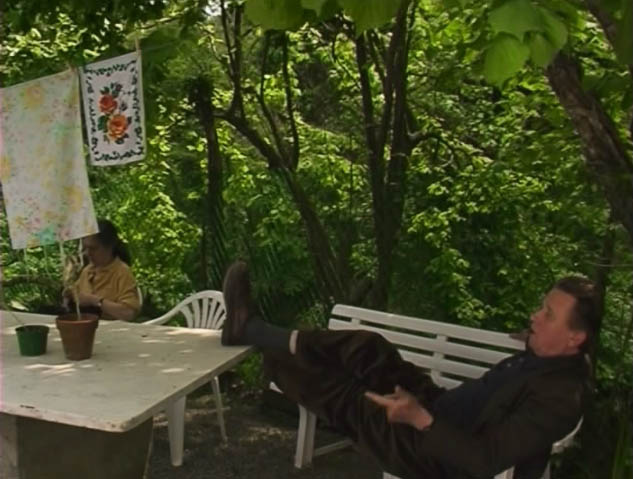
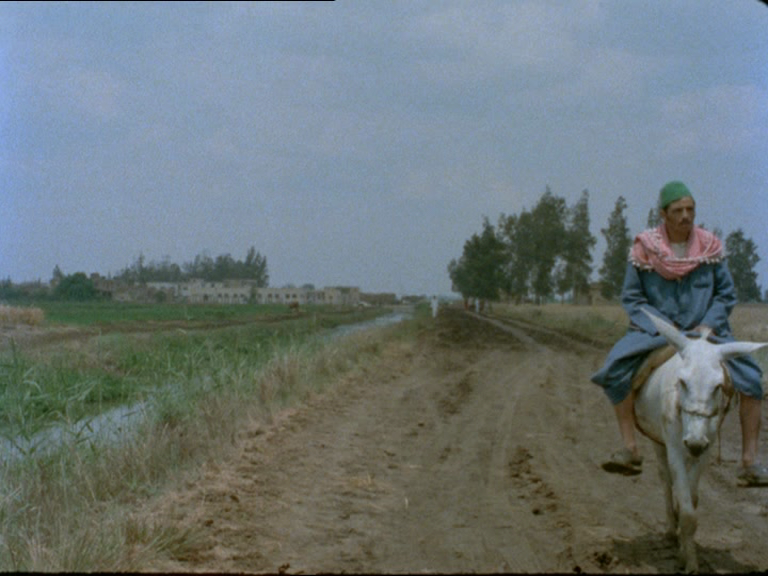
In June 1980, the Straubs spent two weeks filming in the French countryside. They were seen in places as improbable as Treogan, Mottreff, Marbeuf and Harville. They were seen prowling close to big cities: Lyon, Rennes. Their idea, which presides over the execution of this opus 12 in their oeuvre (already twenty years of filmmaking!) was to film as they are today a certain number of places mentioned in a letter sent by Engels to the future renegade Kautsky. In this letter (read offscreen by Danièle Huillet), Engels, bolstered with figures, describes the misery of the countryside on the eve of the French Revolution. One suspects that these places have changed. For one thing, they are deserted. The French countryside, Straub says, has a “science fiction, deserted-planet aspect.” Maybe people live there, but they don’t inhabit the locale. The fields, roadways, fences and rows of trees are traces of human activity, but the actors are birds, a few vehicles, a faint murmur, the wind.

In May 1981, the Straubs are in Egypt and film other landscapes. This time the guide isn’t Engels but a more up-to-date Marxist, author of the recent and celebrated Class Struggles in Egypt, Mahmoud Hussein. Again offscreen, the voice of an Arab intellectual speaks in French (but with an accent) about the peasant resistance to the English occupation, up until the “petit-bourgeois” revolution of Neguib in 1952. Once again, the peasants revolt too early and succeeded too late as far as power is concerned. This obsessive recurrence is the film’s “content.” Like a musical motif, it is established from the outset: “that the middle-class here as always were too cowardly to support their own interests/that since the Bastille, the plebes had to do all the work.” (Engels)

The film is thus a diptych. One, France. Two, Egypt. No actors, not even characters, especially not extras. If there is an actor in Too Early, Too Late, it’s the landscape. This actor has a text to recite: History (the peasants who resist, the land which remains), of which it is the living witness. The actor performs with a certain amount of talent: the cloud that passes, a breaking loose of birds, a bouquet of trees bent by the wind, a break in the clouds; this is what the landscape’s performance consists of. This kind of performing is meteorological. One hasn’t seen anything like it for quite some time. Since the silent period, to be precise.

THE WIND MAKES NOISE

While seeing Too Early, Too Late (especially the first part), I recalled another film, shot in Hollywood in 1928 by the Swedish director Victor Sjostrom: The Wind. This magnificent movie showed how the sound of the wind drove Lilian Gish mad. The film was “silent,” which only gave it more force. Anyone who’s seen The Wind knows that it’s an auditory hallucination. Anyway, there’s never been a “silent cinema,” only a cinema deaf to the racket produced inside each spectator, in his very body, when he becomes the echo chamber of images. Those of the wind, for instance.

One had to wait for the sound film before silence had a chance. Again, Bresson is optimistic when he writes, “The sound film invented silence.” The possibility of silence, at least. Take the example of the wind. One doesn’t have a clear memory of the wind in the films of the Thirties, Forties, Fifties. Or, rather, it was the thunderstorms which went whoosh in pirate films. But the North wind, the draught, the air current, all those winds so close to silence? The West wind? And the evening breeze? No. One had to wait for the Sixties, the small sync-sound cameras, the New Waves. One had to wait for Straub and Huillet.

THE EAR SEES

For at the point of refinement when they arrived at the practice of direct sound, a very strange phenomenon is produced in their films (such as From the Clouds to the Resistance). One rediscovers there the “auditory hallucinations” proper to the “silent” cinema. The same phenomenon crops up in certain recent films by some “old”figures of the New Wave: Rouch (Ambara Damda), Rohmer (The Aviator’s Wife), Rivette (North Bridge). As if the direct sound brought back the absence of sound. As if, out of a world that’s integrally sonorous, the body of a burlesque actor once again emerges.

It’s normal: when the cinema was “silent,” we were free to lend it all the noises, the tiniest as well as the most intimate. It was when it set about talking, and especially after the invention of dubbing (1935), that nothing remained to challenge the victory of dialogue and music. Weak, imperceptible noises no longer had a chance. It was genocide.

They came back again, gradually. In America through an orgy of sonorous effects (see Travolta), in France through the re-education of the ear (see Straub). Too Early, Too Late is, to the best of my knowledge, one of the few movies since Sjostrom’s that has filmed the wind. This has to be seen — and heard — to be believed. It’s as if the camera and the fragile crew took the wind for a sail and the landscape for a sea. The camera plays with the wind, follows it, anticipates it, comes back behind like a ricocheting bullet. As if it were held on a leash or tied to another machine, like the one invented by Michael Snow in that stupefying film that was La Région Centrale (in Snow’s case as well, the terrain of the camera’s performance was a deserted planet of sorts. This explained that.

To see and hear at the same time – but that’s impossible, you’ll say! Certainly, but (1) the Straubs are stout-hearted, and (2) voyages into the impossible are very instructive. With Too Early, Too Late, an experience is attempted, with us and in spite of us: at moments, one begins to see (the grass bent by the wind) before hearing (the wind responsible for this bending). At other moments, one hears first (the wind), then one sees (the grass). Image and sound are synchronous and yet, at each instant, each of us can create the experience in the same order in which one arranges the sensations. It is therefore a sensational films.

DO NOT DISTURB

This is the first part, the French desert. It works differently in overpopulated Egypt. there, the fields are no longer empty, fellahs work there, one can no longer go anywhere and film anyone any which way. The terrain of performance becomes again the territory of others. The Straubs (whoever knows their films realizes they’re intransigent on this matter) accord much importance to the fact that a filmmaker should not disturb those whom he films. One therefore has to see the second part of TToo Early, Too Late as an odd performance, made up of approaches and retreats, where the filmmakers, less meteorologists than acupuncturists, search for the spot — the only spot, the right spot — where their camera can catch people without bothering them. Two dangers immediately present themselves: exotic tourism and the invisible camera. Too close, too far. In a lengthy “scene,” the camera is planted in front of a factory gate and allows one to see the Egyptian workers who pass, enter and leave. Too close for them not to see the camera, too far away for them to be tempted to go towards it. To find this point, this moral point, is at this moment the entire art of the Straubs. With perhaps the hope that for the “extras” thus filmed, the camera and the fragile crew “hidden” right in the middle of a field or a vacant lot would only be an accident of the landscape, a gentle scarecrow, another mirage carried by the wind.

These scruples are astonishing. They are not fashionable. To shoot a film, especially in the country, means generally to devastate everything, disrupt the lives of people while manufacturing country snapshots, local color, rancid back-to-nature museum pieces. Because the cinema belongs to the city and no one knows exactly what a “peasant cinema” would be, anchored in the lived experience, the space-time of peasants. It is necessary therefore to see the Straubs, city inhabitants, mainland navigators, as lost. It is necessary to see them in the middle of the field, moistened fingers raised to catch the wind and ears pricked up to hear what it’s saying. So the most naked sensations serve as a compass. Everything else, ethics and esthetics, content and form, derives from this.

One may find the experience unbearable; that sometimes happens. One may stop finding the very idea of the experience bearable; that happens every day. One may decide that filming the wind is a ridiculous activity. What a lot of hot air! One may also bypass the cinema when it takes the risk of straying from its own turf, away from the beaten paths.

The freedom of Costa and the Straubs

straub-huillet.jpg

Interview by Philippe Azoury, published as ‘Costa et Les Straub en liberté‘ in Libération, 19 September 2001, at the occasion of the release of ‘Operai, contadini’ and ‘In Vanda’s Room’

Patience

JMS: I’ve been talking too much. An interview is dangerous: one always falls back on the clichés that the work on the film really wants to destroy. Bringing us together is also a bad idea: our two films are not alike, although they seem to have some family traits in common. Pedro has spent two years in Vanda’s neighborhood, we have always worked with this patience. What our films have in common is their luxury. The only difficulty they present is the absolute liberty they leave. People are afraid of this liberty.

PC: I have made the film for the people of the neighborhood where I filmed.

The little girls of the province

PC: Vanda is shown in only one cinema. It’s charity, really: it’s not even advertised. Paula Branco (distributor of the film) didn’t deem it necessary. If people are interested in seeing Vanda, they have to do it soon. How many days, not even weeks, can the film hold out?

JMS: In school, I knew a Jesuit who always said: “we need little girls like you in the province”, which meant “everything goes well over there, but not here.” The only liberty we have when making films like that, is that we have been demoted, since thirty years, to beggardom. We are not the only ones: Pedro also doesn’t delegate when making his film. Make a film freely means organising everything oneself. Every film is a political film, if not it’s worth nothing, it’s just put in the hands of professionals. We only try to do the work of artisans freely, correctly, morally and esthetically irreprochable.

Education

PC: the cinema of Danièle and Jean-Marie has formed me. I was into punk-rock when I discovered their films. And, for me, it was the same thing. I would like that the people who have a false, terrorizing, idea of their films, could imagine the very simple, very beautiful things I have learned from them: a minimum of images is enough for there to be cinema. Today, being close to them means to continue to be able to make films in a simple manner, while respecting the things I film.

JMS: Vanda has dazzled me for at least one hour: here is someone of his age making shots not unworthy of Fritz Lang or Mizoguchi. The film takes place inside, but when, in flashes, we find ourselves outside, we immediately imagine ourselves in films of Ozu.

Every film against the previous

JMS: The danger is to apply a style. There is nothing worse than style. When it becomes rhetorics, it’s over. Every Renoir film tried out a little something. We have always tried to do the opposite of the preceding film. It’s a liberty that doesn’t pay off. Operai, contadini is a film against Sicilia. Oddly enough, it’s quite close to our second film, Nicht versöhnt (1965), even though it has been shot in fifty different places.

PC: I have made Vanda because I was completely fed up with the shooting of Ossos, the film I made precedently. The technical crew consisted of forty people, when only four were needed. The production went against the subject of the film. For Vanda, we were only two people: me framing the image, someone else recording the sound. I had spent a sufficient amount of time in that room, I was protected. I wanted to film this girl, with her sister, inbetween these walls, from dusk till dawn. It’s very simple, as desire of cinema, almost in a Renoir fashion, at the limits of “mise en scène”. To be with this girl. And then opening up to the neighboorhood, which was condamned. The irony is that it is still there. In the middle of the film the excavators have left, so they will be there for another winter. I would have liked to stay, and have the means to make a film in 35mm, for the exterior shots.

Deny oneself nothing

JMS: Filmmaker don’t want to deny themselves anything, they’re not masochists. If I had a subject that required digital video, I would love to make it, especially now that everyone has already declared that I’m the one who will never use video. What we deny ourselves are the esthetics which go against the precise subject.

In regards to this film, everyone is surprised that we used the zoom. We never said that it couldn’t be used! The subject decides, every film imposes its esthetical choice. Materially, the location didn’t permit us to construct a travelling shot on the edge of a ravine, with a stream behind us. And then this film, which is basically a process, a hearing, also defies the talk-shows we see on television. I am fascinated by them, although, morally and politically, they disgust me. A talk-show can be something else than a form of contempt.

Place

JMS: Our next film will be different than Operai, contadini, although it will be shot in the same ravine. John Ford always went back to Monument Valley.

PC: Ford always said that he returned because there were people he loved a lot, and the air was pure. In Fontainhas, the air is rotten, everything is shit, but there are people I love. I am at home, there is something shared.

JMS: Our two films are each in their own way “at home”. Place is crucial. Filming Othon in 1969 did not stem from reading Corneille but from this Roman terrace where we wanted to film something. In Operai, contadini, the place contradicts the fiction: there is a proliferation of histories but one specific place that is not fictional. I can’t imagine another decor for this text by Vittorini. My film is this place, this proliferation of colors, of movements produced by nature, in this exact vicinity.

Gentleness

DH: No, our cinema is not a matter of courage, but of justness, of passion.

PC: Radicality is a word that freightens the public. Yet, the problems of cinema are very simple: one has to film, edit, work with actors, it’s human, almost lyrical. Seeing the films of the Straubs, I feel a sensual shiver; as a student, I didn’t understand this fear that was instilled on us even before seeing Dalla nube alla resistenza (1978). It’s a film that I keep revisiting, just like Rio Grande or a Renoir film. These are the most gentle of films.

——————————————————————————————————————————————————————-
Translated by Stoffel Debuysere (Please contact me if you can improve the translation).

In the context of the research project “Figures of Dissent (Cinema of Politics, Politics of Cinema)”
KASK / School of Arts

No Secrets, Just Lessons

hidden-smile.png

A dialogue between Pedro Costa and Thom Andersen on Danièle Huillet and Jean-Marie Straub, after a screening of Costa’s film ‘Où gît votre sourire enfoui?‘ (‘Where Does Your Hidden Smile Lie?‘), on 28 September 2006 at the Bijou Theater, on the campus of the California Institute of the Arts, Valencia, California. Originally published in Cinema Scope, issue 29, winter 2007.

Andersen: Your film on Danièle Huillet and Jean-Marie Straub is often described as a romantic comedy, the kind Stanley Cavell calls “a comedy of remarriage”. I think it’s sometimes compared to some of Hawks’ movies. The other day you mentioned The Marriage Circle (1924) by Lubitsch. Do you want to comment on the comedic aspects of the movie?

Costa: That’s a difficult way to start.

Andersen: You want to start another way?

Costa: Yeah. Because that involves a lot of personal relations between us. I understand very well what Jean-Marie is saying when he addresses me, because he’s really my master. I know there are some secrets that I cannot tell because it’s better to be private, to keep it secret. But I know there is a movement on Jean-Marie’s part in the film of giving himself, exposing himself and exposing his love story, as well as his knowledge and sensitivity, or sensibility. The way he described the first meeting with Danièle is, I think, the best example of what he did for me, and for you, of course, in the middle of this very, very hard work he was doing with a lot of tension in that room, a lot of, I would say, suffering – they wouldn’t like this kind of word – but yeah, let’s say work, tension. And so he had the braveness of doing this movement, of giving some wonderful fragments of their love story, which is personal, private. He had no reason to tell them. He was there just to talk about the editing of this film, cinema, his opinions, to share a bit with the students.

This is a way they found now – or I should say, someone found for them – to finish the films they do today. It is very difficult for them to continue working. One of their mottos is “this will be the last film.” They are always saying that. And it’s absolutely true, not only because they approach every film as the last one, the first and the last, but because to finance the films and to complete them is very, very difficult. I know now for instance – because I helped them a little bit in one of the movies they made recently – I know people now work absolutely for peanuts, as you say, with them. With a lot of pleasure, of course. I could tell you that my film on the Straubs costs as much as Sicilia! So they have this plan B, this escape plan to finish the films, which is going to this school in France, and in exchange for talking like this, about editing, about cinema, about what you’ve seen, they can edit the films and they are given a print. One print. I think that’s the only way they can do it. They’ve been doing this kind of seminar for the last four or five films, I think.
I was there from day one to the end. And as you see, it’s made chronologically. Thay start on the first scene, they end on the last. This lasted for one-and-a half months. So what was a bit ironic or symptomatic was that on day one there were 30 students, and on the last day there were three, one girl and two boys. So that’s very sad because it’s like a screening of one of their films. Everybody leaves.

Andersen: sometimes

Costa: Sometimes. But the ones that stayed were there. There was this deal also that they were showing some of their films in the school’s cinema. I shot that, and I chose to have these two or three moments of those, let’s say, shows, for a simple because that’s the purpose of this series, Cinéma, de notre temps, which is a bit didactic. Also, it’s made to let you know what kind of films this man makes or that woman does. So it should have a didactic side to it. In the case of Jean-Marie and Danièle, it goes much deeper, I think, because for them cinema is not disconnected: it has to do with an attitude, a way of behaving every day. So there is a political way of being that had to be there also. So for me there is a very beautiful moment when Jean-Marie presents the Death of Empedocles (1987), and he shares this vision he has, this dream. This dream is more or less the same as that of this guy he’s talking about – the German poet Hölderlin. This Communist utopia. That has been something he’s been working on in films and his life with Danièle. And he’s probably the person who has worked this dream most deeply, in life and in art. So I had to have that. And the part at the end where he makes a summary of his life, his artistic life, and he says to the audience, “We started, it was difficult, but we enjoyed it, and we’ll keep going.” I felt that I should have those kinds of moments in the film because it wouldn’t be complete, without them.
Also, I wanted to destroy a little bit this common notion, this common cliché, that Straub is intellectual, difficult, hermetic, or Communist, Marxist, Maoist, terrorist – I don’t know what else. When I was young, it was impossible. You almost avoided going to see the films of these people, even the people that were their friends, like the Cahiers du Cinéma. I never agreed, and they don’t agree either – because we’ve talked about that – with those kinds of etiquettes and slogans. It’s like saying: don’t go see that. It creates indifference. It’s like denying this natural faculty that we all have of seeing and watching in liberty, in freedom. We’re free. So when this cultural thing begins, it’s like the beginning of indifference for me. It’s very violent, I think. It never stopped me from going to see their films, but I know that it frightened a lot of people. And perhaps some people saw their films and didn’t like them, I think, because of this other side. You have to know that is Hölderlin or Kafka or Schoenberg on the screen to like the Straubs. It’s not true. You just go there, and you hear something, you see something. If you like that, perhaps you can discover Schoenberg or Pavese. Culture means nothing to them, I think, culture in that sense. It’s really like Danièle says: it’s an effort in giving or approaching something. And then people discover things. So that was also one of the reasons why I accepted to do this films. It was to go against a lot of mainly French and American critics that didn’t help the films. I’m not saying that was the worst that happened to them. Far from it. But it didn’t help. So i think you have a light comedy.

Andersen: But also you were saying that for you the greatest films are the saddest films. And the ending of this film is… I don’t know if “sad” is the word, but “poignant”. They come into the theatre at the end of a screening…

Costa: This film is the impossible dream of every filmmaker because it’s a love story that works, that ends well. It’s probably the last chance I had of doing a film that has a happy ending. I always see that as a happy ending. He’s tired. There’s Beethoven regaining a bit of life, as he said, just for a moment perhaps. But he has his lighter. You see the light. And you know Danièle is behind him. She’s upstairs somewhere, always. So this is exactly like lubitsch. It’s a dream. How can you do something like Lubitsch? I did it once. Now it’s over. I will go on to do sad movies again. But this is not a sad movie, I think.

Andersen: Well, for me, when you’re standing or you’re sitting outside an auditorium in which people are watching a movie you’ve made, there’s a loneliness you feel that is a kind of special loneliness because you know that the way other people experience a movie you’ve made is something you can’t share because your relationship to it has to be different from that of everyone else. So I always feel, even if people like the movie, I always feel a kind a special isolation, which for me is kind of sad.

Costa: Snap out of it.

Andersen: All right.

Costa: Of course it is sad. It is always like this to people that work so hard and try to discover something new. What I found very nice was that everything confirmed all the expectations I had. I knew them a little bit before I did this film, but just from festivals and things like that. It was a very difficult decision for me to do this film because it has been in development for years. Three people tried to make it and failed. Janine Bazin and André Labarthe suggested me for this film because they knew that I was a fan, a guy that always, always, in interviews spoke about the Straubs. So when they asked me if I would like to do it, I said, “Yeah, I have to think because it’s something that is a bit scary.” Not because of them. That I think I could deal with. But what to do? And how? That was difficult. So it was a long story. I went to see them in Rome where they live. I had no idea what to say to them. So we spent one hour, me and Jean-Marie, in silence in a bar. And after an hour, he said, “So, what about this film?” And I said “I think I can make it.” And he said, “What’s it going to be?” And I said, “I’d probably like to film this editing you are going to do in France.” And then I remember he said, “That’s impossible, you can’t see that, it’s impossible to translate the image and sound.” And I said, “Yeah, perhaps.” But I had this experience of the other film, In Vanda’s Room, and sometimes in Vanda’s room, I had this impression that I was in this room and it became something else and the walls were moving and Vanda speaking, ad time and space were just there in front of me, and I was much more in control of all that than in the normal shooting, and so I was very, very sure of what I was seeing and hearing. And I told him about that, and he said, “I don’t think so, but if you don’t bother Danièle, okay, let’s try.”
Then he told me something very funny. He said, “But don’t forget that you will never, never find any artistic secrets. There are no secrets behind us.” I think that was the problem of all the projects before. They wanted how these crazy people do this kind of stuff. And so the editing work was for me the answer, to be close to this nonexisting secret. It’s just about work. So we started, and as Danièle said, it was just about confidence, trust. Little by little, I think they saw I was doing a very hard job myself, and Matthieu Imbert, who was doing the sound. And, of course, everything was confirmed. What I thought or suspected was true. Fortunately, of all the great artists I’ve met, mostly people that I loved very much when I was starting young and just dreaming about them and imagining things, now that I know them, it’s like there’s a reason for me to have loved them before. There was a poetic reason. So I was right. And that is a strong feeling to have. Knowing that you were right doesn’t matter that much, but for your art, it’s important. Sometimes for life. So they were very, very cooperative and generous, as you see, and they were always there.

Andersen: Maybe there aren’t any secrets revealed in the movie, but there are lessons, right? About patience, concentration, reduction, about where form comes from, how you can make a cut. I think for someone who’s interested in how you make movies, it’s a very useful film, even if you don’t agree with everything they say, or with their methods. I’ve always thought a lot of their ideas, which sometimes seem specialized and esoteric, actually apply to other kinds of filmmaking as well.
I could provide one example from my experience (Andersen had a small role in Class relations (1984)). Quite often the acting in their movies is, you might say, peculiar by Hollywood standards, or you could say Brechtian, as they have. There’s actually a quotation from Brecht in their films about the acting style. Something to the effect that the actor should tell the truth, he’s quoting. I recall one time when we were working on Class Relations, in 1983, Danièle said to us as we were working on a scene: “Don’t try to act until you have the lines in your blood.” I think all actors should follow this rule. It would prevent a lot of bad acting. But actors begin to act before they know the lines, so they get into bad habits, which repeat and repreduce themselves when they deliver the lines.
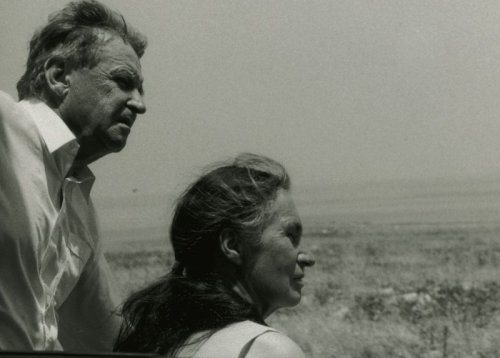
straubhuillet.jpg

Question: Can I ask Thom about his experience in working with the pair? How many takes did you do?

Andersen: Twenty

Question: And what did they tell you between takes?

Andersen: Oh, Danièle said: “Don’t be lazy with your eyes.” That’s all I can remember. In your film, they said something about Christian Heinisch, the star of Class Relations, this young kid who was extremely bright, and because he’s been working with them for so long on this movie, three months or so, he understood what they were doing really well. Don’t they say he was the only actor they ever worked with who knew how to look?
Another story may relate to something Pedro was saying. This was a big production for them, it was a very long shooting schedule, three months or something. Most of the film was shot in Hamburg, but at the end they made one trip to the US, with two or three of the actors and the crew. But the crew was only six or seven people. There were two sound people, a kind of line producer, the director of photography, his assistant, maybe two lighting guys.
But the whole film was made for $250.000, shot in 35mm black and white. They did 20 or 30 takes of each shot. So they said, “You know, in a way we’re the richest filmmakers in the world.” Because they had found a way of working which enabled them to do what needed to be done, to do as many takes as they thought were necessary, by simplifying other aspects of the production. It makes a difference: when you have a crew of six people, you can be a director; when you have a crew of a hundred, catering trucks and all this, you’re not really an artist, you’re a general commanding an army, which is a different kind of work. Not necessarily evil work, just different. And it was like a close-knit family, everybody went to dinner at the same restaurant, everyone stayed at the same hotel and drank in the hotel bar after dinner. Well, Danièle and Jean-Marie didn’t hang out in the bar. They would edit.
What else can I say? Oh, one thing: you can make what you will of it, but I was impressed. I came a little earlier than was necessary for the scenes that I was involved in, and I watched them film for a while. There was this one location, and they filmed for the day with the actors and the crew. It happened to be the last day at this location, and everybody left (for the day), all the actors and the whole crew, but they stayed behind to clean up: they actually got down on their hands and knees and swabbed the floor of the location where they were working, so the place would be left the way they found it. So while everyone else was going out to dinner, they were doing the work that on any other movie would be done by the lowliest members of the crew.

Costa: Jean-Marie also said to me that his work as a director was much more about picking up cigarette butts than directing actors.

Question: You mentioned that in some ways you made this movie in response to a certain strain of criticism, both in France and America. Not being familiar with that body of literature, I was wondering if you could talk about that body of criticism?

Costa: go to your library.

Andersen: If you read French.

Costa: There was a moment, when I was 20 or so, there were two main forces for a person who liked cinema: Godard and Straub. And it was a very strong moment. In my case, when I saw the films, I was much closer to Straub than Godard. I still am. For me they are much closer to my beliefs on sensuality, violence, or tenderness. Perhaps it’s just really that there’s something more crude and raw, without camouflage, you know. That was what I liked about Straub. Actions to me found correspondence in Straub, not in Godard. Godard seemed very old to me, suddenly, when I saw all of Straub’s films. They were the fastest, the most furious, the most beautiful, sensual, ancient, modern. There was no doubt for me. The problem was convincing the others.
So I had these texts that sometimes didn’t help. Some were good, but let’s say the textual atmosphere around Straub was a bit… it didn’t talk well about this principle of sensuality in cinema. And that’s what I wanted to remember in this film, the feeling when I was young. They say it all the time. When they say, “it’s not true that in our films there is no psychology,” they are talking about that. They’re saying if you work well, you will have something. And they don’t avoid the words “emotion” or “tension.” And you can see how film is a movement, it’s a tension that you have to keep going in this editing room until the end, and it’s very, very difficult to maintian this tension, because it’s a tension you will probably have in life also if you do this kind of work. And another problem is that this tension is not bearable. It would be good to have this tension every day, every second, but it’s not possible. They perhaps are the people that go… they go very far in this. When I say “tension,” I could say “intense,” but no, it’s tension, a nervous sensibility, an attention to things, the kinds of details you see in the film. You have to be really, really attentive to see these kinds of things. You cannot maintain that all your life every day, it’s exhausting. But everybody should live that in that kind of way. That’s what they tell us, I think. Everybody should be as tense as a Bach composition – and let’s not say “complicated” or “difficult.” Let’s say “tense,” it’s much more simple, I think.

Question: So is that the reason Straub is referred to more than Huillet, because he was the primary author of these texts? Did he engage in these intellectual debates with Godard?

Costa: The essays are essays that people wrote about them, everything that people wrote in newspapers and magazines, some schools. Sometimes they said “Marxists,” they said “Maoists,” they said “terorists,” they said “formalists,” “Eisensteinians,” “Fordians,” It could be everything and the opposite. What I didn’t like was that people like you, people who don’t know the Straubs even today, can be blinded by these kind of things. So let’s see the films first, and then you can read, great texts on the Straubs – and I’ll tell you a lot of them – and then you can perhaps forget these “Maoist-Marxist-terrorist-hard intellectual” labels.

Andersen: Or maybe you could say there was a time when their films got reduced to being debating points in intellectual arguments. The films became objects to theorize about, and the theorizing wasn’t good enough. But there was another question she was posing: while they are equal collaborators, why do people often talk more about Jean-Marie than about Danièle?

Costa: You know as much about that as I do. I think because he’s the man – that’s point one – and a filmmaker is a man. I think also because she likes to be where she is. There is always this show-off in Jean-Marie. Jean-Marie is really an entertainer, let’s say. He would have liked to be the James Dean of the north of France when he was young, but he’s a genius, so… Danièle says you can be a genius for them, but you’re a distaster at home. He’s the boy, like you see. And Danièle is the woman: she takes care of him. They have been editing like you saw since the beginning, but in the first two films, the credits say, “Directed by Jean-Marie Straub,” and Danièle is the editor, or the producer sometimes. Then it changed to “Directed by Jean-Marie Straub and Danièle Huillet”, and now it has changed to “A film by Danièle Huillet and Jean-Marie Straub.”

Andersen: I think another thing is if you listen to them talk, or read the transcript of one of their interviews, Jean-Marie will go on for 20 minutes, and then Danièle will say one sentence that sums everything up. He talks a lot, but in a certain way she has more to say. She’ll cut to the chase, as it were, and say what he was trying to say over those 20 minutes. You can see it in the texts of the interviews that have been published.

Costa: And she corrects a lot of his misspellings and dates. When he says, “1914,” she says, “It’s ’24.” Or, “It’s not them, it’s they” – these kind of things; But seeing them work like I have, you can see more of Jean-Marie on the set. He’s more agitated, more behind the camera – it’s his job to be behind the camera, whereas she’s more of an art director, and likes to be with the actors.

Andersen: In my experience, on the set, Jean-Marie works on the image, and Danièle is directing the actors and working with the sound.

Costa: But she also does the clothing and the props, everything else. But I think a part of this very beautiful movement that their films have comes from her. This rhythmic fury that they have comes from her, because she’s so controlled. It’s like Moses and Aaron (1975): she’s the mouth of Jean-Marie in the film. She has this nervousness in he cutting, but she’s very calm and controlled. She’s tense too, but more controlled than Jean-Marie, who can be hyper-sentimental, and sometimes very melancholy also. So her work is to pull hum out of that dark place, saying, “Shut up,” or like they say, he’s always talking rubbish, and she says, “There’s a way of not talking rubbish in life: just shut up.” But it’s a collective work, it’s a duel, it’s not one person. It has never been, I think. Because they love each other so.

Danièle Huillet passed away 11 days after this dialogue took place, on October 9, 2006.
Kramer on Newsreel

rkice.gif

by Robert Kramer

Published in Film Quarterly, winter 1968, as part of a special feature on the Newsreel filmmaking collective. As found on Donal Foreman’s blog. Kramer’s “Vietnam Trilogy”, consisting of ‘People’s war’ (1969), ‘Point de départ’ (1993), and ‘SayKomSa’ (1998) will be shown at KASKcinema on February 21, as part of the “Figures of Dissent” series.

We began by trying to bridge the gap between the states of mind and ways of working that we were accustomed to as film-makers, and the engagement/daily involvement/commitments of our political analysis and political activity. This had immediate implications—not only for our film-making, but for interpretations of what, as film-makers, as people in a struggle against established forms of power and control, against established media of all forces, we had to do with or without cameras.

In regard to our films. I think we argue a different hierarchy of values. Not traditional canons of “what is professional,” what is “comprehensive and intelligent reportage,” what is “acceptable quality and range of material.” No. Nor do we accept a more sophisticated argument about propaganda in general: that if the product isn’t sold well, if the surface of the film (grainy, troublesome sound, soft-focus, a wide range of maladies that come up when you are filming under stress) alienates, then the subject population never even gets to your “message” about the product—they just say, “Fuck that, I’m not watching that shit.”

The subject population in this society, bombarded by and totally immersed in complex, ostensibly “free” medcia, has learned to absorb all facts/information relatively easily. Within the formats now popularised by the television documentary, you can lodge almost any material, no matter how implicitly explosive, with the confidence that it will neither haunt the subject population, nor push them to move—in the streets, in their communities, in their heads. You see Cleaver or Seale on a panel show, and they don’t scare you or impress your or make you think as they would if you met them on the street. Why? Because they can’t get their hands on you? Partly, sure. (Fear and committed thought exist in terms of the threat that power will be used against you—in terms of the absolute necessity of figuring out what has to be done—noe in terms of some vague decision to “think it through” in isolation.) But also, because their words are absorbed by the format of the “panel show,” rational (note well: ostensibly rational) discussion about issues that we all agree are important and pressing, and that we (all good liberal viewers) are committed to analysing. Well: bullshit. The illusion of the commitment to analyse. The illusion of real dissent. The illusion of even understanding the issues. Rather, the commitment to pretend that we’re engaging in reality.

OK. At the point when you have considered this argument then you start to make films with different priorities, with shapes justified in a different way. You want to make films that unnerve, that shake assumptions, that threaten, that do not soft-sell, but hopefully (an impossible ideal) explode like grenades in peoples’ faces, or open minds like a good can opener. We say: “The things you see in these films are happening at this moment, they are our ‘news,’ they are important to us and do not represent the droppings of a few freaks, but the activity of a growing wave of people, youir children who were fighting the pigs at Columbia, your brothers who deserted the army, your former slaves who will not now accept your insufficient reparations, etc., etc. You know this reality. You know enough to know that this is real—now deal with it, because soon it’s going to come to deal with you, in one way or another.” The effect of our films is more like seeing 250 Black Panthers around the Oakland Court House, or Columbia students carrying on the business of revolt at Kirk’s desk, or Free Men occupying the streets of Berkely, than listening to what some reporter tells us about what these people might have said, and how we can understand “rebellion” psychologically. We strive for confrontation, we prefer disgust/violent disagreement/painful recognition/jolts—all these to slow liberal head-nodding and general wonderment at the complexity of these times and their being out of joint.

We want a form of propaganda that polarises, angers, excites, for the purpose of discussion—a way of getting at people, not by making concessions to where they are, but by showing them where you are then forcing them to deal with that, bringing out all their assumptions, their prejudices, their imperfect perceptions.

We shoot as best we can—but we shoot what’s important to us, what meets our perceptions of our lived reality; we cut according to our priorities, our ideologies, not “to make it plain and simple to them.” Not to present a “line.” Not to present the lived reality as less complex than it really is. Not to enter into that sterile game: modulating our emotions and intensities and intelligences in some vain hope that by speaking your language your way we can persuade you. No, we know the effective outcome of that: only the acceptance of another of the subtle forms of domination and control. Now we move according to our own priorities, and we are justified in this by objective conditions. Five years ago, for example, such a decision would have been suicidal. Our movement was only emerging—few people knew anything about it—few people were involved. But now, all our audiences (and our audiences represent the full spectrum of the society) know the essence of what we’re talking about. They read it every day in every paper digested and shaped to their preconceptions. So now we present it to them in its nakedness, in our true understanding of it, not vitiated by analyses and “in-depth studies” that we do not accept, but just exactly what counts from our point of view. The established media have done the job of popularising: now we must specify and make immediate; convert our audiences or neutralise them; threaten.

Our films remind some people of battle footage: grainy, camera weaving around trying to get the material and still not get beaten/trapped. Well, we, and many others, are at war. We not only document that war, but try to find ways to bring that to places which have managed so far to buy themselves isolation from it.

So, to return to the issue of propaganda. Our propaganda is one of confrontation. Using film—using our voices with and after films—using our bodies with and without cameras—to provoke confrontation. Changing minds, altering consciousness, seems to us to come through confrontations, not out of sweet/reasonable conversations that are one of the society’s modes of absorbing and disarming dissent and movement, of giving that illusion that indeed we are dealing with “the issues.” Therefore we keep moving. We keep hacking out films, as quickly as we can, in whatever way we can.

To all film-makers who accept the limited, socially determined rules of clarity of exposition, who think that films must use the accepted vocabulary to “convince,” we say, essentially: “You only work, whatever your reasons, whatever your presumed ‘content,’ to support and bolster this society; you are part of the mechanisms which maintain stability through re–integation; your films are helping to hold it all together; and, finally, whatever your other descriptions, you have already chosen sides. Dig: Your sense of order and form is already a political choice. Don’t talk to me about “content”—but if you do, I will tell you that you cannot encompass our “content” with those legislated and approved senses, that you do not understand it if you treat it that way. There is no such thing as revolutionary content, revolutionary spirit, laid out for inspection and sale on the bargain basement counter.

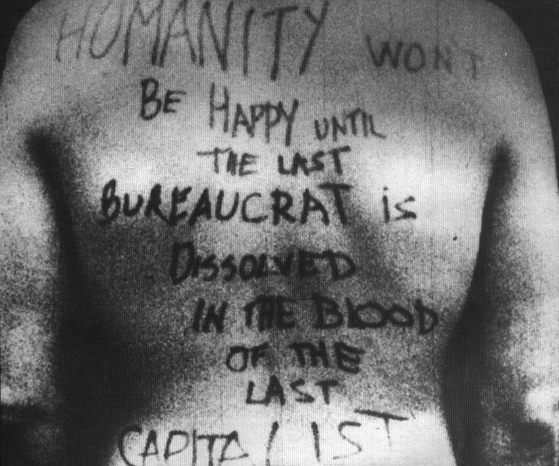
(image taken from Ice, made by Robert Kramer and the Newsreel Collective in 1970)

Venturas Letter

juventude-photo1.jpg

By Jacques Rancière

Originally published as ‘La Lettre de Ventura’ in Trafic #61, spring 2007. Pedro Costa will participate in the next DISSENT! session in February 2013.

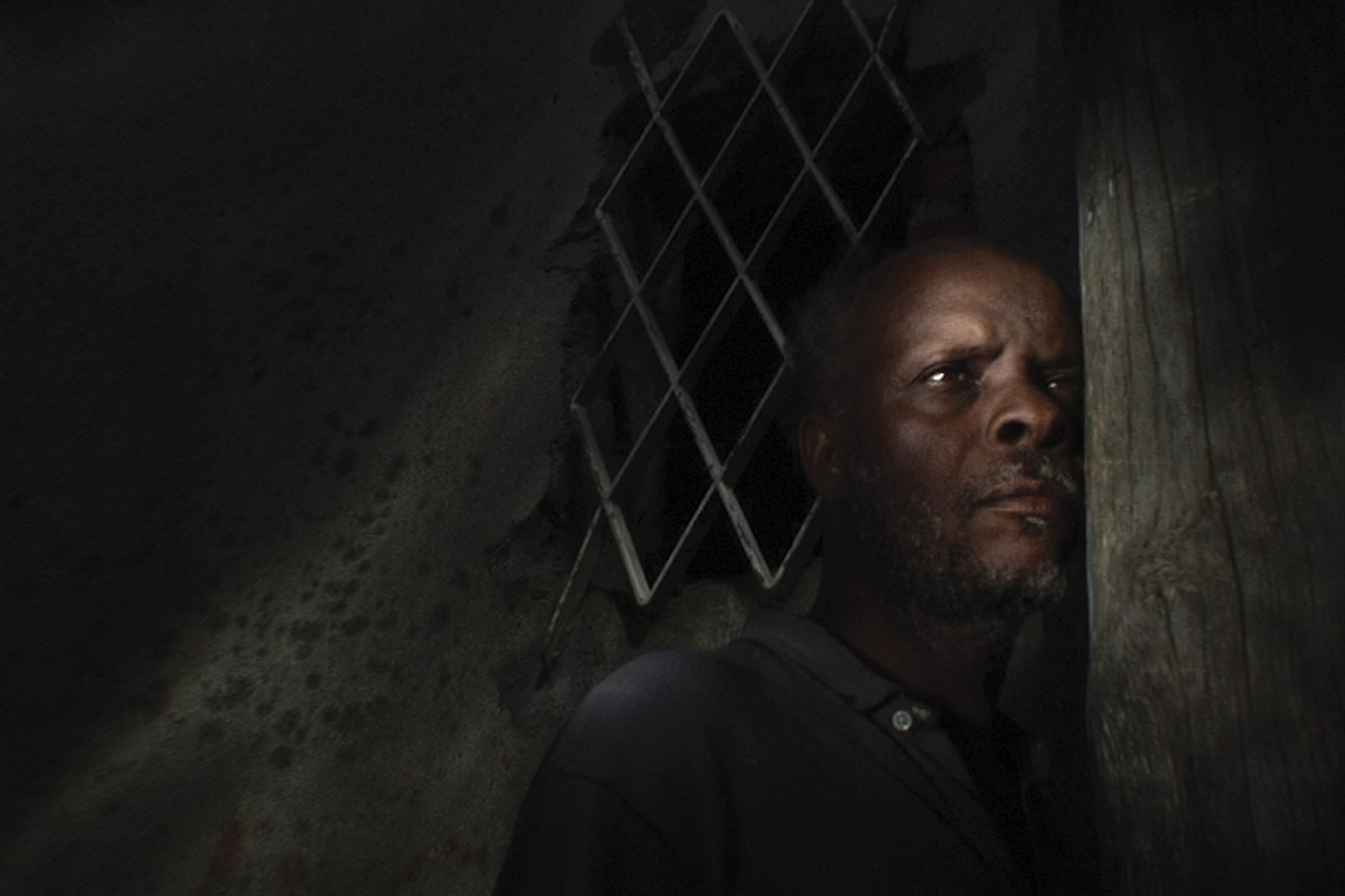
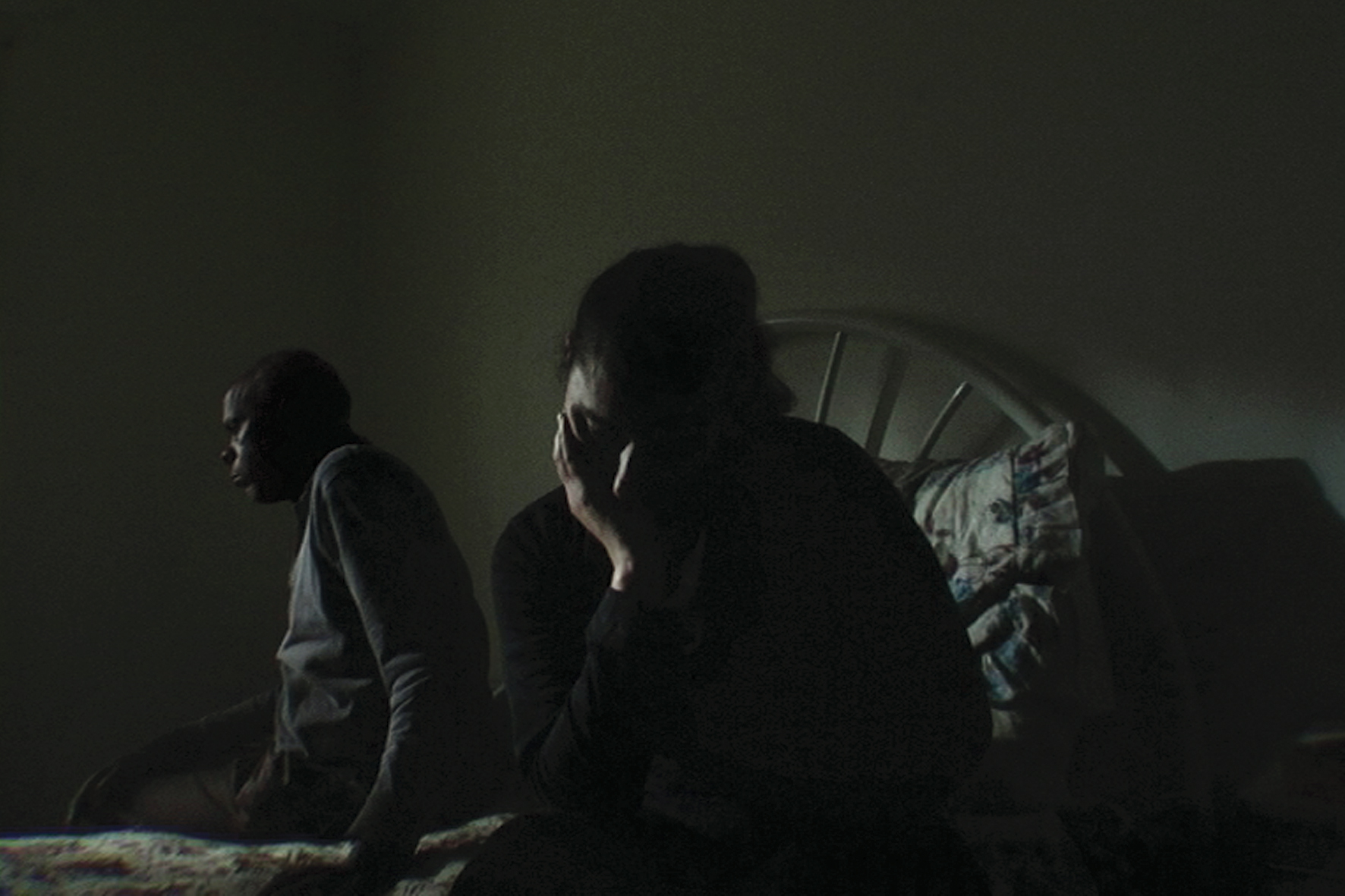
A change in dimensions: this is how we could sum up the novelty of Colossal Youth, the third and most beautiful film of the trilogy that Pedro Costa has dedicated to the inhabitants of the shanty town of Fontainhas, which has now been destroyed. In the beginning, there are high walls with grey metallic hues glistening in the half-light. We see objects passing through a window before crashing on the ground. In the next shot, a woman stands beneath us, appearing as an ancient fury, holding a knife that also seems to serve as a torch, lighting up the dark. She speaks, like one recites a monologue, to recount how she, when still a child in Cape Verde, would go in the water without fear of sharks and without responding to the boys on the shore, who would carefully mutter words of love. Before long the two sequences will find their “explanation”: the woman, Clothilde, has put her husband, the old construction worker Ventura, at the door, and thrown his furniture out of the window. But this is not the essential thing: it is rather to be found in the space constructed by this ouverture, in the tonality that it brings to the story. We are apparently very far from the space and the characters of In Vanda’s Room. In this film, the camera edged its way through the maze of small streets, finding shelter in the corners of narrow rooms, dwelling at the height of its characters, who were half asphyxiated, discussing their lives inbetween two doses of drugs. Here the space has opened up, the camera aimed at the top of this high walled building that looks like some ancient or medieval fortress and from where this woman appears, with a savage appearance, a noble way of talking, and a theatrical intonation that brings to mind Clytemnestra or Medea. Ossos and In Vanda’s Room presented us with young marginals sorting out their lives day by day. Colossal Youth is built around two mythological figures coming from far away, from the dawn of time. First of all Clotilde, who we won’t see anymore, but who continues to haunt the words of the chased away husband, who asks his large family for a place to stay and at one point tells his “daughter” Bete how he had tamed the wild child one independence day when she had (falsely) sung a hymn to liberty; then there’s Ventura, figure of a fallen lord, as if exiled from his African kingship, having become unfit to work due to an injury and unfit for social life due to a head fracture. Sort of a sublime wanderer, inbetween Oedipus en Lear, but also between the Fordian heroes Tom Joad and Ethan Edwards.

en-avant-jeunesse.jpg

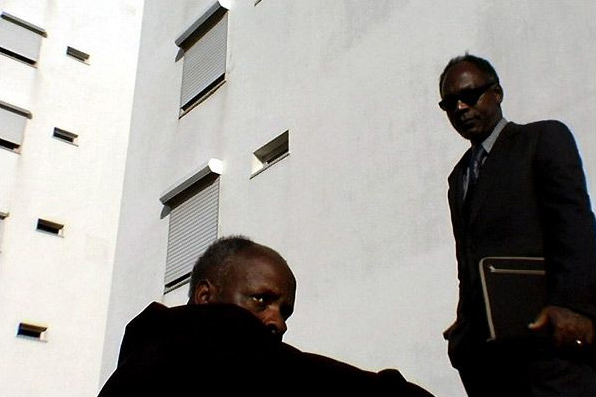
Tragedy has thus invaded the domain of the chronicle. In Vanda’s Room struggled, shot after shot, to release the poetic potential of the sordid decor and the smothered speech of wasted lives, to reconcile, beyond every form of esthetisation of misery, the artistic potentialities of a space with the capacities of the most displaced individuals to regain their own destiny. Its emblematic image was given by this episode where one of the three squatters persisted, out of an esthetical concern, to scrape away the stains from a table destined to be squashed by the jaws of the demolition machines. But the figure of Ventura straightaway resolves the problem: here there is no misery to be elevated by the camera. Between the camera and Vanda, now a mother revalidating from detoxication, or Nurro, who has become an honorable employee, intercedes Ventura, figure of tragic destiny, standing out from the white walls of new appartement buildings and the images of televison series. He is not a disabled unemployed whose difficult reintegration we get to follow, but a prince in exile precisely refusing all “social” rehabilitation. This is strikingly illustrated by two episodes of the film, two incursions of Ventura in a space where he is displaced, two confrontations with blood brothers who have played the game of integration. First the visit to the new apartment where the municipal office worker, in front of the window, lists up the advantages that the cultural and sports facilities in the area provide to Ventura’s “wife” and “children”. Ventura, dark silhouet with his back turned to us, slowly lifts a majestic arm towards the ceiling: “there are spiders everywhere”, he simply says. With one gesture the relation between the social housing administrator and the obligee is turned around. In his attitude, the old builder has mobilized the two sciences separated by tradition: the art of means, the mechanical art of the building constructor, and the art of ends, the art of one who knows how to inhabit the buildings. The white uninhabitable walls overflown with the noise of Vanda’s television are in contrast with the grey walls of this shanty where Bete – who hasn’t moved yet – and Ventura, with his head on the knees of his “daughter”, decipher the fantastic drawings created by the hazards of living and the mold of the building itself: the art of living of the poor ties in with this reading of aleatory figures celebrated by the painter par excellence, Leonarda da Vinci.

juventude-photo4.jpg

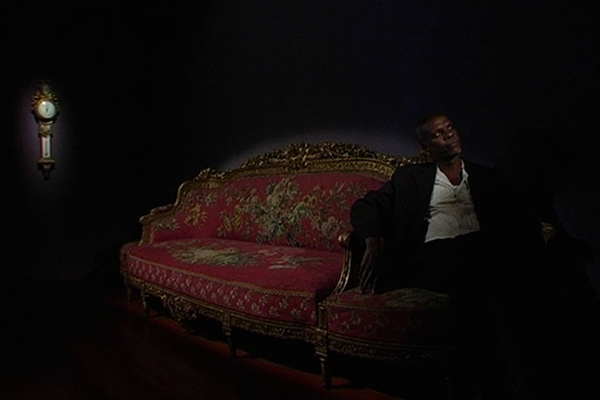
This relation between great art and the art of living of the poor is the whole subject of the film. It finds its spectacular illustration in another episode, the visit to the museum, as far as we can talk of a visit: the film actually transports us without narrative transition to a room in the Gulbenkian Foundation, where we find Ventura leaning against a wall, between Rubens Portrait of Helena Fourment and Van Dyck’s Portrait of a man. In silence, an employee of the museum, black just like the city employee, signs Ventura to leave, before taking a handkerchief and eracing the traces the intruder left on the ground, just like the housing agent before him erased the trace of his face on the white wall of the new appartement. Later he comes back to Ventura, who’s sitting in a rather meditative fashion on a Regency sofa, and makes him leave, still in silence, through the service door. The employee is happy with his work, far away from the cosmopolitan and crooked wildlife of supermarkets. Here, he quietly says to Ventura, we find peace, except when people like us come here, which is rare. Ventura does not reply to his words. Seated above him without looking at him, underneath some garden trees, he talks about the country where he comes from, of the swamp it used to be and the frogs swarming on the domain he has excavated and refurbished, and where he has put gravel and lawn, before pointing with an imperial hand gesture to the place where he fell off a scaffold one day. It’s not about opposing the sweat and pain of museum constructors with the esthetical pleasure of the rich. It’s about confronting history to history, space to space, speech to speech. The treatment of speech actually ruptures with the two preceding films. The fiction of Ossos was under the sign of a certain mutism, that of Tina, the young mother, overtaken by the life she had passed on. In Vanda’s Room assumed, with the appearance of a documentary, the tone of a conversation between four walls. Colossal Youth installs breaks between two different regimes of speech. On one hand, there is the conversation continuing in Vanda’s new room, the room of the mother who’s become slightly more affluent and “bourgeois”, cluttered up by this conjugal bed with supermarket design, continuously filled with the sound of this television set of which we don’t see the screen. Vanda talks about her difficult return to the norm on the same familiar tone as before. Ventura does not converse. Often he remains silent, imposing the somber mass of his silhouet or the force of a look that perhaps judges what it sees or wanders elsewhere, but in any case resists all interpretation. The speech emerging from this silence, seemingly feeding from it, varies between the lapidary formula, similar to an epitath or a hemistich of a tragedy, and lyrical diction. It is this modus that he evokes, behind an interlocutor he doesn’t look at, his departure from Cape Verde on a big plane on 19 August 1972, reminding us of another departure, the one of a poet and his two friends in a small car, on 31 August 1914 *.

juventude.jpg

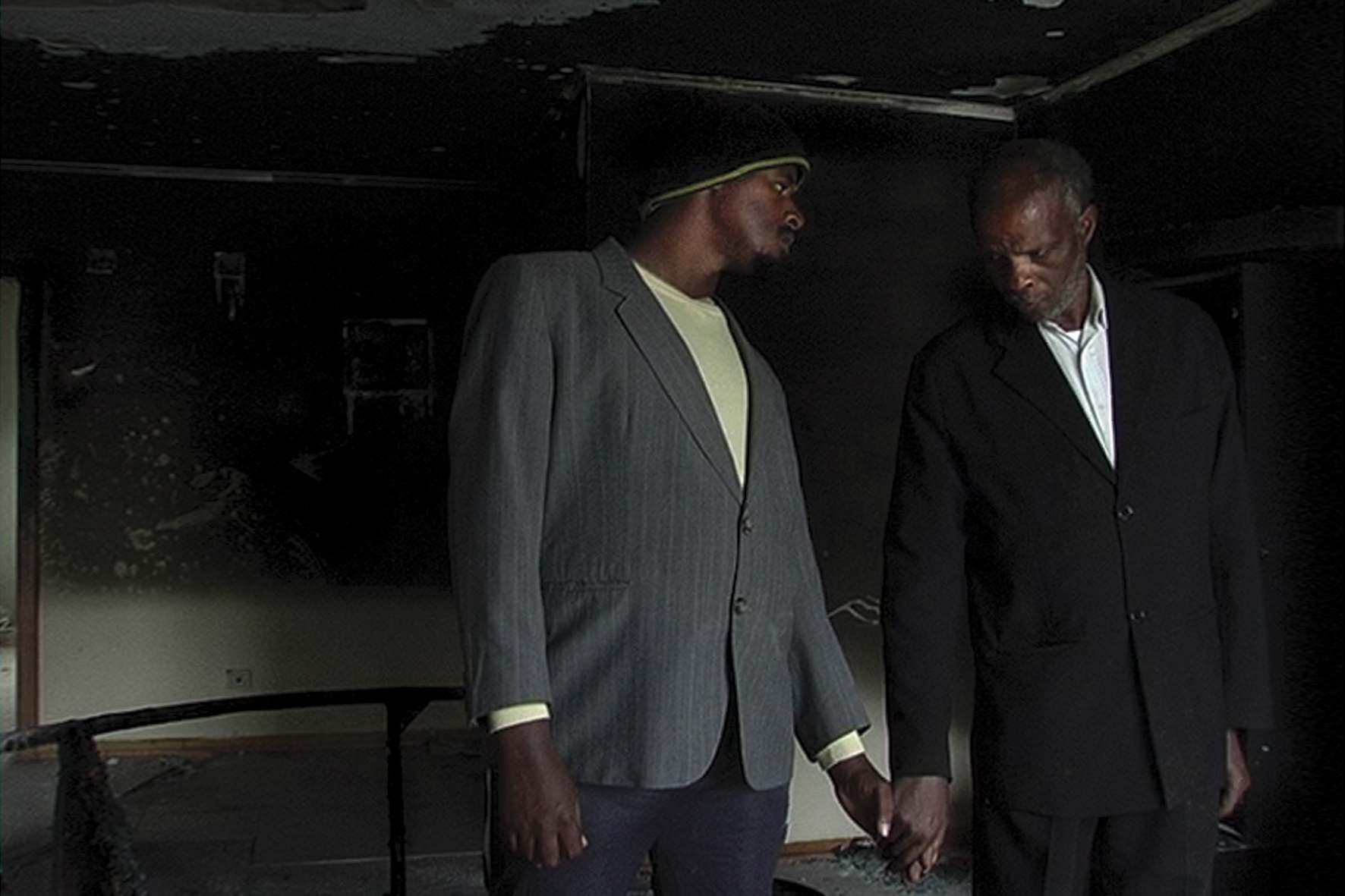
Hearing this well-learned speech seemingly emanating directly from the heart of a being and his history, rather than the lips of a speaker, it is difficult not to think about the art of the filmmakers Pedro Costa has dedicated a film to, Danièle Huillet and Jean Marie Straub. They transformed Vittorini’s narratives in oratorio scores to put them in the mouth of men of the proud people who, while vocalizing the text without looking at any interlocutor, attested to the identical capacity of the poor with work made by skillful hands, noble language and the construction of a new common world. Here we feel, more than in any other film by Pedro Costa, the echo of the cinema lesson of the Straubs. Yet the film presents a dispositive of an ensemble that is different from the poetics and politics of the Straubs. The nobleness of the life of anyone is conveyed here in two different ways: on one hand the conversational modus of In Vanda’s Room, on the other the “literary” modus, which is well suited for this mythical space set out by Ventura’s wanderings between the slums and the new houses, between past and present, Africa and Portugal. But the great speech of which Ventura has the monopoly, at the price of slightly subduing Vanda and her words, is itself constructed in the patchwork modus. This is attested to by the wonderful episode with variations of the letter that gives the film its refrain: a letter addressed by the emigrant to the one who has stayed, at the same time speaking of the everyday of work or suffering, and love promising the loved one one hundred thousand cigarettes, a car, a dozen fancy dresses and a threepenny bouquet. Ventura modules the letter’s recitation in another way in order to teach it to Lento, the illiterate. At times he pronounces it as if lost in his daydreams, at other times with the authority of a teacher hammering the words in an unwilling head. In a sense, this is all the property Ventura has: the literary grandeur of the autodidact who “learns new words every day, beautiful words for you and me alone made to fit us both, like fine silk pyjamas.” Yet Pedro Costa has composed it from two different sources: real letters from emigrants – similar to those of which he was once the mailman and which have led him to Fontainhas – and a letter from a poet, one of the last letters Robert Desnos sent to Youki from the camp of Flöha. The words of the French poet who died in Terezin blend with those of the letters of immigration, to compose a partition of the same sort that Danièle Huillet and Jean Marie Straub distilled from Vittorini’s texts. Lento will never learn the letter, which he doesn’t need anymore anyhow, but in one of the houses devastated by fire, Ventura the madman, the lord, will put, still without looking at him, his hand in his and grants him the tragical dignity, the right to cry for the misfortunes of his friend, just like his friend cries for his own.

juventude-photo5.jpg

The difference in poetry is also a difference in politics. In order to affirm a political dignity of men of the people identical to their esthetical dignity, the Straubs have done away with the everyday misery of anguish and distress. Their workers and farmers offer us directly, in front of the only forces of nature and myth, some hours of communism, some hours of sensible equality. But Ventura, in spite of the film’s rousing title, does not propose any form of communism, past, present or to come. He remains the stranger untill the end, the one who comes from far away to attest to the possibility for each and every one of having a destiny, and being equal in his or her destiny. In the Straubs’ Vittorini films, the dialectical argument and the lyrical capacity was after all based on the collective epic of an eternal communism. In Pedro Costa’s work there is no epic unity: the political concern can not, in order to sing the communist glory, be dissociated from the laborious birth of any life. The capacity of the poor remains torn between Vanda’s familiair conversation and Ventura’s tragic soliloquy. Colossal Youth does not end with an open horizon of common adventure nor a closed fist of irreconciable rebelliousness. The film ends, like a pirouette, in Vanda’s room where Ventura, the man inventing his children, is assigned the role of babysitter. We can’t really make out if it’s him taking care of Vanda’s little girl, or if it’s the child looking over the dreams of a broken man. The faith in art attesting to the grandeur of the poor – the grandeur of whoever – shines here brighter than ever. But it no longer corresponds with the affirmation of a salute. Perhaps this turn is what has become of irreconciliation, of which Pedro Costa is today’s first poet.

* 1. Cf. Guillaume Apollinaire, ‘La petite auto’, Calligrammes, Gallimard, coll. ‘Poésie’, 1966, p. 67-68.

——————————————————————————————————————————————————————-

Translated by Stoffel Debuysere (Please contact me if you can improve the translations).

In the context of the research project “Figures of Dissent (Cinema of Politics, Politics of Cinema)”
KASK / School of Arts

——————————————————————————————————————————————————————-
Ventura’s Letter
English translation from the Cape Verdean Creole, corresponding to the subtitles on the Eureka! Edition of Colossal Youth

Nha cretcheu, my love,
being together again will brighten our lives for at least thirty years.
I’ll come back to you strong and loving.
I wish I could offer you a hundred thousand cigarettes, a dozen fancy dresses, a car, that little lava house you always dreamed of, a threepenny bouquet.
But most of all, drink a bottle of good wine and think of me.
Here it’s nothing but work.
There are over a hundred of us now.
Two days ago, for my birthday, I thought about you for a long while.
Did my letter arrive safely?
Still nothing from you.
Some other time.
Every day, every minute, I learn beautiful new words for you and me alone made to fit us both, like fine silk pyjamas.
Wouldn’t you like that?
I can only send you one letter a month.
Still nothing from you.
Some other time.
I often get scared building these walls.
me with a pick and cement, you with your silence, a pit so deep, it swallows you up.
It hurts to see these horrors that I don’t want to see.
Your lovely hair slips through my fingers like dry grass.
Often, I feel weak and think I’m going to forget you.
Ventura.