23 March – 11 May 2019, CINEMATEK, Brussels. In collaboration with Courtisane, curated by Stoffel Debuysere & Céline Brouwez.
“We think ourselves in love / we think ourselves fiercely rooted
still it always comes / the time of unraveled ties”
— Jean-Louis Murat, Le Lien Défait
This song by Jean-Louis Murat is not only the beating heart of one of the many unforgettable scenes in Claire Denis’s work, it also alludes to one of the themes that’s dear to her : the fragility of human relationships — the filiation between brother and sister in Nénette and Boni, or father and daughter in 35 Shots of Rum, but also the passionate liaison between two fleeting lovers in Friday Night or the yearning for another portrayed as all-devouring hunger in Trouble Every Day. Over the course of thirty years, Denis has built up an idiosyncratic oeuvre that evokes a world in which amorous or familial relationships are never self-evident and in which characters relate to each other in a continuous game of attraction and rejection.
It is the attentive observation of characters who encounter each other through experiences of desire, pleasure, pain or fear that is central to Denis’s cinema. She once remarked, “capturing characters that are embodied by actors on film is what really interests me.” Hence the many dance scenes that run like a red thread through her films: just think of the aforementioned performance scene from I Can’t Sleep, but also the equally phenomenal dance scenes from Beau Travail or 35 Shots of Rum. They are all pulsating moments that are exemplary of the enormous emotional expressiveness that she knows how to extract from the patient and intuitive observation of moving bodies that are trying to position themselves in an environment where they do not always belong.
It’s no coincidence that music is a leading factor in Denis’s films: she regards music as an “ally” who has accompanied her life and work since France became her home, after having spent her first thirteen years with her parents in various colonial outposts in Africa. That childhood experience resonates strongly in her debut Chocolat and White Material, which paint a disconcerting image of the injuries and aftermath of French colonialism in Africa. But the concern for the experience of displacement and the relation to alterity can also be felt in the literary sources of inspiration that resonate in her films, ranging from Frantz Fanon’s study of the psychological effects of colonization to William Faulkner’s portrayal of the brutality of patriarchal and racial oppression.
“The desire to make a film is the desire to see others,” Claire Denis once said. Whether the focus is on a corps of the French foreign legion in Djibouti (Beau Travail), migrant communities in the margins of Paris (I Can’t Sleep), or, more recently, a prison ship adrift in another solar system (High Life), time and time again, Claire Denis’s films are characterized by a searching, sensing sensitivity towards worlds that are not necessarily her own. A sensitivity that she gladly shares with faithful long-term companions such as cinematographer Agnes Godard, co-writer Jean-Pol Fargeau, editor Nelly Quettier, composer Stuart A. Staples and actors such as Alex Descas, Grégoire Colin, Vincent Gallo or Béatrice Dalle. For Claire Denis filmmaking never implies less than “entering into a relationship”, in an intimate search for the ties that bind, for a connection in wonder, whose resonance will always be uncertain.
——
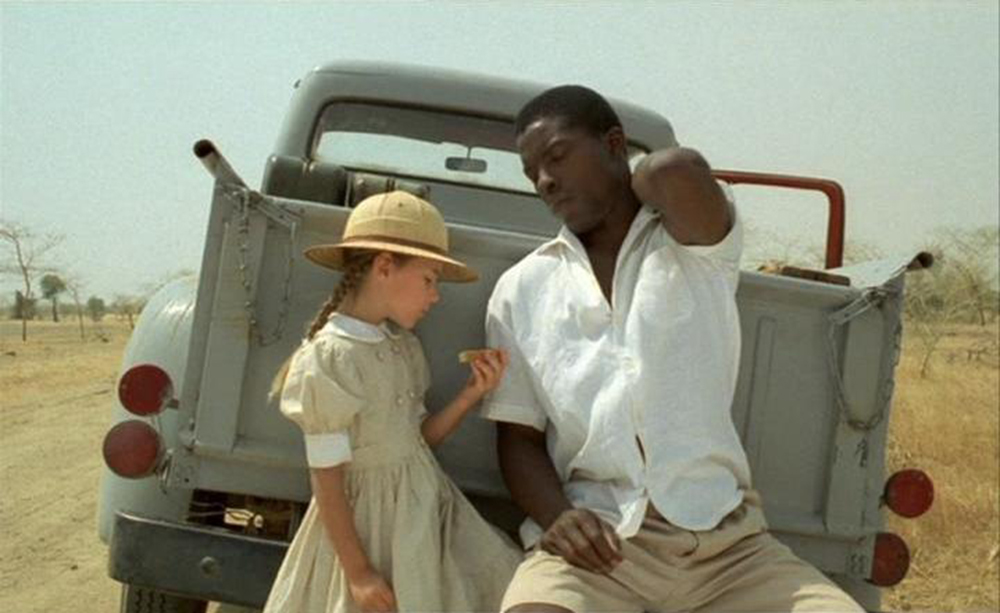
Chocolat
Claire Denis, FR, 1988, 35mm, colour, 105′
Claire Denis’s debut film takes her back to Cameroon, which is the setting for a semi-autobiographical meditation on the colonial experience. Denis focuses on the relationship between the young daughter of a white French state official (Cécile Ducasse) and the black servant of the family (Isaach De Bankolé) in the latter days of colonialism.
“The experience of white people is always the same. We approach, approach, approach, but we never quite reach the heart of Africa. In Chocolat, I always tried to maintain only the perspective of white people. I just didn’t think I should pretend to understand the black point of view.”

Man No Run
Claire Denis, FR, 1989, 35mm, colour, 90′
In her first documentary, Claire Denis follows the Cameroonian band Les Têtes Brulées – known for their interpretation of the traditional Bikutsi music – during their first European tour. Denis had previously met bandleader Jean-Marie Ahanda (who later also made an appearance in White Material) during the production of Chocolat.
“I kept in touch with them as I was editing Chocolat, and they wrote me a letter and told me they were coming to France for a tour, their first tour outside of Cameroon. So I managed to find a camera and some filmm stock and there we were. I didn’t forsee my career. Things happen.”
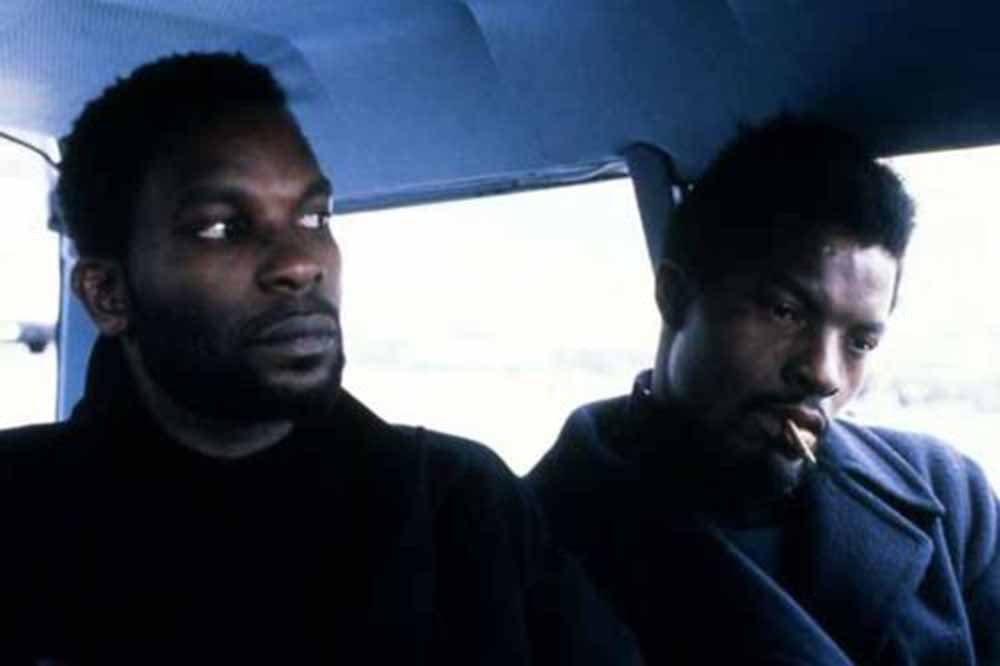
S’en fout la mort
Claire Denis, FR, 1989, video, colour, 93′
In this film, shot by cinematographer Agnès Godard, Claire Denis uses the handheld camera for the first time to explore the raw, claustrophobic world of two friends from the Antilles and Benin (Alex Descas and Isaach De Bankolé) who decide to take part to take part in illegal cockfighting in a suburb of Paris.
“During the camera tests, I thought we had to move together with the actors. That’s when we decided to mount the camera on the shoulder. At the same time I thought, in view of the clandestinity of the actors, that I could not film them in a fixed frame, nor with a travelling or traditional dispositif, but that we had to be clandestine with the camera in order to accompany them, as far as possible, even into the space where they trained.”

US Go Home
Claire Denis, FR, 1994, colour, 61′
An episode of Tous les Garçons et les filles de leur âge, a series of portraits of French youth culture in the period between the early 1960s and the late 1980s, produced by ARTE. Claire Denis drew inspiration from her own childhood and, together with Anne Wiazemsky, wrote the story of a young woman (Alice Houri) who, together with her brother (Grégoire Colin) and her friend (Jessica Tharaud), goes to a party to explore the volatility of social and sexual relationships.
“I hated parties, but I was excited about the importance of music in the series. When I was an adolescent, my records and record player were my secret. Alone in my room, I listened to the Animals, the Yardbirds, Ronnie Bird. The idea of using their music was a powerful motivation to make the film”

Jacques Rivette, le veilleur
Claire Denis, Serge Daney, FR, 1989, video, colour, 130′
An episode from the series Cinéma, de notre temps about Jacques Rivette, who himself came up with the idea to have his portrait directed by Claire Denis. In the company of Serge Daney, Rivette ruminates about his early days at Cahiers du Cinéma and the development of his oeuvre.
“Jacques Rivette had seen my documentary about the musicians (Man No Run) and asked me to make his portrait. He had already made the first film of the series, the portrait of Jean Renoir — to whom he was an assistant — and said, ‘Claire was my assistant, so she must make the film about me.’ I didn’t propose it myself. I received the assignment. I was terrified, but I did it anyway. Again, it is something that happened by chance.”

J’ai pas sommeil
Claire Denis, CH, FR, 1994, 35mm, colour, 111′
The infamous Thierry Paulin case inspired Claire Denis for this film. Paulin was a young, black, homosexual, HIV-positive man who, together with his lover, murdered nineteen elderly women in Paris in the 1980s. Denis approaches the murder case through a circumferential movement, whereby the focus is shifted to a multitude of surrounding stories and characters.
“I quickly understood that the only way to approach the mystery of this kind of murder was through a concentric circle. I thought about the Goose board game. After all, it corresponds to the street map of Paris. The film is constructed according to that logic: from the periphery we travel to the city and then to the 18th arrondissement. The only way to approach the killer that seemed right to me was through accidental connections and encounters.”

Nénette et Boni
Claire Denis, FR, 1996, 35mm, colour, 102′
Following the production of US Go Home (1994), Claire Denis wanted to give a second life to the collaboration with actors Grégoire Colin and Alice Houri. In Nénette et Boni, again, they play brother and sister. They become separated from each other’s lives in Marseille until they meet each other during Nénette’s pregnancy. The film is pervaded by references to films by Marcel Pagnol, Jean Cocteau and Jacques Demy and uses music from the Tindersticks for the first time.
“While US Go Home was completely improvised, Nénette et Boni is a film that is very close to me, immersing me in memories of a shot or a sequence. It’s very exhilarating and at the same time destabilizing, because life experience is the only matrix for me to do this work. The intellectual experience is not for me.”
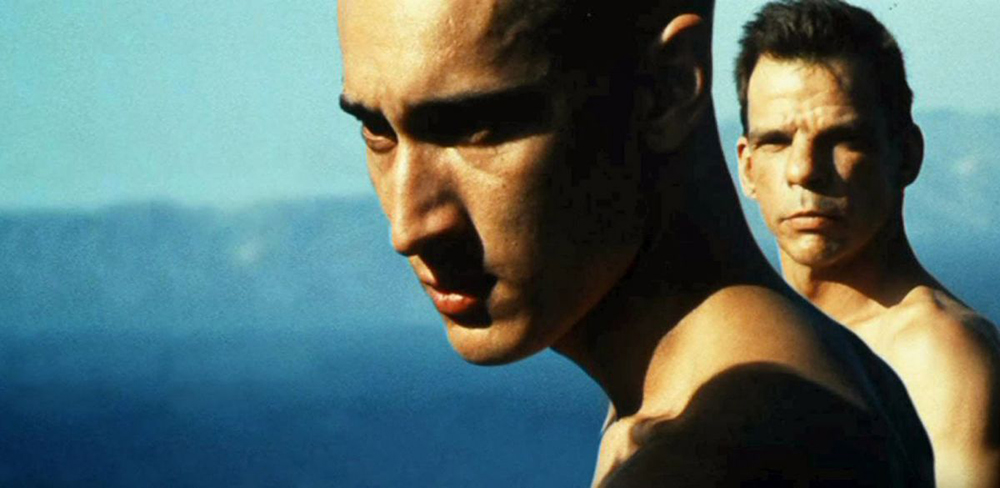
Beau Travail
Claire Denis, FR, 1999, 35mm, colour, 92′
Claire Denis’s undisputed masterpiece was created at the request of ARTE to contribute to the series Terres étrangères. The theme of the film led her to the work of Herman Melville, firstly his novel Billy Budd, Sailor and then to Benjamin Britten’s opera of the same name, and, on the other hand, to the idea of working around the French Foreign Legion in Djibouti (“For me, Africa is like the sea that Melville so dearly missed,” Denis said). The close collaboration with co-writer Jean-Pol Fargeaus, choreographer Bernardo Montet and actor Denis Lavant resulted in a miraculous “poetic rumination that pointedly doesn’t discriminate between major and minor events, intertwining both into a kind of endless magical tapestry” (Jonathan Rosenbaum).

Trouble Every Day
Claire Denis, FR, 2001, 35mm, colour, 101′
A film inspired by the desire to work again with actor Vincent Gallo and by the proposal to participate in a series of horror films. Claire Denis met the challenge by immersing herself in the fantasy novels of Joseph Sheridan Le Fanu and films such as Jacques Tourneur’s Cat People and Jean Cocteau’s La Belle et la Bête; but at the same, she time decided not to erase the horror of an erotic desire that manifests itself as a devouring hunger by simply suggesting it. Instead, she made it explicit.
“It seemed necessary to me to push current boundaries: for me, not showing the devoration scenes would have been unacceptable. I refused the comfort of the ellipse or allusion for the same reasons that kept me away from pastiche. When you tell such a story, you must confront it, accept it as it is, accept that it puts you at risk.”

Vendredi Soir
Claire Denis, FR, 2002, 35mm, colour, 90′
An adaptation of the eponymous book by Emmanuèle Bernheim, about a passionate one-night stand between a woman (Valérie Lemercier) and a man (Vincent Lindon). Claire Denis approaches the almost wordless exchange and the growing desire with tactile sensitivity, resulting in a lyrical ode to the enjoyment of unexpected encounters.
“However important it is to determine the frame of the mise en scene, it is equally important, for me, to accompany the actors in an intimate way. This was the main challenge in Vendredi Soir: how to be intimate without becoming voyeuristic? How can you penetrate something while keeping a certain distance from it? It is important for me, when I film an actor, to always preserve a certain degree of modesty.”

L’Intrus
Claire Denis, FR, 2004, 35mm, colour, 130′
L’Intrus is inspired by the eponymous book by philosopher Jean-Luc Nancy, an intimate reflection on the idea of intrusion following his heart transplant. Claire Denis transformed this story into an elliptical fiction in which a heart patient travels the world in search of a new heart, until he becomes confronted with his past in Tahiti. Denis also drew inspiration from R.L. Stevenson’s In the South Seas and Gauguin’s paintings from his South Pacific period.
“The idea of transplantation has always fascinated me. I often talk about transplantation in my work. It’s as if cinema can only be really interesting to me if there’s a transplant involved. There’s no such thing as literature on one side and cinema on the other. Cinema enters literature—it’s transplanted, as it were. Reading L’intrus meant a lot to me. The mental dialogue I have with that book keeps me busy to this day.”
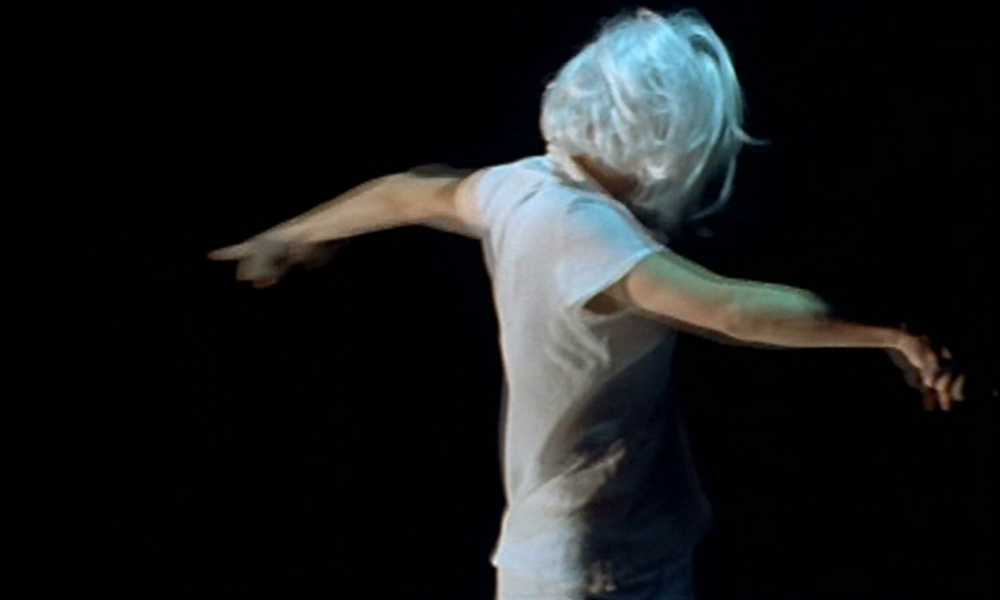
Vers Mathilde
Claire Denis, FR, 2004, 35mm, colour, 84′
Claire Denis’s portrait of the French choreographer Mathilde Monnier, with whom she shares a working relationship with Jean-Luc Nancy.
“Mathilde Monnier asked me to film one of her pieces. I told her that I didn’t have the time and that I wasn’t interested. However, because she was insistent, I proposed that I could film her work in my free time. We did it very simply: my brother did the sound, and Agnes or Ellen took care of the image. We worked like that for a year before we began to edit. I decided to focus on my relationship to Mathilde presenting her work, as if we were similar in our work processes. I felt that she wanted me to film her because she saw something similar in me, and she was right. We could be sisters.”

35 Rhums
Claire Denis, FR, 2008, 35mm, colour, 100′
An homage to the work of Yasujiro Ozu, in particular the father-daughter drama Late Spring (1949), but also to the relationship between Denis’s mother and her grandfather. A widower (Alex Descas) and his daughter (Mati Diop) live together in an apartment in a Parisian suburb, until the moment arrives to let go. With great tenderness, Claire Denis films the everyday rhythms of two closely connected people who are confronted with the passing of time.
“I once went to see some Ozu films with my mother, and I felt that the presence of the father in his films reminded her of her father — my grandfather. I felt increasingly inclined towards the desire to make a film about it. But in reality, I let go of the idea because I couldn’t immediately think of who could play that man. My grandfather was Brazilian; I could feel that he wasn’t French. Being a foreigner, it seemed as if his daughter was his only family. Even when I was little, I could see that he only had eyes for her.”

White Material
Claire Denis, CM, FR, 2009, 35mm, colour, 106′
For the shoot of White Material Claire Denis returned to Cameroon, where she spent a considerable part of her youth. With the encouragement of actress Isabelle Huppert and in close collaboration with writer Marie NDiaye, she created the story of a white coffee plantation owner who stubbornly tries to hold on to her land when a violent civil war breaks out. In this film, Denis returns to a theme that’s dear to her: the friction between intruding and belonging, between foreignness and sameness.
“The presence of foreign bodies in my work stems from my childhood. I myself have experienced how a foreign body feels and that’s also why I made the film L’Intrus, about the intrusion of a hostile body. That’s also what I wanted to do in White Material: show that even if white men think they are the rulers of the world, their whiteness is sometimes hostile.”
Aller au diable
Claire Denis, FR, 2011, 35mm, colour, 42′
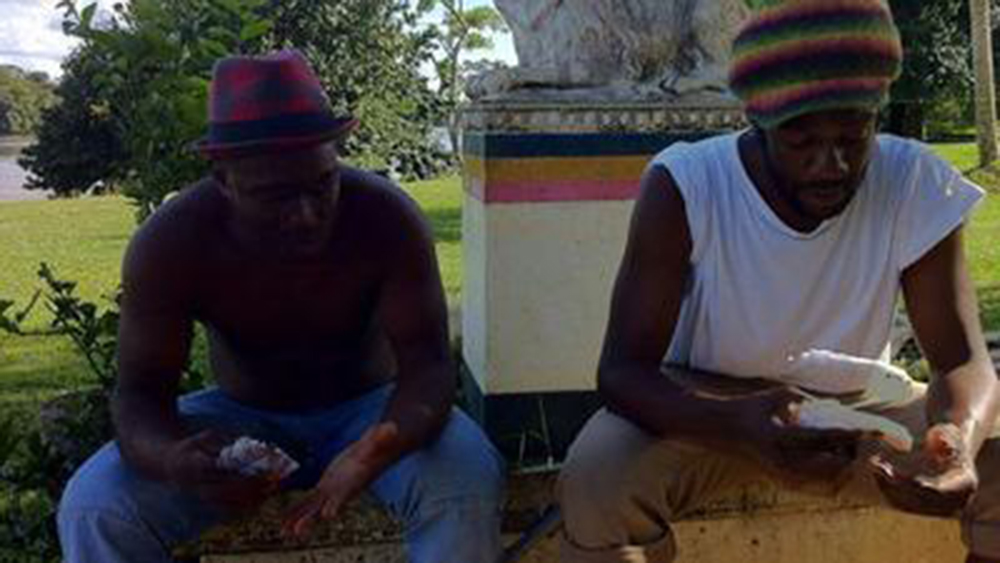
Commissioned as part of the Jeonju Digital Project, Aller au diable blends elements of autobiography with documentary interviews (including a conversation with the notorious outlaw gold-mining boss Jean Bena) as Claire Denis and actor Jean-Christophe Folly travel to French Guiana to research an upcoming feature film about the Alukus, a group of escaped former slaves who established their own society in defiance of corrupt local governments.
+

Le Camp Breidjing
Claire Denis, FR, 2015, HD, colour, 52′
Claire Denis’s contribution to the Réfugiés project by ARTE, who asked numerous filmmakers, photographers and artists to record testimonies of life in different refugee camps. Denis filmed Breidjing camp, in the East of Chad. Over the past ten years, the camp has developed into a real city where more than forty thousand refugees from Darfur live.

Les Salauds
Claire Denis, DE, FR, 2012, DCP, colour, 100′
Encouraged by the challenge of her producer to write a film off the cuff, Claire Denis and co-scenarist Jean-Pol Fargeau invented a dark revenge drama in the spirit of Akira Kurasawa’s The Bad Sleep Well and William Faulkner’s Sanctuary. The result is an elliptically structured fate tragedy in which a sailor (Vincent Lindon) returns to Paris and ends up in a tangle of twisted family relationships, sexual exploitation and manipulation.
“I didn’t feel like I was nearing an abyss. I knew we were on the front line, certainly: death is present from the beginning until the end of the film. For me, there is nothing stronger than thinking about what is forbidden and why it is forbidden. I’m talking about what is morally forbidden. What we call taboo only exists because it is inherent in human nature.”

Un beau soleil intérieur
Claire Denis, FR, 2017, DCP, colour, 94′
The proposal to make an adaptation of Roland Barthes’s Fragments d’un discours amoureux inspired Claire Denis to write a film, together with writer Christine Angot, about the agony of love. Juliette Binoche shines as Isabelle: a divorced woman, around fifty years old, who’s looking for true love. The way in which Denis portrays the encounters, uncertainties and disappointments of her protagonist shows extraordinary warmth and intelligence.
“For me, Juliette is still the young girl I discovered in Téchiné’s Rendez-vous. Her character still believes in love. With all her body confidence, Juliette stands for the absolute parade against death. Agony is what controlled me when I was young myself. Here, however, we see the exploits of a woman who wants something that suits her.”

CLAIRE DENIS SHORTS
Bibliothèque modèle pour les enfants (Chroniques d’en France n°87)
Claire Denis, FR, 1973, 16mm, colour, 7′
À propos de Nice, la suite: Nice, Very Nice
Claire Denis, FR, 1994, colour, 10′
Voilà l’enchaînement
Claire Denis, 2014, DCP, colour, 30′
Ten Minutes Older: The Cello:Vers Nancy
Claire Denis, FR, 2001, Digibeta, b&w, 10′
Le 15 Mai
Claire Denis, 1969, video, colour, 28′


