In Between Times

InBetweenTimes

In the context of the Courtisane Festival 2016 (23-27 March).

“I believe people accept there is no real alternative.” Thus spoke the Iron Lady. After the freezing Winter of Discontent came the long-awaited ‘winter of common sense’. An era is drawing to a close, she claimed, meaning that the time for foolish dreams and misguided actions was over. There were to be no more diversions from the one and only course worth pursuing: that leading to the triumph of global capitalism and liberal democracy. While those in power started to pursue vigorous reform programs of neoliberal economic policy and regressive social agendas, some of those who lost their bearings blamed the ‘bloody-minded’ commoners for having invited the ravages brought upon the dreams of another future. As the memories of struggle faded, counter-forces retreated to a defensive position, where they could merely see fit to protect the freedoms and entitlements that had been acquired with so much grit.

“Wanting to believe has taken over from believing,” a filmmaker observed. But the uncertainty did not stop filmmakers from making films, just as it didn’t stop movements from occupying the spaces that the traditional counter-forces had excluded and abandoned. Instead of holding on to the plots of historical necessity and the lures of an imagined unity, they chose to explore twilight worlds between multiple temporalities and realms of experience, situated in the wrinkles that join and disjoin past futures and future presents, memories of struggle and struggles for memory.

This program presents a selection of British films that have documented and reflected on the changing political landscape in a period that stretched from the mid-1970s to the beginning of the 1990s. At its core is the work of a filmmaker who was pivotal within Britain’s independent film community: Marc Karlin (1943-1999). He was a member of Cinema Action, one of the founders of the Berwick Street Film Collective, director of Lusia Films, and a creative force behind the group that published the film magazine Vertigo. Described by some as ‘Britain’s Chris Marker’(with whom he was befriended), he filmed his way through three decades of sea change, wrestling with the challenges of Thatcherism, the demise of industrial manufacturing, the diffusion of media and memory, the crisis of the Left and the extinguishing of revolutionary hopes.

The work by Marc Karlin and the other filmmakers in this program allows us to feel the pulse of an era of transition, whose challenges and transformations are still with us today. At the same time that the Iron Lady is being immortalized as ‘a force of nature’, while the arguments for the austerity policies that she championed are crumbling before our eyes, a time when the present is declared to be the only possible horizon, it may be worth our while to revisit this era, if only to discover that history is not past – only its telling.

In the framework of the research project “Figures of Dissent” (KASK/Hogent).
Special thanks to Andy Robson and Federico Rossin

———————————————————————————————–
ibt_1_Nightcleaners_02_0

THURSDAY, MARCH 24, 2016 – 12:30 – KASKCINEMA
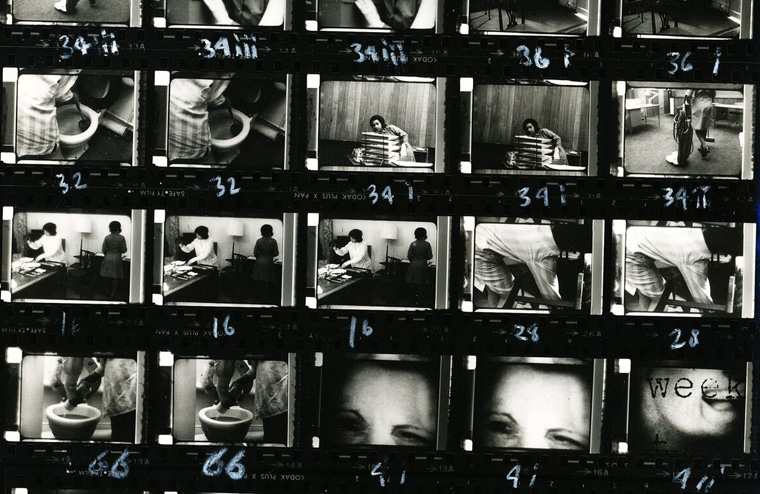
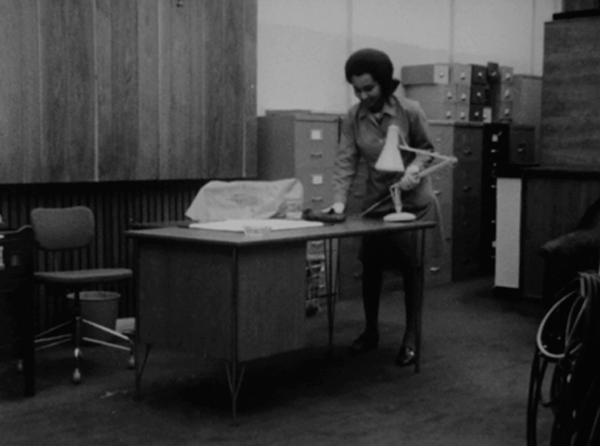
Nightcleaners
Berwick Street Film Collective, UK, 1975, 16mm, video, 90′

Nightcleaners was originally conceived by members of the Berwick Street Film Collective as a campaignfilm about attempts to unionize women working at night as contract cleaners in large office blocks. But in the process of making the film, it became, as Marc Karlin observed, a film “about distances”.
“The film was about the distance between us and the nightcleaners, between the women’s movement and the nightcleaners, and was choreographing a situation in which communication was absolutely near enough impossible. I mean, there were these women who were in the offices at night who would wave, or sign or whatever, and sometimes we had to get into offices through very, very subterfuge-like means. The women’s movement came mainly from a kind of middle-class background, and I got in terrible trouble for even saying there were distances, or making a film about distances, and that is what I wanted to do, by and large… The nightcleaners haven’t changed, and it always comes back to this idea, you know, of W.H. Auden and all those people who say: “Well, you know, a poem won’t stop a tank.” Maybe not, but a poem can actually reveal a tank and… I think with Nightcleaners what we did was we revealed the situation of the nightcleaners on the one hand and on the other, the impossibility of capturing those lives.” (Marc Karlin)

———————————————————————————————–
ibt_2_36-to-77_01_0

THURSDAY, MARCH 24, 2016 – 22:30 – SPHINX
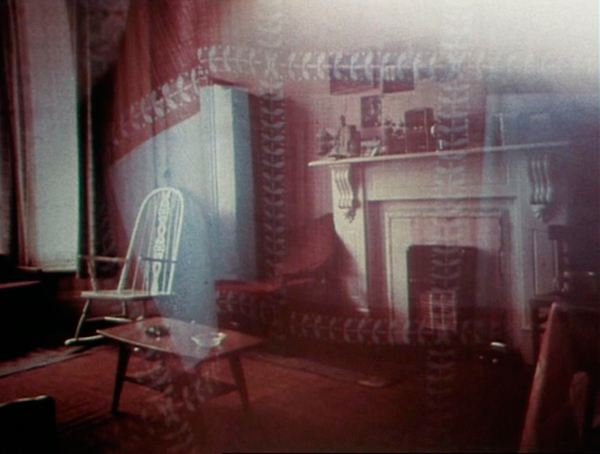
‘36 to ‘77
Marc Karlin, Jon Sanders, James Scott, Humphrey Trevelyan, UK, 1978, 16mm, video, 85′

Nightcleaners was originally conceived as the first of an ongoing series. Material subsequently shot for Part 2 eventually became ‘36 to ‘77, in which Myrtle Wardally, one of the cleaners in the earlier film, reflects on the strike and on her life, then and afterwards.
“To me ‘36 to ’77 is very important for the way it changes the understanding of how you live with representations. The normal film or television experience leaves you without any trace. It doesn’t hurt you at all to look at it. With ‘36 to ‘77 I realised how people desperately desire a certain normality for film. It’s such an obsessive need, and when for instance political people see the idea of rendering their politics visible, it completely breaks them apart. A film does test how real your politics are, to the extent of confronting you with something that breaks the very boundaries in your writing. Film acts as a sort of dislocating lever. There’s a lot of left rhetoric about personal politics which is actually a refusal to take personal politics seriously – it’s a refusal to dismember yourself, to re-think, re-phrase, re-constitute yourself in the light of your actions and the things in front of you. It’s a refusal to see age, to see change, to see distances, always taking the same photograph of yourself, wherever you are…The representation of workers on film is normalised because it’s always surrounded by and held in the situating of them as workers in a recognisable political situation, and which a lot of people might not be sharing. The idea that they might have other things that would contradict your idea of them never obviously comes into play now.” (Marc Karlin)

———————————————————————————————–
ibt_3_For-Memory_04_0

FRIDAY, MARCH 25, 2016 – 13:00 – KASKCINEMA
For Memory
Marc Karlin, UK, 1982, 16mm, video, 104′

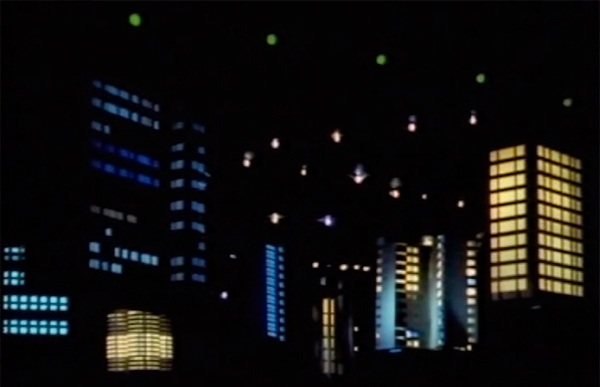
Produced between 1977 and 1982, this film remained on the shelves until the BBC finally broadcast it in a sleepy afternoon slot in March of 1986. For Memory is a contemplation on cultural amnesia, written as a reaction to Hollywood’s Holocaust film, a serialisation of the genocide. Karlin asks: how could a documentary image die so soon and be taken over by a fiction? Seeing that an enormous amount of documentation exists, why did it take a soap opera to have the effect that it did?
“The film came out of a showing of a Hollywood series on the Holocaust. I was deeply shocked by it because of its vulgarity and stupidity… And yet, and yet…! In a sort of Auden-tank sense, it had an enormous effect! In Germany, for instance, where children saw it and were given history books or packages to do with the camps, and so on. I was really disturbed that something like this Hollywood series established some kind of truth, and I just wondered where another kind of truth had disappeared, which was that of the documents. The documents had died to the point where, much later on, in Shoah, Claude Lanzmann would not use a single document. So, I was interested in kind of pursuing them. That led me to think out how, in the future, an imaginary city would remember – because it was the very convenient thing to say that modern times are totally to do with amnesia.” (MK)

———————————————————————————————–
ibt_4_So-That-You-Can-Live_01

FRIDAY, MARCH 25, 2016 – 15:30 – KASKCINEMA
So That You Can Live (For Shirley)
Cinema Action, UK, 1981, 16mm, video, 83′

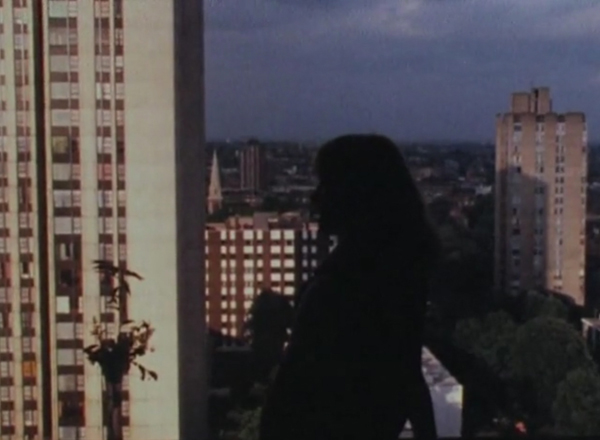
So That You Can Live developed from a project called The Social Contract, which the Cinema Action collective began in the mid-1970s. When filming in Treforest, South Wales, the filmmakers met Shirley Butts, a union convenor who was leading a strike by women demanding equal pay. In the subsequent five years, they documented the impact that global economic changes had on her and her family. As Marc Karlin remarked, So That You Can Live is “a film of and in transit – from city to countryside, from employment to the dole, from generation to generation, from power to powerlessness”.
“The most important British independent film since Berwick Street Film Collective’s Nightcleaners, Cinema Action’s So That You Can Live (For Shirley) is in many ways a very simple film, about a family in a South Wales valley community which has been struck down in the last five years – the period over which the film was made – by the socially destructive consequences of pit and factory closures and the resulting unemployment… Slow and beautifully controlled, a poetry unfolds in this film of enormous depth of feeling and lucid intelligence, and in this way it becomes a passionate plea for the voice of conscience to be heard again in the labour movement. For the word and the idea to become once again part of our vocabulary, as it was for previous generations. For us all to look around and see, in the shapes and forms of our environment, what parents and grandparents tell to those who ask of what is only recently past, the history of Living memory.” (Michael Chanan)

———————————————————————————————–
ibt_5_The-Year-of-the-Beaver_01

FRIDAY, MARCH 25, 2016 – 17:00 – KASKCINEMA
The Year of the Beaver
Poster-Film Collective, UK, 1985, 16mm, video, 78′

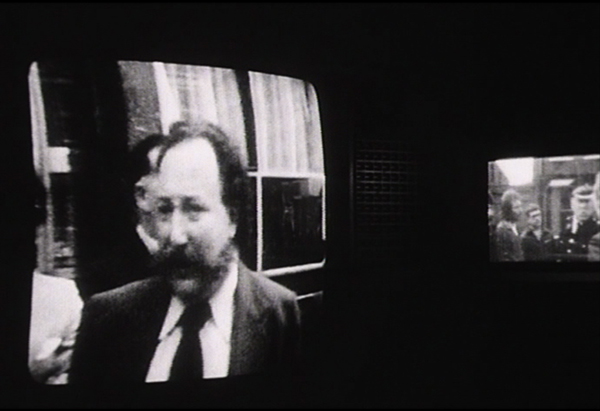
The Year of the Beaver documents the strike at the Grunwick film processing factory in North London in 1976-‘78, which was then described as “a central battleground between the classes and between the parties”. The film, which incorporates a lot of the material from the reporting that was being produced at the time, is not only a documentary of a strike, but a portrait of an historical period, as it underwent transition to the modern ‘civilized’ state under Thatcherism.
“It wasn’t until the early eighties that a film called The Year of the Beaver emerged and I first really met Marc Karlin as he hugged me on seeing it. A film which had, for all the efforts of the inexperienced people who had worked on it, managed to create layers of meaning and make connections between the myriad of things it had had to take on board. It showed what had come to be viewed as the seeds of Thatcherism developing long before her reign. This mammoth work had been years in the making, years in editing rooms struggling for ways and means to illuminate a story that needed to be told, to find an adequate form in which to tell its tale.” (Steve Sprung)

Followed by a DISSENT! talk with Ann Guedes (Cinema Action) and Steve Sprung (Cinema Action, Poster Collective).

———————————————————————————————–
ibt_6-1_Nicaragua_05

SATURDAY, MARCH 26, 2016 – 13:00 – PADDENHOEK
Nicaragua: Voyages
Marc Karlin, UK, 1985, 16mm, video, 42′

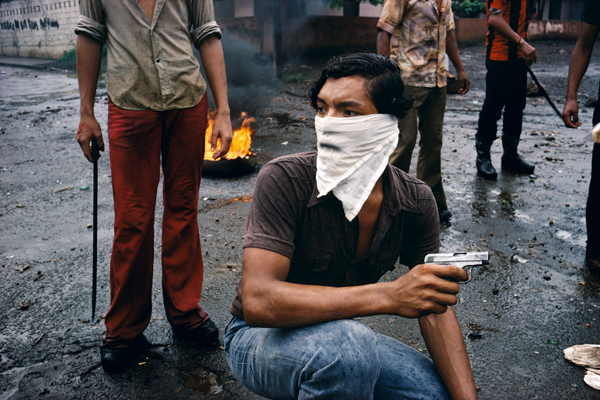
The first film in Marc Karlin’s four-part series on the Nicaraguan revolution that brought down President Somoza’s regime in 1979, Voyages is composed of five tracking shots, gliding over blown-up photographs that Susan Meiselas took during the insurrection. The film takes the form of an imagined correspondence, which interrogates the responsibilities of the war photographer, the line between observer and participant, and the political significance of the photographic image.
“Photographs are in a way far ahead of our ability to deal with them – we have not yet found a way of dealing, living with them. We have appropriated them in a channel – ‘language’, ‘papers’, ‘magazines’, ‘books’ – all of which seem the only tools by which we can give them an earthbound gravity. We brush past them, flick them, demand of them things they cannot give… Liberate photographs from its priests and jujumen – including myself. We do not need interpreters. We need looks – and thus the task is up to the photographer to renew his or her contract i.e. what can photographs and their arrangement do to defy the prison house interpretation à la John Berger – and make us think of ourselves in relationship to Nicaragua.” (MK)
TWILIGHT-CITY-4467

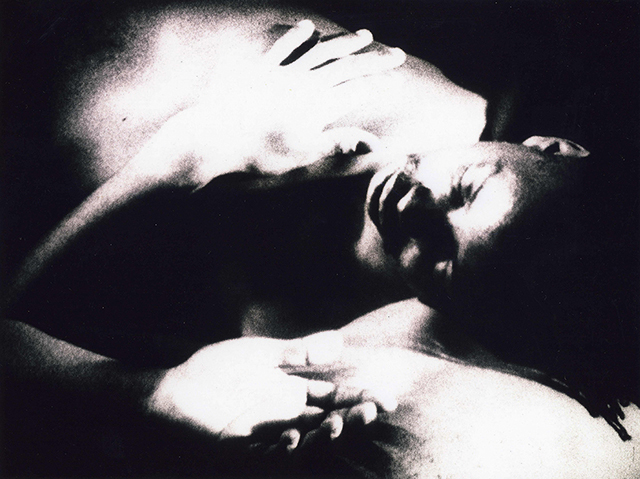
Twilight City
Black Audio Film Collective / Reece Auguiste, UK, 1989, 16mm, 52′

“A love story about the city and its undesirables,” this third film by the Black Audio Film Collective evokes the New London – in the filmmakers’ words “a fading world of being and unbelonging, invisible communities, the displaced and the rise of redevelopment.”
“The film presents an imaginary epistolary narration of a young woman’s thoughts as she writes to her mother in Domenica about the changing face of London, then in the throes of the new Docklands development. She fears it is a city that her mother would not now recognise should she return. The film cuts between this narrative voice and interviewees bearing witness to their youthful experience of the city as a territory mapped by racial, cultural, sexual, gender and class boundaries, a place ‘of people existing in close proximity yet living in different worlds.’ This polyvocal narrative moves restlessly back between past and present, reflecting on the loss of roots and erasure of history caused by the demolition of old established neighbourhoods. The further displacement of already marginalised communities falls under the shadow of the films’s recurrent motif of the public monument to a heroic British imperial history notable for its effacement of its disruptive descendants.” (Jean Fisher)

———————————————————————————————–
ibt_7_Scenes-for-a-Revolution_05

SUNDAY, MARCH 27, 2016 – 17:00 – PADDENHOEK
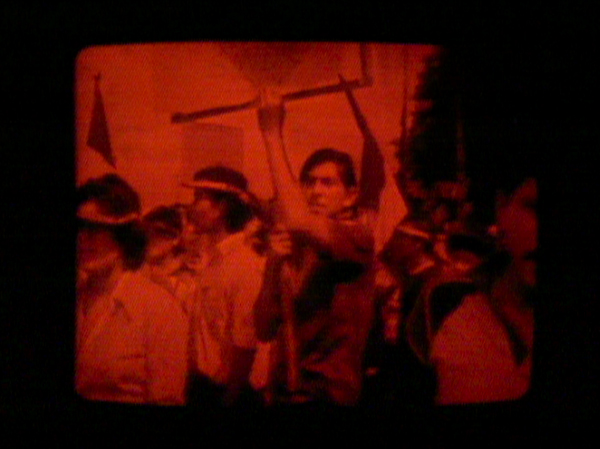
Scenes for a Revolution
Marc Karlin, UK, 1991, 16mm, video, 110′

Revisiting material of his earlier four-part series, Marc Karlin returns to Nicaragua to examine the history of the Sandinista government, to consider its achievements and assess the prospects for democracy following its defeat in the 1990 general election.
“For ten years, the Sandinistas had tried to make democracy mean access to education, health, nationhood, and the sense of collective responsibility. Now in one swift move Nicaragua found itself suddenly transplanted to the political events of Eastern Europe. It was as if differences, identities, separate histories, could all be electronically and democratically jammed. But then in this day and age, anyone and everyone could speak the word ‘democracy’. What it meant, what it felt like, what it could be as opposed to what it was not no-one would dare say. As if a democracy to really work had to be by definition valueless, orderless, heard but not seen. As if democracy could be about nothing else but the right to be left alone… For ten years Nicaragua had hardly been out of the headlines. Now that it was officially declared a democratic nation it was hardly ever heard of. As if democracy instead of making voices heard was there to silence them. A confirmation after all that history and all its wrongdoings had officially ended. But these images, so often seen in films on the Third World, to the point of invisibility, were the product of a bitter poverty which had not been erased. If in 1983 we had come to film a socialism that had hopefully learned from its past mistakes, in May 1990 we were still filming the reasons why that dream would simply not go away.” (MK)


DISSENT ! Kidlat Tahimik

perfumed-nightmare-les-blank-films

20 March 2016 18:00, Bozar Cinema, Brussels.

Mababangong Bangungot (Perfumed Nightmare)
PH, 1977, color, English spoken, 16mm, 93’
Sinong Lumikha ng Yoyo? Sinong Lumikha ng Moon Buggy? (Who Invented the Yo-Yo? Who Invented the Moon Buggy?)
PH, 1979, color, English spoken, 16mm, 93’

In the presence of Kidlat Tahimik.

“A cultural politics, a politics of daily life, which emerged in earlier decades but as something of an adjunct and a poor relative, a supplement, to ‘politics’ itself, must now be the primary space of struggle. This is indeed precisely what Kidlat’s film teaches us: that the other levels must be inscribed – from the sheerly eventful or punctual to the great class warfare of the national liberation struggle – but that today as never before we must focus on a reification and a commodification that have become so universalized as to seem well-nigh natural and organic entities and forms.”
– Fredric Jameson

Werner Herzog counted the film amongst the most original and poetic works of cinema made anywhere in the 1970’s. It reminded Susan Sontag that “invention, insolence, enchantment – even innocence – are still available on film”. And Fredric Jameson hailed it as a model example of how cinema could invent new geotopical cartographies within the landscape of late capitalism. But for all these words of praise, Perfumed Nightmare, Kidlat Tahimik’s first feature film, has overall remained a hushed secret within the dominant historiographies of cinema. If it is mentioned at all, the film tends to be associated with “Third Cinema”, a catch-all term that once embodied the hope for a new kind of cinema that could challenge the hegemony of the dream factories of Hollywood and Mosfilm, a hope that coincided with a political aspiration that was called “Third-Worldism”. Today, the idea of a “third” world or cinema seems to have become nothing less than an embarrassment in view of a time of globalization whose economic reality has, or so it appears, supplanted all possibilities of alternate ways of life or alternate modes of production. Perhaps this explains why a Marxist critic like Jameson is fascinated with the work of Kidlat Tahimik, which succeeds in remapping the new into the old and the old into the new, rather than aiming to simply replace or destroy old paradigms. In Perfumed Nightmare (1977) Tahimik plays a jitney driver in a Philippine village who dreams of becoming an astronaut or at the very least to strike it rich in the land of dreams which is the United States. He makes it as far as Europe, where a series of rude and comical awakenings unfolds and Kidlat learns that the modern Western world is far from paradise. In the follow-up film, the self-proclaimed “third-world space spectacle” Who Invented the Yo-Yo? Who Invented the Moon Buggy? (1979), our hero finds himself as a guest worker in the Germanic lands of “Yodelburg,” where he dreams of organizing the Philippines Official Moon Project. After all, even the global juggernaut of the American space program can’t get to the moon without Philippine innovations: the yo-yo, the early cousin of the gyroscope, which was placed on spaceships to the moon, was invented by Philippine tribesmen, while a Filipino living in the U.S. created the moon buggy. Both films, as Sontag pointed out, “makes one forget months of dreary moviegoing”. Like the festooned “jeepny” that Tahimik’s character constructs from an abandoned U.S. Army vehicle, they create something wholly original and imaginative from the discards of colonialism, like a pair of omnibuses hovering back and forth between different worlds with generous hilarity.

In collaboration with Arsenal – Institute for Film and Video Art, Cinematrix distribution and the Birkbeck Essay Film Festival.

DISSENT ! is an initiative of Argos, Auguste Orts and Courtisane, in the framework of the research project “Figures of Dissent” (KASK/Hogent), with support of VG.

About DISSENT!

How can the relation between cinema and politics be thought today? Between a cinema of politics and a politics of cinema, between politics as subject and as practice, between form and content? From Vertov’s cinematographic communism to the Dardenne brothers’ social realism, from Straub-Huillet’s Brechtian dialectics to the aesthetic-emancipatory figures of Pedro Costa, from Guy Debord’s radical anti-cinema to the mainstream pamphlets of Oliver Stone, the quest for cinematographic representations of political resistance has taken many different forms and strategies over the course of a century. The multiple choices and pathways that have gradually been adopted, constantly clash with the relationship between theory and practice, representation and action, awareness and mobilization, experience and change. Is cinema today regaining some of its old forces and promises? Are we once again confronted with the questions that Serge Daney asked a few decades ago? As the French film critic wrote: “How can political statements be presented cinematographically? And how can they be made positive?”. These issues are central in a series of conversations in which contemporary perspectives on the relationship between cinema and politics are explored.

DISSENT ! Sylvain George

sylvain

9 March 2016 20:00, STUK / Cinema Zed, Leuven.

Qu’ils reposent en révolte (des figures de guerre) (Sylvain George, FR, 2010, b&w, 150′)
Followed by a discussion with Sylvain George and Jacques Lemière (in French)

“Cinema not only bares witness to the struggle of migrants, it also offers the sensible world that responds to it: a world where there are not only makeshift tents, cold, hunger and grids, but also their transmutation in always changing spectacles, in movements and shimmering, in shadows and reflections. This is the most profound politics of Sylvain George’s films: not only in showing the capacity of the ‘wretched of the earth’ to live and think in accordance with the violence they are subjected to, but also in making them antecedently inhabit this world that is refused to them, the world where everyone has access to everything, including the superfluent and the artificial.”
– Jacques Rancière

Thousands of women, men and children, worn out after a long and terrible voyage, left to their own devices in what is considered as the largest slum of Europe, where they survive in inhumane and insanitary conditions. Without basic hygienic facilities, they face the constant threat of epidemics and infectious diseases. While local authorities increasingly impose restrictions on the work of health organizations and aid agencies, clashes with police forces and right-wing militants are deteriorating into a spiral of violence. To this dreadful situation, the state governement responds with more repression in the name of “security”. These are the facts that we all know about the “jungle” of Calais, as well as the more recent migrant camps in Dunkerque and elsewhere in the North of France and Belgium. For over eight years now Sylvain George has committed himself to give visibility to the living conditions of those suffering this injustice. Qu’ils reposent en révolte, the first feature film that resulted from this commitment, is composed of fragments that were filmed in Calais between Juli 2007 and November 2010. The film however does not merely offer an illustration of a utterly scandalous situation. The migrants depicted in the film do not correspond to the figures of victims silenced by oppression or of fighters crying for their rights. Instead of showing the clash of one violence against another, the film rather depicts how individuals rise their bearings and thoughts to meet the state violence inflicted on them. Instead of depicting them as eternal victims or “bare lives”, it shows their capacity to state their own history and take charge of their destiny. “Politically speaking, it is about standing up”, says Sylvain George, “about contesting these grey zones, these spaces or cracks like Calais situated somewhere between the exception and the rule, beyond the scope of law, where law is suspended, where individuals are deprived, stripped off their most fundamental rights. And that while creating, through some dialectic reversal, the ‘true’ exceptional states. Space-time continuums where beings and things are fully restored to what they were, are, will be, could be or could have been”.

DISSENT ! is an initiative of Argos, Auguste Orts and Courtisane, in the framework of the research project “Figures of Dissent” (KASK/Hogent), with support of VG.
In collaboration with STUK, Lieven Gevaert Centre and Hoger Instituut voor Wijsbegeerte (KU Leuven).

About DISSENT!

How can the relation between cinema and politics be thought today? Between a cinema of politics and a politics of cinema, between politics as subject and as practice, between form and content? From Vertov’s cinematographic communism to the Dardenne brothers’ social realism, from Straub-Huillet’s Brechtian dialectics to the aesthetic-emancipatory figures of Pedro Costa, from Guy Debord’s radical anti-cinema to the mainstream pamphlets of Oliver Stone, the quest for cinematographic representations of political resistance has taken many different forms and strategies over the course of a century. The multiple choices and pathways that have gradually been adopted, constantly clash with the relationship between theory and practice, representation and action, awareness and mobilization, experience and change. Is cinema today regaining some of its old forces and promises? Are we once again confronted with the questions that Serge Daney asked a few decades ago? As the French film critic wrote: “How can political statements be presented cinematographically? And how can they be made positive?”. These issues are central in a series of conversations in which contemporary perspectives on the relationship between cinema and politics are explored.

In Between Times: The Song of the Shirt

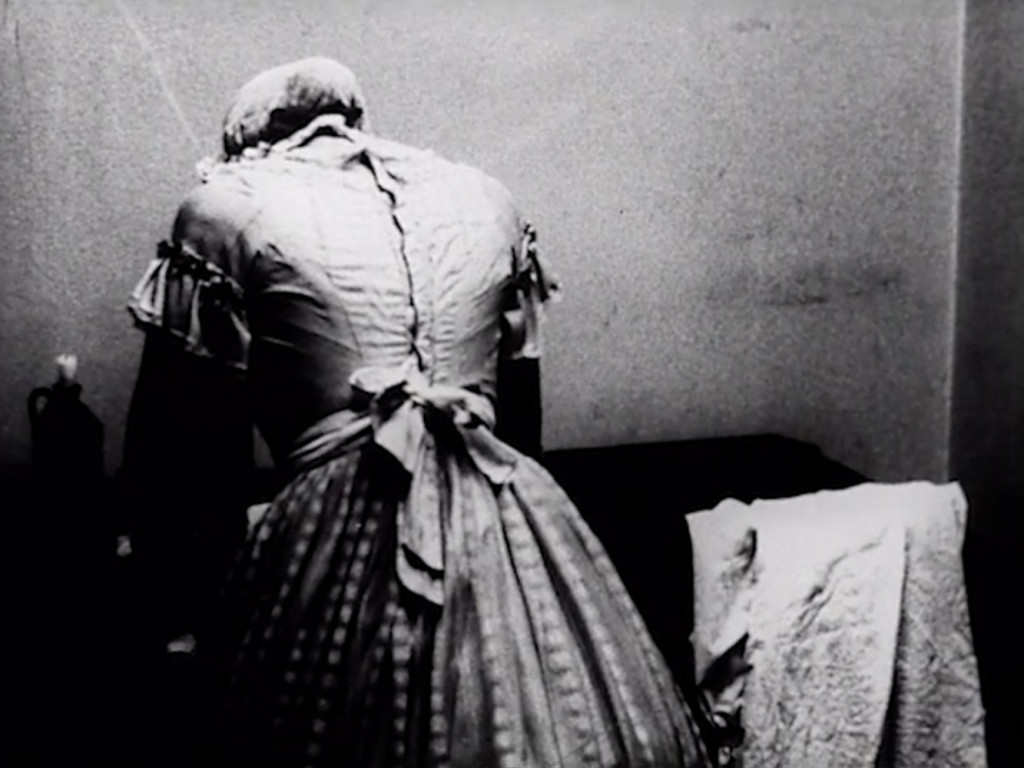
thesongoftheshirt01

15 February 2016 20:00, Art Cinema OFFoff, Gent. Preview of the program In Between Times (Courtisane Festival 23 > 27 March 2016), which will present a selection of British films that have attempted to document and reflect on the changing political landscape in a period that stretches from the mid-1970’s to the beginning of the 1990’s.

Sue Clayton & Jonathan Curling
The Song of the Shirt

UK, 1979, 16mm, 135′, b&w, English spoken

An independent feature film about women in the sewing trade in the nineteenth century, about whom poets wrote, philanthropists raved, and finally government interest was stirred – bringing about legislation to protect them which formed the origins of the Welfare State. Made collectively with over 200 cast, crew, musicians, artists, historians, academics in various fields, womens’ groups and trades unions.
“The “slop-house’’ workers were a favourite of both the bourgeois and radical presses. They were horrified by the picture they saw of the single woman in this casually organized and over-supplied trade. Her independence and misery disturbed the hypocritical convention of the “protection of women” in the family and in the Law. Her person, as it was waged, starved and sexually active, disturbed the womanly ideal, the passive domestic consumer, that accompanied the rise of the bourgeoisie. She presented problems for the propaganda of social reformers and conservatives alike. However, the film is not a piece of historical detective work, awarding the unknown figures their proper (and final) recognition. The presence of the seamstresses was acknowledged in certain ways: the film is concerned with the forms which that recognition took. The motivation for making the film lies partly in the persistence of comparatively bad working conditions for women in the garment trade. But in addition to its specific historical material, The Song of the Shirt also constitutes a confrontation with a problem-area which has arisen within the economic and cultural conditions of independent filmmaking in England, and within feminist film analyses and practices of the past few years.” (Alison Beale)

In the framework of the research project “Figures of Dissent” (KASK/Hogent)

Lying Down In A World Of Tempest – Lav Diaz Publication

On the occassion of the first Belgian retrospective to date of the work of Lav Diaz, produced by CINEMATEK, Courtisane and Bozar, in collaboration with VDFC (10 SEPTEMBER – 26 NOVEMBER, 2015).

How to come to terms with the history of a country that is haunted by memories of colonization, rebellion and oppression, a country that continues to wrestle with itself in search for meaning and identity? The weight of this question makes itself felt in every frame, in every face, breath and gesture inhabiting the films of Lav Diaz. From his feature debut, Serafin Geronimo: Criminal of Barrio Concepcion (1998), to his latest From What Is Before (2014), all of his films are deeply rooted in the history and politics of his home country, the Philippines. They bear the wounds of a troubled past that have never been able to heal, as the shadows cast by the Spanish and American colonization, the conflict between Moro Muslims and Christians, and Ferdinand Marcos’ imposition of Martial Law still loom heavily over the country. Even though the dictatorship has come to an end almost thirty years ago, the harms and injuries produced by the past have never seemed to wither away, but have grown ever more inward. This legacy of trauma and disempowerment, of “stifled hands and silenced voices,” as Alexis Tioseco wrote, is what can be felt reverberating in Lav Diaz’ shattering tragedies of sin, guilt and redemption.

It seems unlikely to be a coincidence that 19th century Russian literature, especially the work of Dostoevsky and Tolstoy, has never been far from his mind. Already in Serafin Geronimo, which starts out with a quote from Crime and Punishment, Diaz seems to have established his main theme: the search for redemption, a theme which continues to run through his oeuvre, from the Tolstoy-inspired Death in the Land of Encantos (2007), in which a onetime political prisoner confronts his former interrogator, to Norte, the End of History (2013), which begins with a Raskolnikov-like figure committing murder, but develops into an allegory about Marcos. And just as the Russian novelists sought to depict “the Russian soul” by making full use of the temporal spaciousness of their prose epics, Diaz’ portrayals of the lives and suffering of the Filipino people unfold over epic lengths of time, stretching over multiple hours. This duration gives Diaz a grand canvas on which he patiently sketches painstaking diagrams of the factors and events that shape the multiple, interconnected lives of the people he observes, unfurling into panoramic meditations on morality, violence and death, torn between humanist faith and materialist despair.

Cinema as window onto the troubled soul of the world, as a quest for the inner life of reality in all its mystery and ambiguity: in Lav Diaz’ work yesteryear’s dream of André Bazin appears to have found a contemporary follower, a filmmaker who is not about to tone down his search any time soon. As he himself has said, “I would go to any extent in my art to fathom the mystery of humankind’s existence. I want to understand death. I want to understand solitude. I want to understand struggle. I want to understand the philosophy of a growing flower in the middle of a swamp.”

Stoffel Debuysere