DISSENT ! Pedro Costa

ou-git-2.jpg

2 February 2013 20:30 Argos, Brussels
in conversation with Stoffel Debuysere

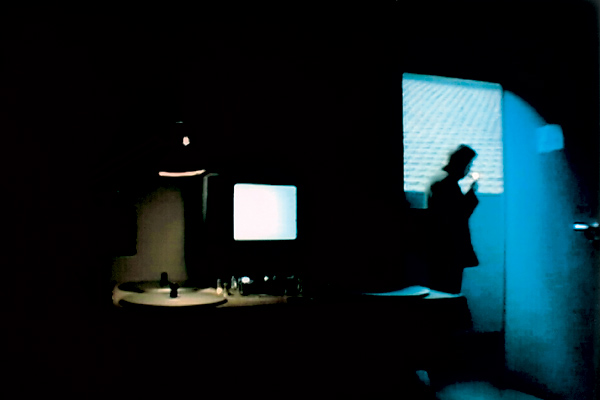
“We have to do away with this notion of urgency associated with politics, because it’s the contrary of love. That’s where it starts. Politics is love.” The politics of Pedro Costa’s cinema has nothing to do with the instructive demonstration of injustice or the uncovering of mechanisms of exploitation or repression, but with a committed search for an approach that lives up to the capacity of anyone. This politics is most present in the films he has been making, since the mid 1990’s, in Fontainhas, a poor and insular Lisbon neighborhood, where he uses minimal means to depict its habitants in all their grandeur. This is a cinema of desire and conviction: the desire to take the time and the risk to capture the essence of people and things, the conviction that cinema not only has to witness the wealth of the world – the wealth belonging to anyone – but also has to return it, as condensations of light and color, bodies and objects, speech and silence. In this sense Costa’s work has a lot in common with the films of Jean-Marie Straub en Danièle Huillet, which he once described as “the fastest, the most furious, the most beautiful, sensual, ancient, modern.” While critical attention is all too often directed at the communist world view of Straub-Huillet, Costa particularly draws from the way in which they give cinematographic form to their ideas, as an unique and rigorous play of materialism, mysticism and humanism. In this DISSENT ! session Pedro Costa will use fragments from Où gît votre sourire enfoui? (2001), his portrait of Straub-Huillet, to discuss the ethics and politics underpinning their work. In the words of Jean-Marie Straub: “no political film without morality, no political film without theology, no political film without mysticism.”

One of the most important artists on the international film scene today, Portuguese director Pedro Costa has been steadily building an impressive body of work since the late eighties. Ossos, In Vanda’s Room, and Colossal Youth are the three films that put him on the map: spare, painterly portraits of battered, largely immigrant lives in the slums of Fontainhas, a neighborhood on the outskirts of Lisbon. Hypnotic, controlled works, these films confirm Costa as a provocative new cinematic poet, one who locates beauty in the most unlikely of places. (Criterion)

DISSENT ! is an initiative of Argos, Auguste Orts and Courtisane, in the framework of the research project “Figures of Dissent” (KASK/Hogent), with support of VG & VGC. Pedro Costa is also presenting ‘En Avant Jeunesse !’, ‘Ne change rien’ and ‘Centro Historico’ (Costa/Oliveira/Erice/Kaurasmaki) At Bozar on February 3rd. Pedro Costa’s visit to Brussels was initiated by ‘Ecole de Recherche Graphique’ (Erg).

Also read ‘The Politics of Pedro Costa‘ and ‘Ventura’s Letter‘, both by Jacques Rancière, as well as ‘A Closed Door That Leaves Us Guessing‘, the seminal text of a seminar Costa gave in 2004. Various texts about the work of Jean-Marie Straub and Danièle Huillet, written by Rancière, Serge Daney and others can be found here.
——————————————————————————————————————————————————————-
About DISSENT!

How can the relation between cinema and politics be thought today? Between a cinema of politics and a politics of cinema, between politics as subject and as practice, between form and content? From Vertov’s cinematographic communism to the Dardenne brothers’ social realism, from Straub-Huillet’s Brechtian dialectics to the aesthetic-emancipatory figures of Pedro Costa, from Guy Debord’s radical anti-cinema to the mainstream pamphlets of Oliver Stone, the quest for cinematographic representations of political resistance has taken many different forms and strategies over the course of a century. The multiple choices and pathways that have gradually been adopted, constantly clash with the relationship between theory and practice, representation and action, awareness and mobilization, experience and change. Is cinema today regaining some of its old forces and promises? Are we once again confronted with the questions that Serge Daney asked a few decades ago? As the French film critic wrote: “How can political statements be presented cinematographically? And how can they be made positive?”. These issues are central in a series of conversations in which contemporary perspectives on the relationship between cinema and politics are explored.
Figures of Dissent: Robert Kramer

the-peoples-war.jpg

21 February 20:00, KASKcinema, Gent. A Courtisane event.
introduced by Stoffel Debuysere

“Different experience requires different camera movements. To get the movements in a right relation with what’s there you have to really know what you’re seeing. (…) And while this movie making was yet another way of creating temporary communities to live inside of, the shelters and campsites that I need so much, it is not the same project as the one that went before.“
– Robert Kramer

“I’m from NYC. The 50s were bad. I got reborn in the 60s. I left the states at the end of the 70s. I’ve been living around, mostly based in Paris, and I make movies.” 
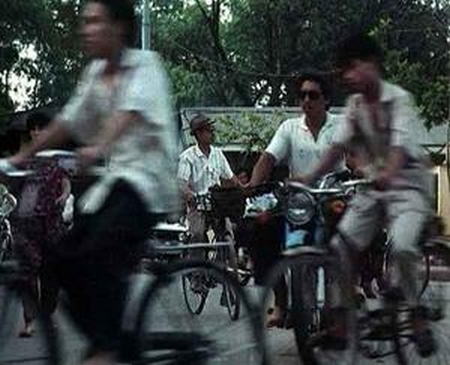
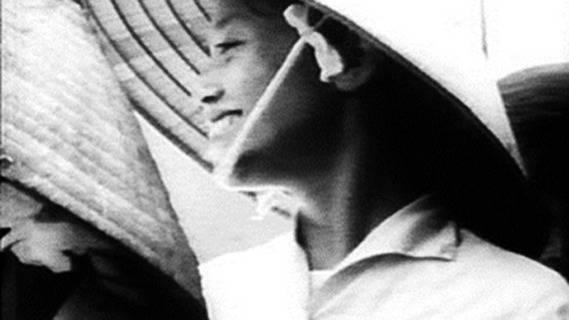
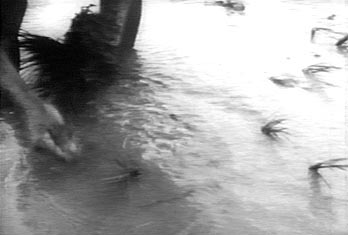
This is how Robert Kramer (1939 –1999) introduced himself in a letter he wrote, shortly before his death, to Bob Dylan, who he considered as one of the “voices in his head”, accompanying him throughout his life. To Kramer, the experience of the sixties has always been the touchstone for his life and work, the moment when he chose sides: first as a journalist in Latin-America and a community worker in Newark, later as a filmmaker and a member of the Newsreel collective. Again and again Kramer searched out the battlegrounds: in Venezuela, Vietnam, Portugal, Angola, but also closer to home, in the heart of the radical movements working revolution and challenging the political structures of the United Stated at the time. Each time Kramer found himself committed to the search for dissenting forms of community, of which he himself depicted the breakdown in Milestones (1975), an unsettling self-portrait of his “lost” generation. After moving to Europe Cinema would more than ever become his true home territory: working from his base in Paris, he produced more than twenty films, varying in length, genre, medium and degree of achievement. Armed with his camera, Kramer not only kept on exploring the contours and boundaries of the world, but also of himself, as critical cartographer of a fast changing society, rebounding between private and public, interior and exterior, choice and necessity. In some ways, the films in this programme can be considered as the milestones of his work: three films at the same time reflecting the trajectory of his own history and that of a place he cherished deeply: Vietnam.

Robert Kramer, Norman Fruchter, John Douglas (Newsreel Collective)
People’s war

1969, 16mm, b/w, English spoken, 40’

viet1.jpg
“To all filmmakers who accept the limited, socially determined rules of clarity, of exposition, who think that films must use the accepted vocabulary to ‘convince’, we say essentially: your sense of order and form is already a political choice – don’t talk to me about ‘content’ – but if you do, I will tell you that you cannot encompass our ‘content’ with those legislated and approved senses, that you do not understand it if you treat it that way. There is no such thing as revolutionary content, revolutionary spirit, laid out for inspection and sale on the bargain basement counter. We want to make films that unnerve, that shake assumptions, that threaten, that do not soft-sell.” (RK about Newreel Collective)

Robert Kramer
Point de départ

1993, 35mm, color, English, French, Vietnamese with French subtitles, 83′

startingpoint.jpg
“Many of the ideas that some people died for have been forgotten. It is necessary to read through the pages of recent history. The ‘starting place’ is really after the film. It is now. I could have made this film in another place. The most important thing was not to talk particularly or exclusively about Vietnam, but was, above all, this idea of ‘starting place.’ Because that’s the way things are, we have to start out from a look at what we have experienced over the last thirty years.” (RK)

Robert Kramer
SayKomSa

1998, video, color, English, French, Vietnamese with French subtitles, 20′

saykomsa.jpg
“Gray Paris street. In the apartment there are gifts from old friends in Vietnam: reminders of a different history.
But the time is now, 1998: the market economy, that’s our common fate. A construction-site on the edges of the West lake in Hanoi. This lake in the centre of Hanoi is being gradually walled in by huge modern hotels. The village is disappearing.
Everybody knows: it’s just a matter of money now. Who’s rich and who’s poor, who can and who can’t. That’s how it is: c’est comme ca.” (RK)

In the context of the research project “Figures of Dissent (Cinema of Politics, Politics of Cinema)”
KASK / School of Arts

See also Kramer’s statement on Newsreel and his text Snap Shots. His letter to Dylan can be found here.
Also read Adrian Martin‘s wonderful essay on Kramer’s essay films.

DISSENT ! Eyal Sivan

notre-musique-palestina.jpg

12 December 2012 20:30 Argos, Brussels
in conversation with Stoffel Debuysere

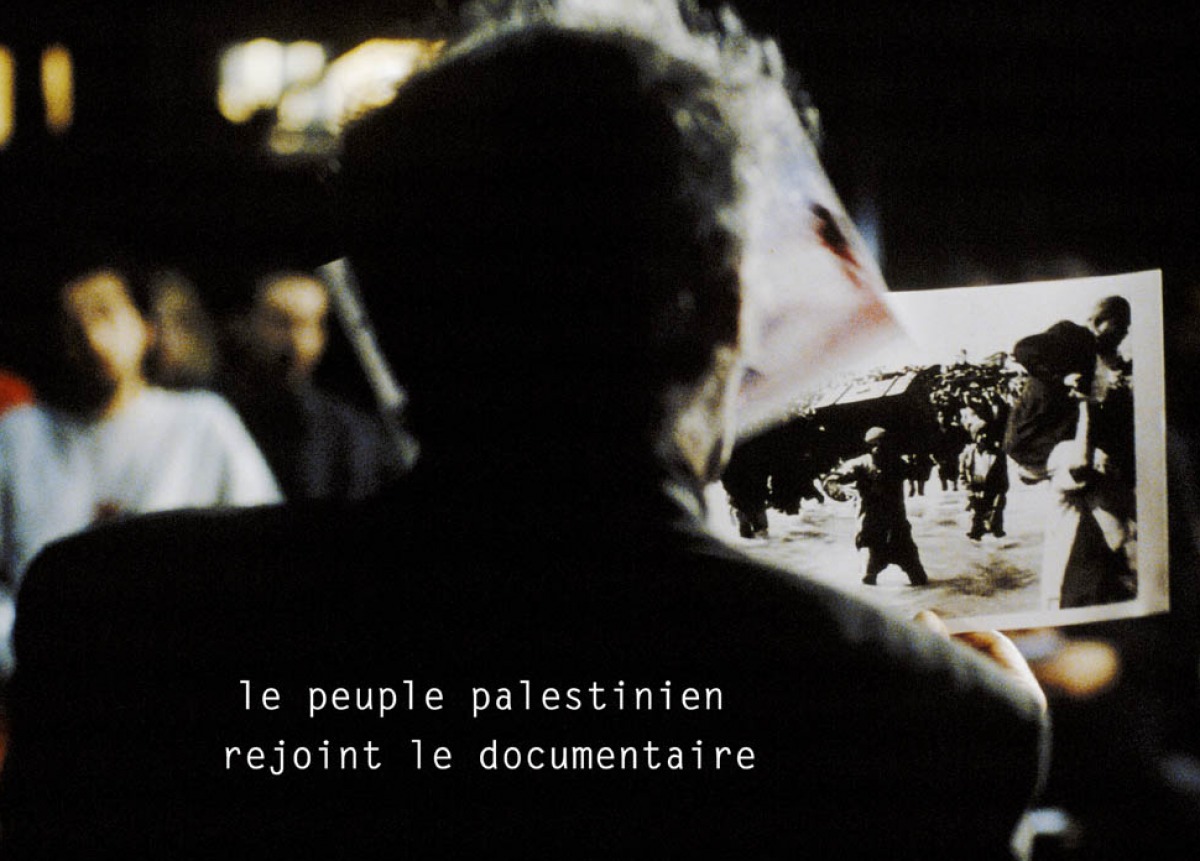
“Shot and counter shot do not imply any form of similarity or equality but they pose a question.” According to Jean-Luc Godard, montage, as the essence of cinema, does not solely consist of putting one image in juxtaposition or in opposition to another or to draw together heterogeneous elements; its purpose is rather to create a space of thought in which the possibility exists that one reality inhabits another. This stance also characterises Godard’s approach to two recurrent themes that form a constant thread throughout his oeuvre: the Jewish question and the Palestinian question. The Jewish issue AND the Palestinian issue, Jew AND Muslim: bringing up these connections promptly instigate criticism and discord. This “forbidden montage” is the central theme of the eponymous online project (montageinterdit.net) developed by documentary filmmaker Eyal Sivan. The project aims to generate critical reflections on montage and its possible meanings within a political debate. According to Sivan, by using a databank of fragments from Godard’s work, the project seeks to “show that the islamophobia and racism now spreading through Europe have their roots in the Jewish question and antisemitism”. In this DISSENT! session Sivan discusses what this “forbidden montage” amounts to. What does it mean to bring two elements together and weigh one up against the other with the aid of a montage as, dixit Godard, “the scales of justice”?

Eyal Sivan is a documentary film maker and theoretician. Born in September 1964 in Haïfa Israel, Eyal Sivan grew up in Jerusalem before moving to Paris in 1985. From early on in his career, his writing and films have critically examined Israeli society and the occupation of Palestine, as well as broader themes of national identity, collective memory and civil disobedience. Recent projects include “Common state”, a reflection on the one-state solution for the Israeli-Palestinian conflict, and “A Common Archive for 1948 Palestine”, which seeks to bring together testimonies of Palestinian refugees and Zionist perpetrators of the Nakba.

DISSENT ! is an initiative of Argos, Auguste Orts and Courtisane, in the framework of the research project “Figures of Dissent” (KASK/Hogent), with support of VGC.

Also read Godard’s text published in ‘El Fatah’ (1970), his letter to Elias Sanbar (1979) and these extracts taken from various texts written by and interviews with Godard, all related to the question of ‘Montage Interdit’. More articles on the work of Godard can be found here.
——————————————————————————————————————————————————————-
About DISSENT!

How can the relation between cinema and politics be thought today? Between a cinema of politics and a politics of cinema, between politics as subject and as practice, between form and content? From Vertov’s cinematographic communism to the Dardenne brothers’ social realism, from Straub-Huillet’s Brechtian dialectics to the aesthetic-emancipatory figures of Pedro Costa, from Guy Debord’s radical anti-cinema to the mainstream pamphlets of Oliver Stone, the quest for cinematographic representations of political resistance has taken many different forms and strategies over the course of a century. The multiple choices and pathways that have gradually been adopted, constantly clash with the relationship between theory and practice, representation and action, awareness and mobilization, experience and change. Is cinema today regaining some of its old forces and promises? Are we once again confronted with the questions that Serge Daney asked a few decades ago? As the French film critic wrote: “How can political statements be presented cinematographically? And how can they be made positive?”. These issues are central in a series of conversations in which contemporary perspectives on the relationship between cinema and politics are explored.
Figures of Dissent: Eyal Sivan

eichmann.jpg

13 December 2012 20:30, KASKcinema, Gent. A Courtisane event.
moderated by Stoffel Debuysere

“La limite éthique est la vraie question du documentaire. C’est une question qui traverse l’ensemble de mon travail : la limite avec le montage dans Un Spécialiste, la limite dans les liens entre parole et image dans le film sur la Stasi… Je pense que la seule chose que l’on peut opposer à cela, tout en reconnaissant la limite éthique, c’est que c’est visible, ce n’est pas caché. Oui, c’est un acte extrêmement subjectif, signé, et qui prétend donner un essai politique, ce que sont la plupart de mes films.”
– Eyal Sivan

The Specialist. Portrait of a Modern Criminal
1999, b/w, 35mm, 128′

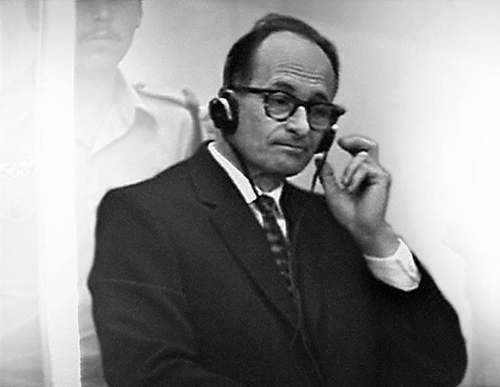
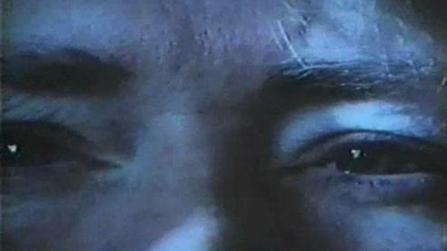
How to portray perpetrators? Why are so few documentaries dealing with the representation of those who seem to place so little value on humanity: warlords, executioners, hangmen, personifications of “absolute evil”? Is the documentary form, as Jean-Luc Godard once suggested, then the de facto domain of their counter-image: the victims? These are some of the questions that filmmaker Eyal Sivan (Israel, 1964) wrestles with, most explicitly in The Specialist (1999), his examination of the infamous trial of Adolf Eichmann. The film, inspired by Hannah Arendt’s controversial book Eichmann in Jerusalem, report on the banality of evil and written in cooperation with Rony Brauman, is drawn from 350 hours of recordings bearing witness to the trial of one of the architects of the Holocaust, a man who has been depicted as a blood thirsty maniac but who came across as a bland bureaucrat, disconcerting in his banality. In the words of Arendt: “this normality was more frightening than all the atrocities together”. However, Sivan and Brauman are not as interested in the psychology of the accused as they are in the mechanism of justification of his crimes. “We have done nothing more than expose, in the form of a indictment, Eichmann’s defensive position”, is what they wrote in Éloge de la désobéissance, the booklet that accompanies the film. Thus the film offers a cutting insight into a system that is effectively predicated on denial and disculpation – “when everyone is guilty, nobody is” (Arendt). But Sivan also insinuates that the regime of justification does not only apply to the history of the genocide of the Jews in Europe but also to the history of the state of Israel. Are the Palestinians, as Edward Said asserted, not “the victims of the victims”?

In the presence of Eyal Sivan, who will also take part in the DISSENT ! series in Brussels on December 12.

In the context of the research project “Figures of Dissent (Cinema of Politics, Politics of Cinema)”
KASK / School of Arts

DISSENT ! Olivier Assayas & Eric de Bruyn

debord-friends.jpg

22 November 2012 20:30 Argos, Brussels
introduced by Stoffel Debuysere

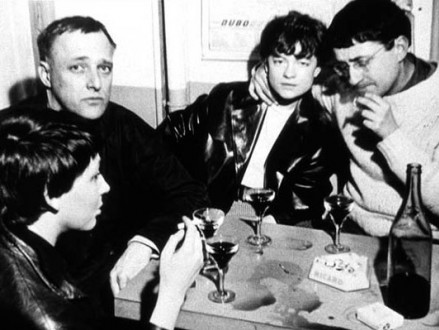
What does one of the most celebrated film makers of the post-Nouvelle Vague generation have in common with Situationist International’s erstwhile figurehead? One was just thirteen during the uprising of May 1968, while the other is considered one of its driving forces. It was not until later, enthused by the echo of this revolutionary experience and the wave of the 70s counter-culture, that Olivier Assayas turned to the work of Guy Debord, which he continues to treasure to this day as “the only place where I have always felt life, resistance and history intact”. About this prominent period, Assayas published in 2005 the booklet Une adolescence dans l’apres mai, which also served as a blueprint for his latest film, Après Mai. Assayas mentions in his text, written as a letter to Debord’s widow, the desperation of his generation, the collapse of the left, the advance of globalisation and mediatisation, the tyranny of a consensus society, and in stark contrast to all of this, Debord’s unremitting poetry of resistance: “he tells us that soon it will be too late. That lost opportunities do not present themselves again. But also that thought can shake up the city. Not only has he said so, he has done so and set an example; so that everyone, deep down, knows that it can be done.” In this first DISSENT ! session, Assayas enters into dialogue with art historian Eric de Bruyn, about Debord’s lasting influence, not least in the shape of his films, which Assayas managed to rescue from obscurity a few years ago. What contemporary resonance does Debord’s work have? And how can his films inspire a cinema about, and of, today?

Preceded by a screening of Sur le passage de quelques personnes à travers une assez courte unité de temps.

Olivier Assayas has established himself as one of the most extraordinary voices in cinema. Between his first feature ‘Désordre’ (1986) and such major works as ‘Irma Vep’ (1996), ‘Les Destinées sentimentales’ (2000) and, most recently, ‘Carlos’ (2010) and ‘Après Mai’ (2012), he has charted an exciting and highly dialectical path, “embracing narrative and character, dealing with the fragmentary reality of life in a global economy, and, at the same time, crafting what amounts to an ongoing, passionate spiritual autobiography.“ (Kent Jones)

Eric C.H. de Bruyn is an assistant professor of film and photographic studies at the University of Leiden, The Netherlands. He is an editor of Grey Room and has published, among other places, in Artforum, Texte zur Kunst, and Art Journal. This past spring he organized with Sven Lütticken, “Séances: Performing Film,” a series of screenings that took place at MUMOK in Vienna.

DISSENT ! is an initiative of Argos, Auguste Orts and Courtisane, in the framework of the research project “Figures of Dissent” (KASK/Hogent), with support of VGC.

Cinematek is also organizing a retrospective of Olivier Assayas’ work 1 – 21 November. The full programme is available on www.cinematek.be. With the support of Hogeschool Sint-Lukas Brussels (LUCA).

Also read ‘In eternal circumstances from the depths of a shipwreck‘ by Assayas, and two interviews on Guy Debord, as well as Jacques Rancière’s ‘When we were on the Shenandoa‘.

——————————————————————————————————————————————————————-
About DISSENT!

How can the relation between cinema and politics be thought today? Between a cinema of politics and a politics of cinema, between politics as subject and as practice, between form and content? From Vertov’s cinematographic communism to the Dardenne brothers’ social realism, from Straub-Huillet’s Brechtian dialectics to the aesthetic-emancipatory figures of Pedro Costa, from Guy Debord’s radical anti-cinema to the mainstream pamphlets of Oliver Stone, the quest for cinematographic representations of political resistance has taken many different forms and strategies over the course of a century. The multiple choices and pathways that have gradually been adopted, constantly clash with the relationship between theory and practice, representation and action, awareness and mobilization, experience and change. Is cinema today regaining some of its old forces and promises? Are we once again confronted with the questions that Serge Daney asked a few decades ago? As the French film critic wrote: “How can political statements be presented cinematographically? And how can they be made positive?”. These issues are central in a series of conversations in which contemporary perspectives on the relationship between cinema and politics are explored.